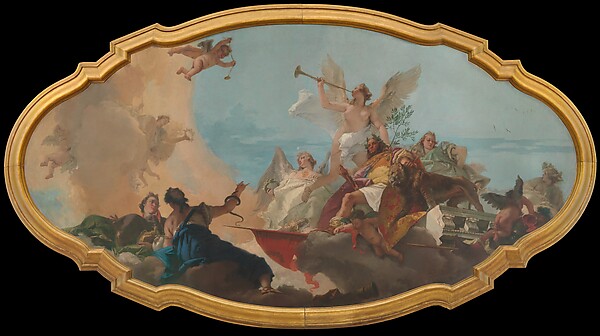
In the collection of Cleveland Museum of Art, Cleveland — check current display status with the museum.
FROM THE CLEVELAND MUSEUM OF ART’S CATALOG
A scherzo is a musical composition made up of little phrases, with implications of playfulness. Tiepolo's Scherzi are improvised scenes of magicians, philosophers, soldiers, old men in turbans, and shepherds who consult horoscopes, skulls, skeletons, and snakes among altars, ruins, and ancient bas-reliefs. The transitory nature of life, the vanity of human pursuits, and direct confrontation with death, are the recurring themes. The eerie mood of the prints reflect the preoccupation of 18th-century Venice with magic, superstition, and witchcraft. Light was Tiepolo's essential means of expression and the basic element of his style. The sensation of sunlight bathing each scene is an illusion created by the contrast of the nervous, broken lines against white paper. Shade is obliterated; even the darkest areas are transparent as they, too, are created out of light.
Be the first to share your thoughts.
Sign in to join the discussion.
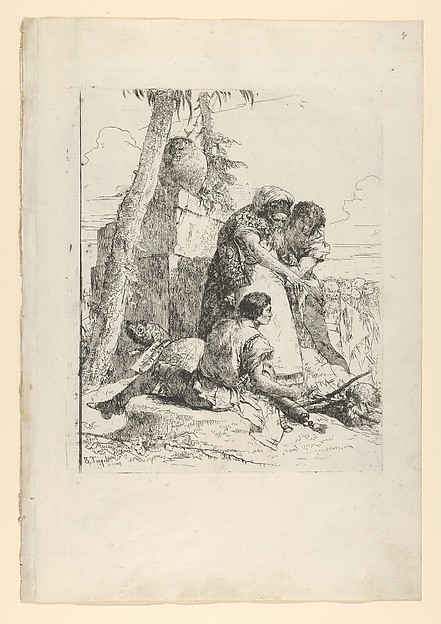 Giovanni Battista Tiepolo — Magician pointing out a burning
 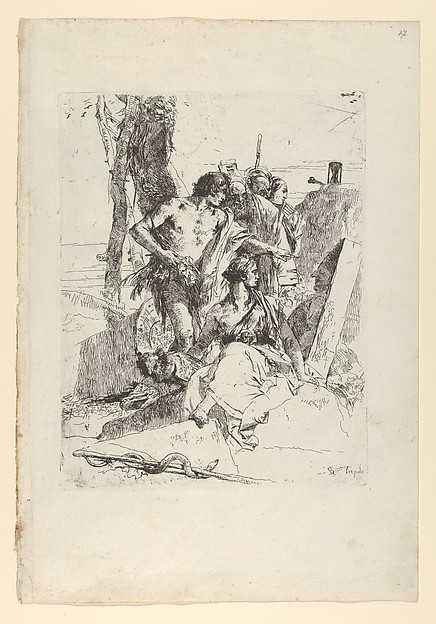 Giovanni Battista Tiepolo — The Discovery of the Tomb of Pun
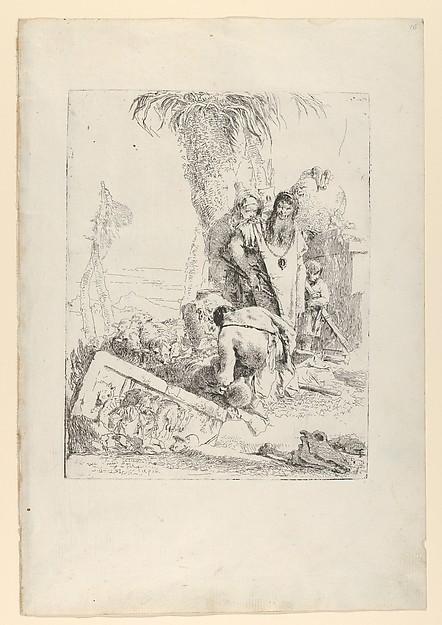 Giovanni Battista Tiepolo — A Shepherd with two Magicians, f
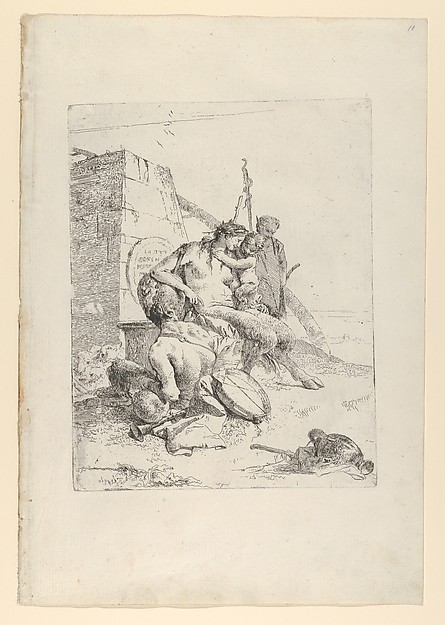 Giovanni Battista Tiepolo — Satyr Family with the Obelisk, f
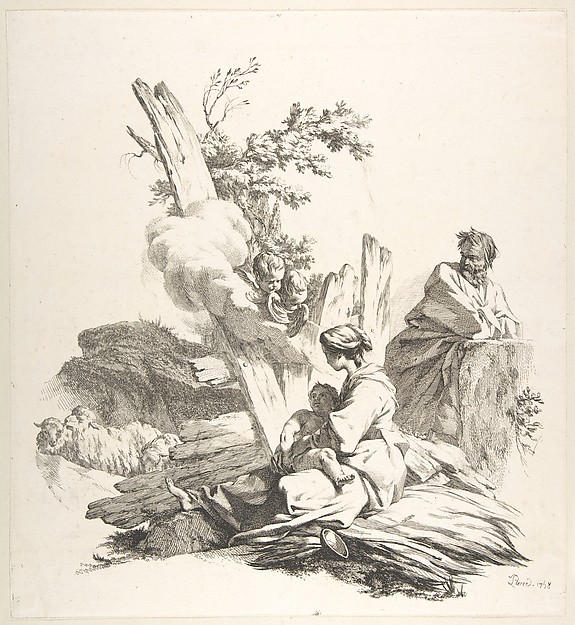 Jean-Baptiste Marie Pierre — The Flight Into Egypt
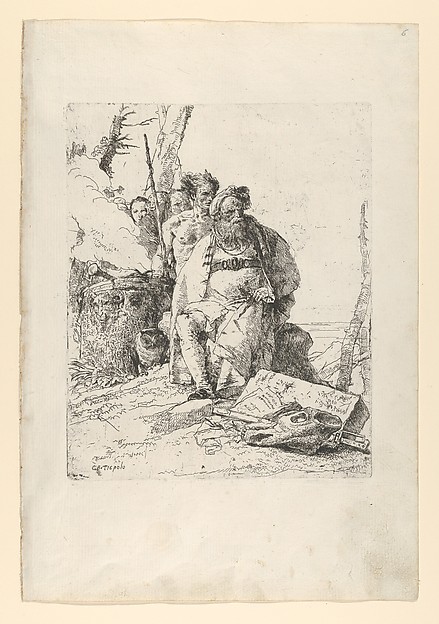 Giovanni Battista Tiepolo — Magician with four Figures near
 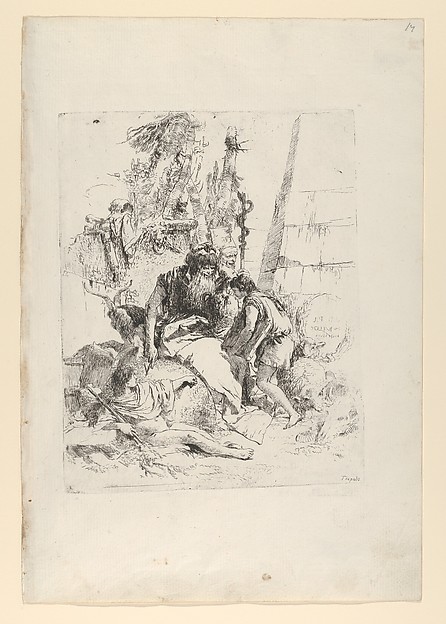 Giovanni Battista Tiepolo — Two magicians and two boys, from
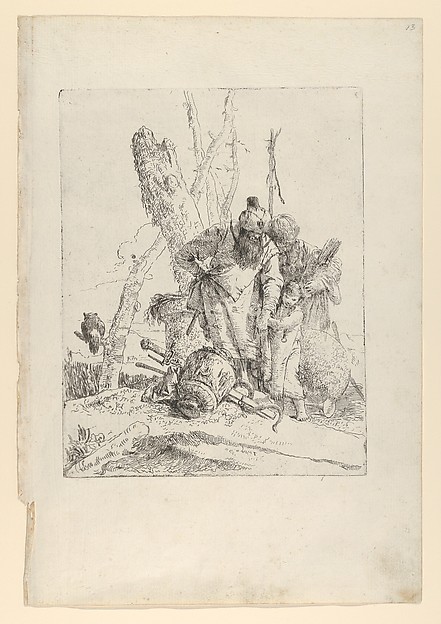 Giovanni Battista Tiepolo — Two astrologers and a boy, from
  Thomas Rowlandson|Francis Wheatley — Fishermen by the Shore
 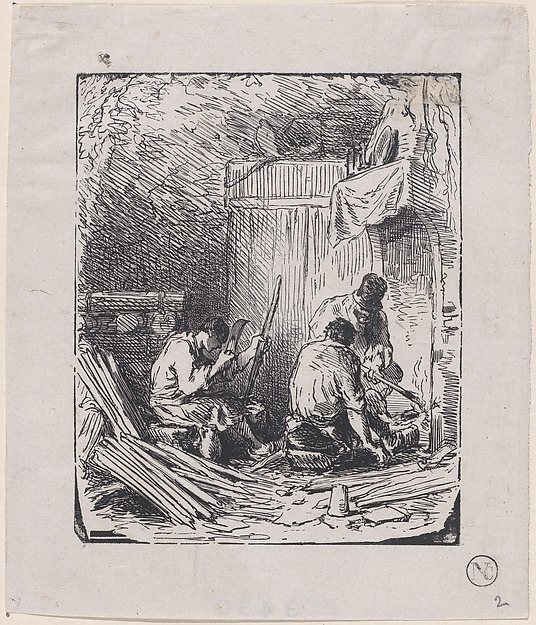 Jacques-Adrien Lavieille|Charles Jacque — Three men at work
 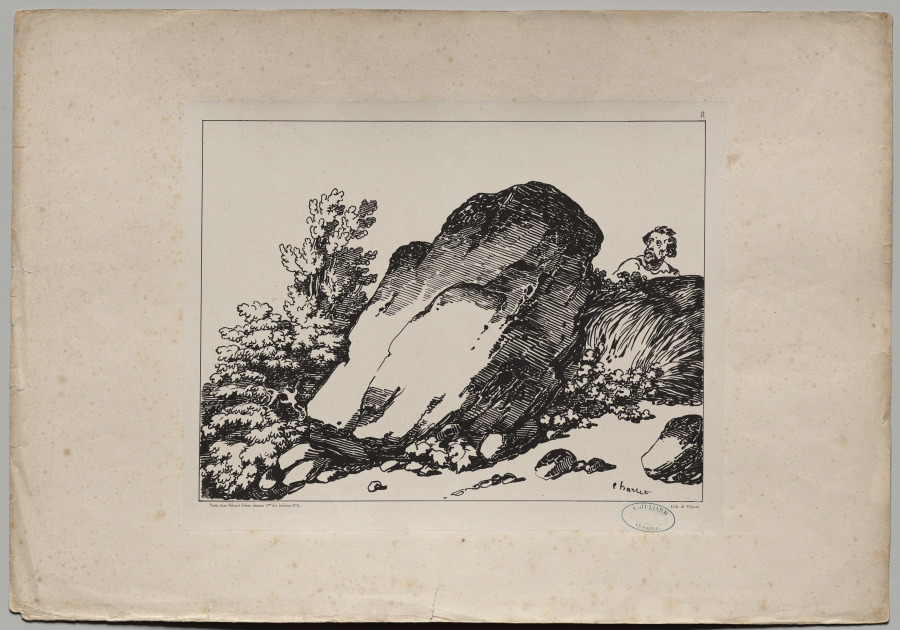 Nicolas Toussaint Charlet (French, 1792–1845) — Landscape wi
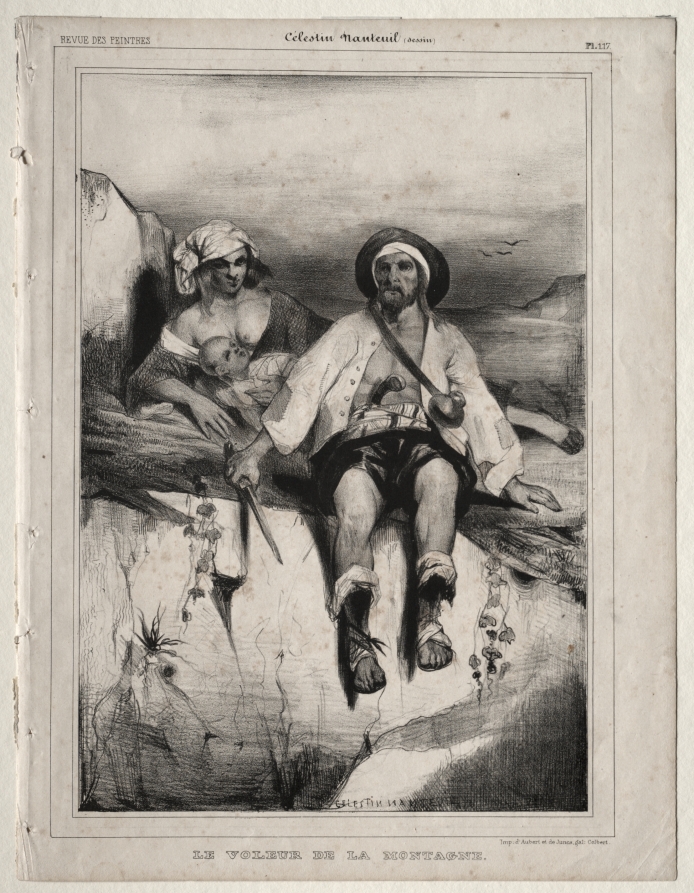 Célestin François Nanteuil (French, 1813–1873) — The Robber