Untitled (Married Couple)
SEE IT IN PERSON
Not currently on view
In the collection of Art Institute of Chicago, Chicago · as of July 2026
Discussion
FROM THE ART INSTITUTE OF CHICAGO’S CATALOG
The daguerreotype was invented in France in 1839 but gained its longest-lived popularity in America, where it was prized for its faithful detail and affordability. In the 1850s especially, millions of daguerreotypes were made by "operators" who rapidly learned the technique—involving copper plates coated in silver, each producing a unique image—to fulfill burgeoning demand for portraits. The seated elderly couple shown here holds a note identifying their ages and the occasion for the image, their 50th wedding anniversary: "70 years, 2 months, 20 days. / 68 years, 3 months, 21 days. / THANKS BE TO GOD: / Oct. 11th, 1802 Marriage Jubilee, Oct. 11th, 1852." Lateral reversal through the camera lens caused all writing in daguerreotypes to appear backwards, while the fineness of the metal plate gave jewel-like precision and great tonal range to the images. These qualities prompted viewers to nickname the daguerreotype "mirror with a memory."
Be the first to share your thoughts.
Sign in to join the discussion.
More by Unknown


![[Union Army Officer]](https://images.metmuseum.org/CRDImages/ph/web-large/DP257700.jpg)
More like this
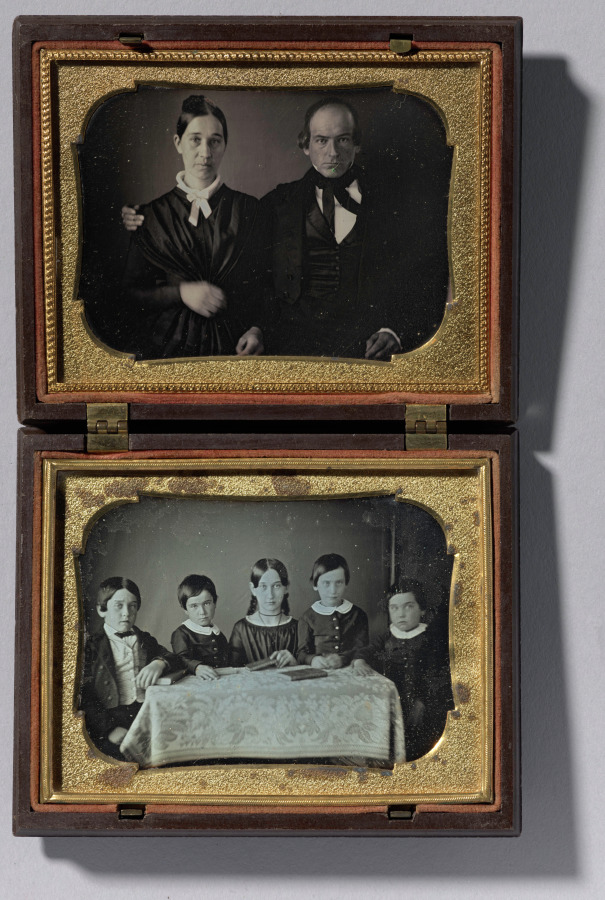 The Homework Table & Parents of Five Children Doing Homework
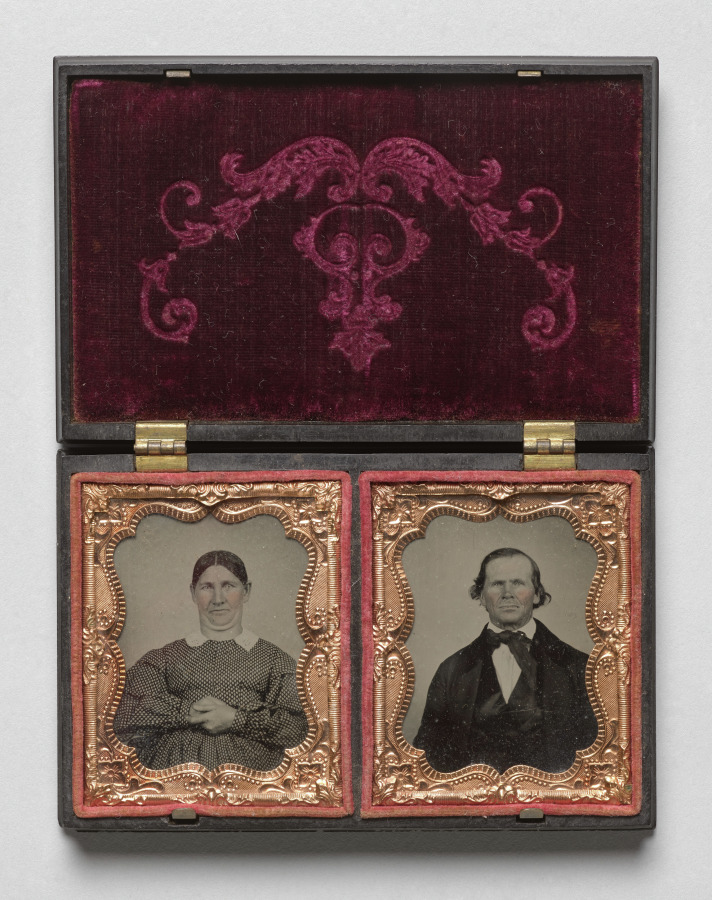 Husband and Wife
![[Pair of Portraits of Man and Woman (Husband and Wife?)]](https://images.metmuseum.org/CRDImages/ph/web-large/DP700063.jpg) Jeremiah Gurney — [Pair of Portraits of Man and Woman (Husba
Jeremiah Gurney — [Pair of Portraits of Man and Woman (Husba Unknown Maker — Untitled (Portrait of the Smith Family, New
  Rufus Bean — Untitled (Portrait of a Reclined Man on the lef
 Unknown Maker — Untitled (Portrait of Three Woman and a Man)
 James Preseley Ball — Untitled (Portrait of Man and Woman)
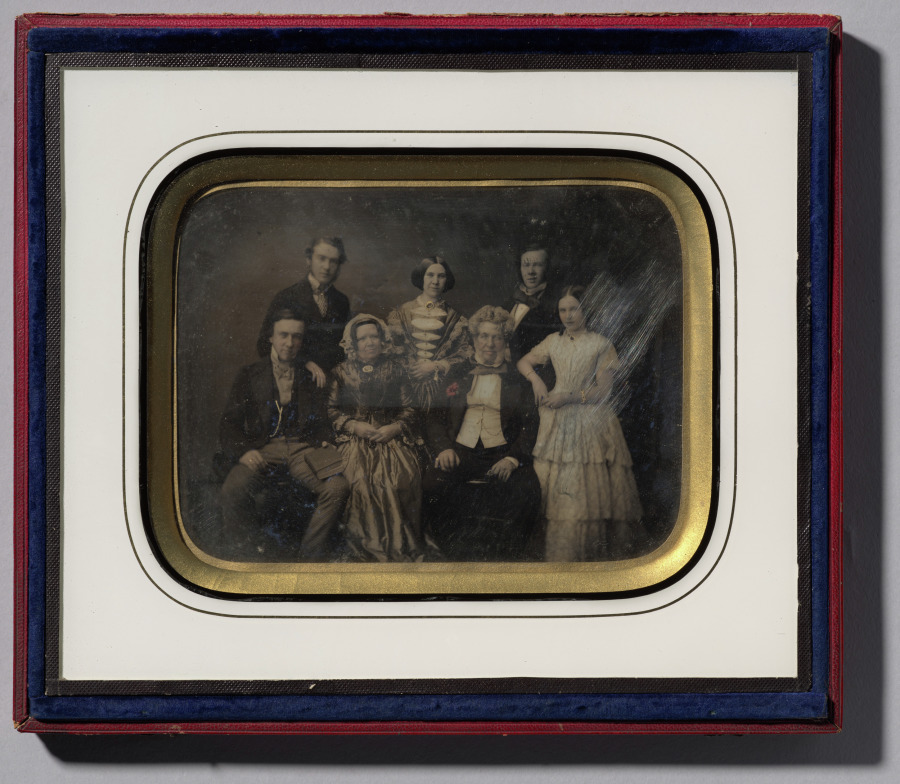 English family of seven
![[Young Man]](https://images.metmuseum.org/CRDImages/ph/web-large/DP700112.jpg) Knickerbocker Gallery — [Young Man]
Knickerbocker Gallery — [Young Man]![[Man Wearing Coat and Gloves, Holding Hat, Seated in Front of Painted Outdoor Backdrop]](https://images.metmuseum.org/CRDImages/ph/web-large/DP700138.jpg) Samuel Broadbent Jr. — [Man Wearing Coat and Gloves, Holding
Samuel Broadbent Jr. — [Man Wearing Coat and Gloves, Holding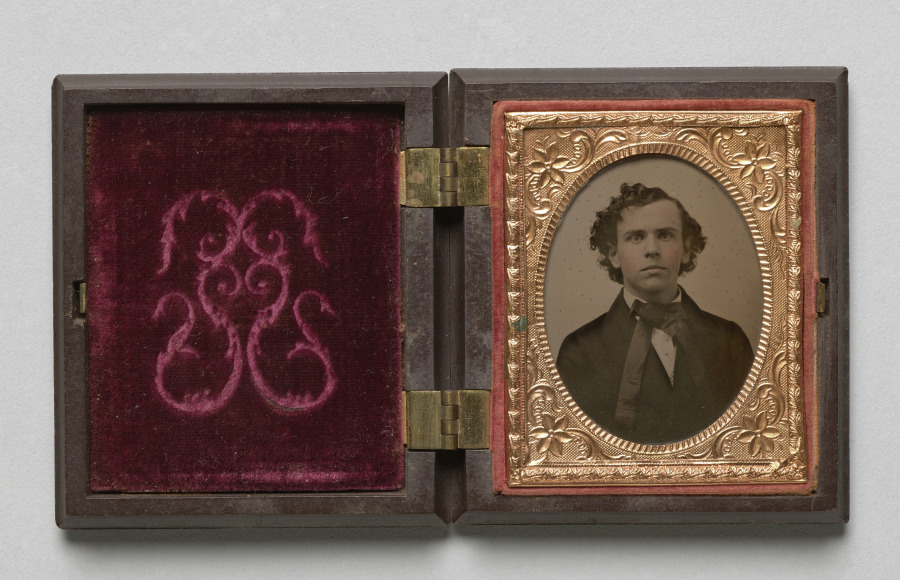 Portrait of a Young Man
 William Langenheim — Untitled (Portrait of David and Christi