Pietro Santi Bartoli|Giulio Romano

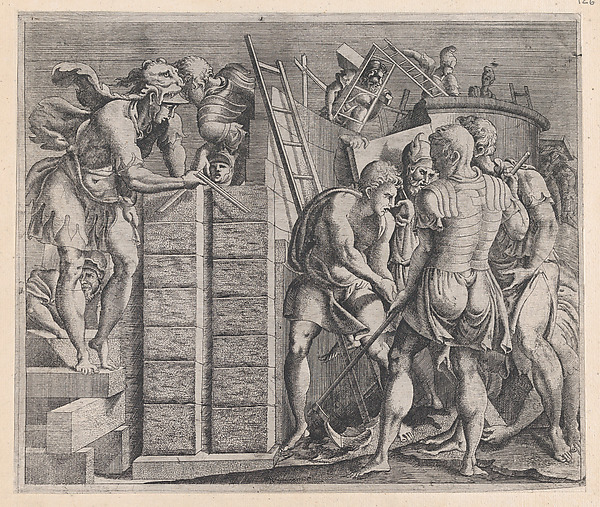
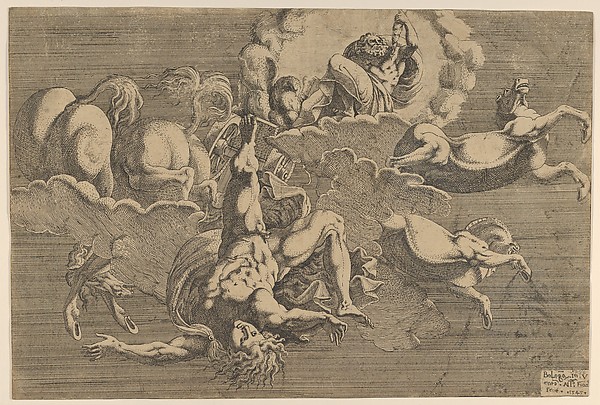
Giants crushed by rocks and the falling columns of the temple, clouds of smoke above, Poseidon in his chariot to left in the background, two spaces at left for doorways, from 'Giove che fulmina li giganti', after the frescoes on the ceiling of the Sala dei Giganti designed by Giulio Romano for the Palazzo del Te, Mantua

ca. 1680
Etching
19.2 × 28.5 cm (7.6 × 11.2 in)

SEE IT IN PERSON

Not currently on view

In the collection of The Metropolitan Museum of Art, New York · as of July 2026

View at metmuseum.orgPlan a visit ↗

Discussion

Be the first to share your thoughts.

Sign in to join the discussion.
Community guidelines

More by Pietro Santi Bartoli|Giulio Romano

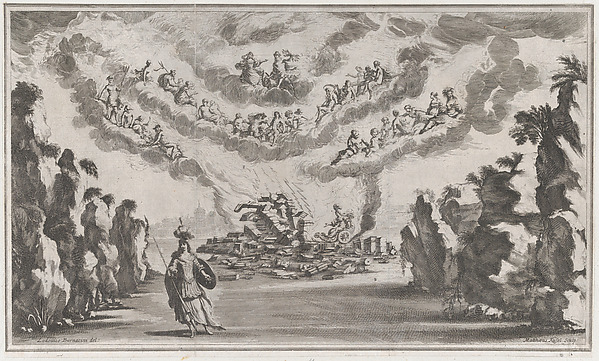
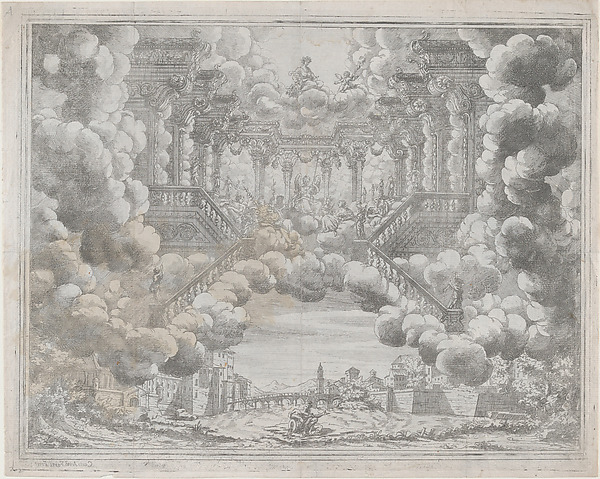
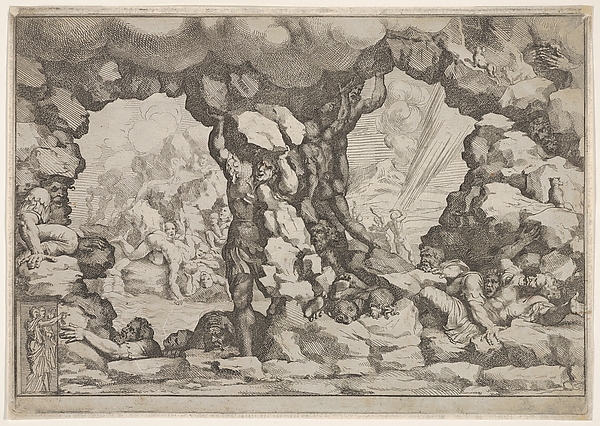
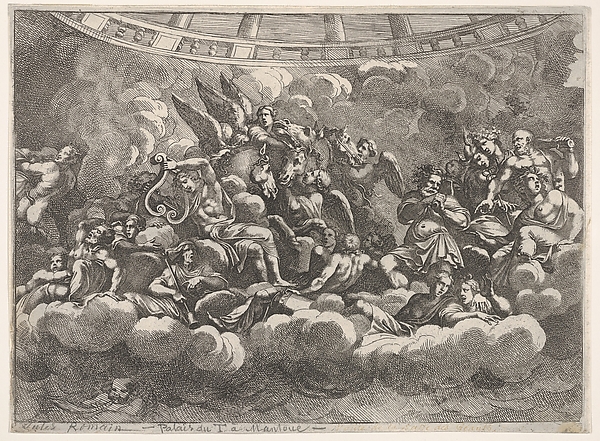
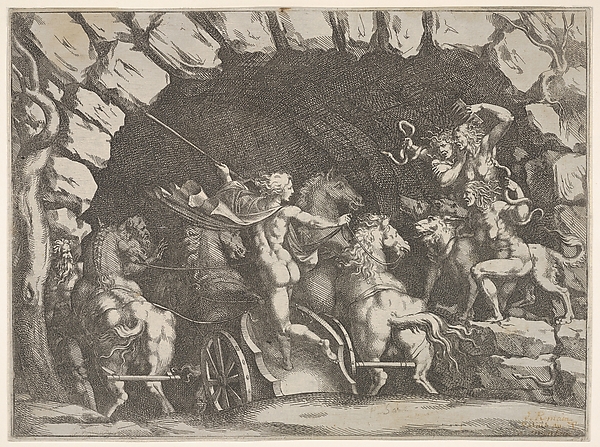
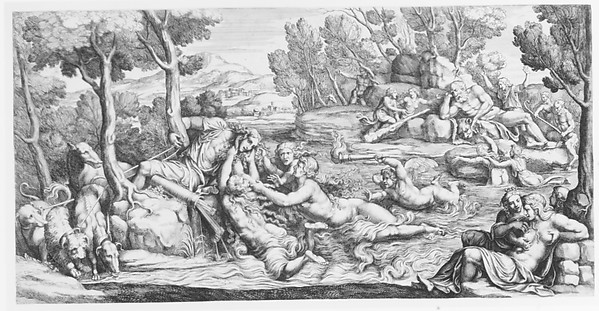
A giant heaving a boulder at center, other giants to left and right struggling and recoiling against impending boulders, nude figures climbing rocks and struggling in the background, from 'Giove che fulmina li giganti', after the frescoes on the ceiling of the Sala dei Giganti designed by Giulio Romano for the Palazzo del Te, MantuaA giant heaving a boulder at center, other giants to left anGathering of various Olympian gods and mythological figures among clouds, Apollo at center with his lyre, Vulcan, Mercury, Hercules, and Hermes to right, various figures below, horses and attendants behind in center, from 'Giove che fulmina li giganti', after the frescoes on the ceiling of the Sala dei Giganti designed by Giulio Romano for the Palazzo del Te, MantuaGathering of various Olympian gods and mythological figures Pluto, seen from behind, entering the Underwold on his chairot, Cereberus and three Furies to right, from 'Giove che fulmina li giganti', after the frescoes on the ceiling of the Sala dei Giganti designed by Giulio Romano for the Palazzo del Te, MantuaPluto, seen from behind, entering the Underwold on his chairHylas and the Water NymphsHylas and the Water Nymphs

More like this

The Fall of PhaetonAntonio Fantuzzi|Francesco Primaticcio — The Fall of PhaetonPlate 26, from Landscapes with Scenes from the Old and New Testament and Ovid’s MetamorphosesHans Bol — Plate 26, from Landscapes with Scenes from the OlSpeculum Romanae Magnificentiae: Romulus and Remus Building the Walls of RomeAnonymous, French, School of Fontainebleau, 16th century|FraLeopold I of Austria as Jupiter with his wife enthroned in the clouds, looking down on the struggling giants belowMathäus Küsel|Mauro Oddi — Leopold I of Austria as Jupiter wHercules strangling the serpents: Hercules grasps two serpents in his crib, Juno points toward the serpents from a mass of cloud at right, from the series 'The Labors of Hercules'Antonio Tempesta — Hercules strangling the serpents: HerculeThe Trojans Bring the Wooden Horse into Their CityJean Mignon|Luca Penni — The Trojans Bring the Wooden Horse A shore framed by rocks, with Neptune in his chariot on the left and Salacia in hers on the right; at center, a ship caught in a storm; set design from 'Il Pomo D'Oro'Ludovico Ottaviano Burnacini|Mathäus Küsel — A shore framed Cain holding a mirror watching his sacrifice engulfed in flames, Adam and Eve seated nearby; in the upper right an angel expelling them from ParadiseAntonio Veneziano|Giulio Bonasone|Amico Aspertini — Cain holPlate 2 [counterproof]: Stage set with allegorical figures seated among the clouds, with a large colonnade in the background; from Aurelio Aureli, 'Il Favore De Gli Dei'Domenico Mauro|Aurelio Aureli|Gianantonio Lorenzini — Plate Speculum Romanae Magnificentiae: Naval BattleMichele Lucchese|Polidoro da Caravaggio — Speculum Romanae MThe "Quos Ego"Simone Cantarini (Italian, 1612–1648) — The "Quos Ego"A woman in a chariot arrives at the ruins of a building as the Olympian gods look down from above, in the foreground stands an armed female figure; set design from 'Il Pomo D'Oro'Ludovico Ottaviano Burnacini|Mathäus Küsel — A woman in a ch