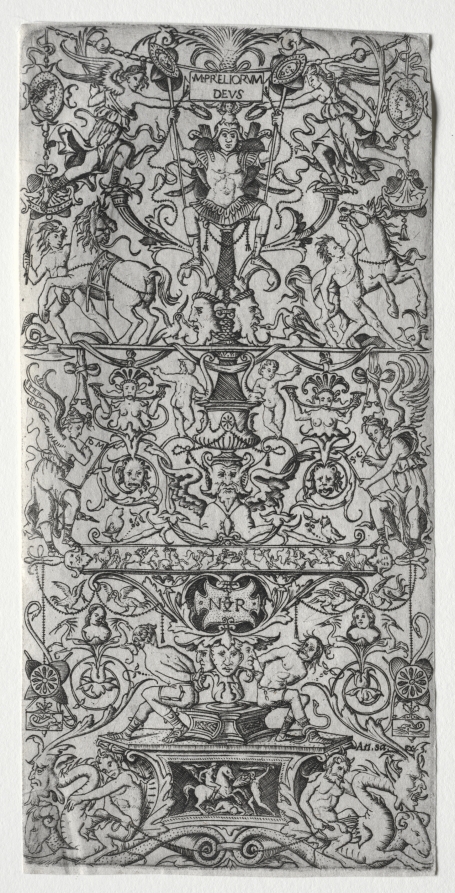
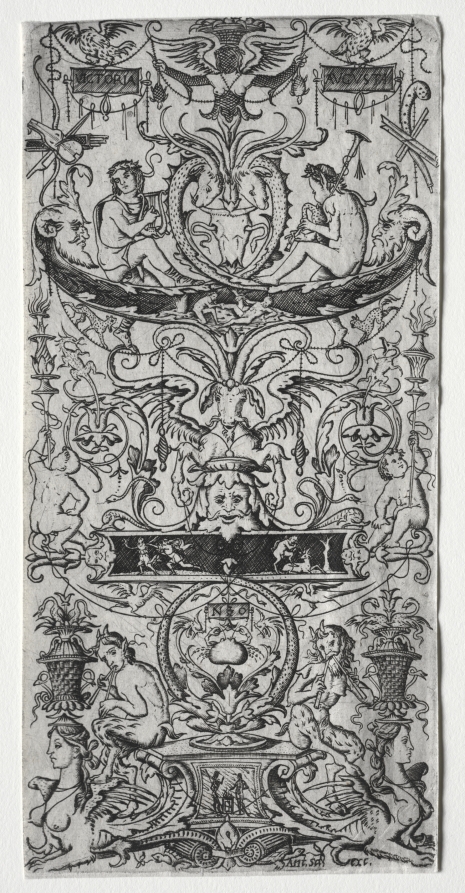
Ornament Panel with Mars, God of Battles
c. 1507
Engraving on ivory laid paper
26.4 × 12.8 cm (10.4 × 5 in)
SEE IT IN PERSON
● On view now — Gallery 204
Art Institute of Chicago, Chicago · verified July 2026
Discussion
FROM THE ART INSTITUTE OF CHICAGO’S CATALOG
This ornamental image consisting of loosely connected motifs is part of a series of four grotteschi . The grotesque style became popular in Rome in the late 15th century. Its name comes from the word grotto , used to describe the wall decorations on the Golden House of the Roman emperor Nero, which had only recently been rediscovered underground. This work combines symbols of warfare and triumph. Mars, the Roman god of war, is crowned with wreaths by winged Victories. Captives, armor, and satyrs also decorate the sheet.
Be the first to share your thoughts.
Sign in to join the discussion.
More by Nicoletto da Modena
 The Nativity and the Adoration of the Shepherds
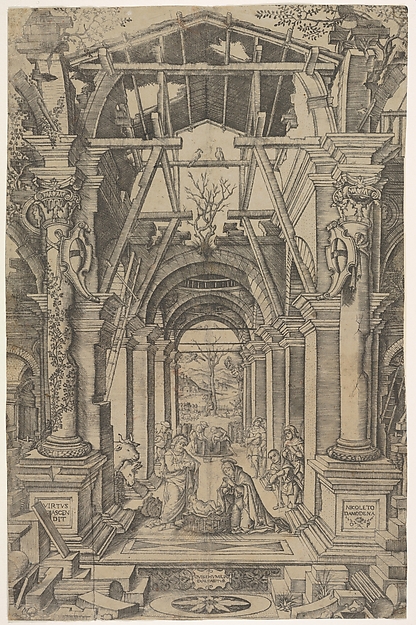 The Nativity and Adoration of the Shepherds
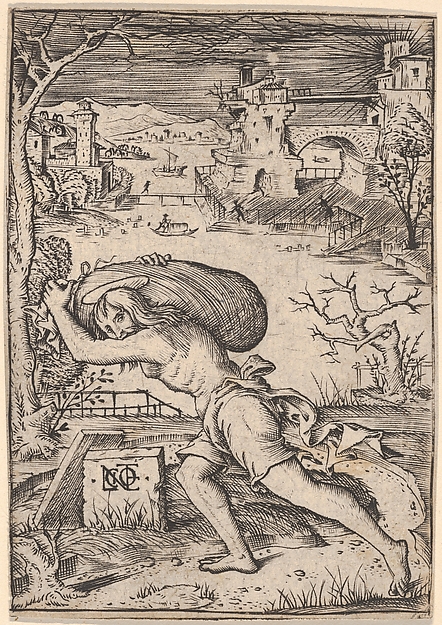 A man carrying sack striding to the left
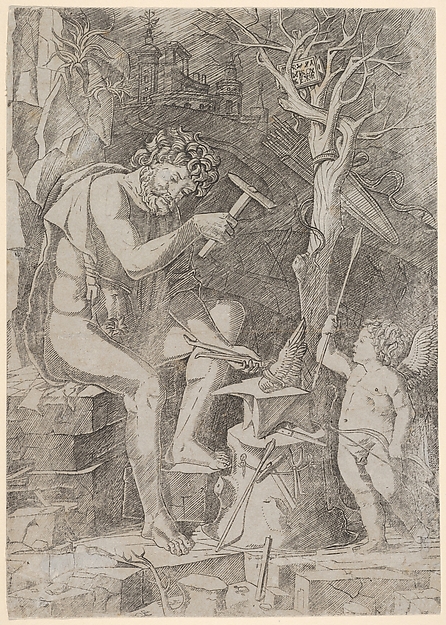 Vulcan seated forging Cupid's wing
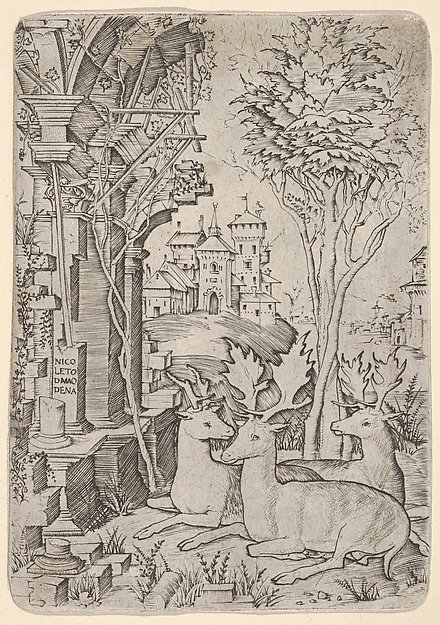 Three Stags, sitting in the ground, buildings in background
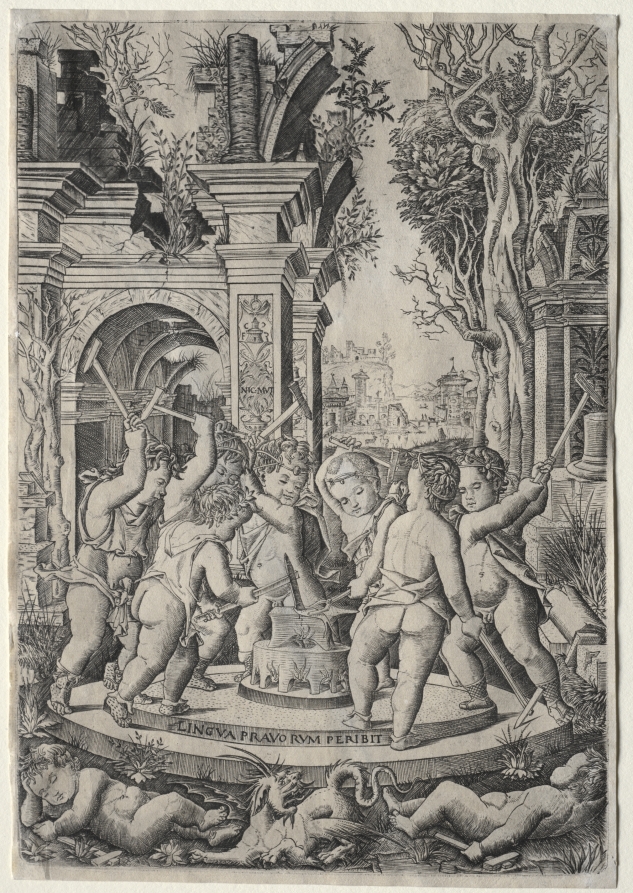 The Fate of the Evil Tongue
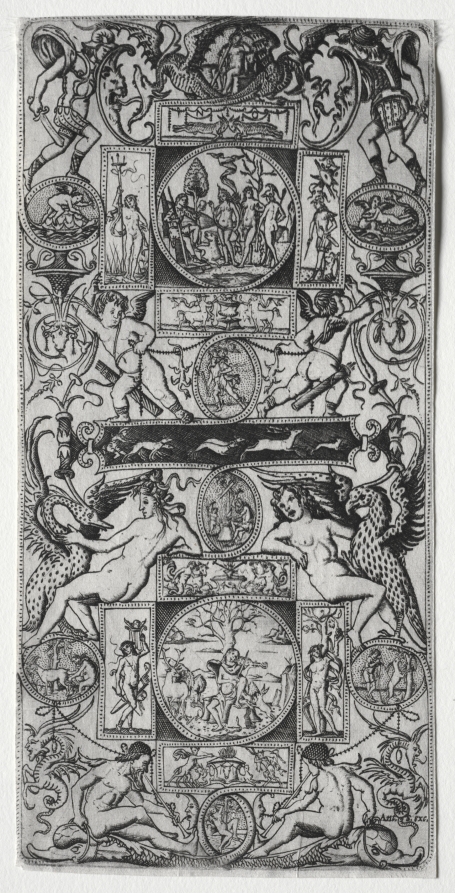 Orpheus and the Judgment of Paris
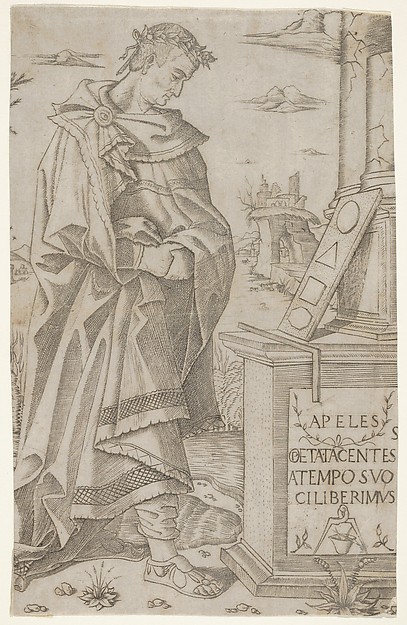 Apelles standing profile looking at a tablet of geometric fi
More like this
 Nicoletto da Modena (Italian, active c. 1500–1520) — Ornamen
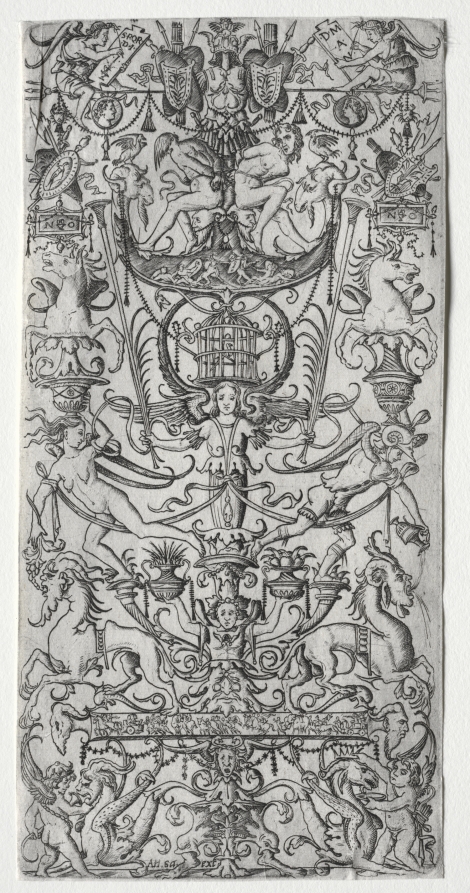
 Nicoletto da Modena (Italian, active c. 1500–1520) — Ornamen
 Nicoletto da Modena (Italian, active c. 1500–1520) — Ornamen
 Jacques Androuet Du Cerceau|Nicoletto da Modena — Grotesque
  Daniel Hopfer, I — Ornament with Arabesques
 Giovanni Antonio da Brescia — Griffins and Two Cupids CrossiNicoletto da Modena (Italian, active c. 1500–1520) — Orpheus
 Nicoletto da Modena (Italian, active c. 1500–1520) — Panel o
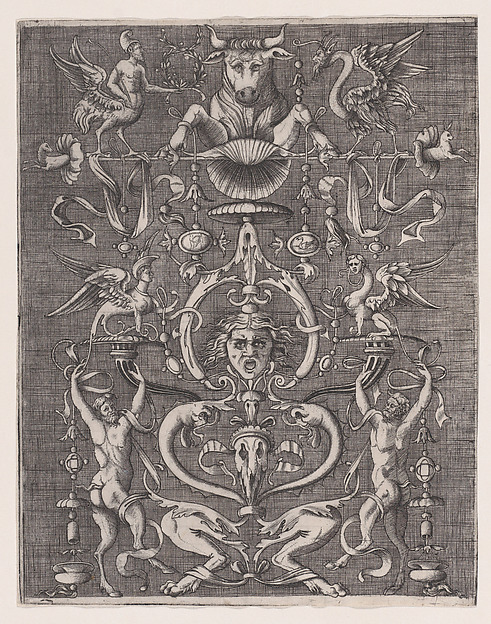 Anonymous, Italian, 16th to early 17th century|Agostino Vene
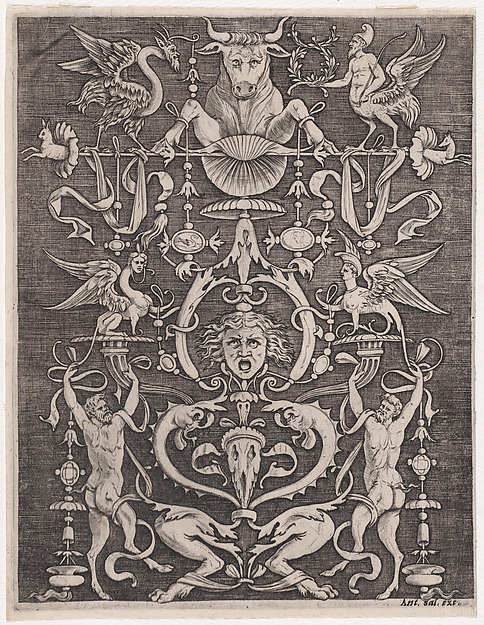 Agostino Veneziano (Agostino dei Musi) — Ornamental Panel
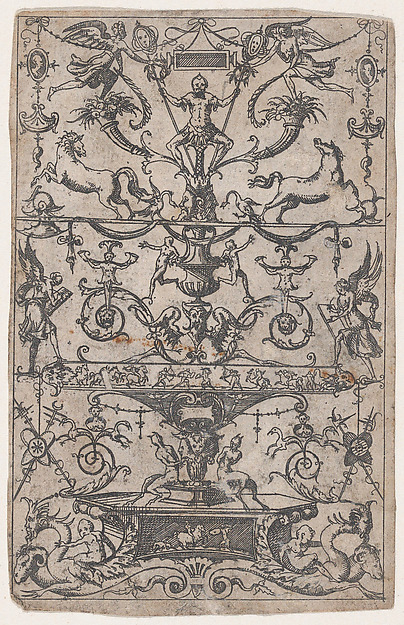 Jacques Androuet Du Cerceau — Panel of Grotesques
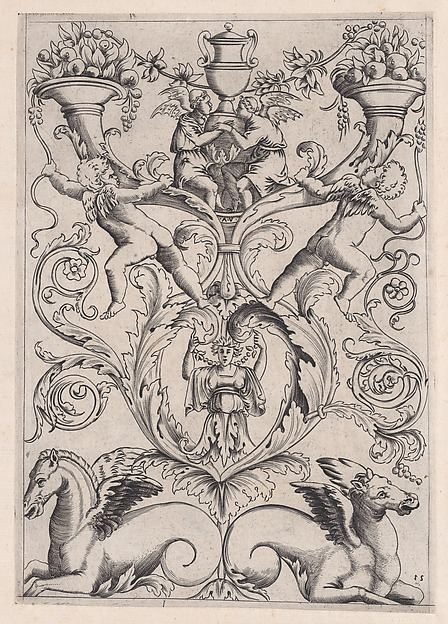 Agostino Veneziano (Agostino dei Musi)|Raphael (Raffaello Sa