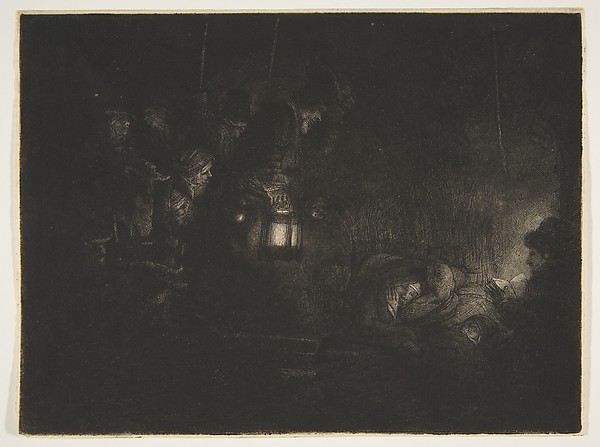
The Adoration of the Shepherds: A Night Piece
SEE IT IN PERSON
Not currently on view
In the collection of Art Institute of Chicago, Chicago · as of July 2026
Discussion
FROM THE ART INSTITUTE OF CHICAGO’S CATALOG
Rembrandt was printing mezzotint-like prints before the medium existed. Ludwig von Siegen’s invention of mezzotint engraving may even owe something to his encounter with Rembrandt’s prints during a pivotal 1642 visit to Amsterdam. Several of Rembrandt’s works dating from the 1650s—when few were familiar with the mezzotint process—were traditionally called “dark manner” or “night pieces.” In this unusually nocturnal Adoration , tardy shepherds arouse the Holy Family. The mezzotint process was an important part of Rembrandt’s career: copies of Rembrandt’s prints were made entirely in mezzotint, occasionally his drypoint lines were refreshed using mezzotint effects, and some of his plates were finished posthumously by other hands using the method.
Be the first to share your thoughts.
Sign in to join the discussion.
More by Rembrandt van Rijn


More like this
 Rembrandt (Rembrandt van Rijn) — Adoration of the Shepherds:
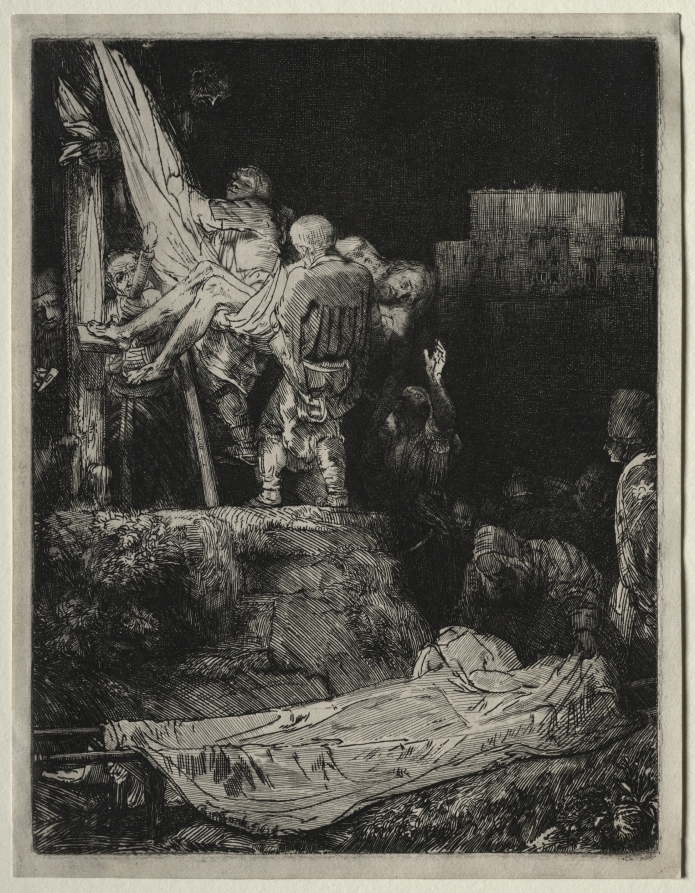 Rembrandt van Rijn (Dutch, 1606–1669) — The Descent from the
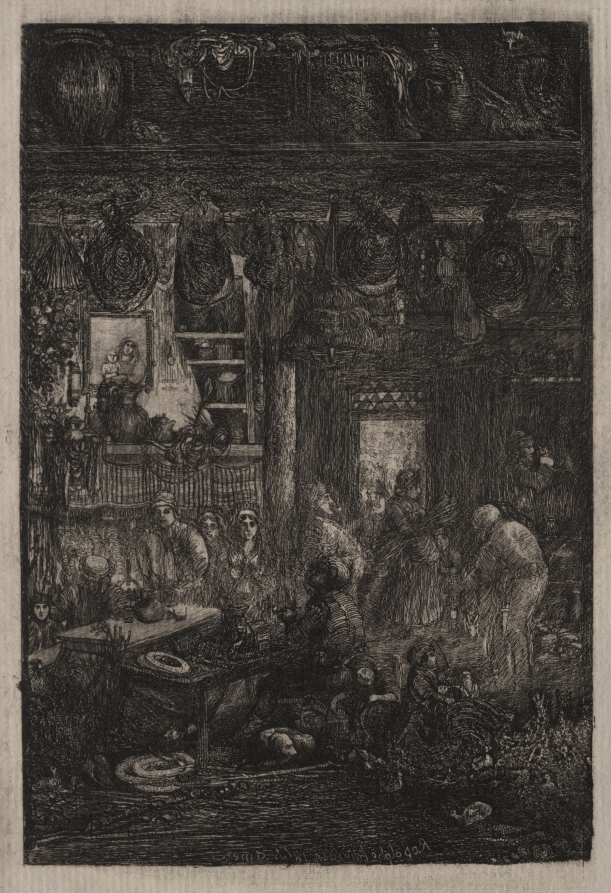 Rodolphe Bresdin (French, 1822–1885) — Moldavian Interior
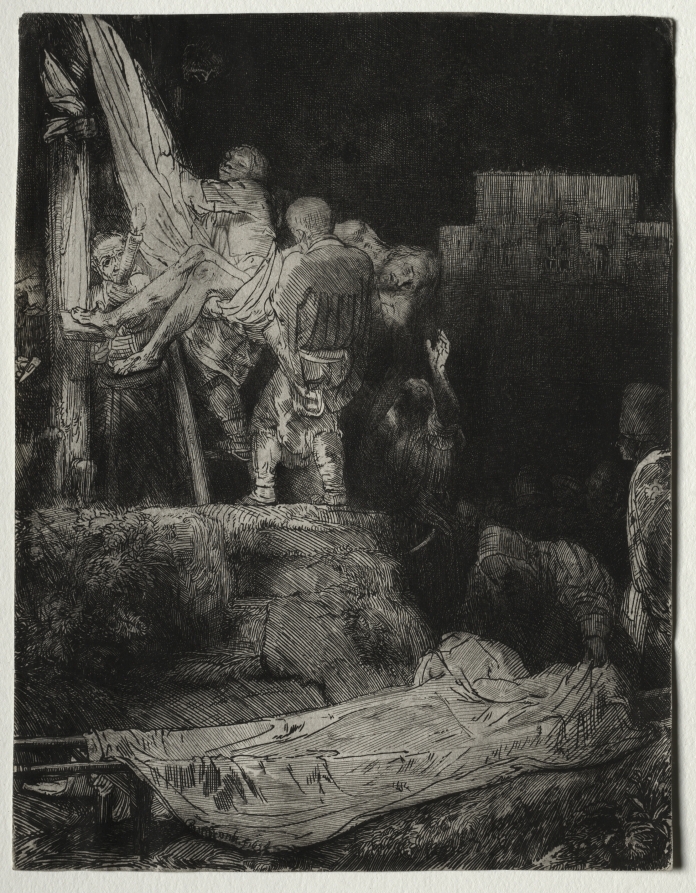 Rembrandt van Rijn (Dutch, 1606–1669) — The Descent from the
 Charles François Daubigny — The Search for an Inn
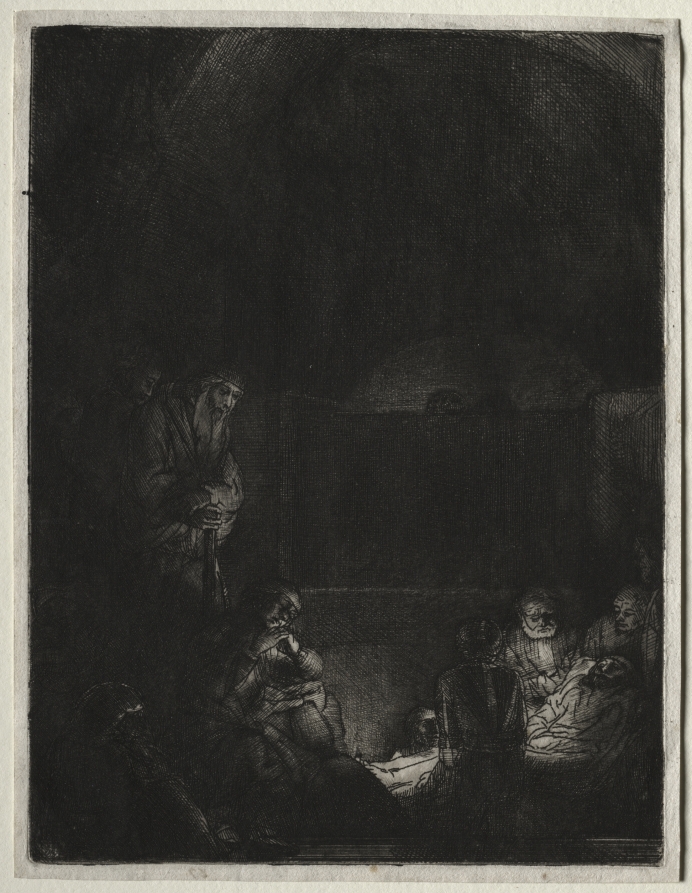 Rembrandt van Rijn (Dutch, 1606–1669) — The Entombment
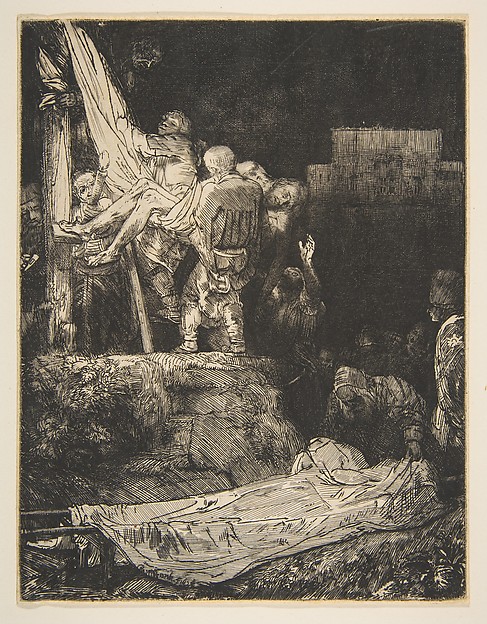 Rembrandt (Rembrandt van Rijn) — Descent from the Cross by T
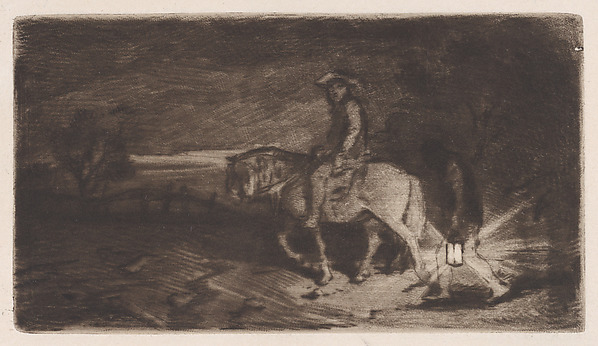 Charles Jacque — The Cavalier
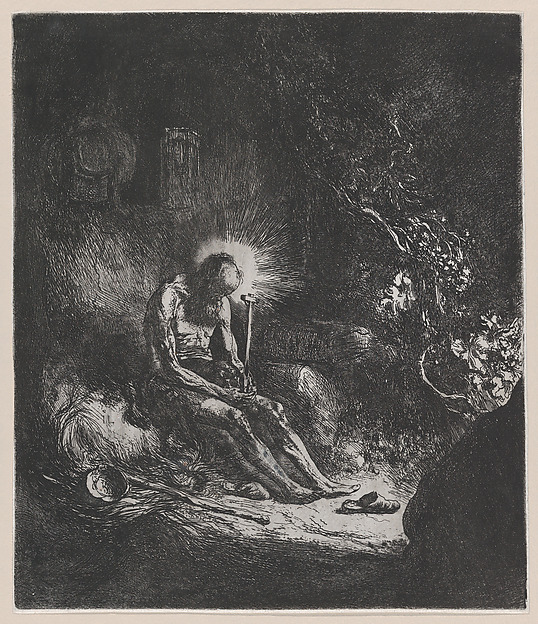 Jan Lievens — St. Jerome
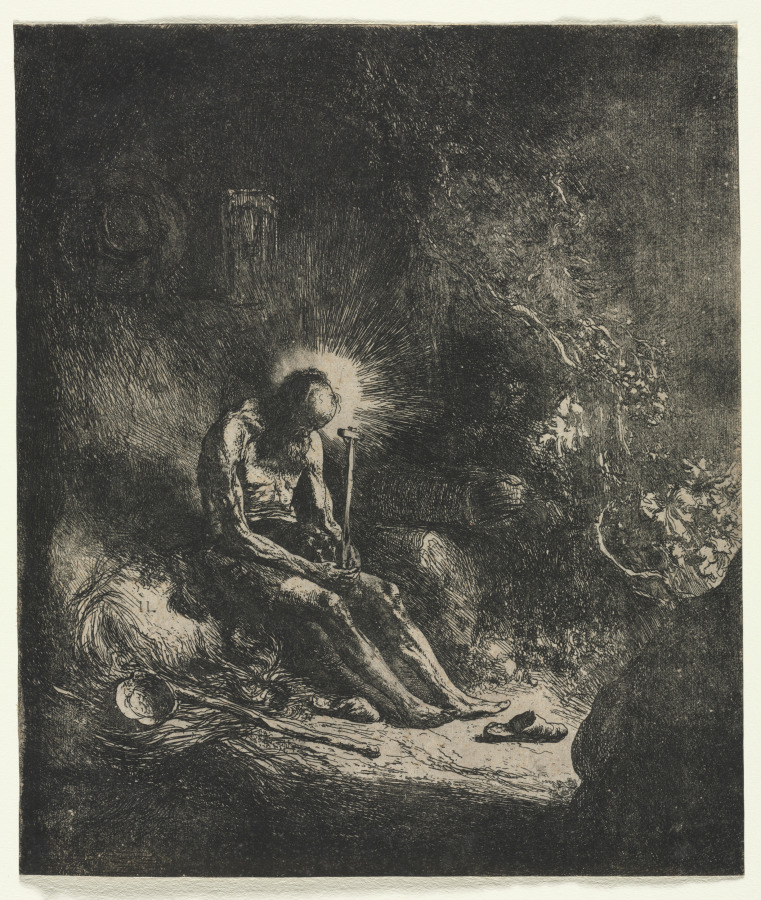 Jan Lievens (Dutch, 1607–1674) — St. Jerome
 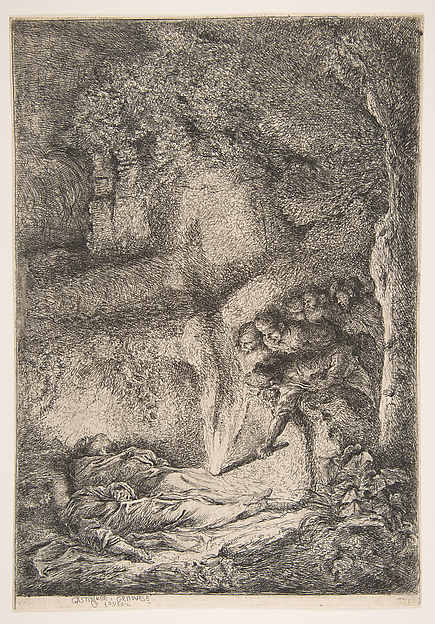 Giovanni Benedetto Castiglione (Il Grechetto) — Finding of t
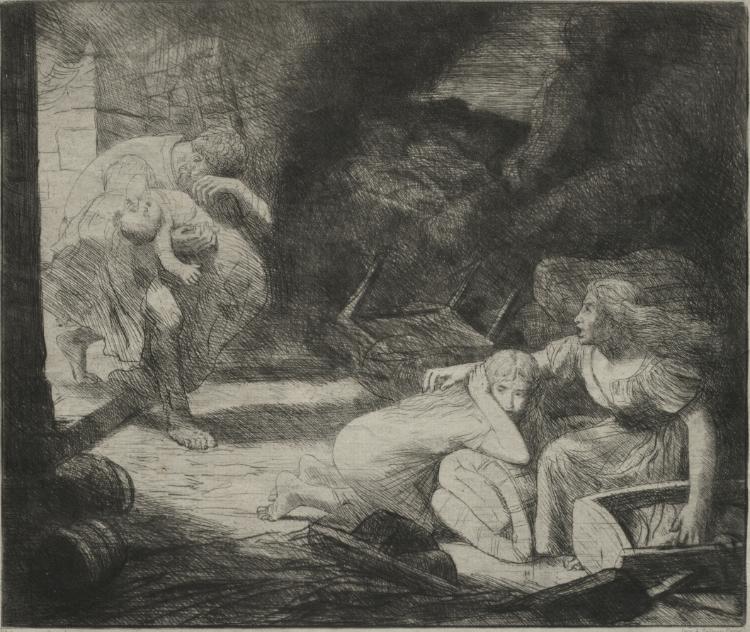 Alphonse Legros (French, 1837–1911) — L'Incendie