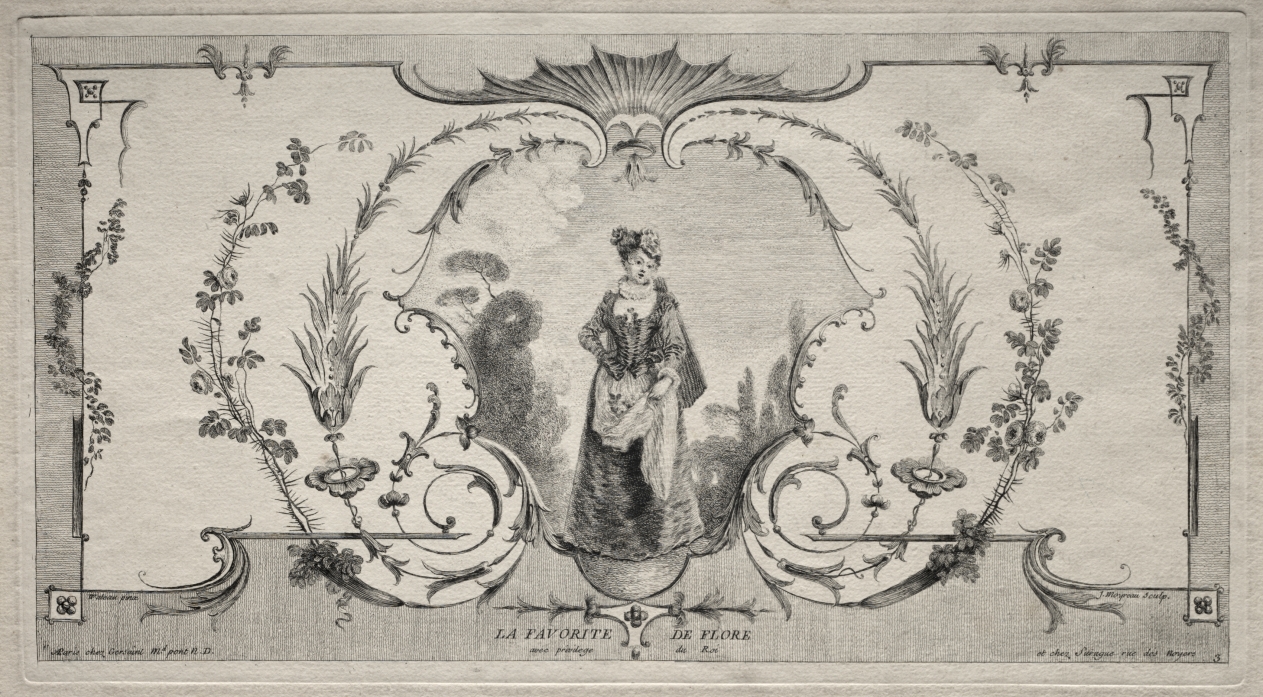
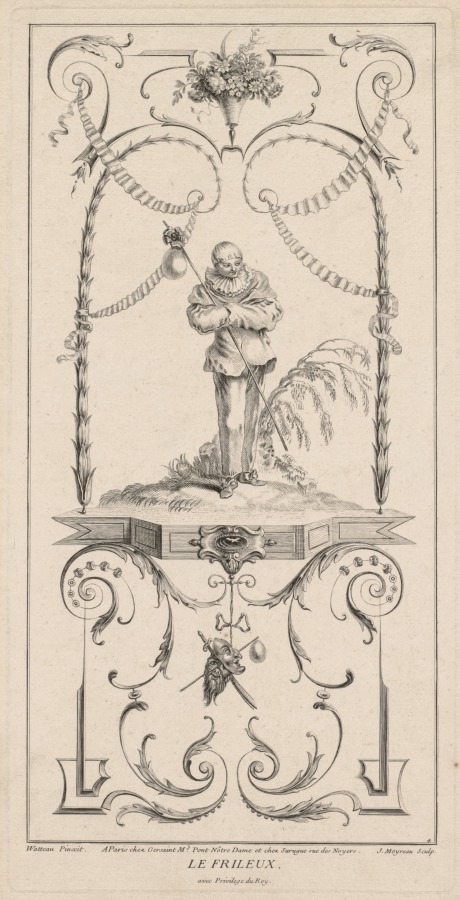
In the collection of Cleveland Museum of Art, Cleveland — check current display status with the museum.
FROM THE CLEVELAND MUSEUM OF ART’S CATALOG
Arabesques (decorations with curves and tendrils inspired by plant forms) were in vogue in 18th-century France. Watteau (1684-1721) produced arabesques for the ornamentation of walls, paneling, furniture, and ceilings. He depicted popular motifs, such as the elegant courtship in an idyllic outdoor setting pictured in The Gallant, shown nearby, or as in Columbine and Harlequin, two characters from productions of the Commedia dell'arte, an Italian comic theater. Watteau launched a trend for the exotic scenes found on imported Chinese porcelains and lacquer ware about 1707. The parasol in The Gallant, and the Asian face that smiles down from the top of Columbine and Harlequin, are examples of chinoiserie, the playful imitation of Chinese art.
Be the first to share your thoughts.
Sign in to join the discussion.
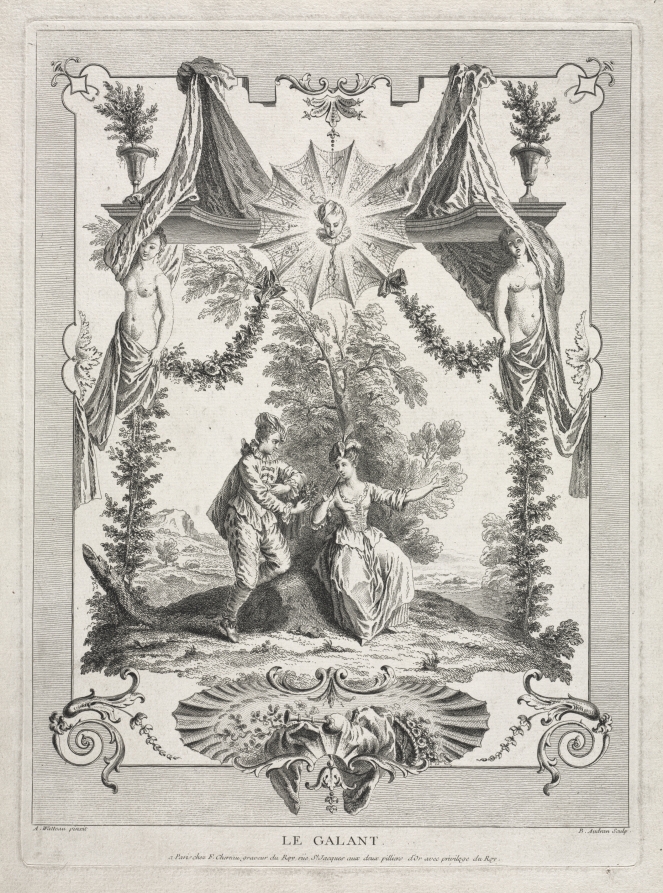 Benoit II Audran (French, 1700–1772) — The Gallant
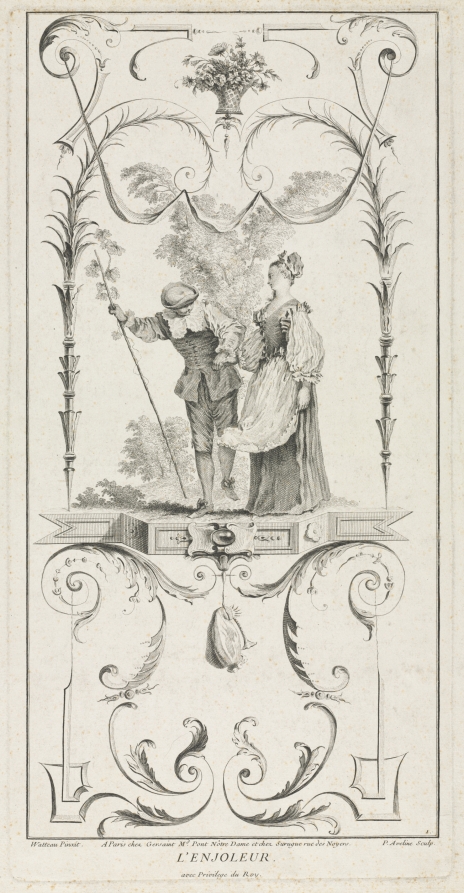 Pierre Alexandre Aveline (French, 1710–1760) — The Coaxer, A
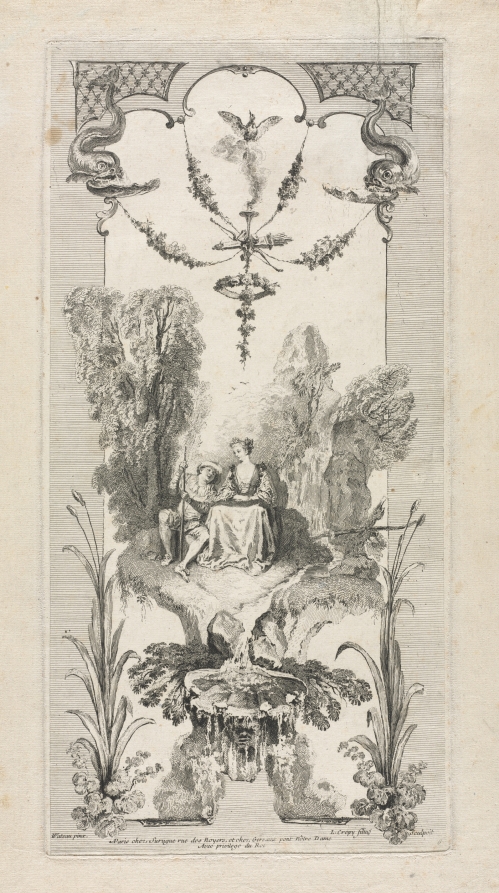 Louis Crépy (French) — Pastoral, Arabesque
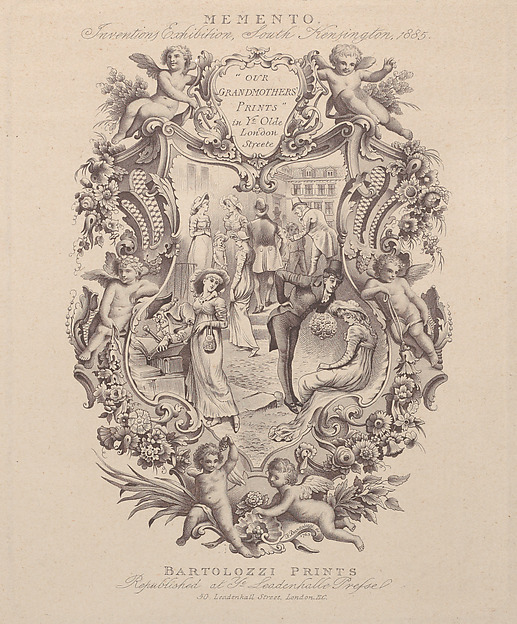 Francesco Bartolozzi — Advertisement for Memento, Inventions
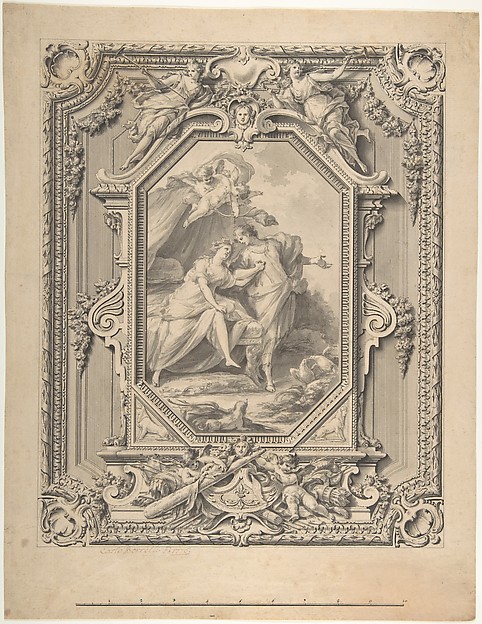 Carlo Borrelli (Ponticelli) — Design for a Sculptured Frame
 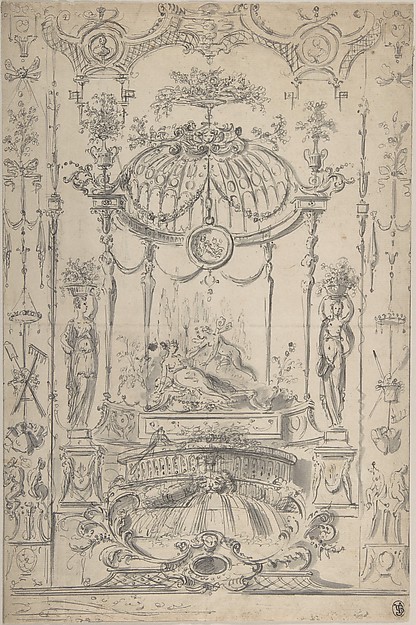 Claude Gillot — Design for an Arabesque with Cupid and Psych
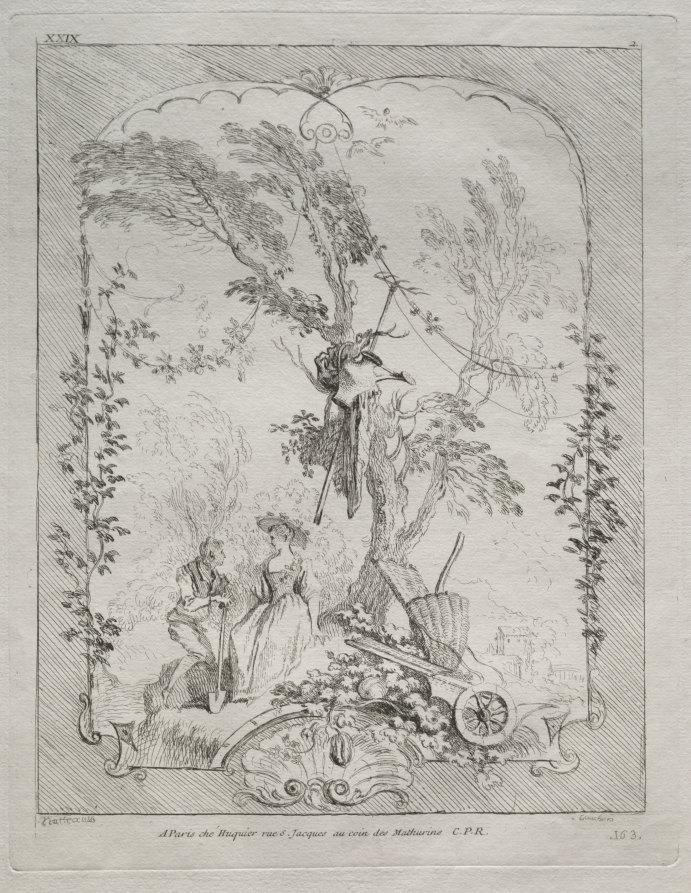 François Boucher (French, 1703–1770) — The Proposal
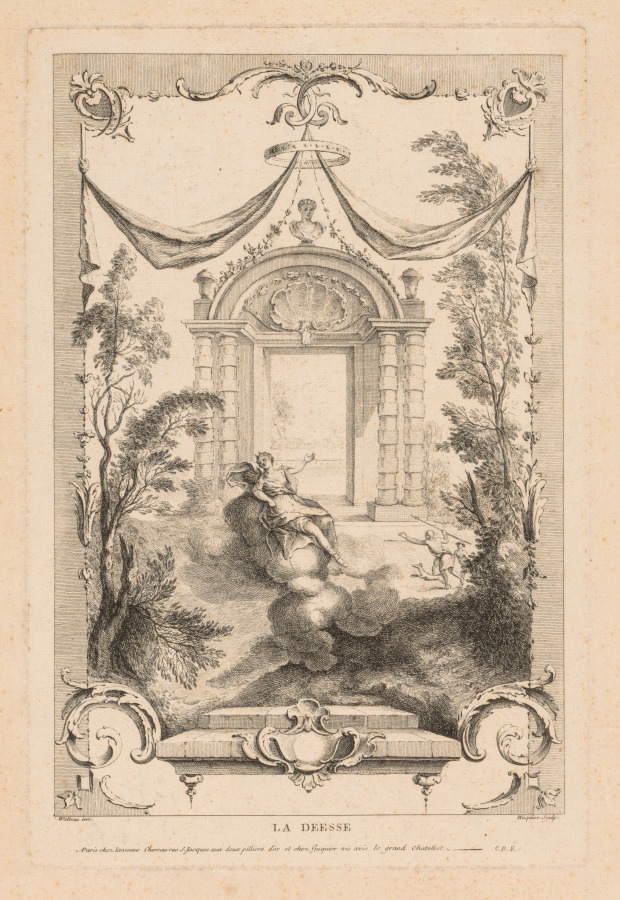 Gabriel Huquier (French, 1695–1772) — The Goddess, Diana on
 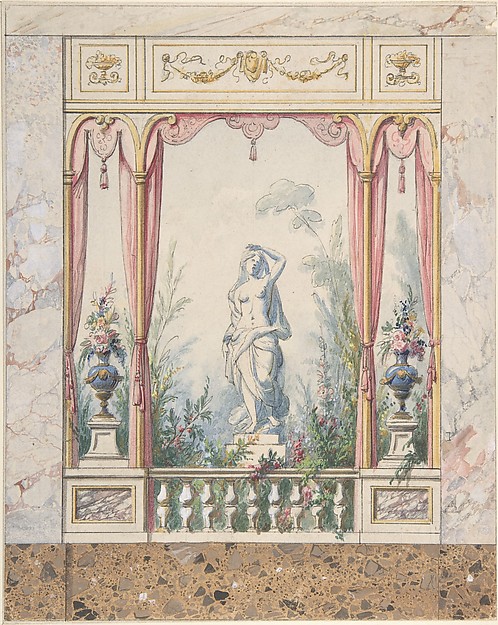 Anonymous, Italian, early 19th century — Design for an Inter
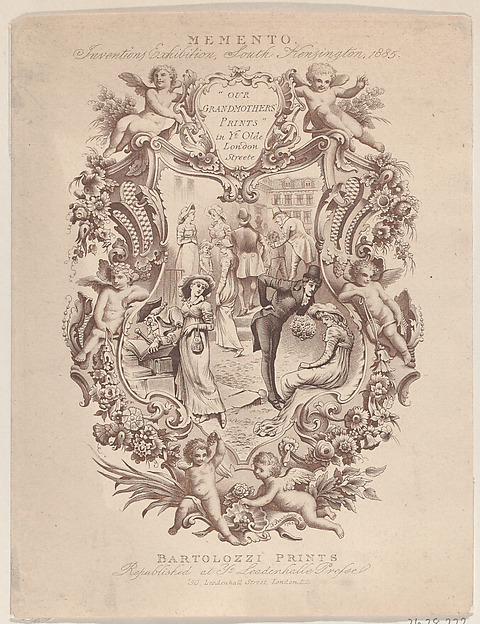 Francesco Bartolozzi — Advertisement for Memento, Inventions
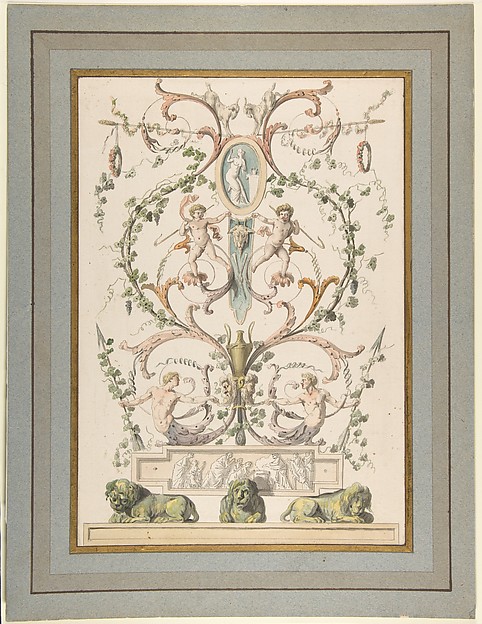 Etienne de Lavallée-Poussin — Design for an Arabesque
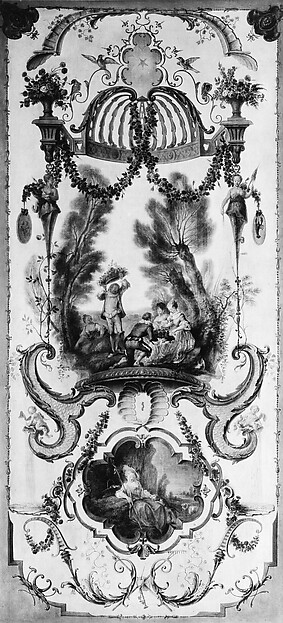 Antoine Watteau — May and June (part of a set illustrating t