FROM THE CLEVELAND MUSEUM OF ART’S CATALOG
Fire sacrifice was central to the Indo-European people who entered the Indian subcontinent as early as 1800 BC. Only Brahmins, a social class of priests, had access to the sacred texts called the Vedas, which explained the meaning and process of the fire sacrifice, considered by orthodox Hindus as a way to communicate with the gods. A king named Drupada in ancient India sponsored this fire sacrifice in order to generate a powerful warrior who would be able to slay the enemy who took half his kingdom. Seated around an altar in the sacrificial enclosure, Brahmins pour oblations into the fire and recite the prayers necessary to generate the divine warrior Dhrishtadyumna, shown here in full battle armor at birth. The inscription below gives the title and the name of the artist, Habshi, which means “Ethiopian,” suggesting the presence of Africans in the royal Mughal workshop. The story of how the warrior Dhrishtadyumna was generated from the fire sacrifice is written on this page. When King Drupada lost half his kingdom to a military master named Drona, he needed a gift from the gods to defeat him: a new warrior born to accomplish this mission. In order to obtain this gift, King Drupada
Source ↗︎
Be the first to share your thoughts.
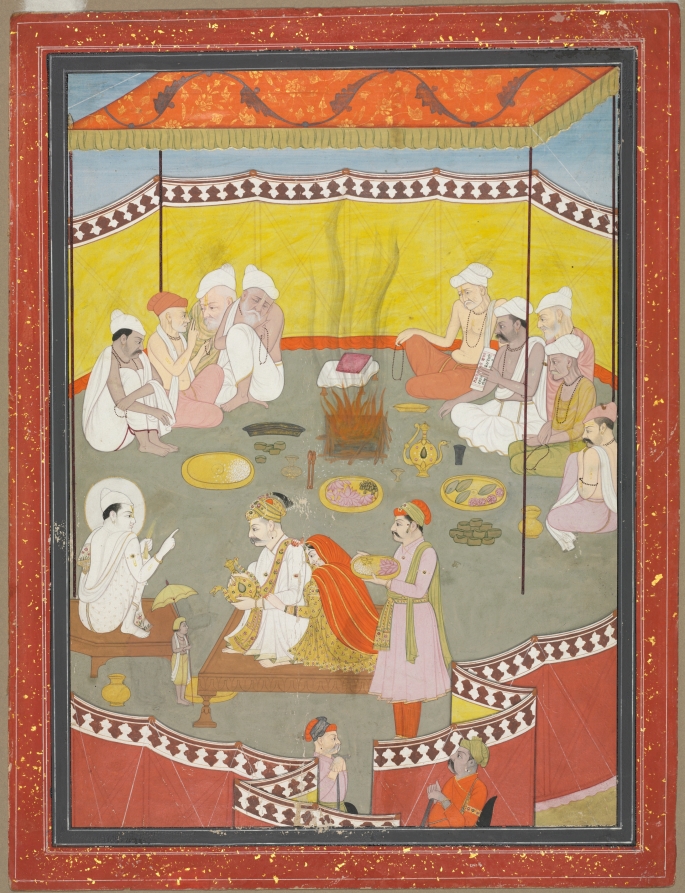 King Bali gives a gift of land to Vamana
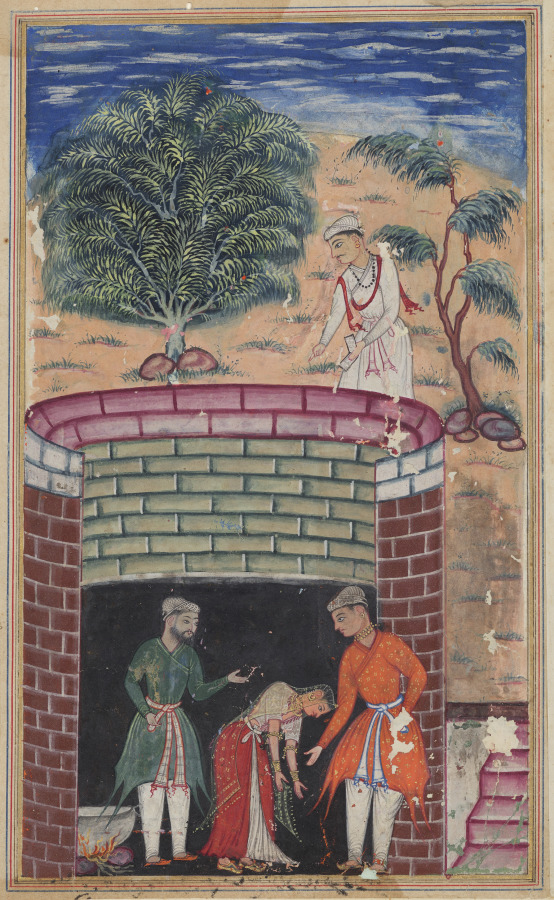 The daughter of the king of the jinns bows before the King o
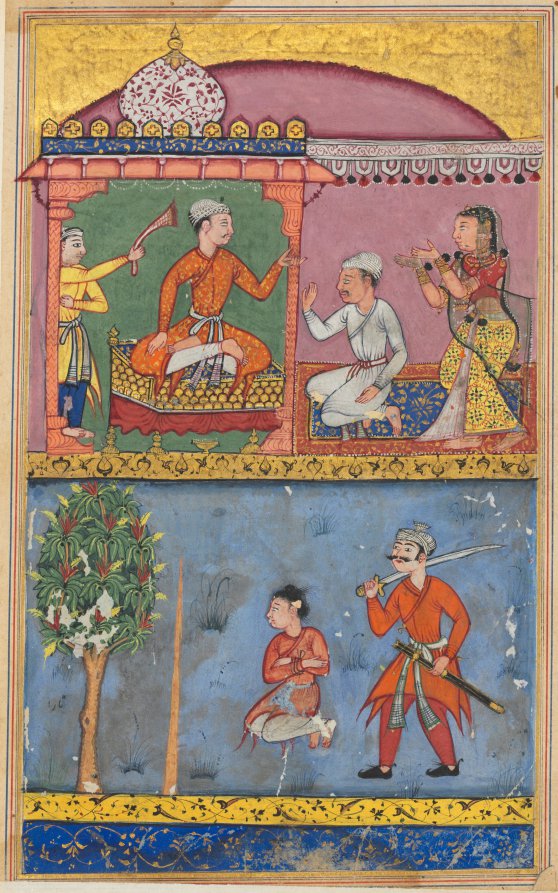 Tara 2 (Indian, active 1550s-1590s) — The handmaiden appeals
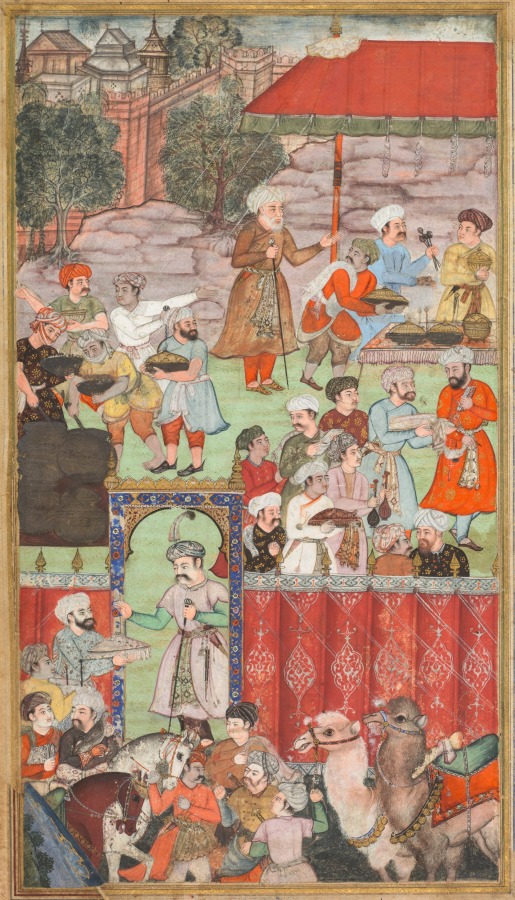 Basavana (Indian, active c. 1560–1600) — A feast for Babur h
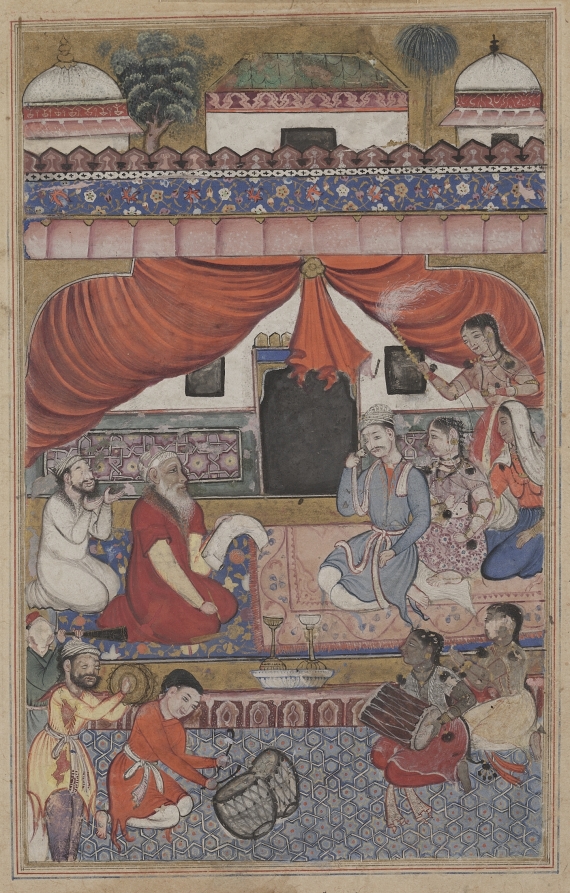 Preparation for the marriage of Mahmuda to the Young Vizier,
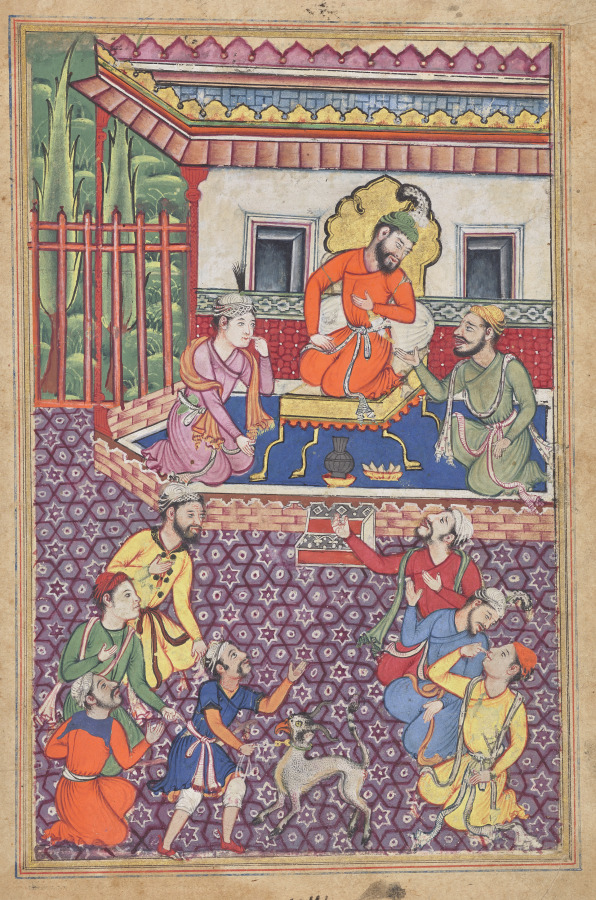 The court of the Raja of Ujjain, from a Tuti-nama (Tales of
 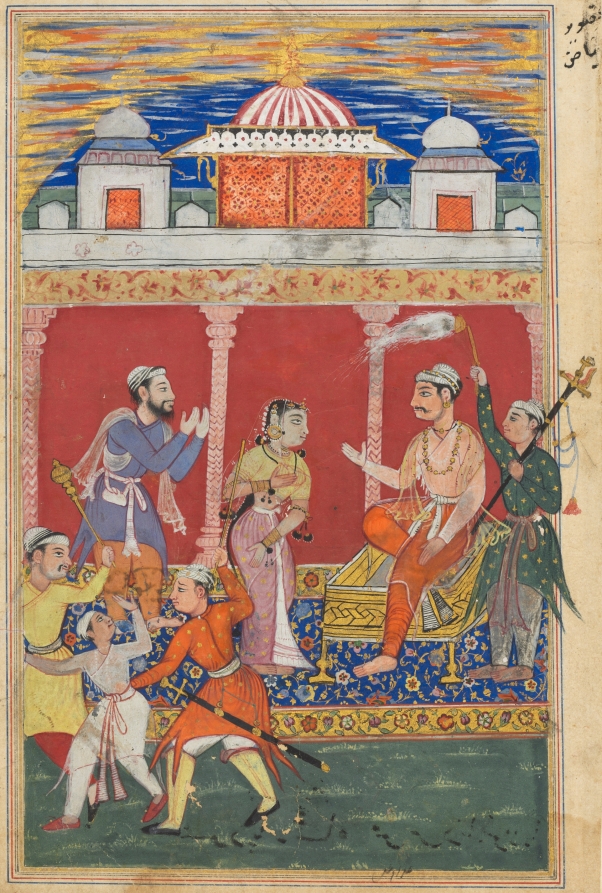 Ghulam 'Ali (Indian, active 1550s-1590s) — The prince’s orde
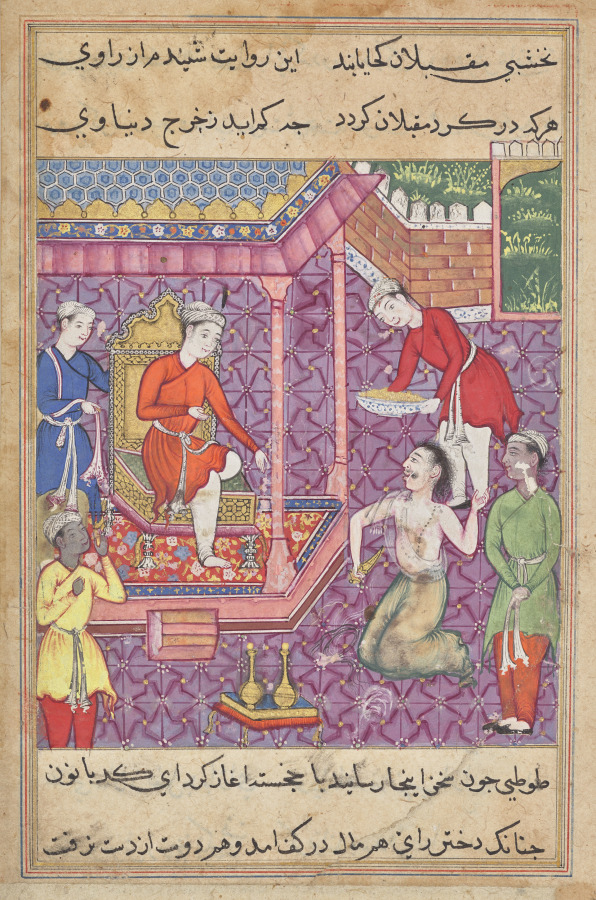 The magician disguised as a Brahman returns to claim his “da
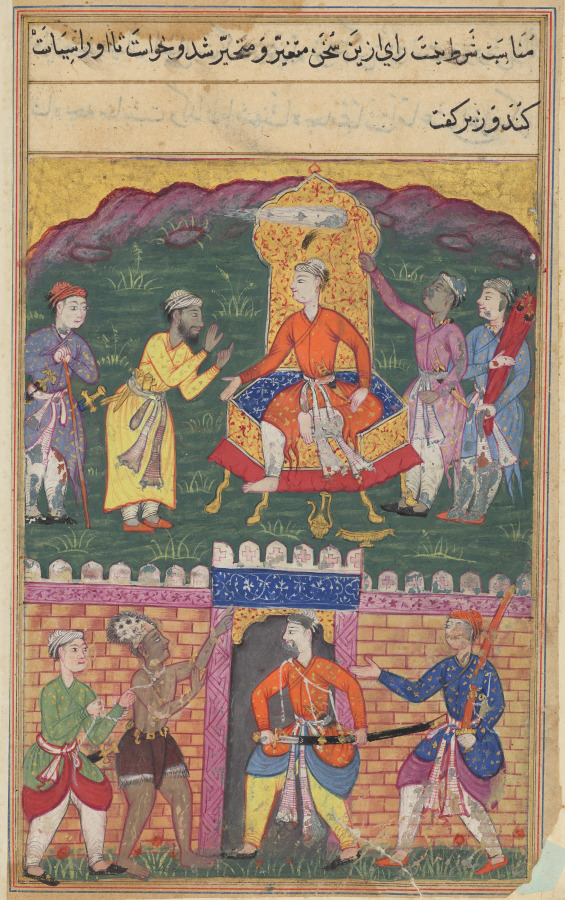 The vizier dissuades the king of Bahilistan from executing t
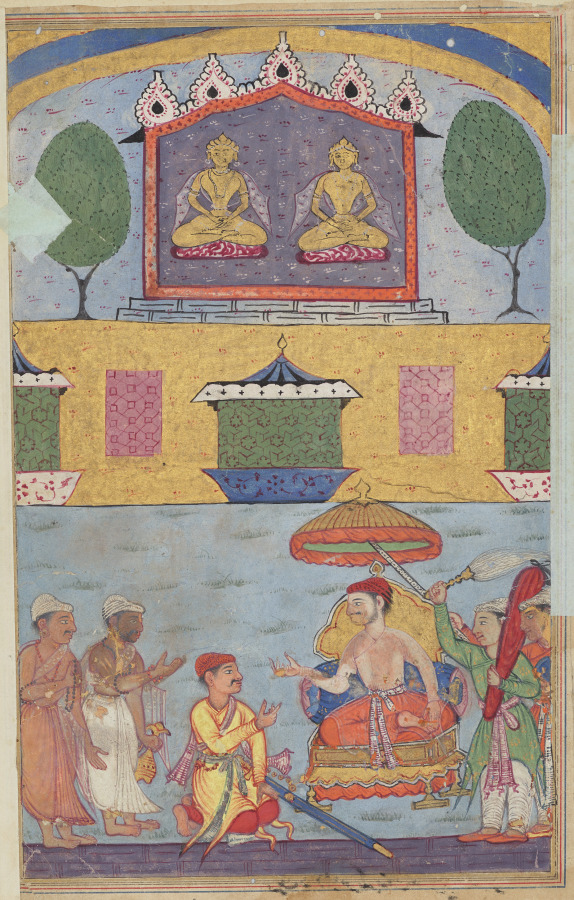 The goldsmith and the carpenter inform the king of a dream i
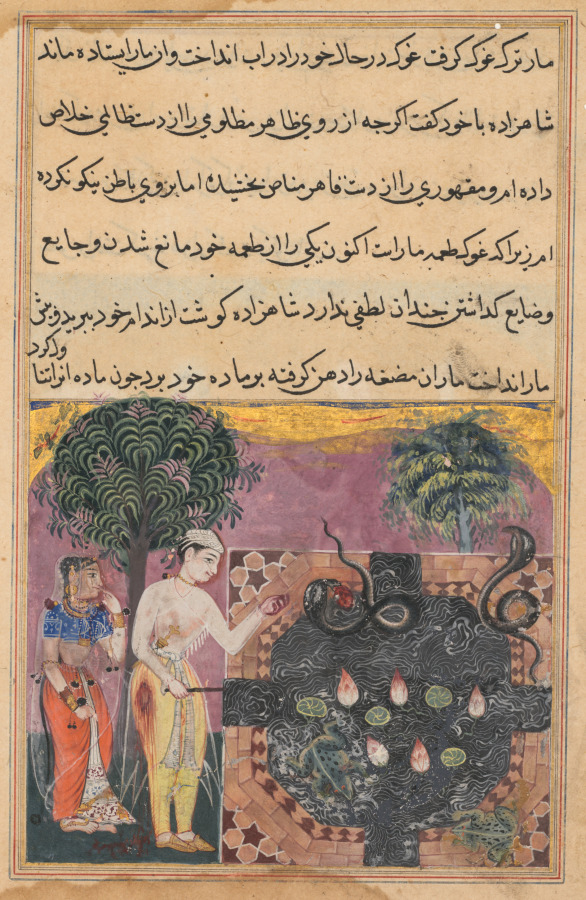 The prince, having deprived the snake of its natural food, a
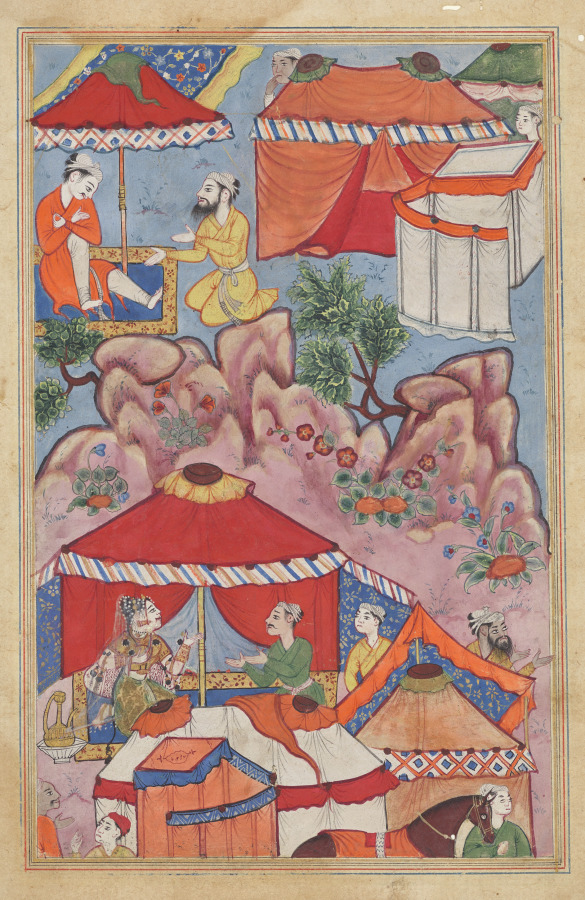 Bashir confides his love for Habbaza to an Arab friend, and