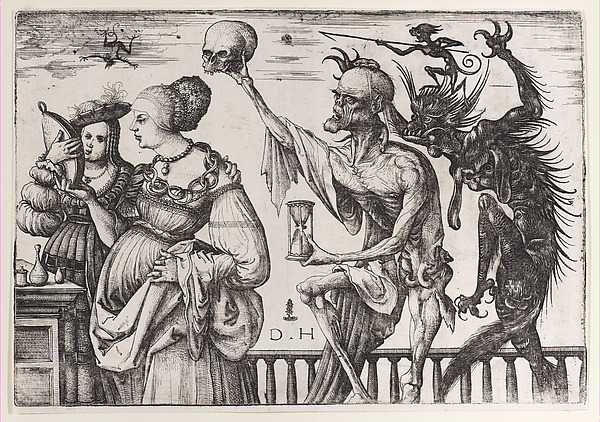
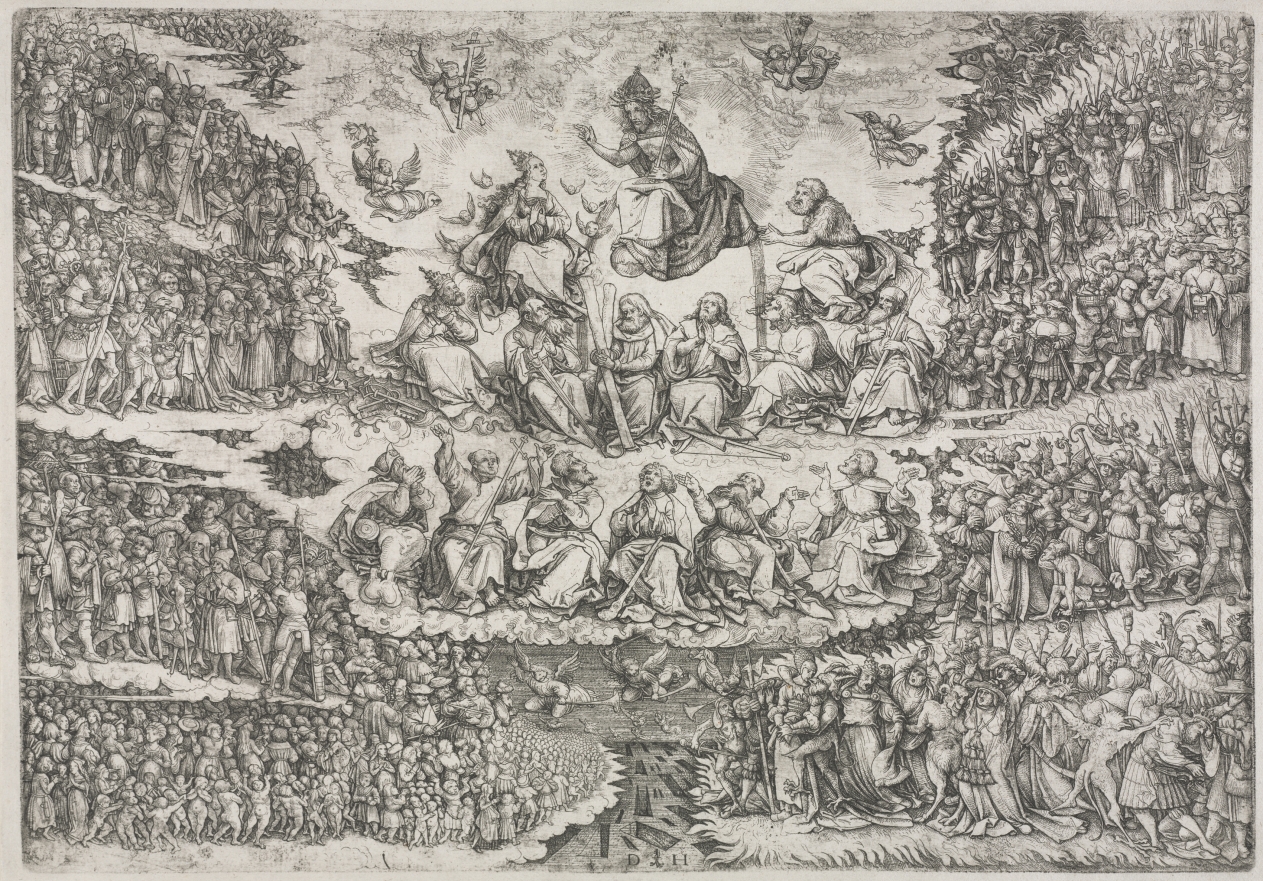
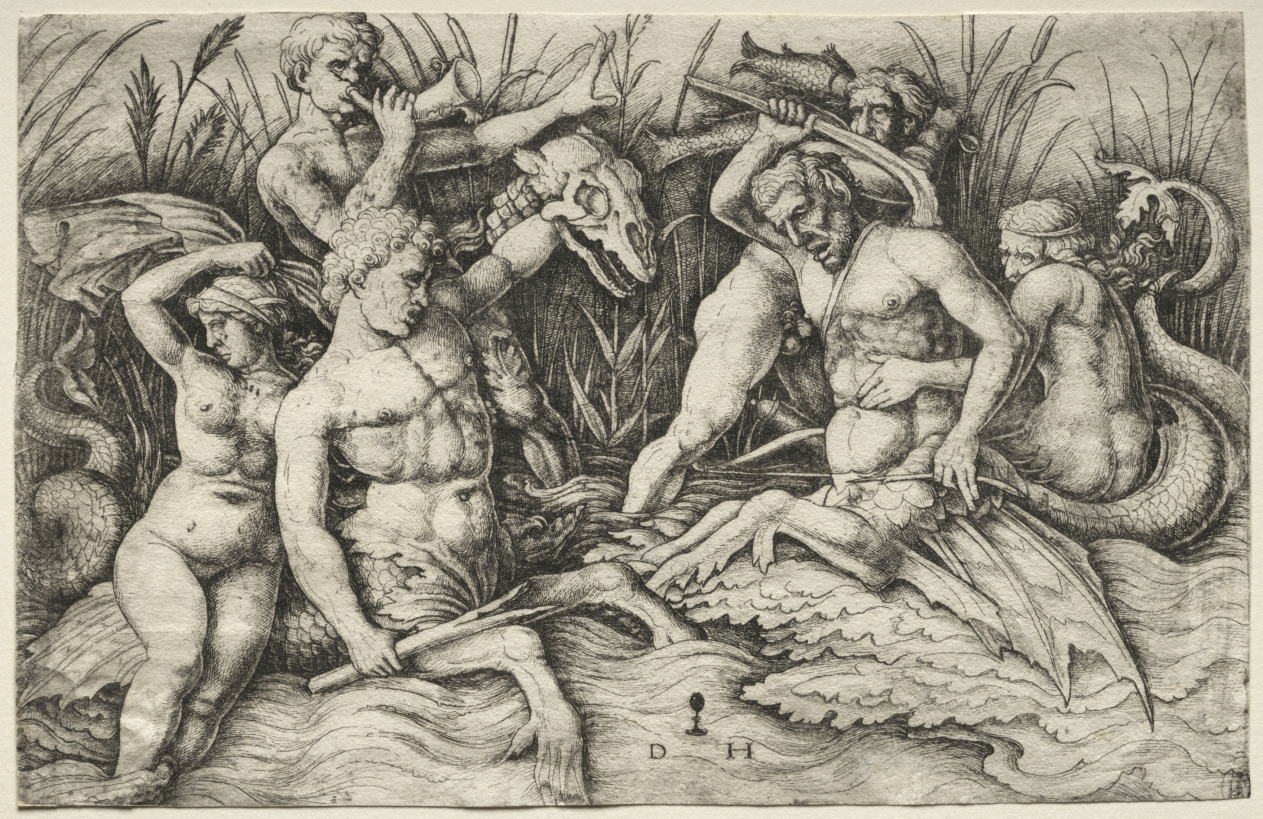
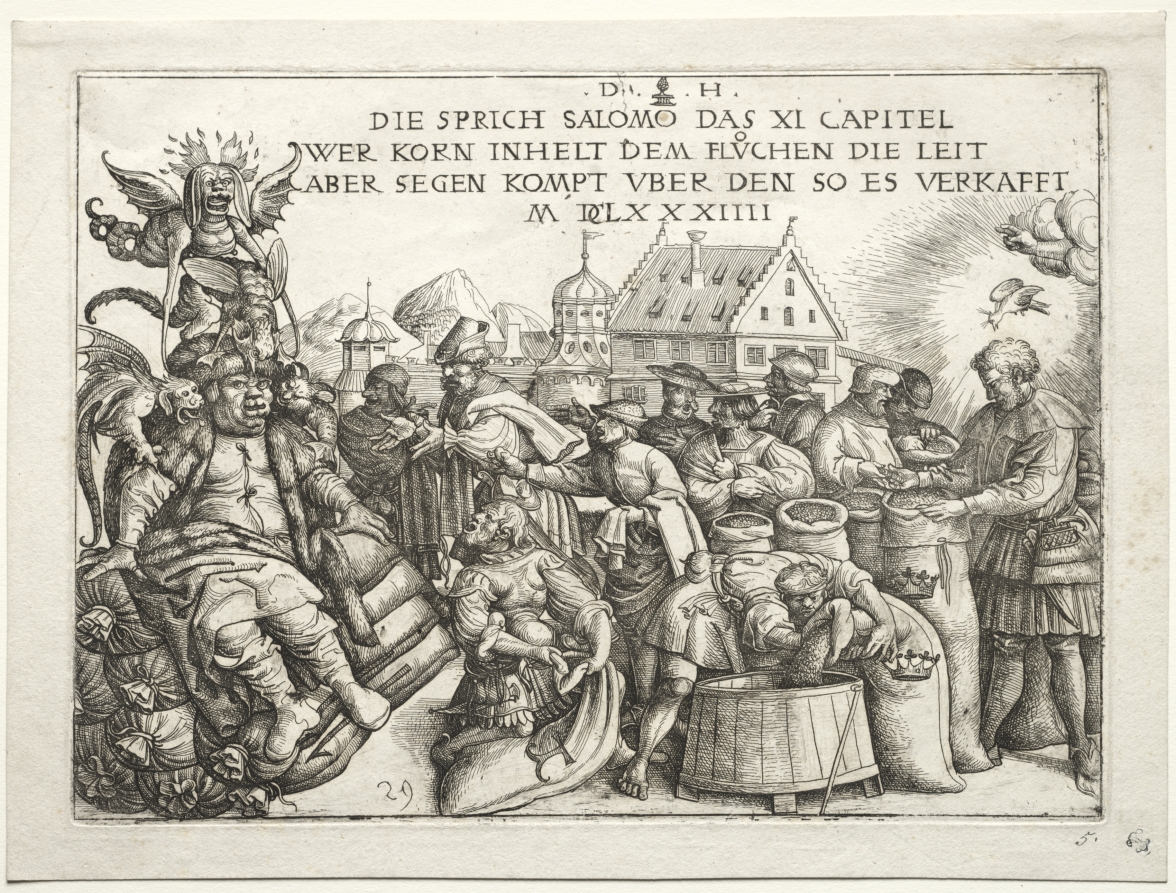
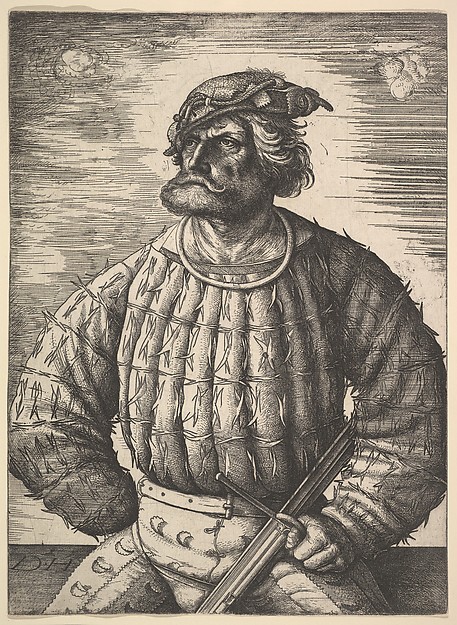
In the collection of Cleveland Museum of Art, Cleveland — check current display status with the museum.
FROM THE CLEVELAND MUSEUM OF ART’S CATALOG
Although recipes for etching iron and steel are recorded at least as early as 1400, scholars have been unable to show that armor designs were etched in Italy or Germany before the end of the 15th century. As early as 1500 iron plates were also used to make prints, probably first in Augsburg, Germany, in the workshop of Daniel Hopfer. Etching allows the artist to draw freely on the plate and so is less laborious than engraving. Because of the acid then available, only iron or steel plates could be used and these rusted. For this reason only a small number of etchings were made (including six by Albrecht Dürer) until about 1550, when the technical difficulties of using copper plates had been overcome.
Be the first to share your thoughts.
Sign in to join the discussion.
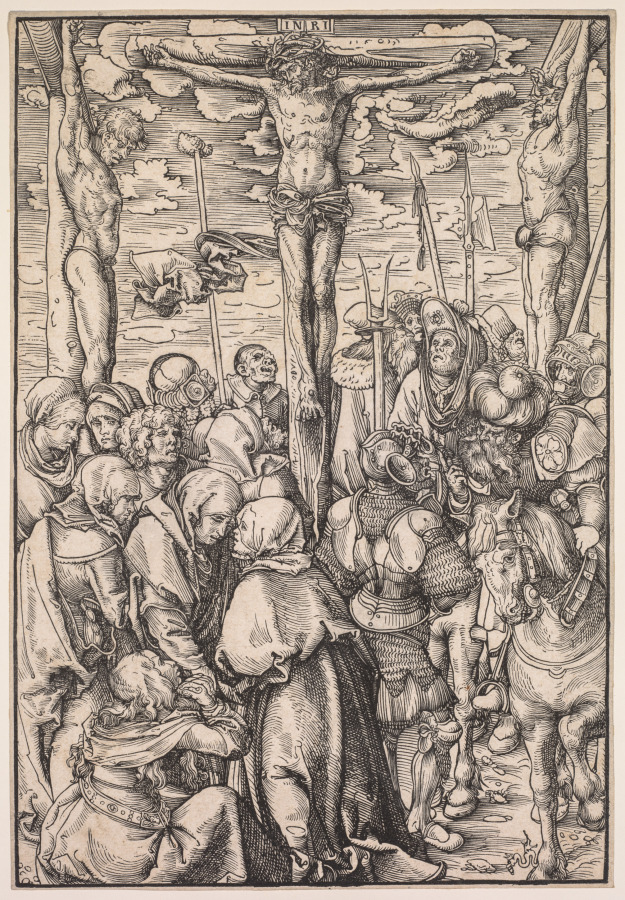 Lucas Cranach (German, 1472–1553) — The Passion: Crucifixio
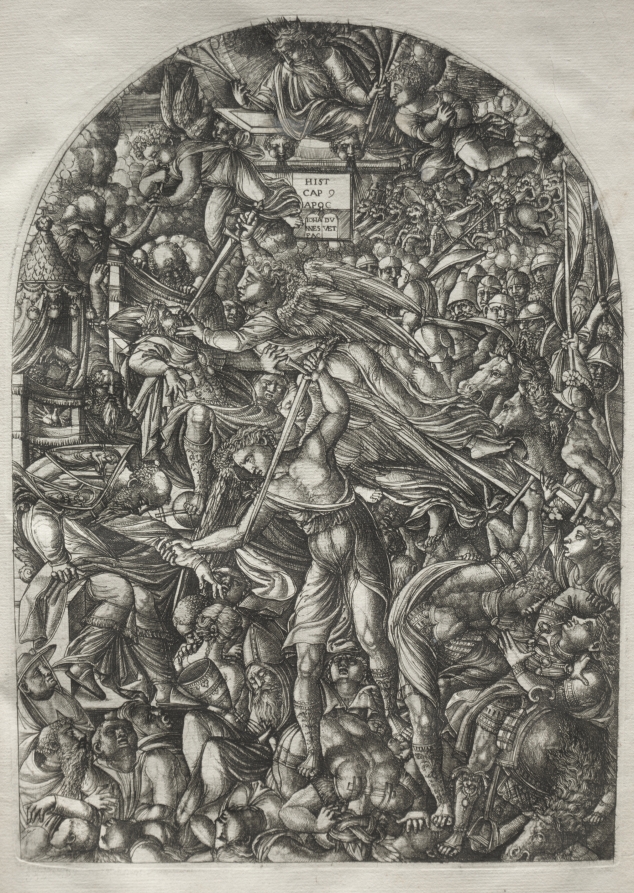 Jean Duvet (French, 1485–1561) — The Apocalypse: The Angel
 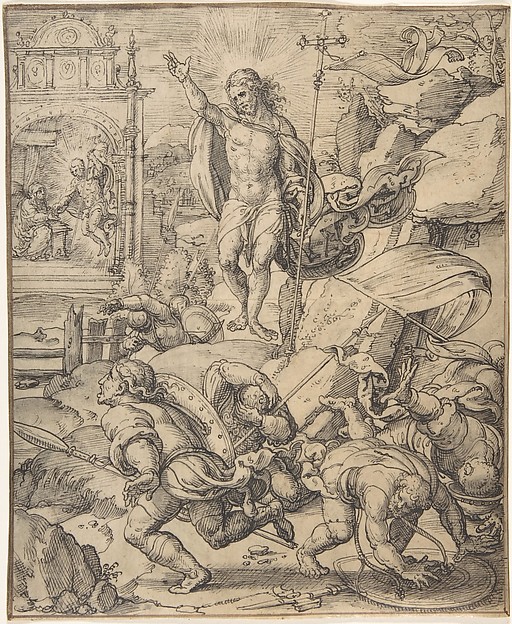 Master of Saint Michael|Bernard van Orley — The Resurrection
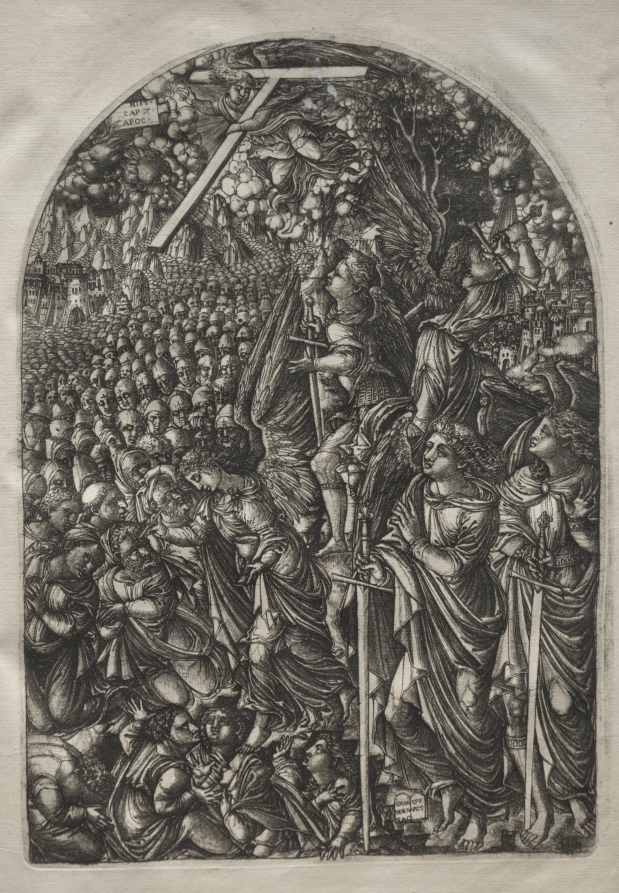 Jean Duvet (French, 1485–1561) — The Apocalypse: Four Angel
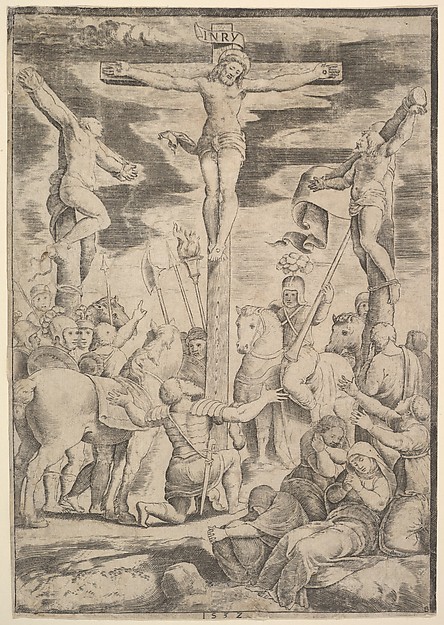 Master of the Die — The conversion of the Centurion who flin
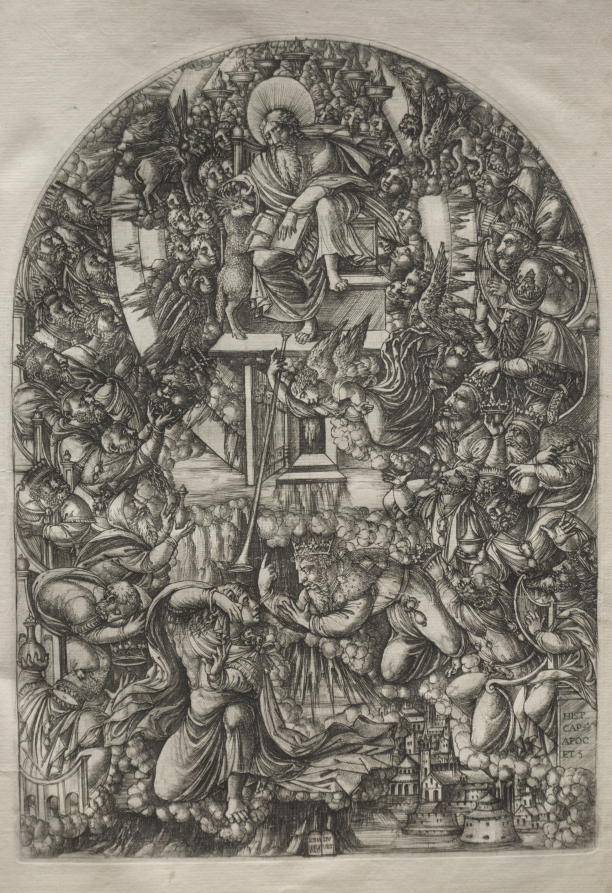 Jean Duvet (French, 1485–1561) — The Apocalypse: St. John S
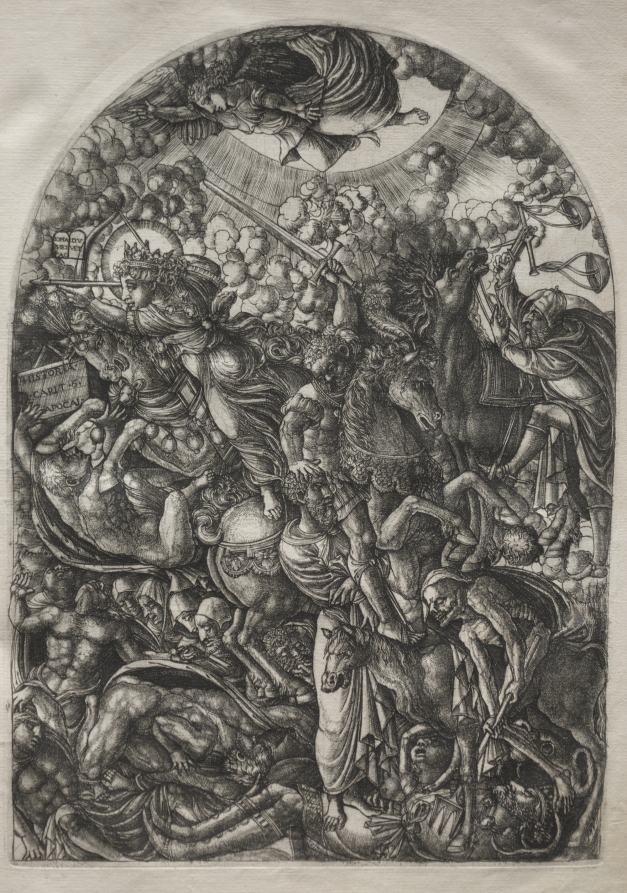 Jean Duvet (French, 1485–1561) — The Apocalypse: St. John S
 Martin Schongauer (German, c. 1450–1491) — The Passion: Chri
 Jean Duvet — The Deposition
 Hans Burgkmair — The Crucifixion
 Albrecht Dürer (German, 1471–1528) — Revelation of St. John:
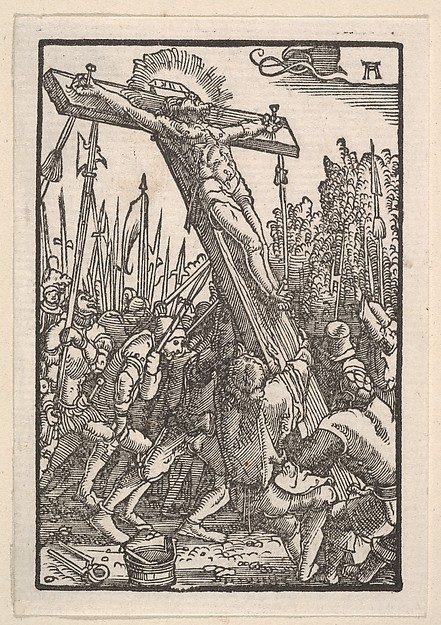 Albrecht Altdorfer — Raising of the Cross, from The Fall and