FROM THE CLEVELAND MUSEUM OF ART’S CATALOG
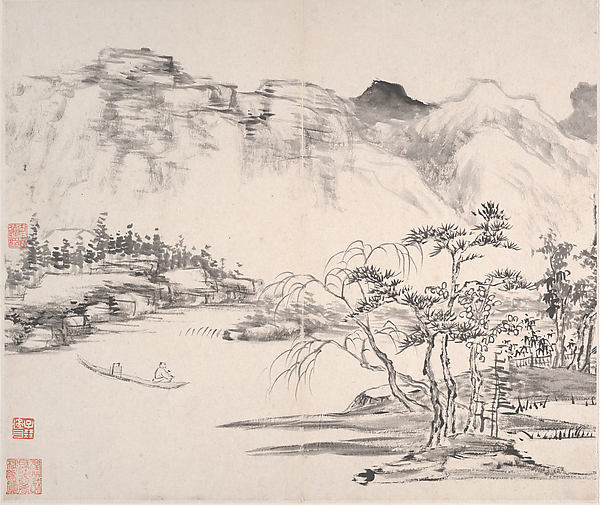
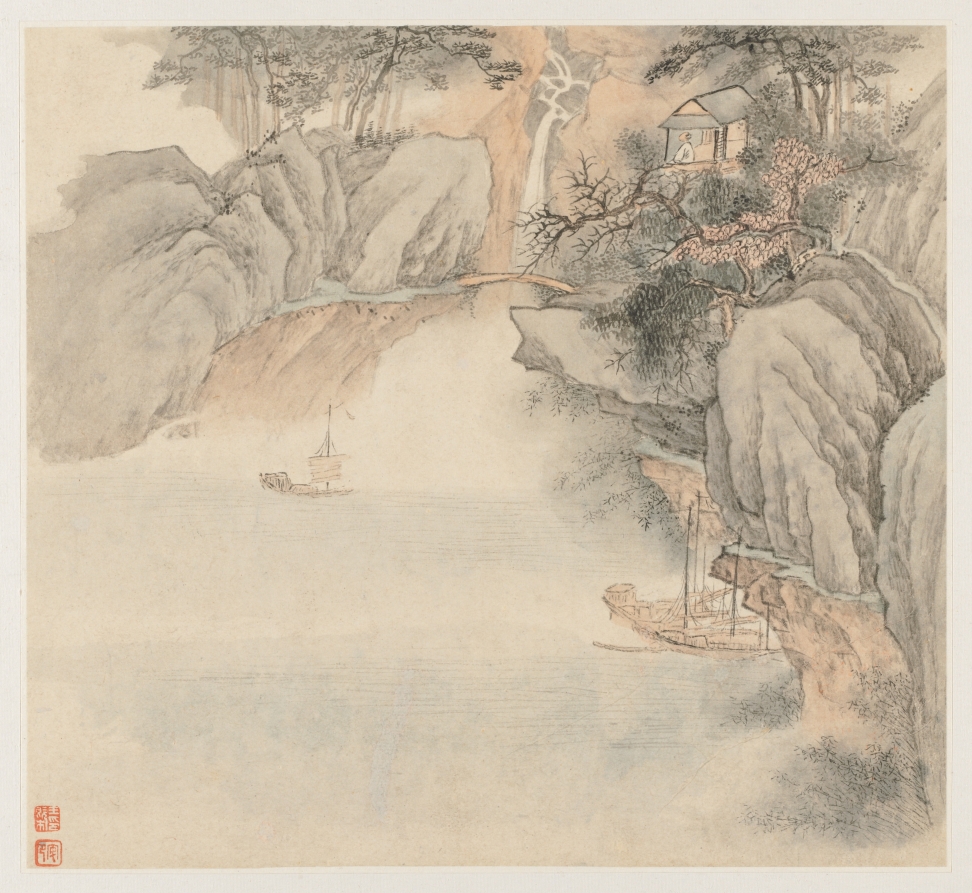
This leaf presents a rising promontory in the near distance, whose base is hidden by a dense grove of barren, autumnal trees. A gentle incline emerges from the lower right, with a small path leading to its summit, where a gentleman is sheltered from the wind by two pines. This promontory resembles Guangming Ding 光明頂 (Summit of the Bright and Luminous), the second tallest peak in Huangshan 黃山 (Mt. Huang or Yellow Mountain), the scenic area that inspired much of Mei Qing’s artistic production. Instead of looking down on the “Sea of Clouds,” though, as one who scales Huangshan’s peak would, this gentleman is looking out at two boats on an actual sea.
Source ↗︎
Be the first to share your thoughts.
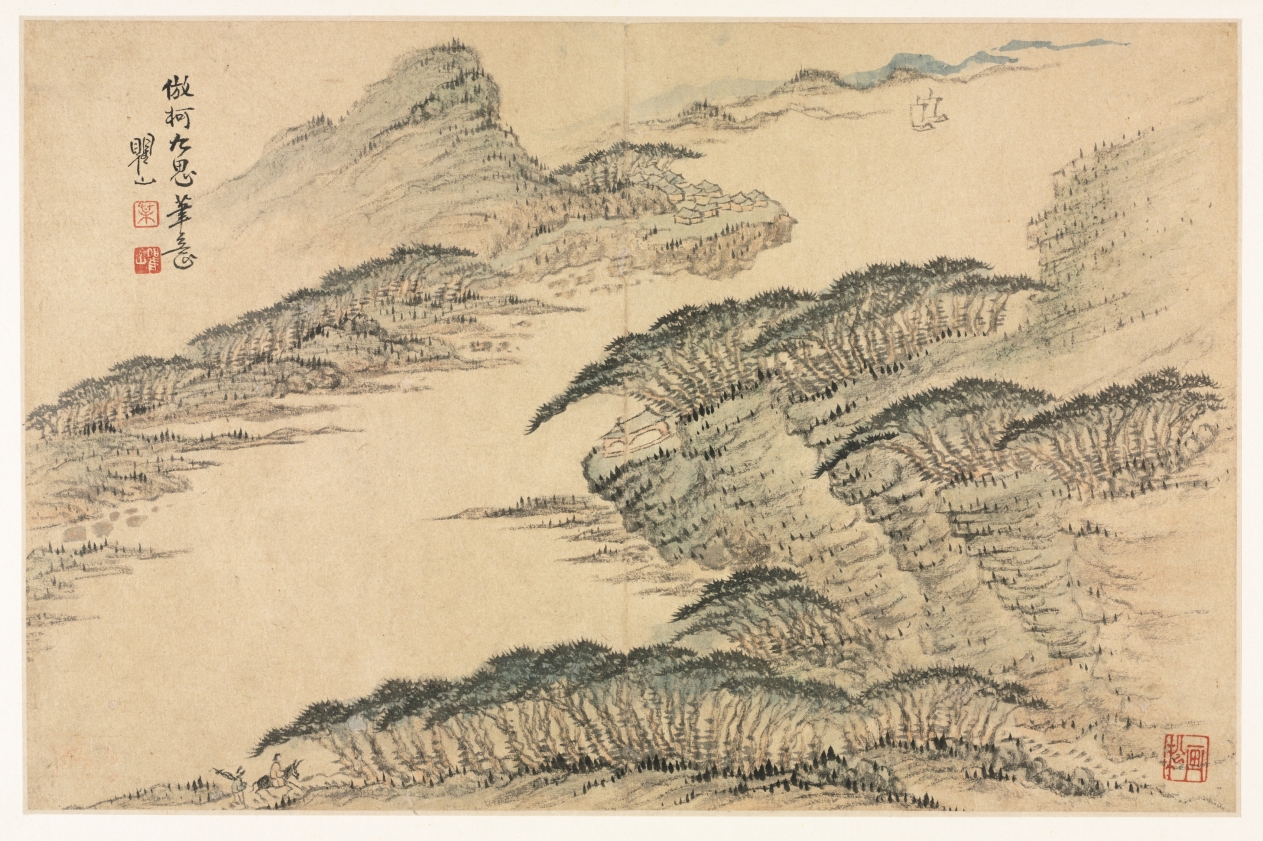 Landscapes in Various Styles after Old Masters
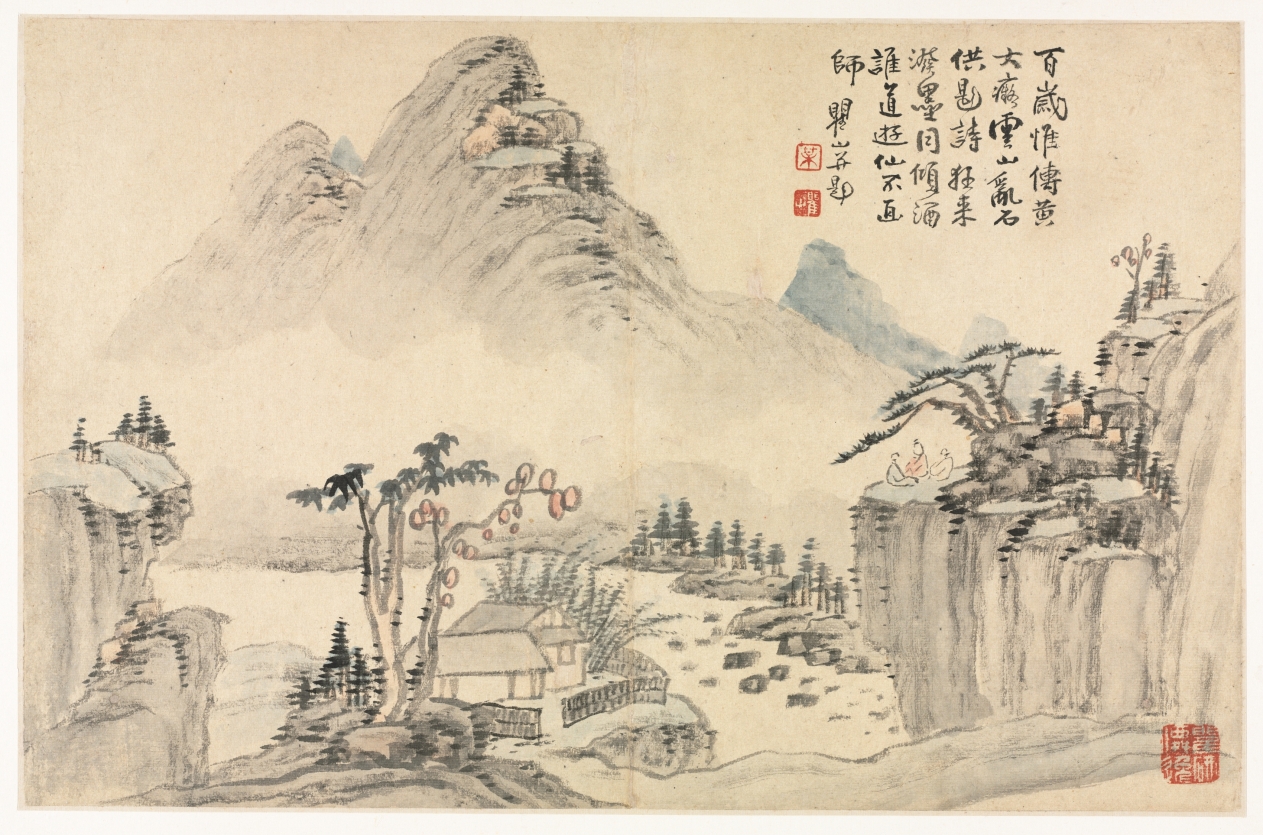 Landscapes in Various Styles after Old Masters
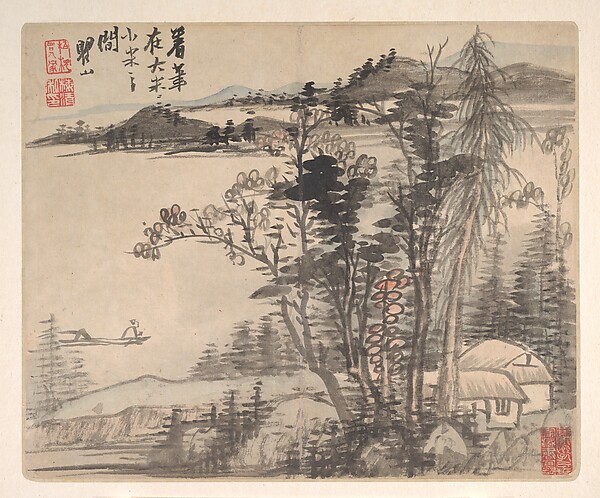 清 梅清 為澤翁倣各家山水圖 冊|Landscapes after Ancient Masters
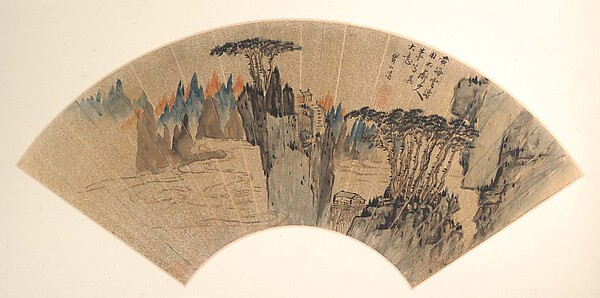 清 倣 梅清 黃海雲濤圖 扇頁|Peaks of Mount Huang
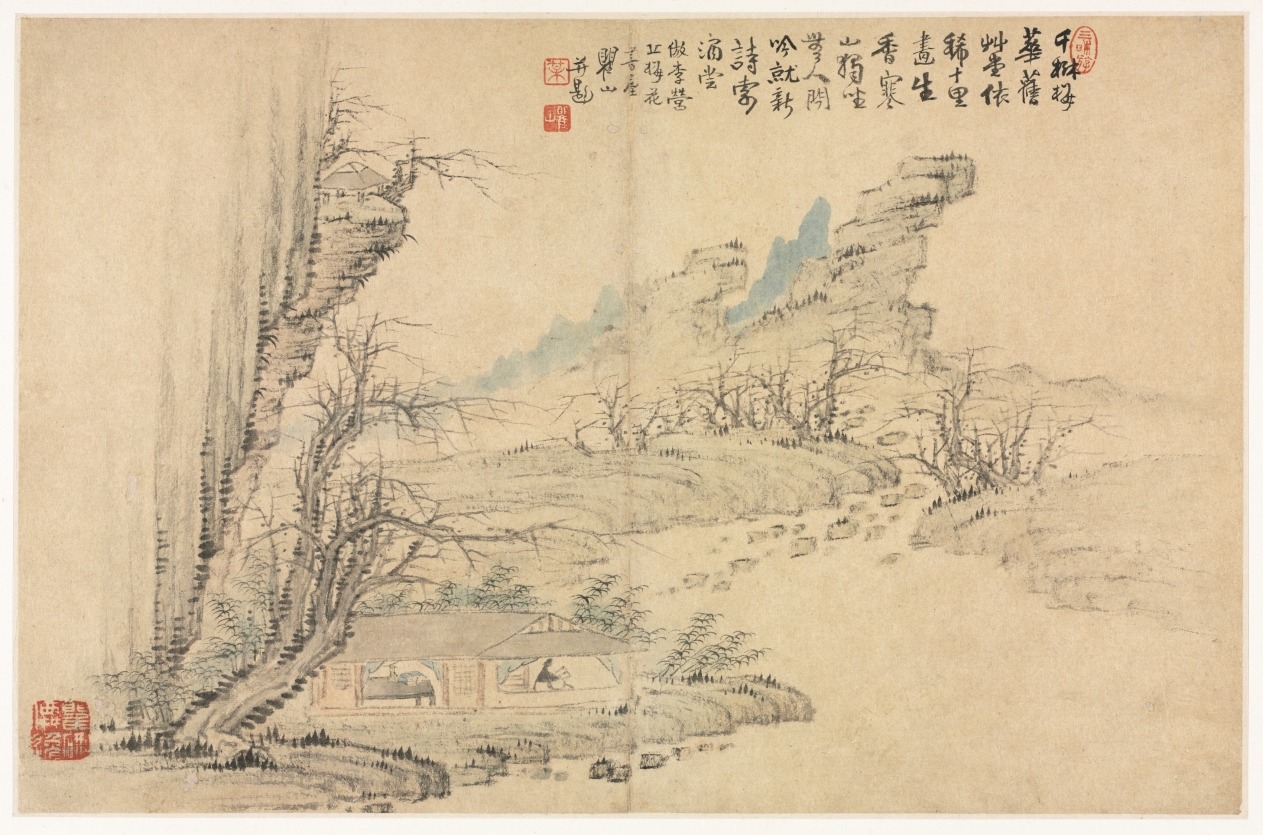 Landscapes in Various Styles after Old Masters
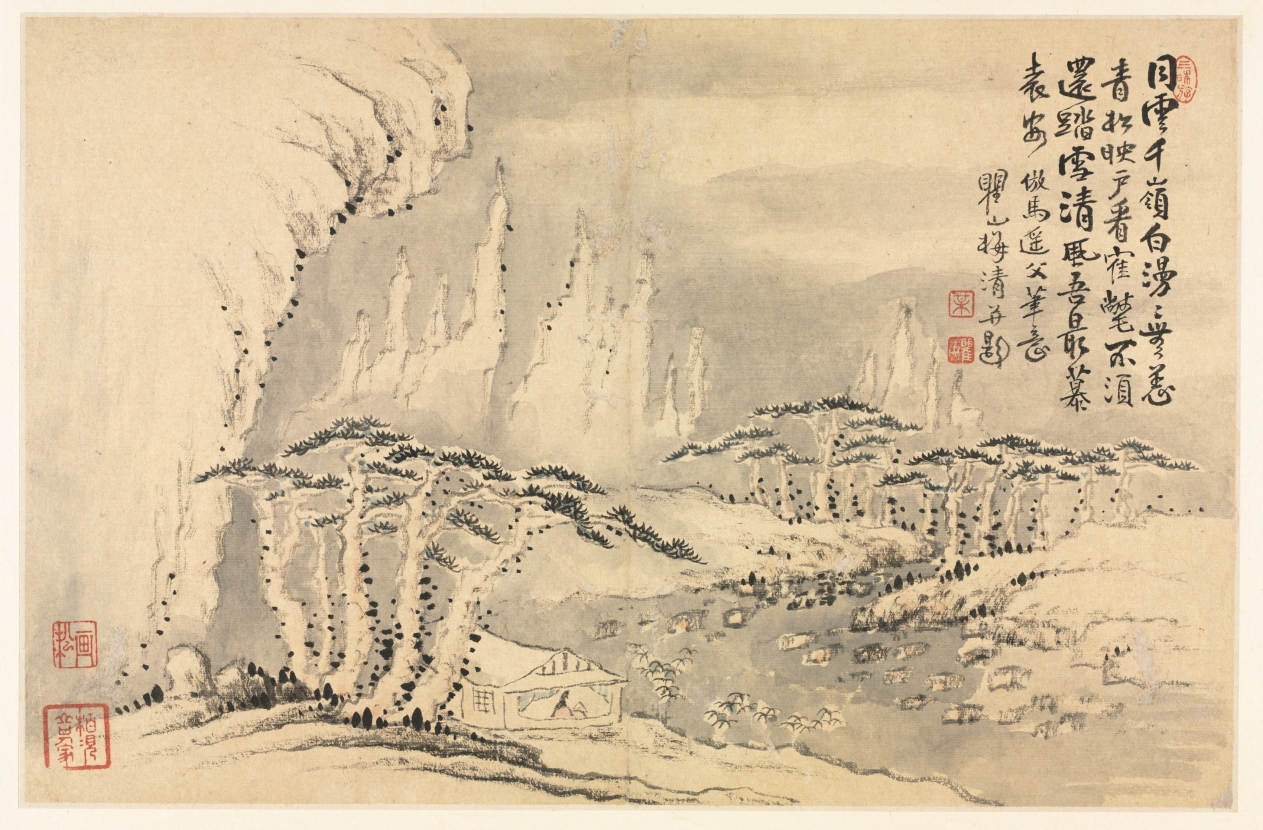 Landscapes in Various Styles after Old Masters
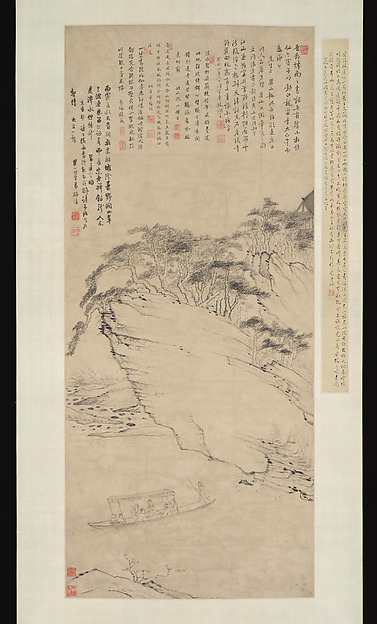 清 倣梅清 響山泛舟圖 軸|Boating beneath Echo Hill
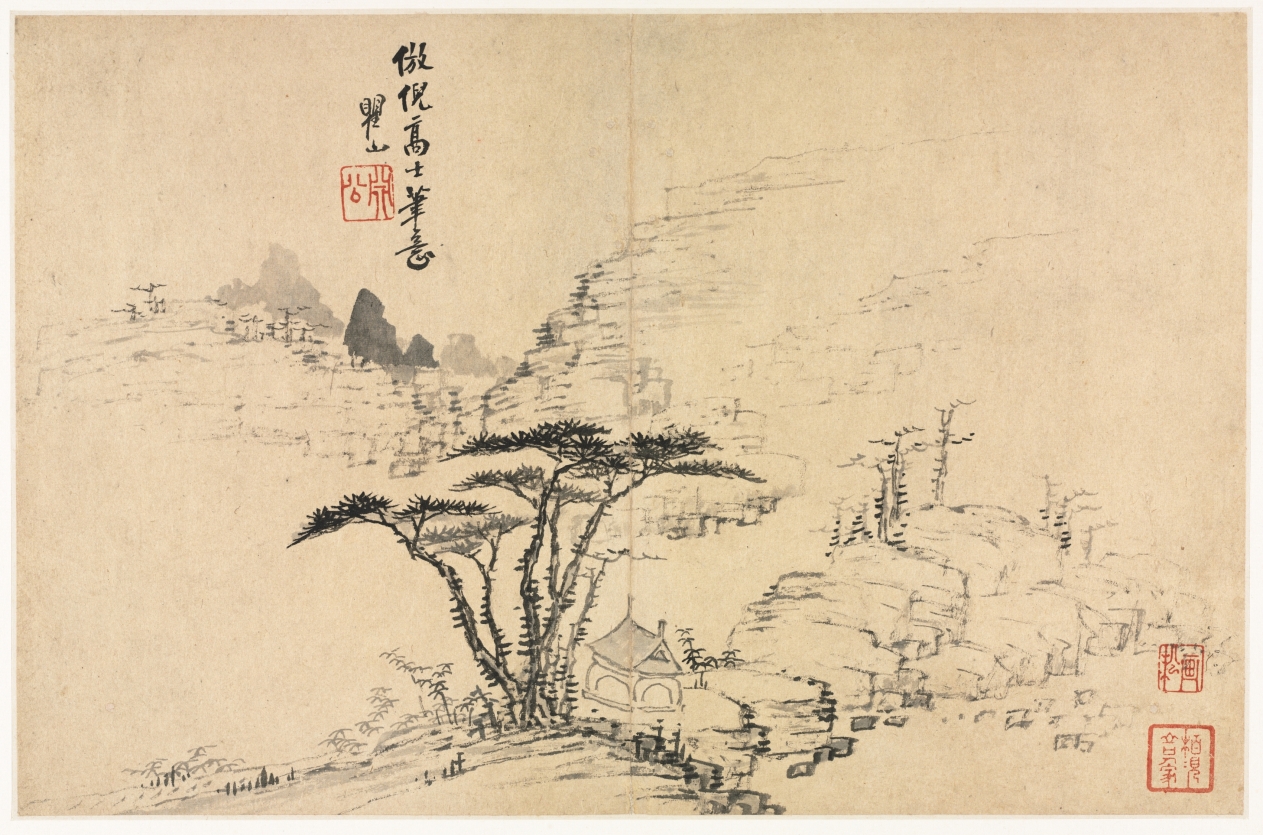 Landscapes in Various Styles after Old Masters