The Beach at Sainte-Adresse
SEE IT IN PERSON
● On view now — Gallery 225
Art Institute of Chicago, Chicago · verified July 2026
Discussion
FROM THE ART INSTITUTE OF CHICAGO’S CATALOG
In the summer of 1867, Claude Monet stayed with his aunt at Sainte-Adresse, an affluent suburb of the port city Le Havre in northern France. The artist was familiar with the landscape, having grown up in the area, but the region changed significantly during his lifetime. The expansion of the country’s rail network turned this small, rural fishing village into a seaside resort for tourists. Here, Monet hinted at this transformation. The viewer is immediately drawn to the visible aspects of local life—dark-sailed fishing boats drift in the water, with groups of fishermen, their equipment, and other craft on the shore. The beached boats frame two figures sitting on the shoreline, highlighted by a few strokes of red and yellow paint: a man in a dark hat and suit looks through a telescope, accompanied by a woman wearing a straw hat with a scarlet ribbon. The presence of this couple—undoubtedly vacationers, given their fashionable attire—changes what might have been a traditional coastal scene into a painting of modern life, one of the artist’s first explorations of tourism. Monet began this painting outdoors and revised it later in his studio. Conservation research has revealed that he chang
Be the first to share your thoughts.
Sign in to join the discussion.
More by Claude Monet


More like this
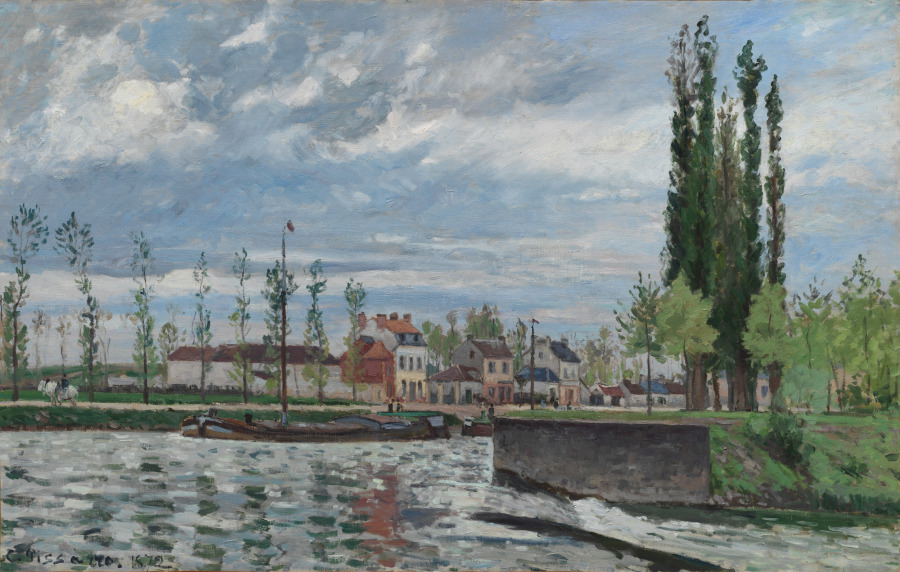 Camille Pissarro (French, 1830–1903) — The Lock at Pontoise
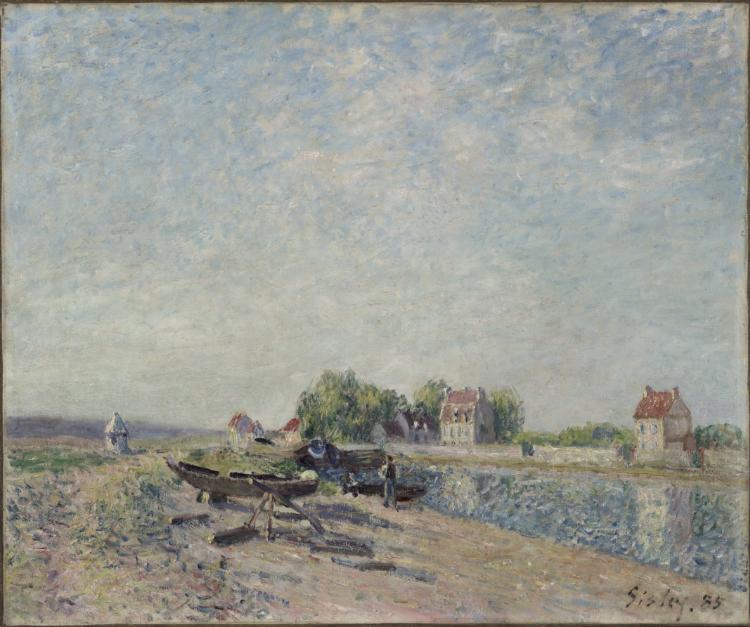 Alfred Sisley (French, 1840–1899) — Saint-Mammès, Loing Cana
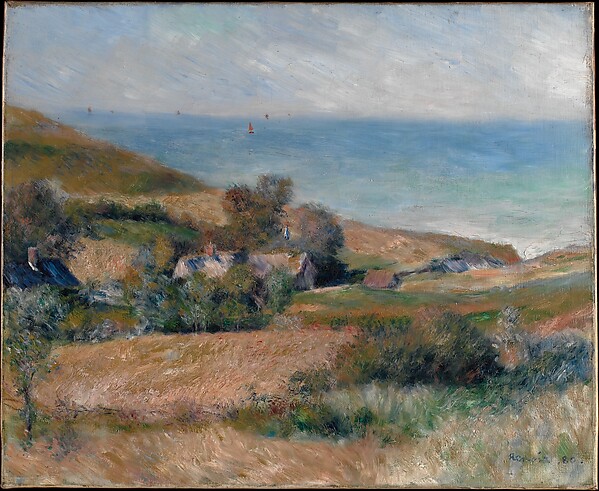 Auguste Renoir — View of the Seacoast near Wargemont in Norm
 Henri Matisse — The Black Boat (Le Bateau noir)
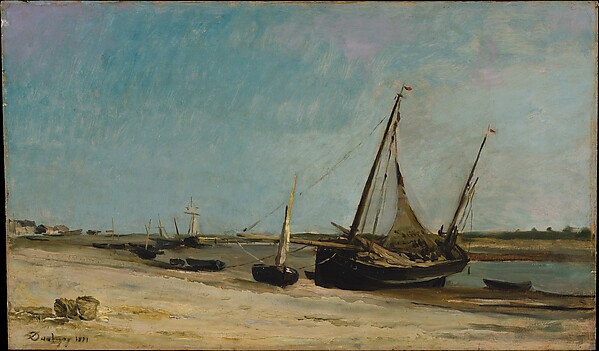 Charles-François Daubigny — Boats on the Seacoast at Étaples
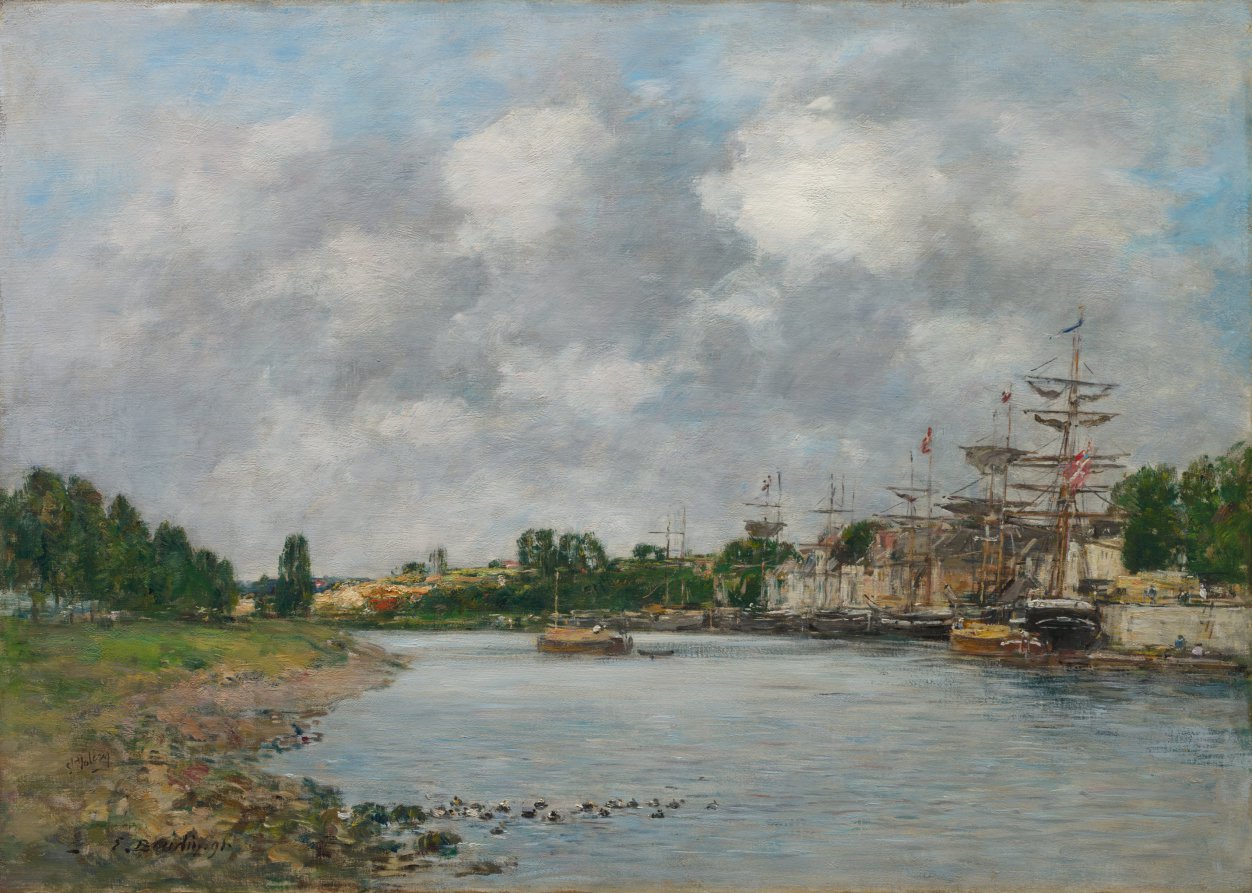 Eugène Boudin (French, 1824–1898) — View of the Port of Sain
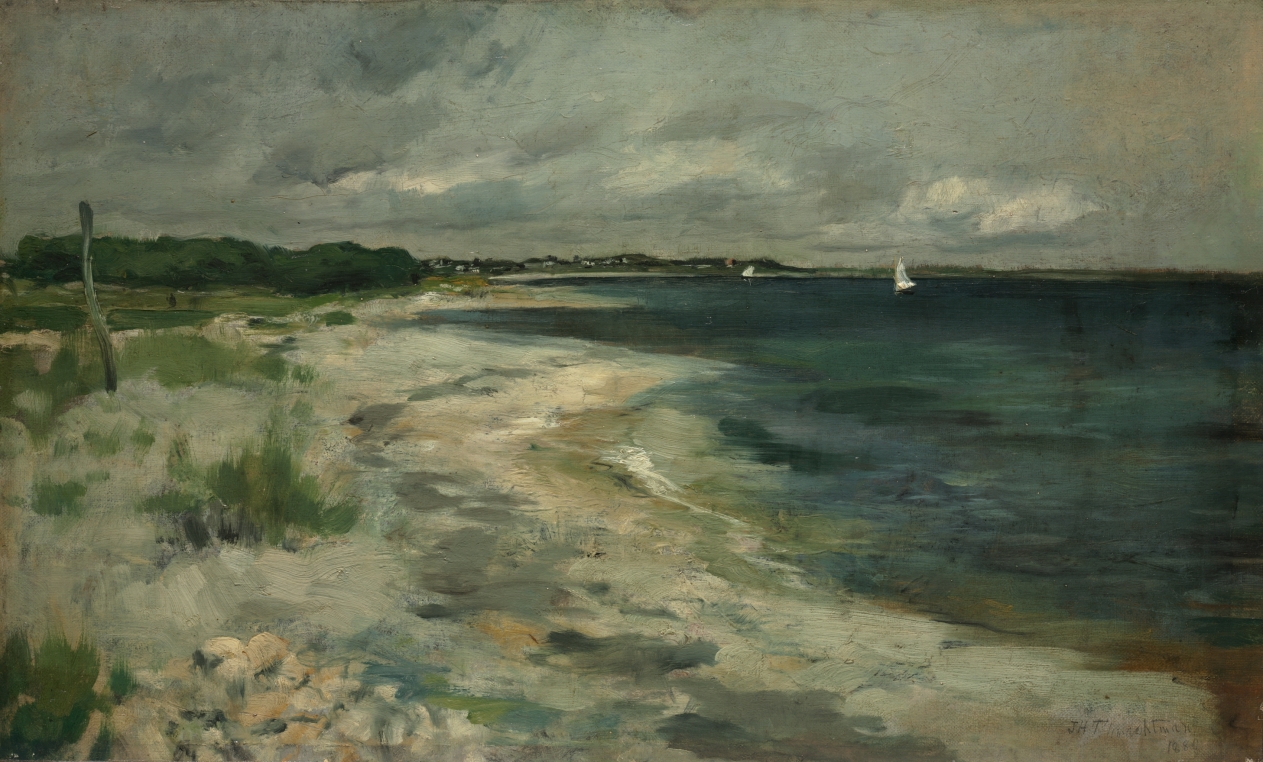 John Henry Twachtman (American, 1853–1902) — Storm Clouds
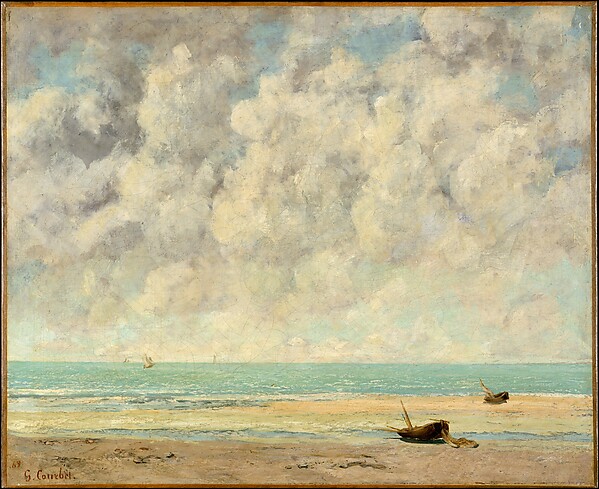 Gustave Courbet — The Calm Sea