FROM THE CLEVELAND MUSEUM OF ART’S CATALOG
Twenty-four-year-old Paul Sérusier met Paul Gauguin in Brittany at the artists' colony in Pont- Aven. Sérusier enthusiastically embraced the older artist's flat, simplified forms and bold colors. He became one of Gauguin's closest disciples, promoting his aesthetic among a group of Parisian artists who became known as the Nabis-the Hebrew word for "prophets"-because they predicted a new era in art. Sérusier was primarily interested in creating decorative surfaces which juxtaposed flat planes of opposing colors. Sérusier made only a few prints during his career, but the bold, primitive-looking Breton Landscape was selected for publication in L'estampe originale, a quarterly publication of original prints that appeared from 1893 to 1895. Breton Landscape pays homage to Gauguin's Volpini Suite, a series of eleven zincographs printed on canary yellow paper in 1889. The high horizon, tilted ground, winding fence, and geometric shapes of the fields echo details in Gauguin's Breton Women by a Fence.
Source ↗︎
Be the first to share your thoughts.
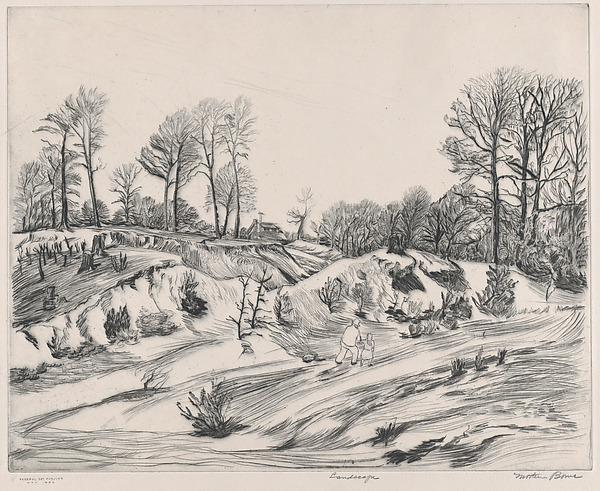 Mortimer Borne|WPA — Landscape
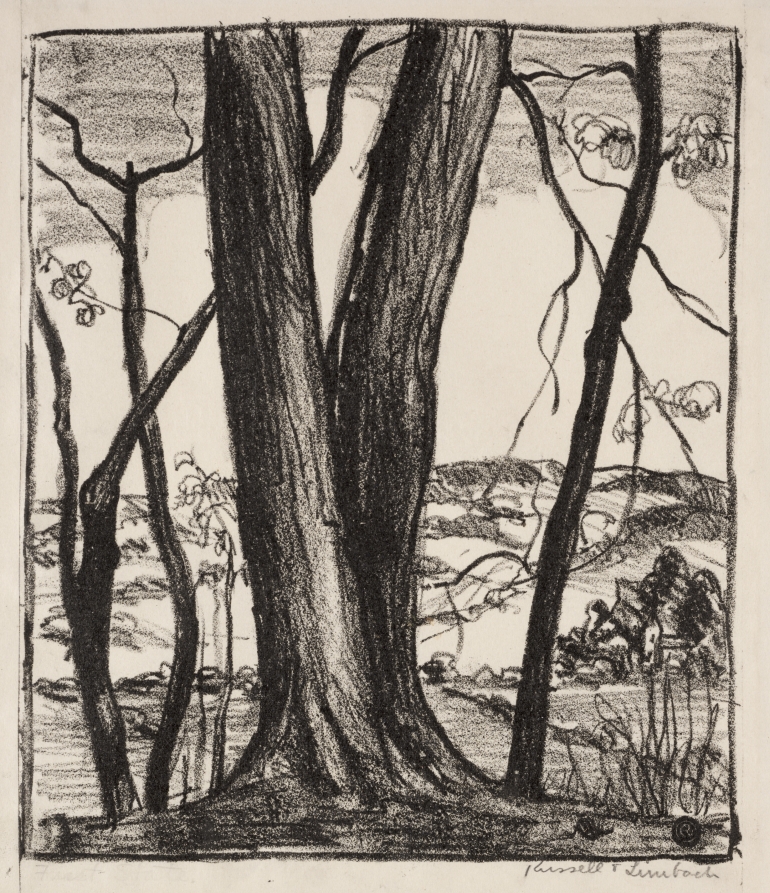 Russell T. Limbach (American, 1904–1971) — The Hilltop
 Vincent van Gogh — View of the park from Arles
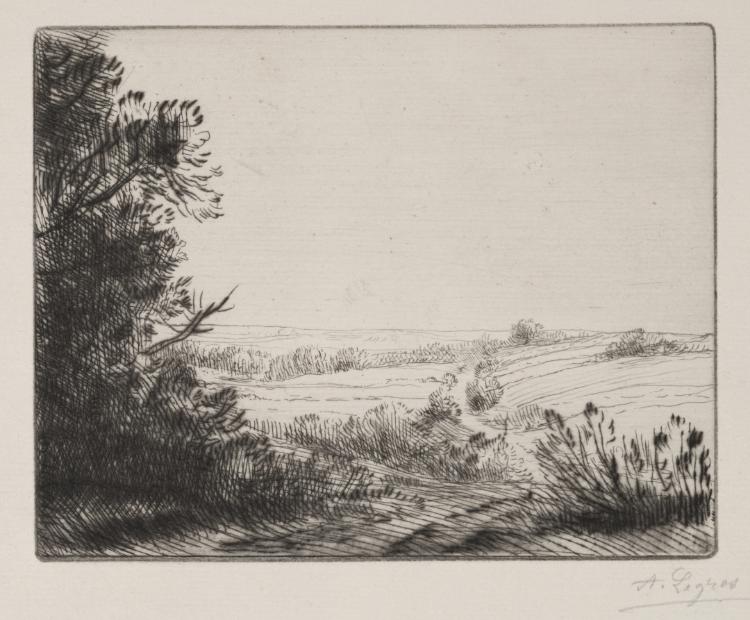 Alphonse Legros (French, 1837–1911) — The Road to Horville
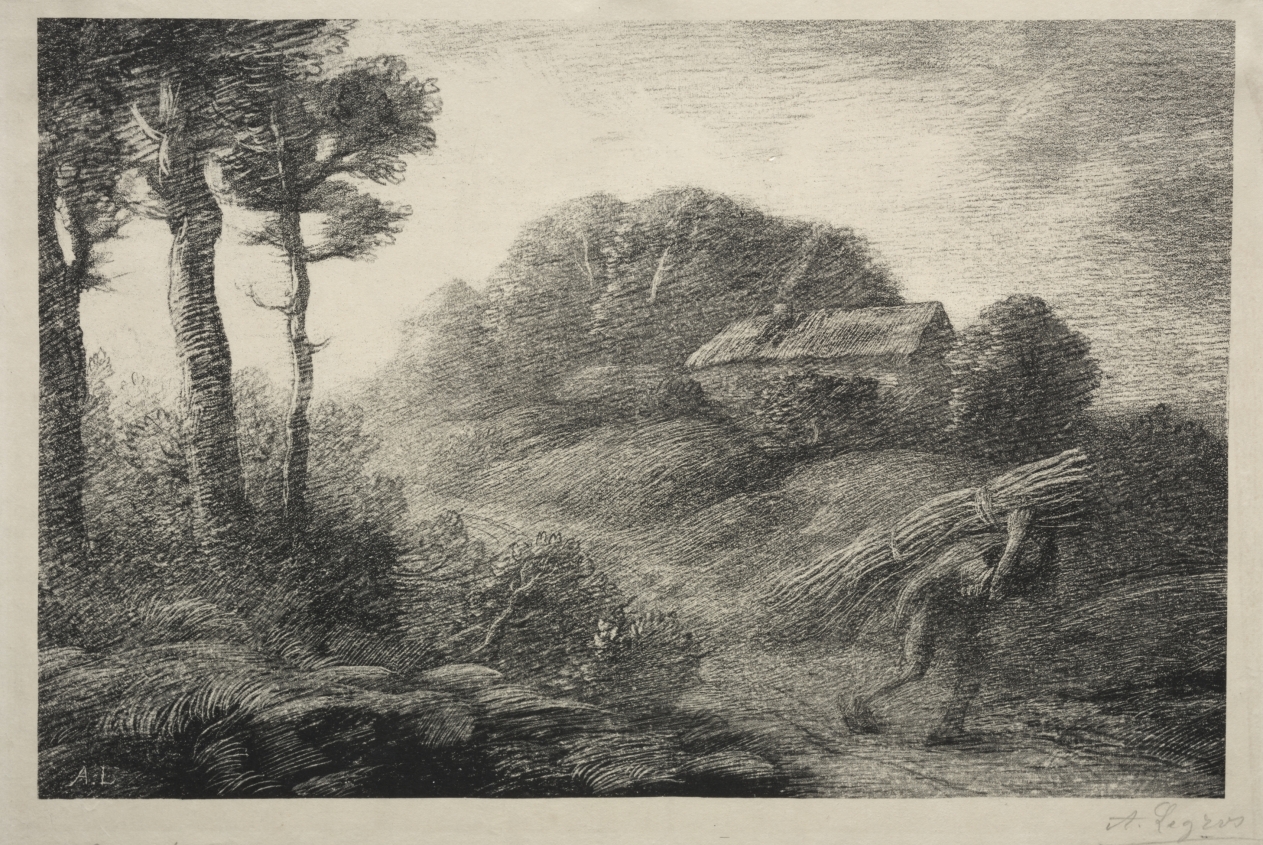 Alphonse Legros (French, 1837–1911) — The Return of the Fago
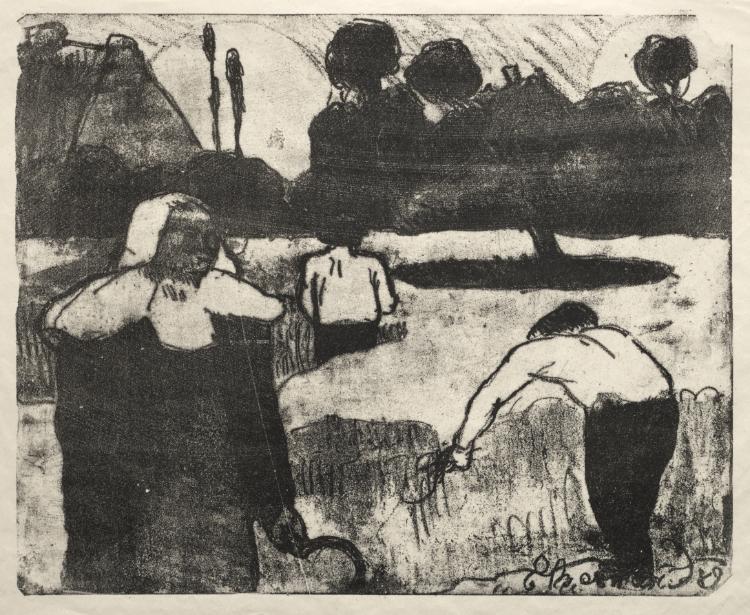 Émile Bernard (French, 1868–1941) — Les Bretonneries: The Ha
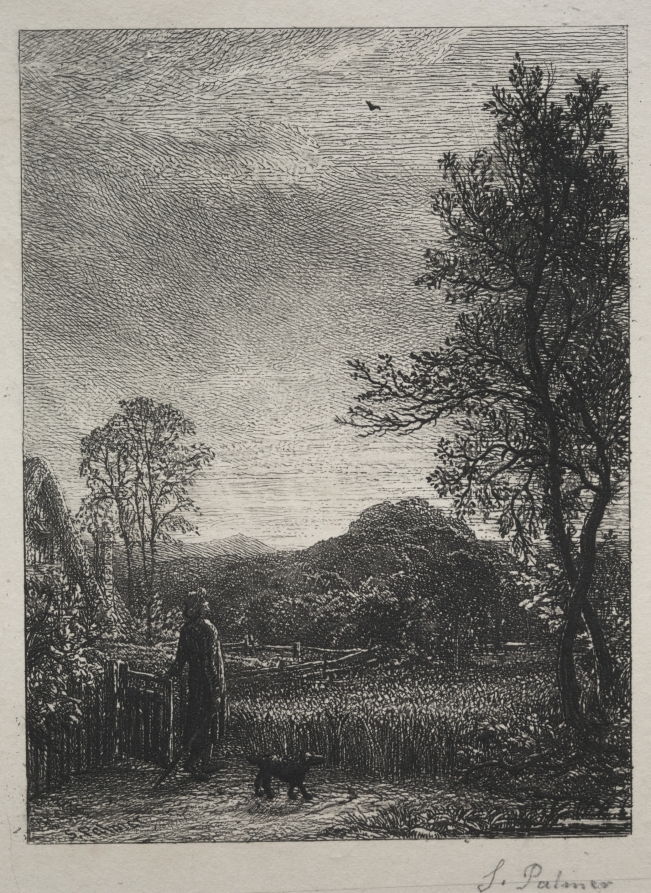 Samuel Palmer (British, 1805–1881) — The Skylark
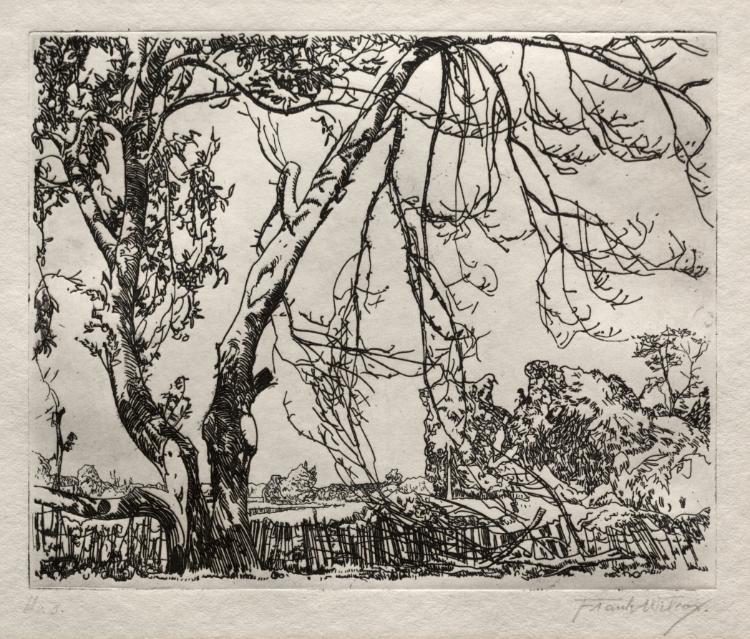 Frank Wilcox (American, 1887–1964) — Apple Tree
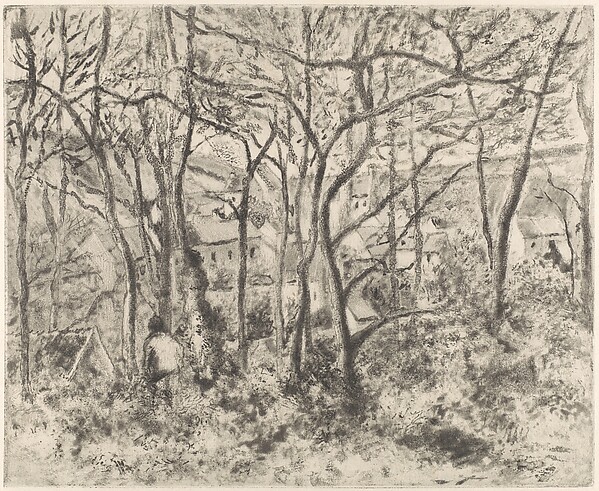 Camille Pissarro — The Woods at L'Hermitage, Pontoise
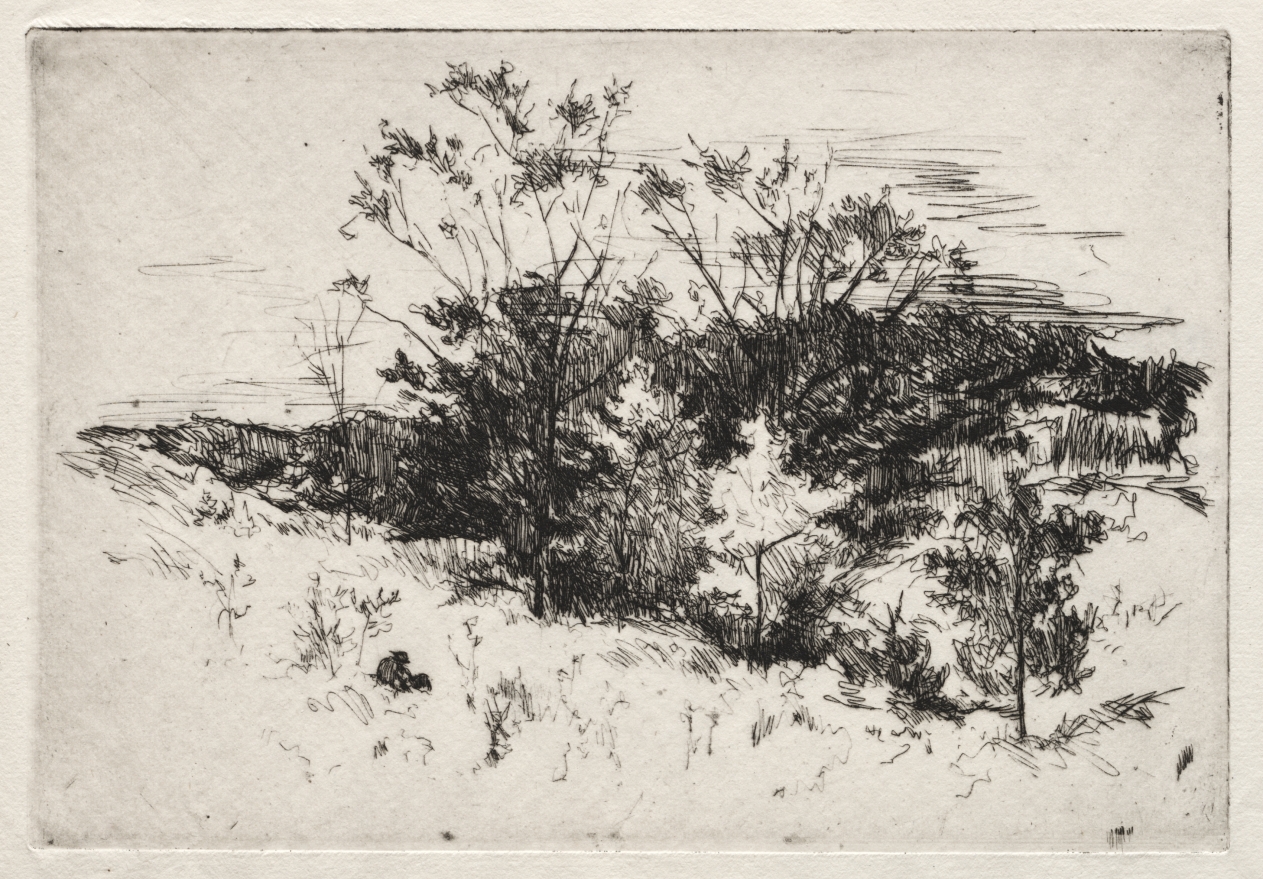 John Henry Twachtman (American, 1853–1902) — Autumn Landscap
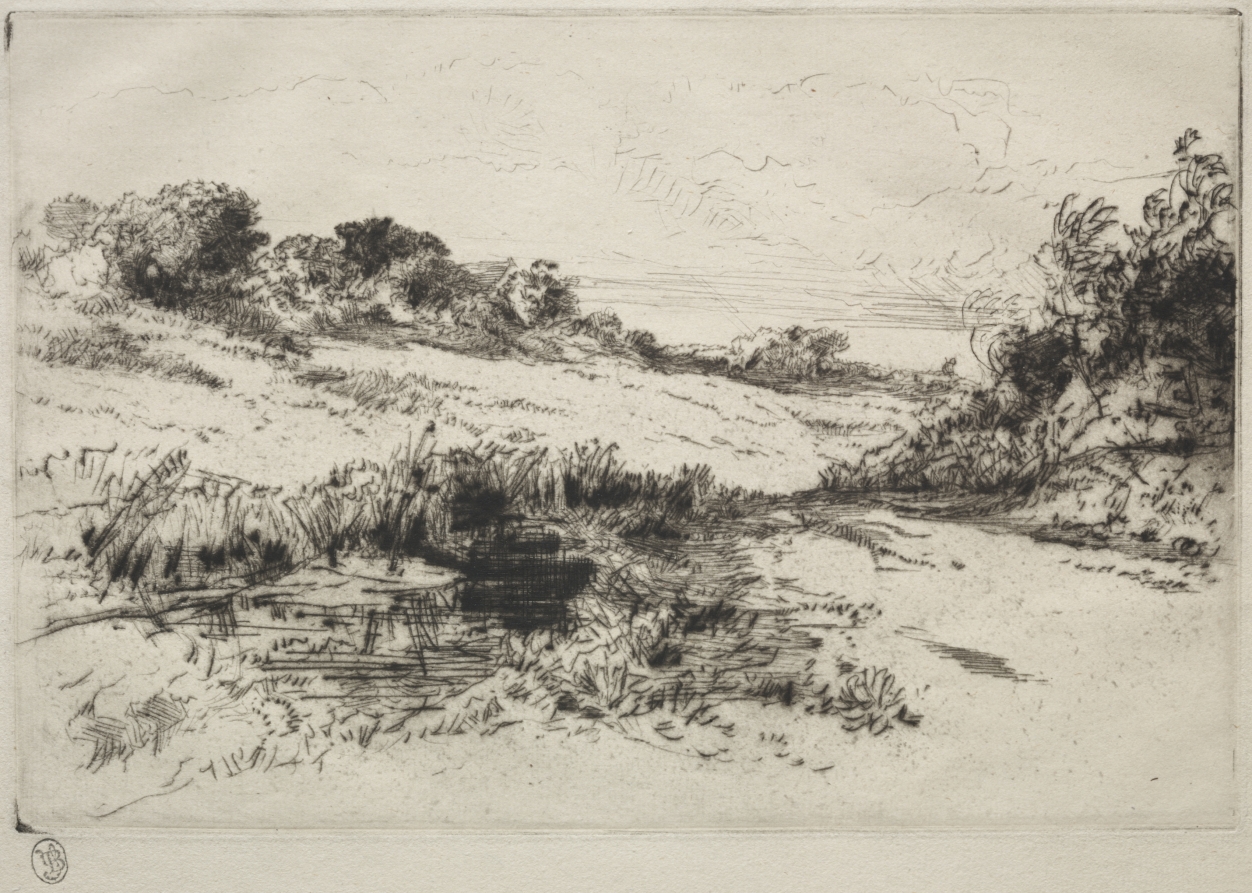 Francis Seymour Haden (British, 1818–1910) — Windmill Hill,
 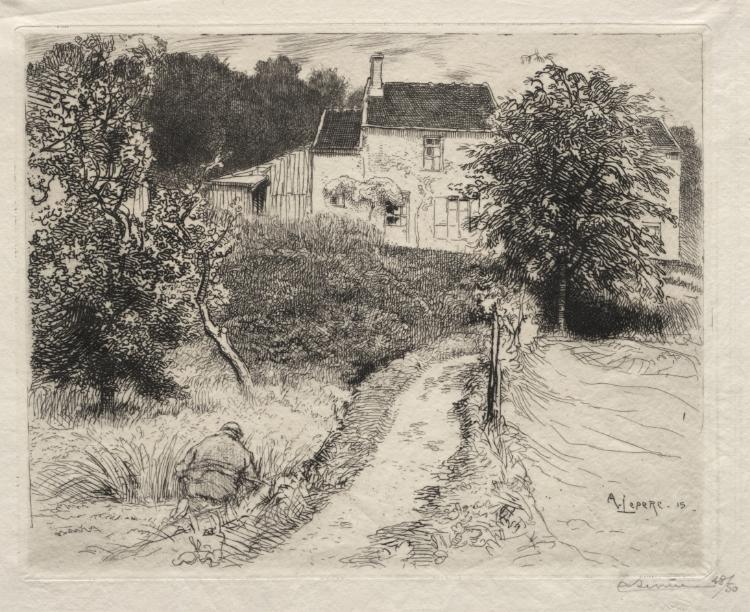 Auguste Louis Lepère (French, 1849–1918) — A Bellot