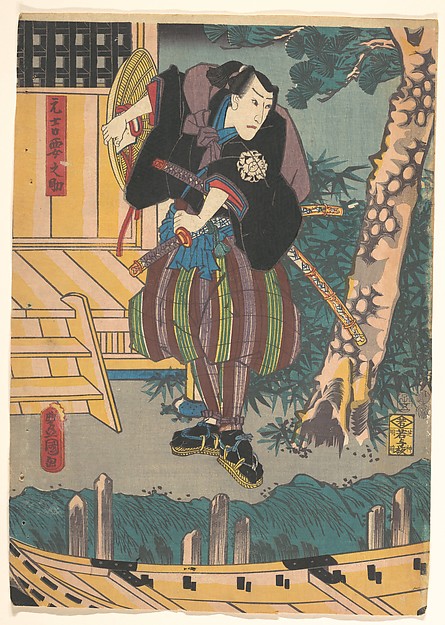
Hakoomaru meets Kudo Saemon Suketsune, from the series "Illustrated Tale of the Soga Brothers (Soga monogatari zue)"
c. 1843/47
Color woodblock print; oban
35.2 × 25.1 cm (13.9 × 9.9 in)
SEE IT IN PERSON
Not currently on view
In the collection of Art Institute of Chicago, Chicago · as of July 2026
Discussion
Be the first to share your thoughts.
Sign in to join the discussion.
More by Utagawa Hiroshige
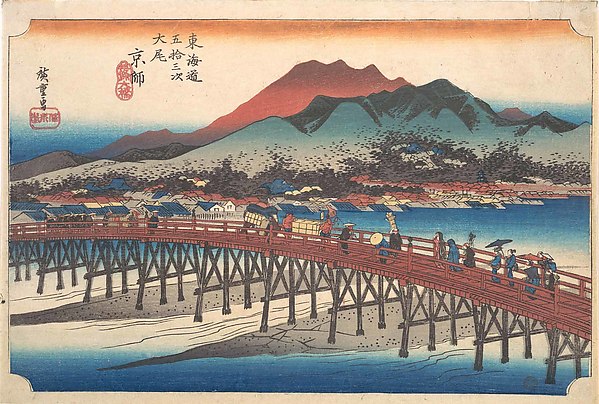 歌川広重画 「東海道五十三次 大尾 京師 三条大橋」|Kyoto: The Great Bridge at Sanjō
  Opening of the Garden at Fukagawa Hachiman Shrine (Fukagawa
 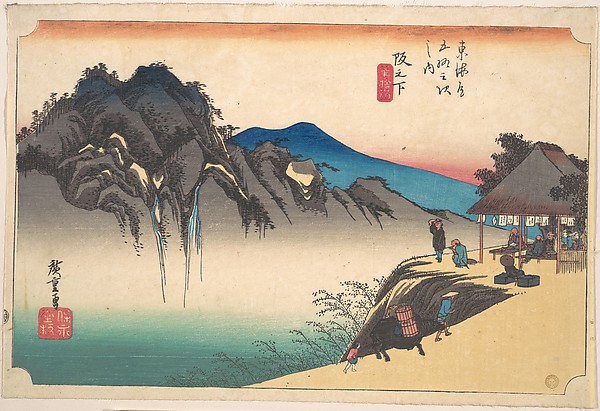 東海道五十三次之内 阪之下 筆捨嶺|Saka-no-shita, Fude-sute Mine
 Kumano Junisha Shrine in Tsunohazu, Popularly Known as Junis
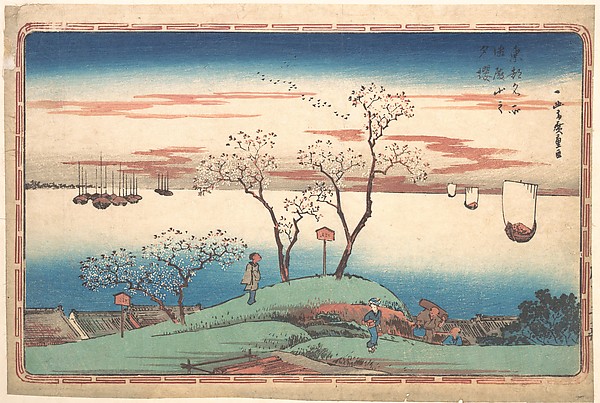 Gotenyama no yu-zakura|東都名所 御殿山之夕桜|Evening Cherry Blossoms a
 Sakanoshita: Peak of Fudesute Mountain (Sakanoshita, Fudesut
 Maisaka: View of Imagiri (Maisaka, Imagiri shinkei), from th
 Inume Pass in Kai Province (Kai Inume toge), from the series
More like this
 Utagawa Kunisada I (Toyokuni III) — The actors Ichikawa Enzo
 Katsukawa Shunsho — The Actors Nakamura Nakazo I as Chinzei
 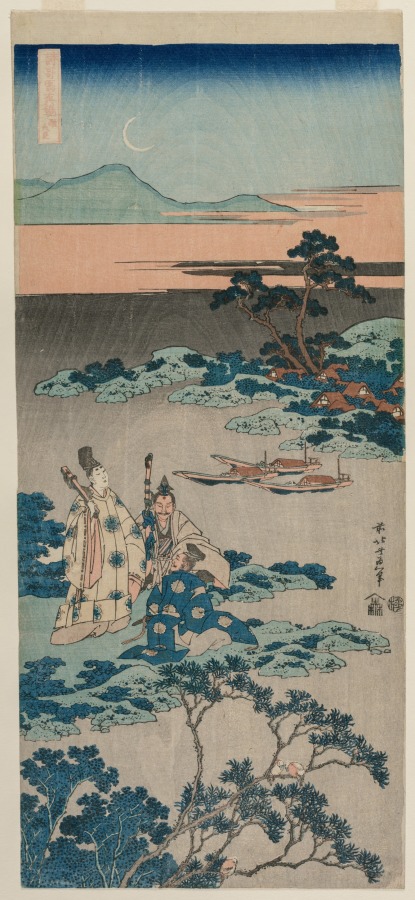 Katsushika Hokusai (Japanese, 1760–1849) — The Minister Toru
 Utagawa Kunisada I (Toyokuni III) — Mount Nachi in Kii Provi
 Tōshūsai Sharaku — The actors Segawa Kikunojo III (R) as the
 Utagawa Kunisada
 Katsushika Hokusai — The Minister Toru (Toru no Otodo), from
 Tsukioka Yoshitoshi — Omori Hikoshichi from the series “New
  Tōshūsai Sharaku — The actors Ichikawa Omezo I (R) as Tomita
 Torii Kiyomitsu I — The Actor Bando Hikosaburo II as Ono no
  Utagawa Kunisada I (Toyokuni III) — The actors Onoe Kikugoro
 Utagawa Kuniaki II