FROM THE CLEVELAND MUSEUM OF ART’S CATALOG
The grandest of the Buddhist mortuary rites is the Water-Land ( shuilu ) ritual. This esoteric ceremony is conducted for the salvation of “all souls of the dead on land and sea.” The ostentatious ritual was performed for imperial ancestors and high officials from the Song (960–1279) to the Ming dynasties and drew large crowds. On the second day of the weeklong ceremony, paintings are hung in the inner altar. These two scrolls belong to a set of 36 Water-Land ritual paintings that are the finest works of their types known from the Ming period. With their bright, opaque color and fine-line gilt decoration intact and unfaded, both paintings share a remarkable state of preservation. In the upper right corner of each painting is an imperial seal and an inscription in gold reading: Donated on the third day of the eighth month in the fifth year of the Jingtai reign (1454) of the Great Ming . Written in ink in the lower left corner is the record that they were made on imperial order, probably to present them to the Da Longfu monastery in Beijing. One scroll represents the Eight Hosts of Celestial Nagas and Yakshis as described in the Lotus Sutra . The other represents Bodhisattvas of the T
Source ↗︎
Be the first to share your thoughts.
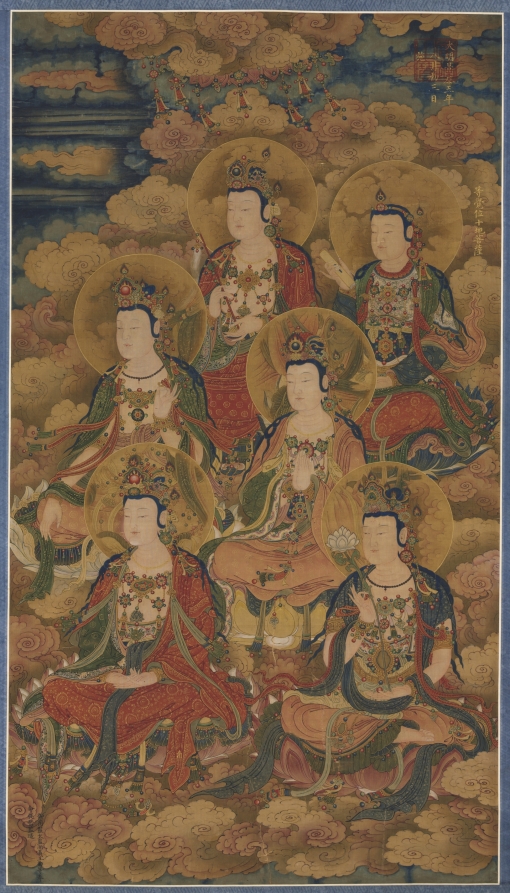 The Bodhisattvas of the Ten Stages in Attaining the Most Per
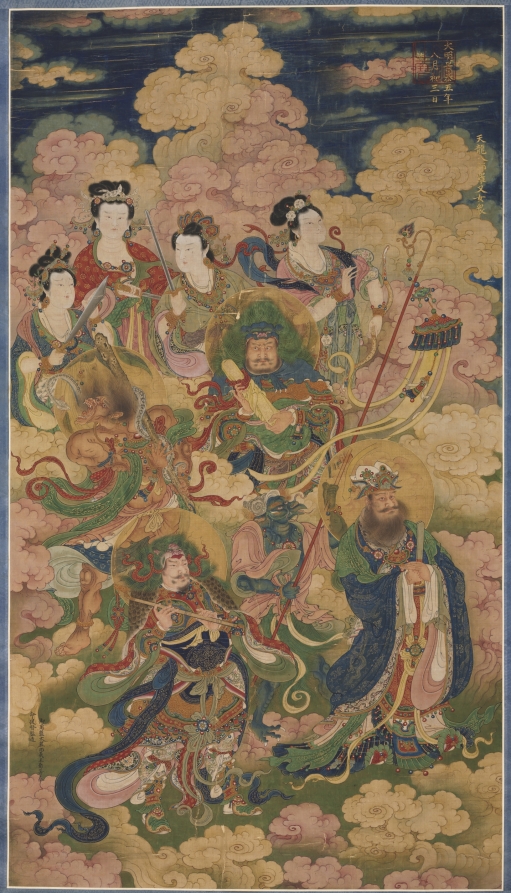 The Eight Hosts of Deva, Naga, and Yakshi
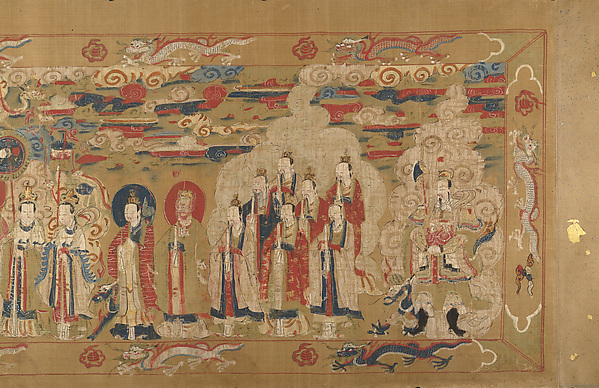 Unidentified artist — 明 佚名 奉神圖 卷|Canonization scroll of
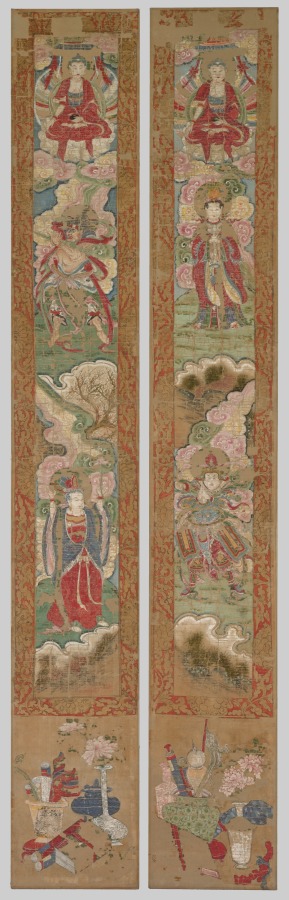 Buddhist Panel
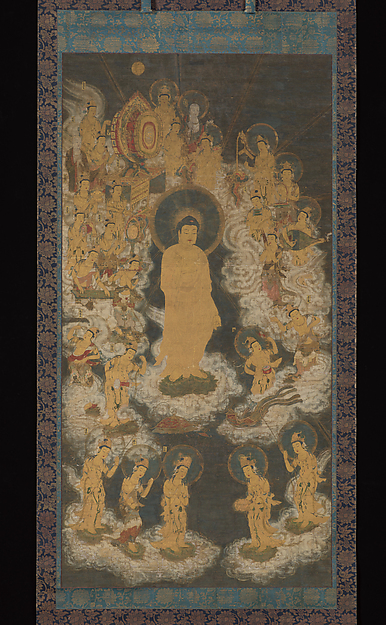 Unidentified artist — 阿弥陀聖衆来迎図 |Welcoming Descent of Amida a
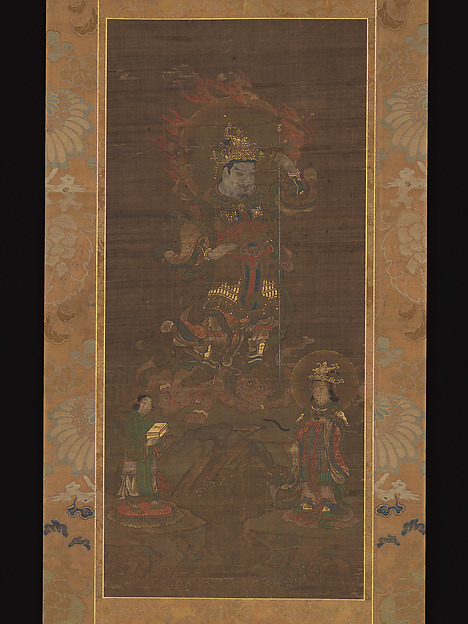 Unidentified — 鞍馬山曼荼羅・毘沙門天三尊像図|Mount Kurama Mandala: Bishamo
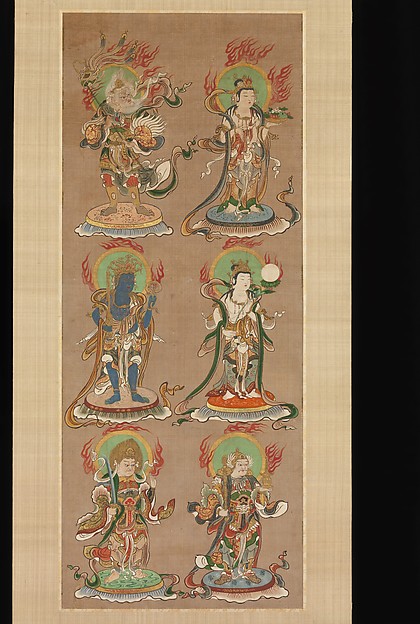 十二天像|Twelve Deva Kings (Jūniten)
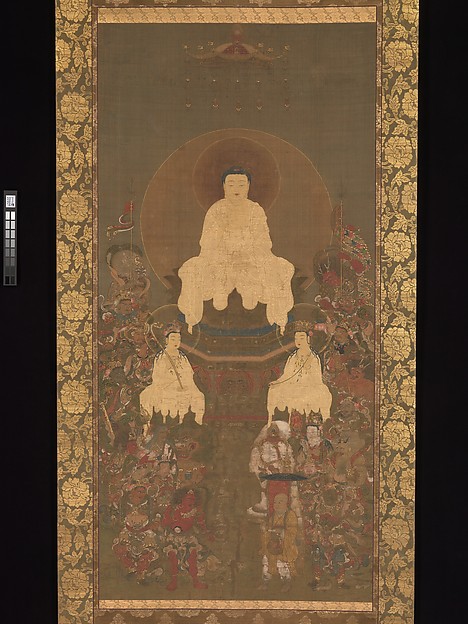 Unidentified artist — 釈迦三尊十六善神像|Shaka (Shakyamuni), the Hist
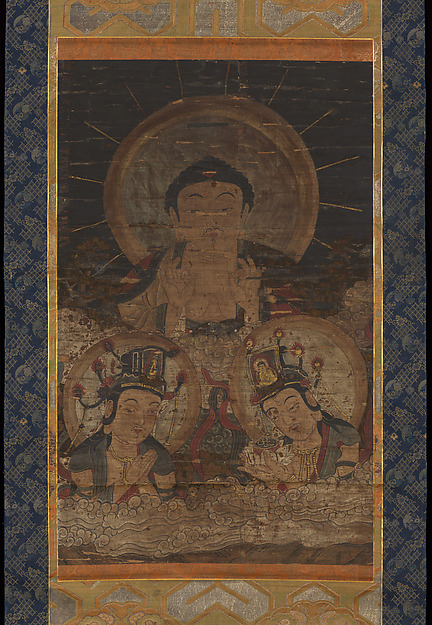 Unidentified artist
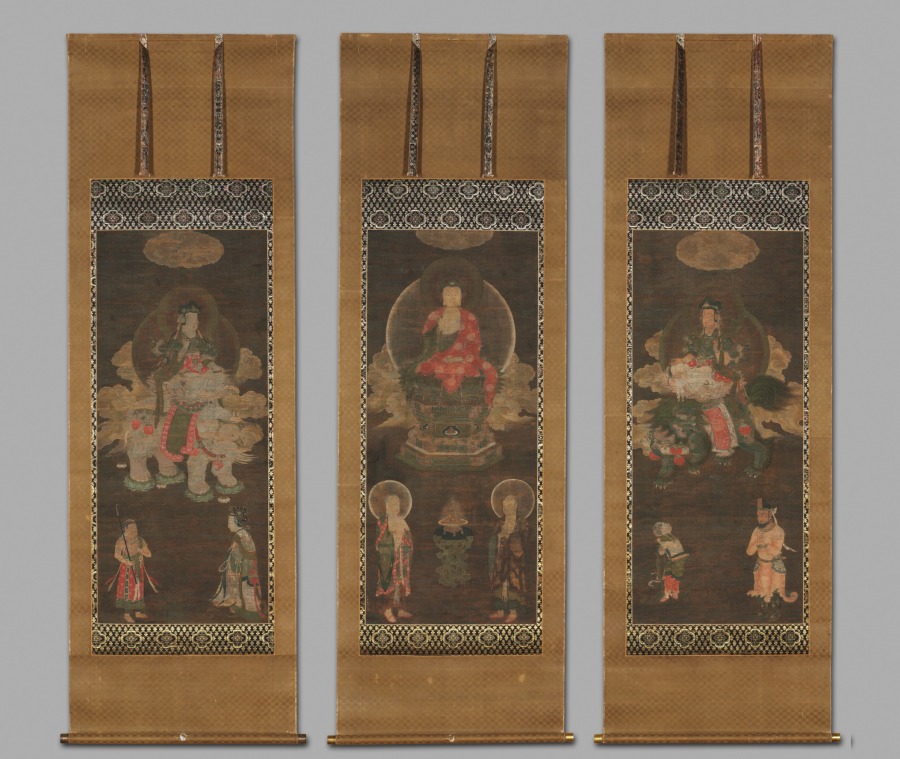 Shakyamuni Triad: Buddha Attended by Manjushri and Samantabh
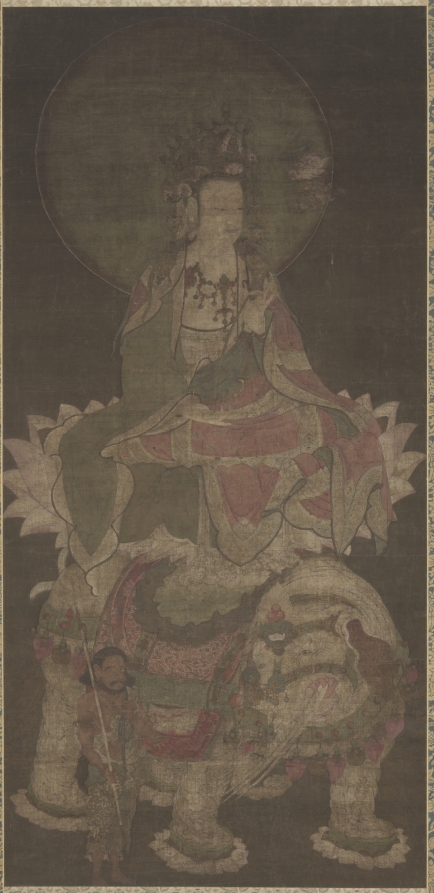 Samantabhadra
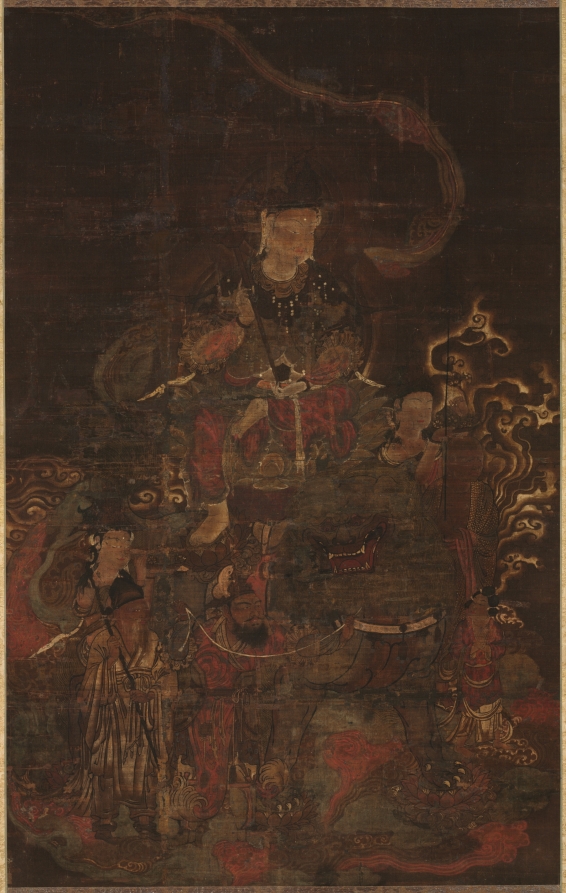 Monju Riding Lion with Attendants