In the collection of The Metropolitan Museum of Art, New York — check current display status with the museum.
Be the first to share your thoughts.
Sign in to join the discussion.
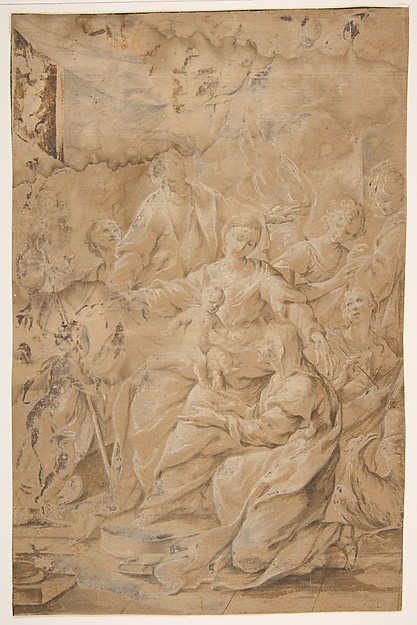 Andrea Sacchi — Holy Family
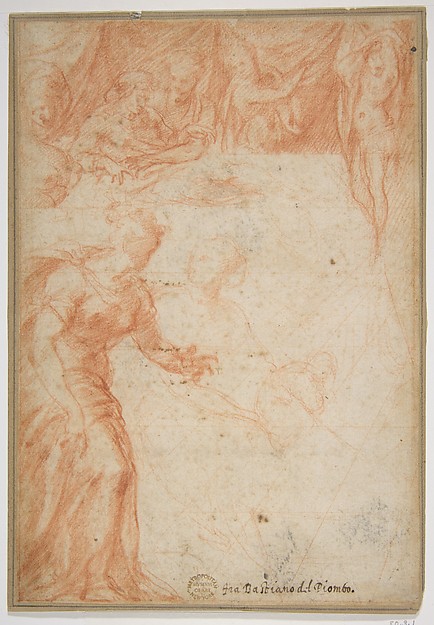 Rosso Fiorentino — Figural Studies for a Scene (The Birth of
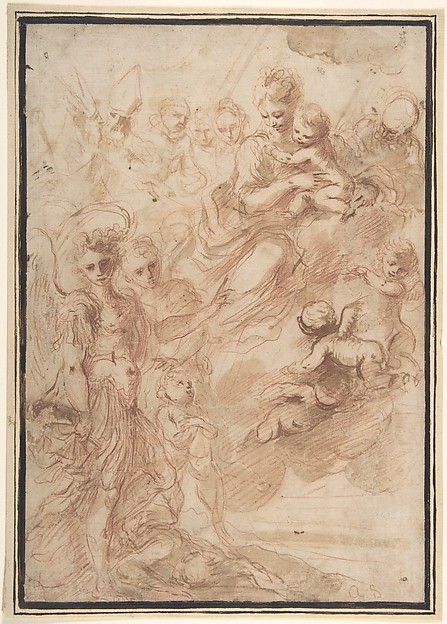 Bartolomeo Biscaino — Saint Michael the Archangel and Anothe
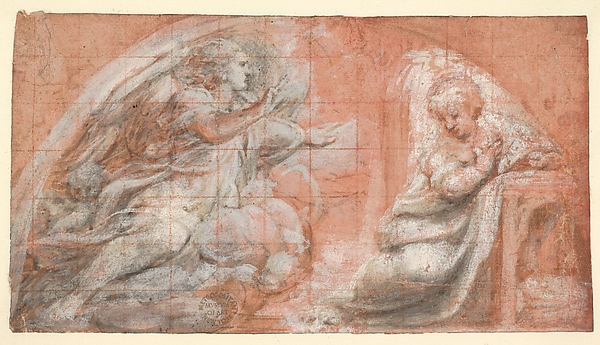 Correggio (Antonio Allegri) — The Annunciation
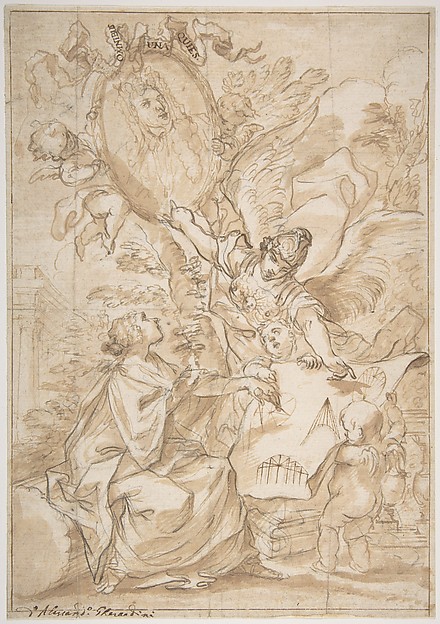 Alessandro Gherardini — Allegorical Homage to an Architect (
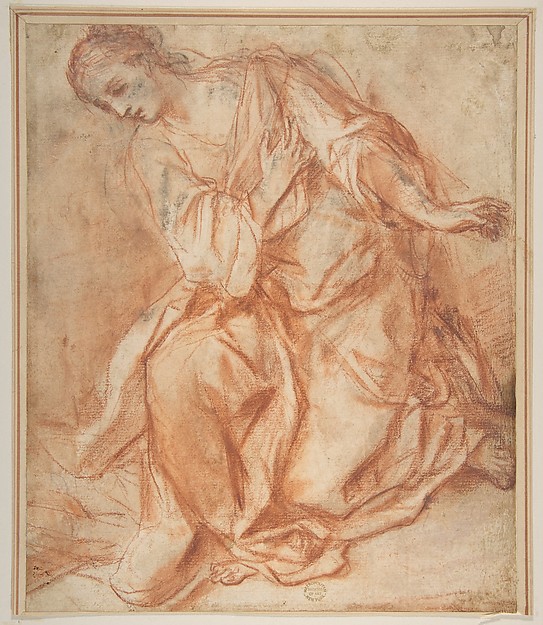 Mattia Preti (Il Cavalier Calabrese) — Kneeling Woman
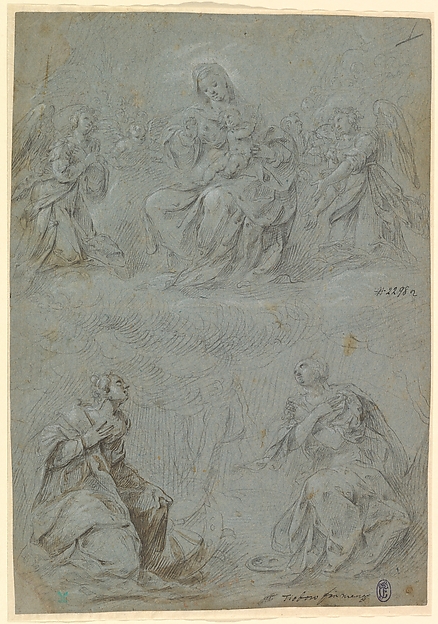 Dirck Hendricksz., called Centen, also called Teodoro d'Erri
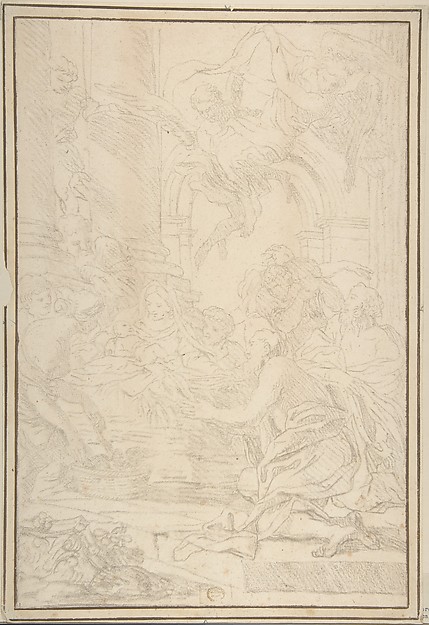 Anonymous, Italian, Roman-Bolognese, 17th century — The Ador
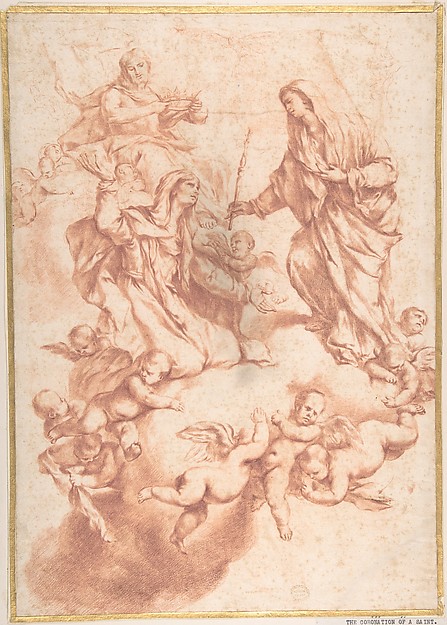 Luca Giordano — Saint Anne Received in Heaven by Christ and
 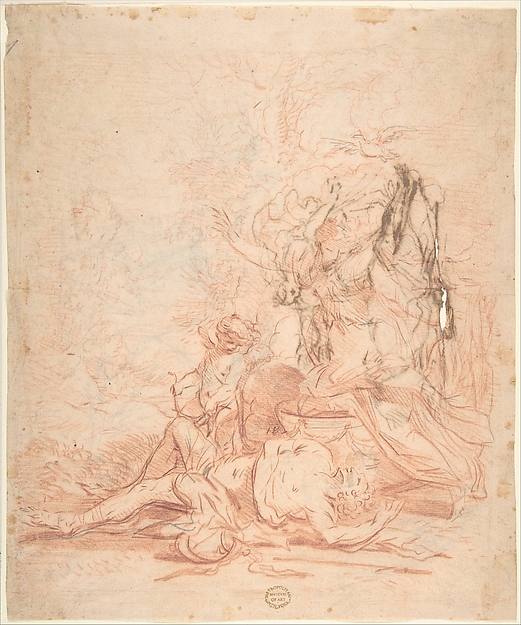 Anonymous, Italian, Roman-Bolognese, 17th century — Venus an
 Joachim von Sandrart — The Holy Kinship (Madonna and Child a
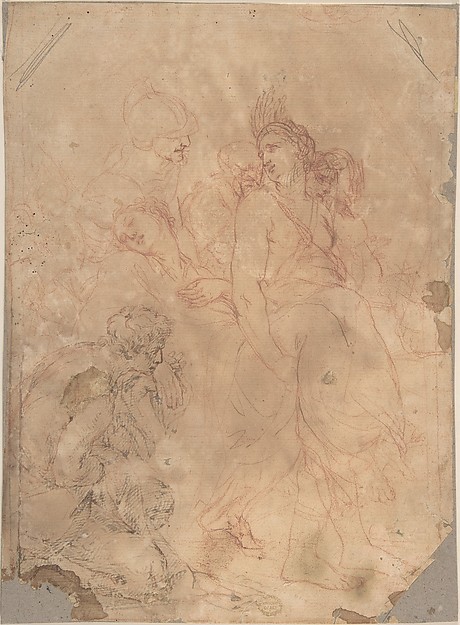 Anonymous, Italian, Roman-Bolognese, 17th century — Figures