Two Studies of a Roma Woman and a Roma Boy in a Large Hat
SEE IT IN PERSON
Not currently on view
In the collection of Art Institute of Chicago, Chicago · as of July 2026
Discussion
FROM THE ART INSTITUTE OF CHICAGO’S CATALOG
Jacques De Gheyn II employed a stylized graphic language of hatching and cross-hatching to capture the individual features and garments of the figures represented here, which include a woman shown from two vantage points and a young boy. The artist used iron gall ink made from the protective growth an oak tree produces after a wasp lays its eggs inside the tree branch. The ink is deep brown and almost black in some areas. Because iron gall ink contains a high concentration of tannic acid, however, it dissolves paper over time. Above the right foot of the Roma woman the damaged paper was repaired. On several occasions De Gheyn represented figures from the Roma or Romani community, itinerant members of Dutch society whose origins can be traced to northern India. Often finding shelter at the outskirts of cities, the Roma frequently took up informal trades like peddling and fortune telling.
Be the first to share your thoughts.
Sign in to join the discussion.
More by Jacob de Gheyn, II


More like this
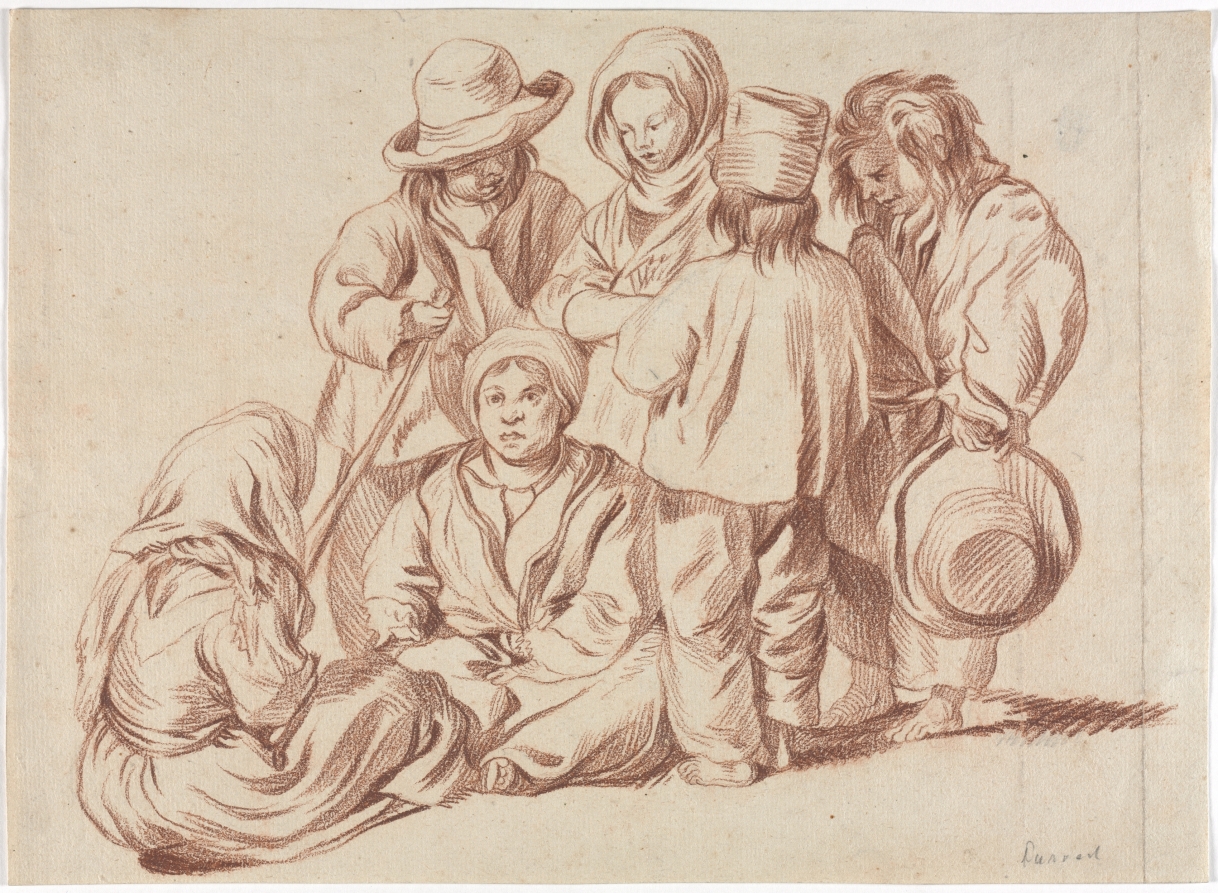 Group of Six Children (recto)
 Rembrandt (Rembrandt van Rijn)|Nicolaes Maes — Studies of Tw
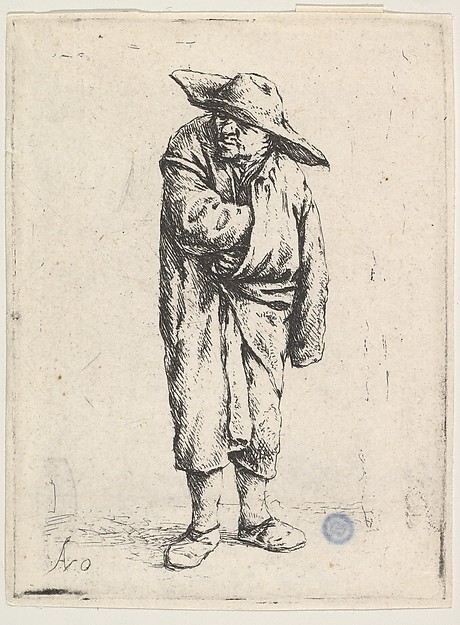 Adriaen van Ostade — Peasant With His Hand In His Cloak
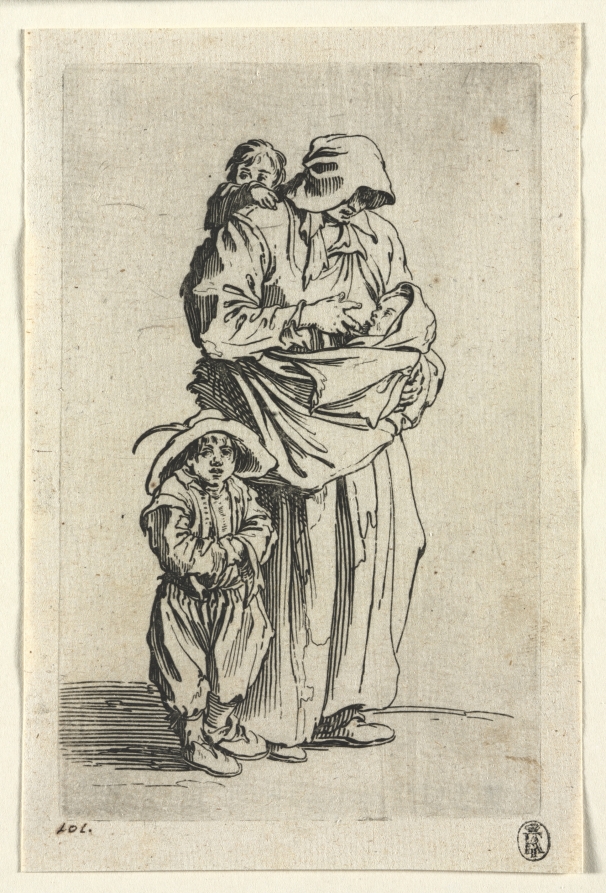 Jacques Callot (French, 1592–1635) — The Beggars: A Mother a
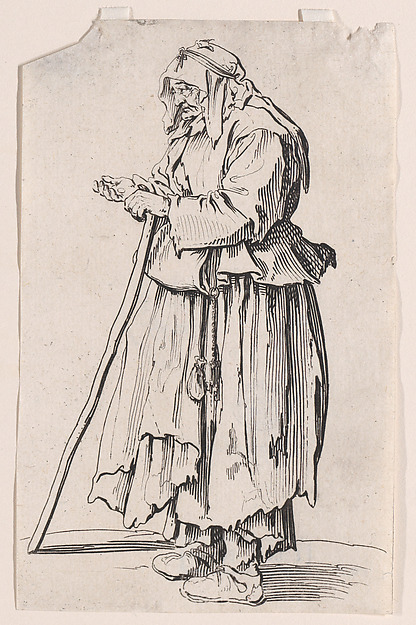 Jacques Callot — La Mendiante Venant de Recevoir la Charité
  Rembrandt van Rijn — Beggar in a High Cap, Standing and Lean
 Rembrandt van Rijn — Peasant Family on the Tramp
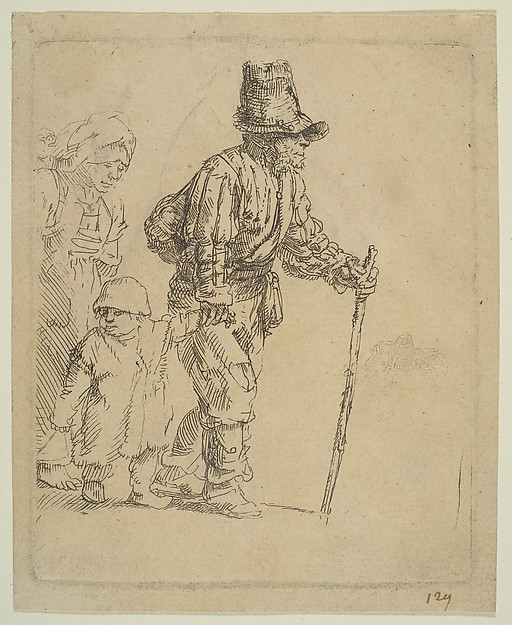 Rembrandt (Rembrandt van Rijn) — Peasant Family on the Tramp
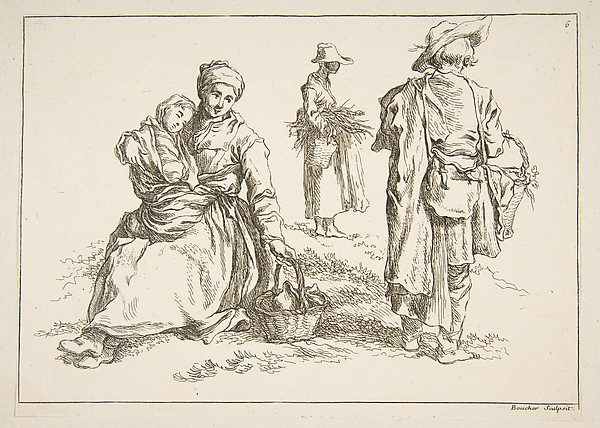 François Boucher|Abraham Bloemaert — Sheet of Sketches
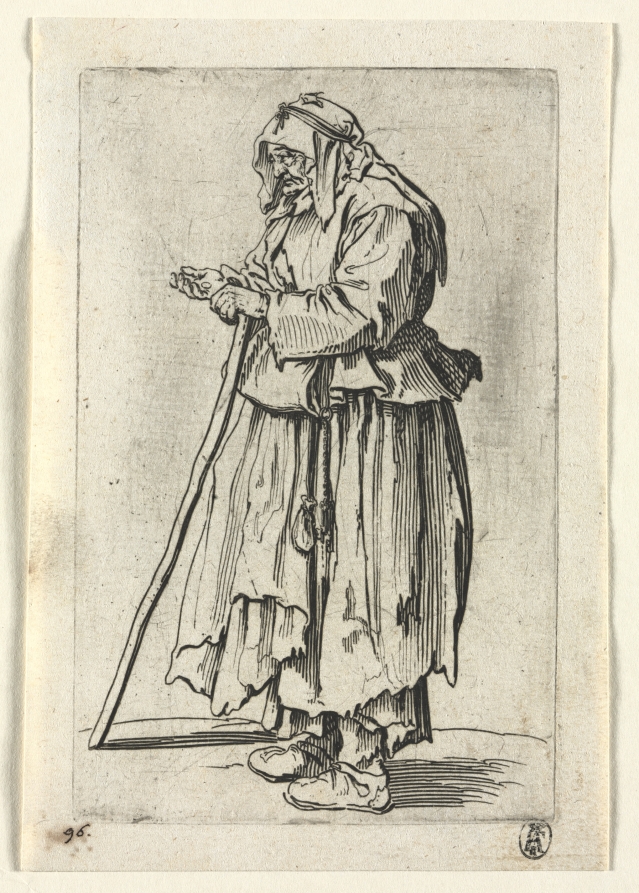 Jacques Callot (French, 1592–1635) — The Beggars: Beggar Wom
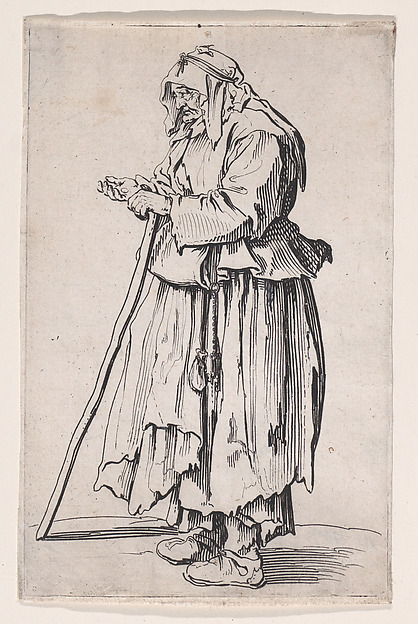 Jacques Callot — La Mendiante Venant de Recevoir la Charité
  Adriaen van Ostade — Two Gossips