FROM THE CLEVELAND MUSEUM OF ART’S CATALOG
This scene from ancient history shows a moment in the boyhood of the great Carthaginian general Hannibal (247-about 183 bc). While sacrificing to the gods in preparation for a military campaign, Hannibal's father decided to have his son swear an oath to remain the eternal enemy of Rome. At the center of the composition, the nine-year-old Hannibal imitates the gesture and stance of his father, while a bull is sacrificed below. The unknown creator of the scene probably planned to make a larger painting of it because important events from antiquity, such as this one, were typical subjects for the period. In addition, the overall use of pen and brush with white highlights for modeling was a technique frequently used to finalize a composition before realization on a larger scale in oil.
Source ↗︎
Be the first to share your thoughts.
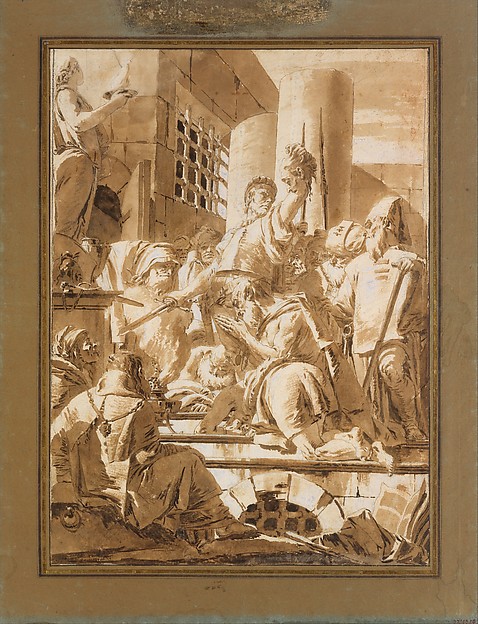 Giovanni Battista Tiepolo — Beheading of Two Male Saints
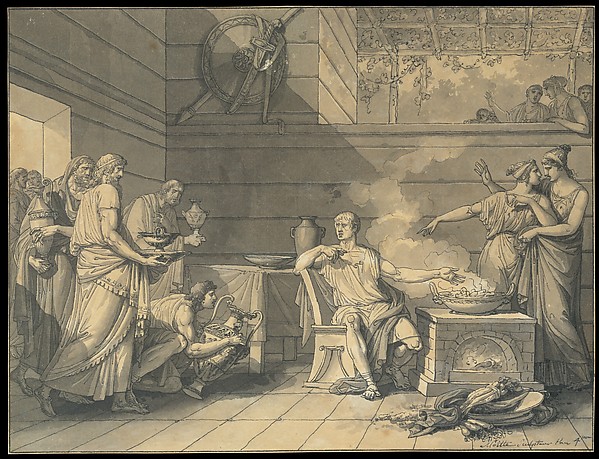 Jean Guillaume Moitte — Manius Curius Dentatus Refusing the
 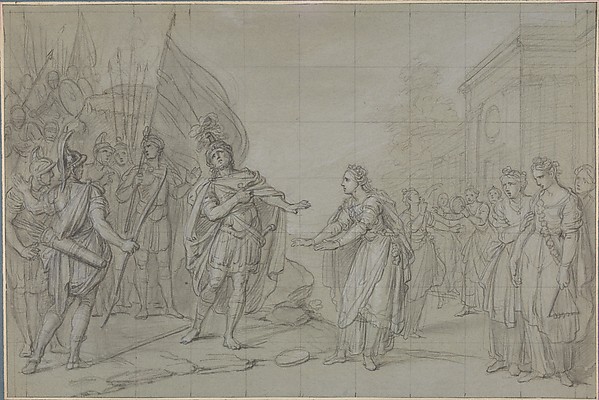 Charles Antoine Coypel — The Daughter of Jephthah
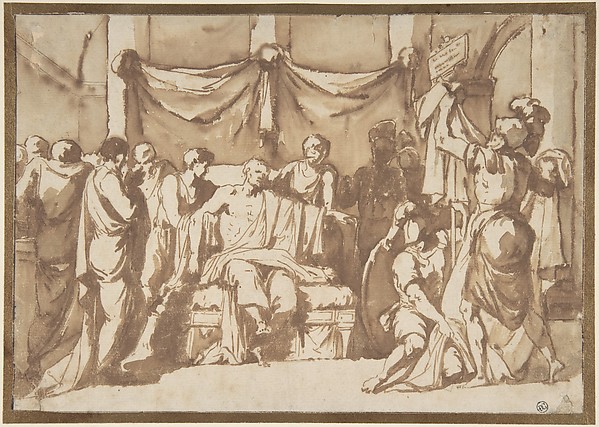 Pierre Peyron — The Death of Seneca
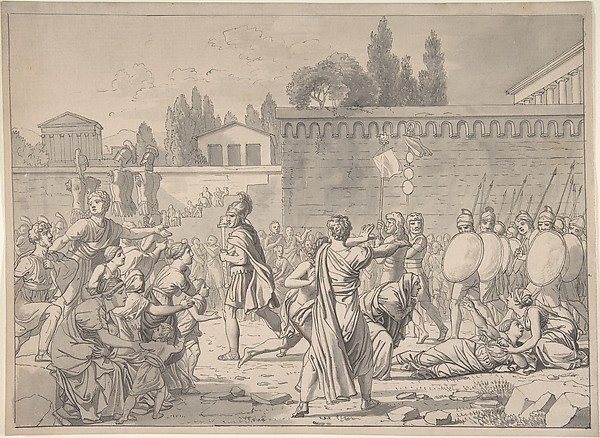 Christoffer Wilhelm Eckersberg — The Surviving Horatian
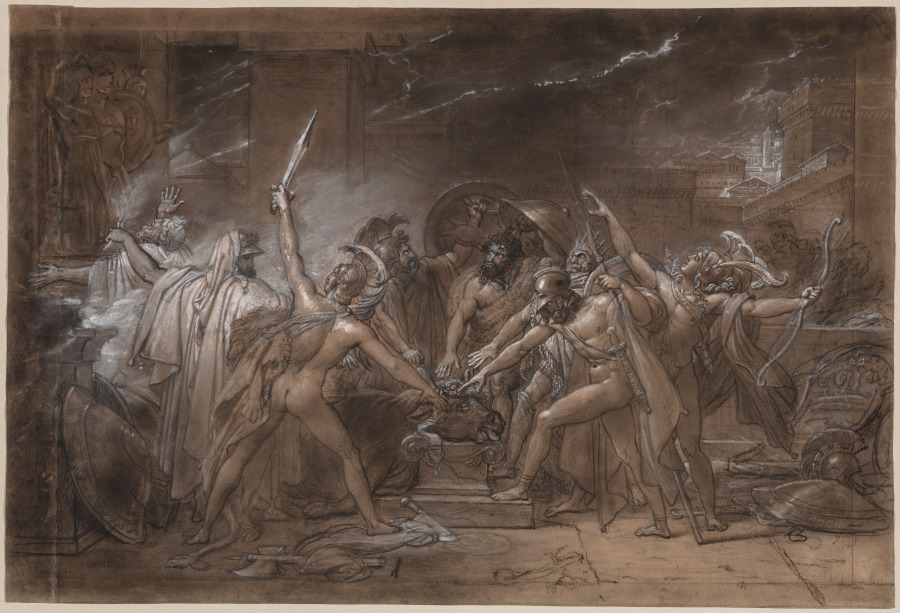 Anne-Louis Girodet de Roucy-Trioson (French, 1767–1824) — Th
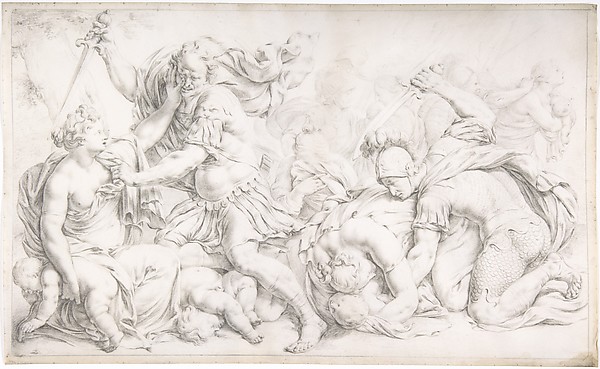 Willem van Mieris — Massacre of the Innocents
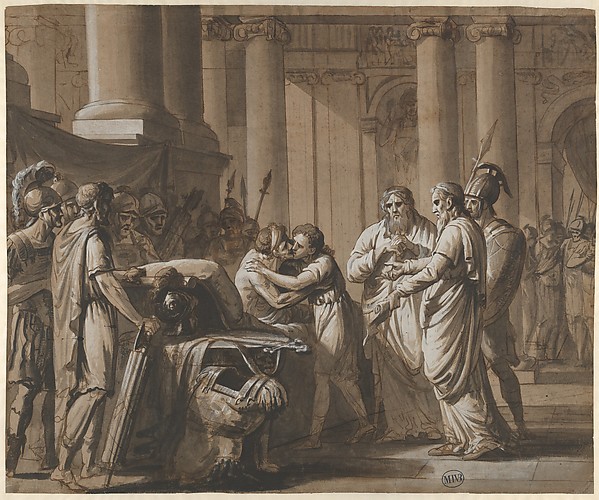 Mathieu-Ignace van Bree — Scene from Roman History, depictin
 Heinrich Friedrich Füger — Two Warriors in Classical Costume
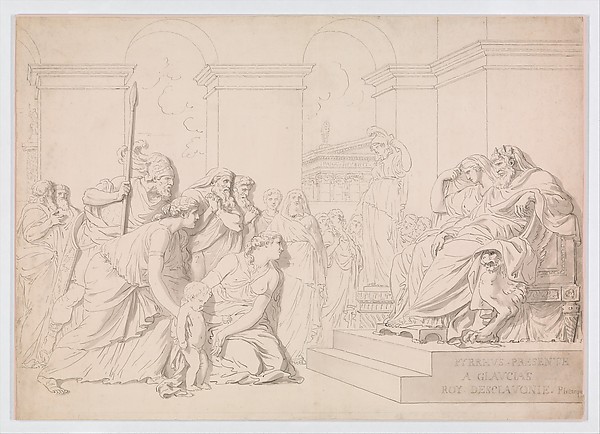 Augustin Pajou — Pyrrhus in the House of Glaucias
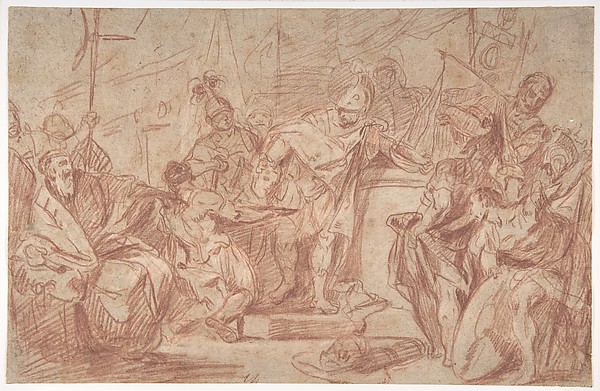 Nicola Marcola — Scene from Ancient History (recto); Leg and
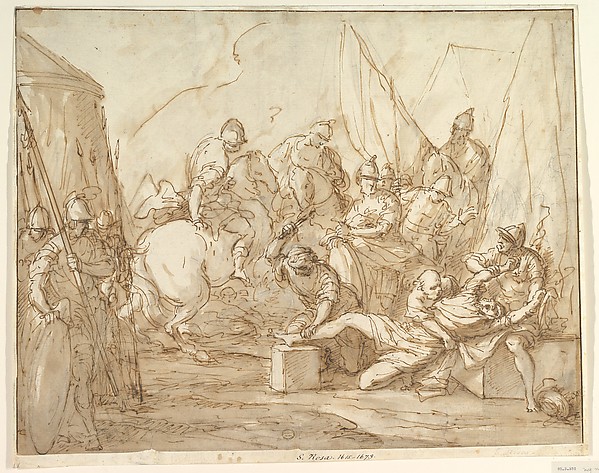 Giuseppe Piattoli — Scene from Ancient History