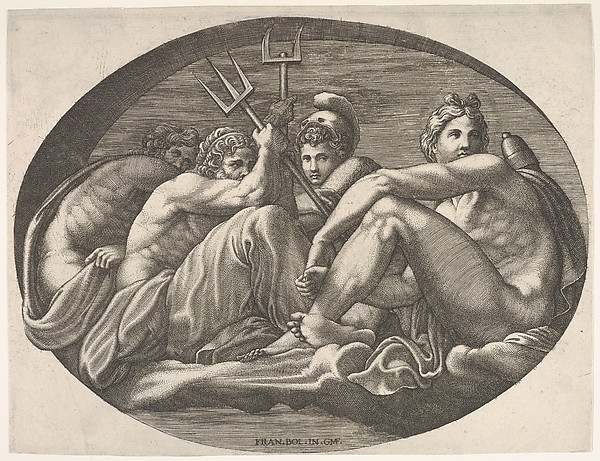
Giorgio Ghisi|Francesco Primaticcio

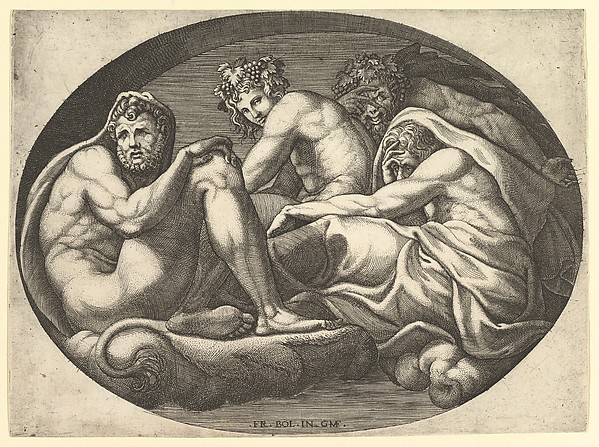
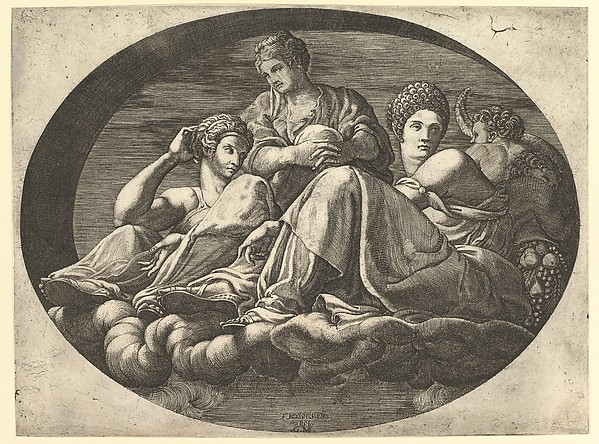
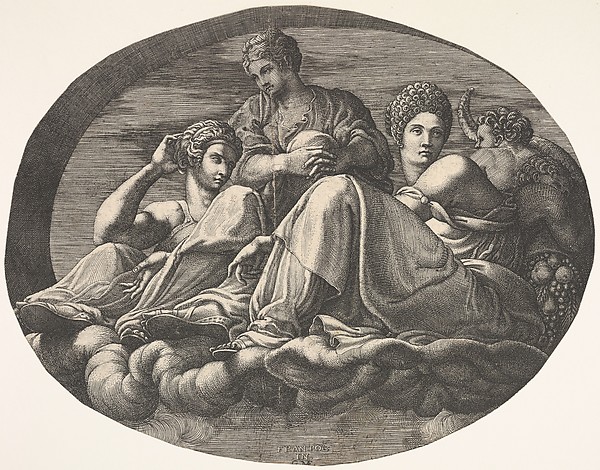
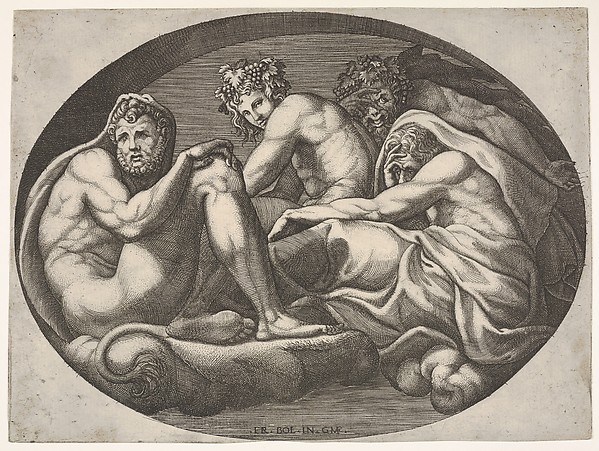
Pluto, Neptune, Minerva and Apollo, from a series of eight compositions after Francesco Primaticcio's designs for the ceiling of the Ulysses Gallery (destroyed 1738-39) at Fontainebleau

1560s
Engraving
17.6 × 23.7 cm (6.9 × 9.3 in)

SEE IT IN PERSON

Not currently on view

In the collection of The Metropolitan Museum of Art, New York · as of July 2026

View at metmuseum.orgPlan a visit ↗

Discussion

Be the first to share your thoughts.

Sign in to join the discussion.

Community guidelines

More by Giorgio Ghisi|Francesco Primaticcio
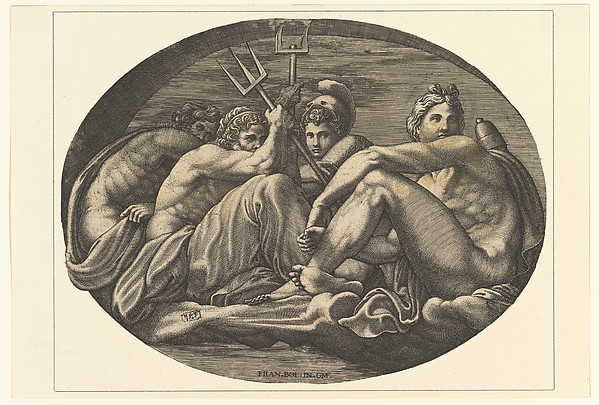
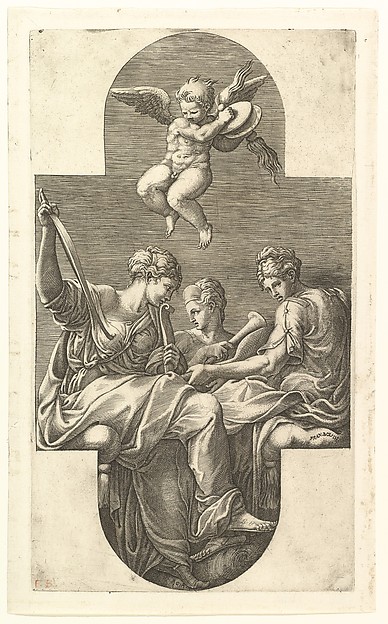
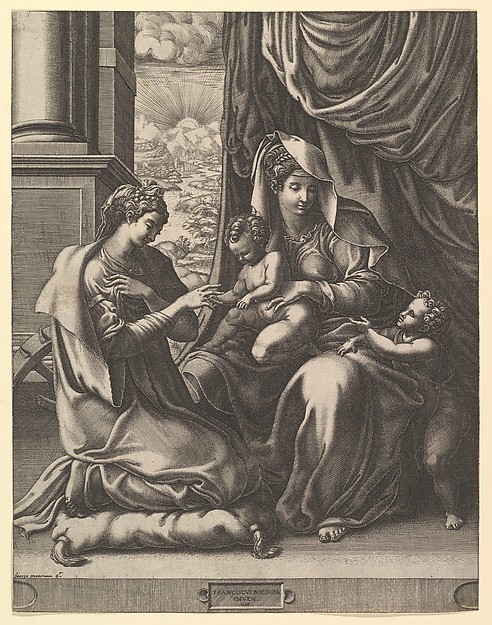
Pluto, Neptune, Minerva, and Apollo, from a series of eight compositions after Francesco Primaticcio's designs for the ceiling of the Ulysses Gallery (destroyed 1738–39) at FontainebleauPluto, Neptune, Minerva, and Apollo, from a series of eight Apollo, Neptune, Pluto, and Athena seated on a cloud under an arch, an oval composition, from a series of eight compositions after Francesco Primaticcio's designs for the ceiling of the Ulysses Gallery (destroyed 1738-39) at FontainebleauApollo, Neptune, Pluto, and Athena seated on a cloud under aThree Muses and a Putto with Cymbals,  a cruciform composition, from a series of eight compositions after Francesco Primaticcio's designs for the ceiling of the Gallery of Ulysses (destroyed 1738-39) at FontainebleauThree Muses and a Putto with Cymbals, a cruciform compositiCeres Seated on Clouds with Two Goddesses and Two Putti, from a series of eight compositions after Francesco Primaticcio's designs for the ceiling of the Ulysses Gallery (destroyed 1738-39) at FontainebleauCeres Seated on Clouds with Two Goddesses and Two Putti, froJuno and two goddesses reclining on clouds with two child figures and fruits at right, an oval composition, from a series of eight compositions after Francesco Primaticcio's designs for the ceiling of the Ulysses Gallery (destroyed 1738-39) at FontainebleauJuno and two goddesses reclining on clouds with two child fiThe Mystic Marriage of St. CatherineThe Mystic Marriage of St. CatherineHercules, Bacchus, Pan, and Saturn, from a series of eight compositions after Francesco Primaticcio's designs for the ceiling of the Ulysses Gallery (destroyed 1738–39) at FontainebleauHercules, Bacchus, Pan, and Saturn, from a series of eight cHercules, Bacchus, Pan, and another god seated on a cloud under an arch, an oval composition, from a series of eight compositions after Francesco Primaticcio's designs for the ceiling of the Ulysses Gallery (destroyed 1738-39) at FontainebleauHercules, Bacchus, Pan, and another god seated on a cloud un
More like this

Venus and Vulcan at the ForgeGiorgio Ghisi|Perino del Vaga (Pietro Buonaccorsi) — Venus aSeated Neptune holding a conch shell to his mouth, accompanied by a seated triton and another emerging from the water at bottom rightGiorgio Ghisi|Perino del Vaga (Pietro Buonaccorsi) — Seated Thetis Standing with Two TritonsGiorgio Ghisi|Perino del Vaga (Pietro Buonaccorsi)|AnonymousVenus and Mars with cupid and the Three GracesGiovanni Jacopo Caraglio|Rosso Fiorentino|Master HCB — VenusThetis Standing with Two TritonsGiorgio Ghisi|Perino del Vaga (Pietro Buonaccorsi)|Anonymousornamental Frieze with two Putti and a MonsterGiulio Bonasone — ornamental Frieze with two Putti and a MonThe Battle of the Sea Gods (left portion of  frieze)Andrea Mantegna — The Battle of the Sea Gods (left portion oAssembly of the Gods after the ceiling composition in the Loggia di Psiche, Villa Farnesina, RomeGiovanni Jacopo Caraglio|Giovanni Francesco Penni|Raphael (RThe Three GracesJacob Matham — The Three GracesGalatea escaping Polyphemus; he is seated on a rock holding a staff and pipes and looking towards Galatea at right riding a shell pulled by two dolphins, Cupid flying aboveMarco Dente — Galatea escaping Polyphemus; he is seated on aEnvy or Avarice at the right being driven from the temple of the Muses by Hercules who raises a club, the muses watching from the leftMaster of the Die|Ugo da Carpi|Philippe Thomassin|BaldassareFour classical figures (pagan sacrifice)Andrea Mantegna|Wenceslaus Hollar — Four classical figures (