In the collection of Cleveland Museum of Art, Cleveland — check current display status with the museum.
FROM THE CLEVELAND MUSEUM OF ART’S CATALOG
This is one of three prints forming a continuous scene of figures visiting Futamigaura Bay near Ise Grand Shrine, one of Japan’s most sacred places. In the background, the sun rises between the “Wedded Rocks” joined by a twisted rope, called a shimenawa , used to designate a sanctified space. The rocks mark the entrance to Futami Okitama Shrine and are said to be embodiments of Izanagi and Izanami, the gods who, according to myth, created Japan. Futamigaura was a place where pilgrims purified themselves before visiting Ise and often lodged afterward.
Be the first to share your thoughts.
Sign in to join the discussion.
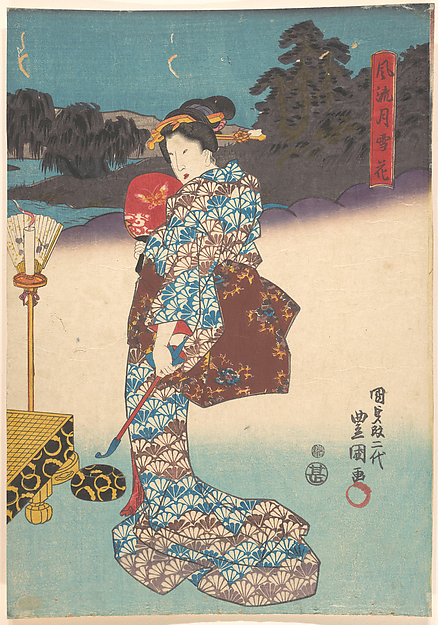 Utagawa Kunisada
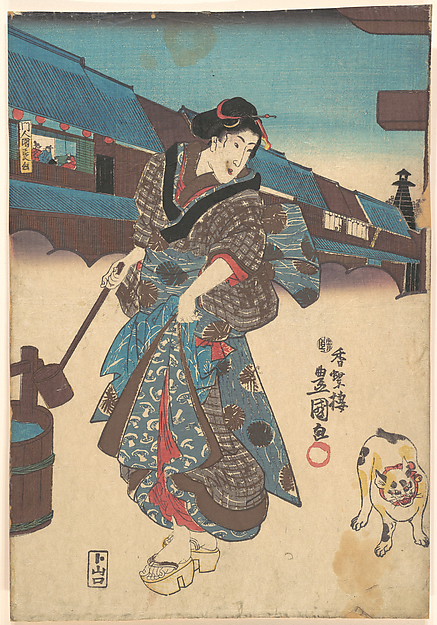 Utagawa Kunisada
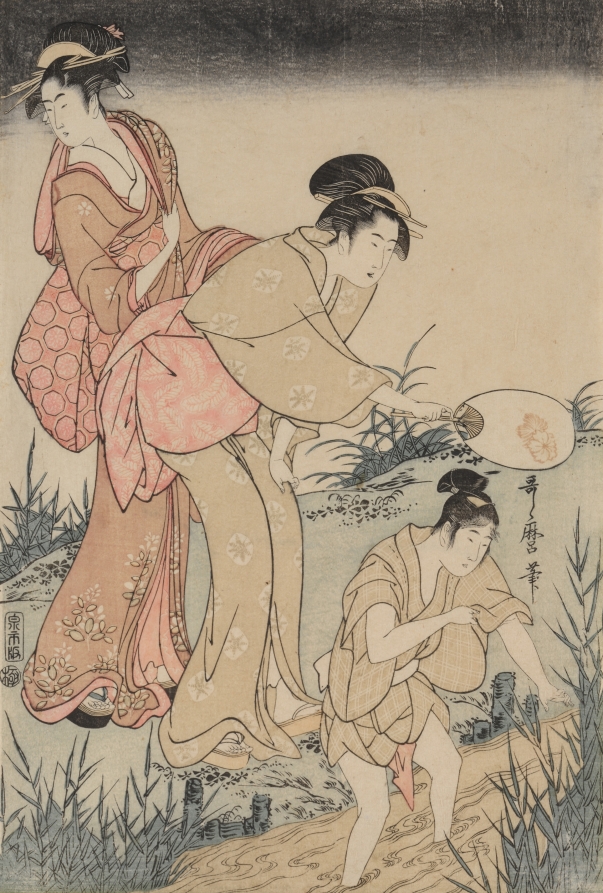 Kitagawa Utamaro (Japanese, c. 1754–1806) — Catching Firefli
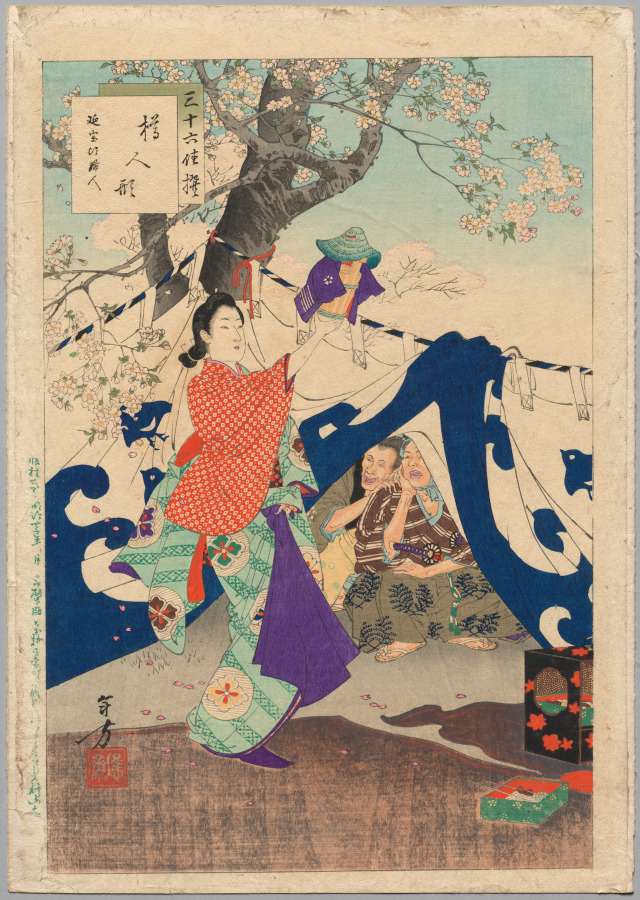 Mizuno Toshikata (Japanese, 1866–1908) — A Puppet Made from
 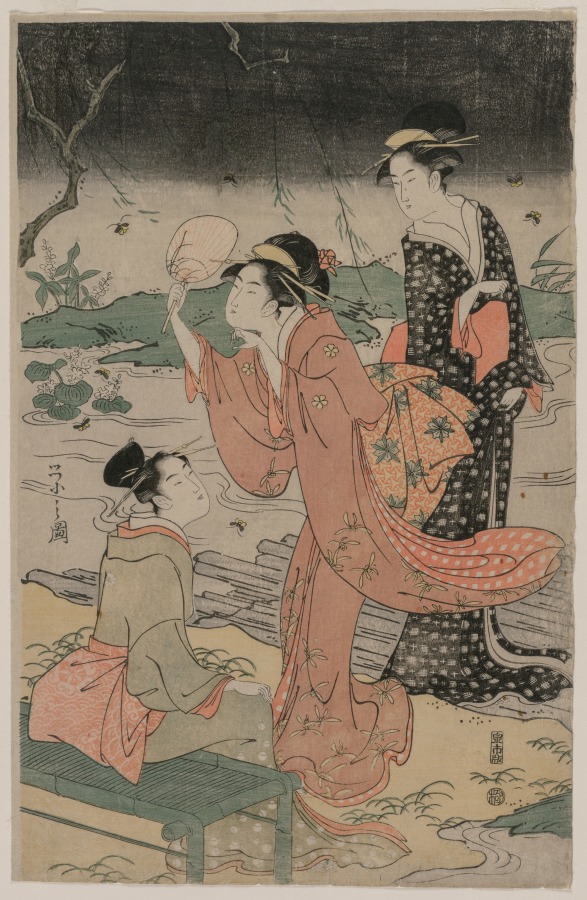 Chōbunsai Eishi (Japanese, 1756–1829) — Women Beside a Strea
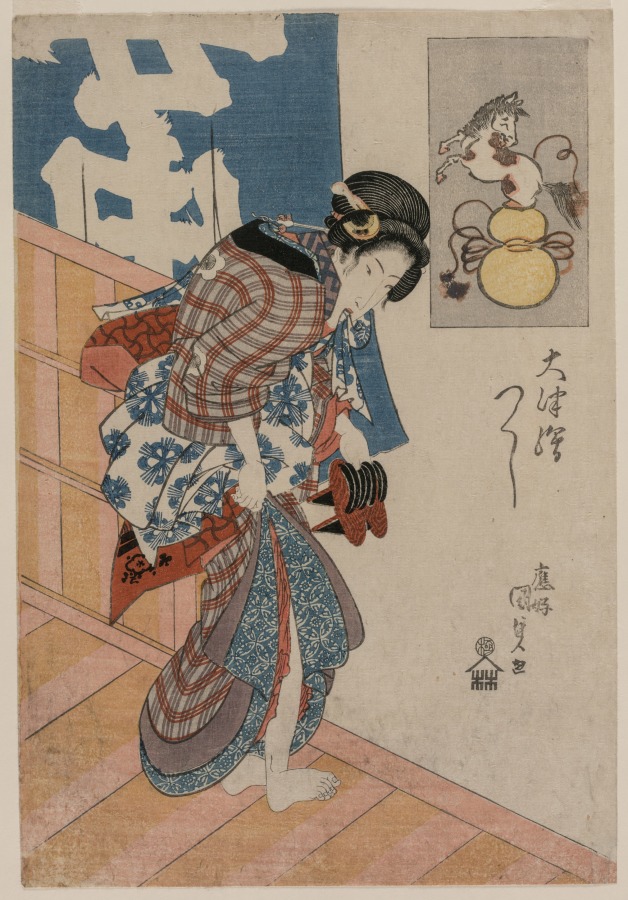 Utagawa Kunisada (Japanese, 1786–1865) — Woman Leaving a Bat
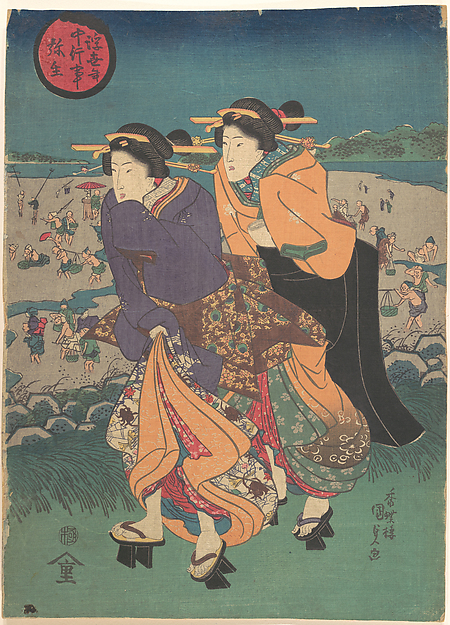 Utagawa Kunisada
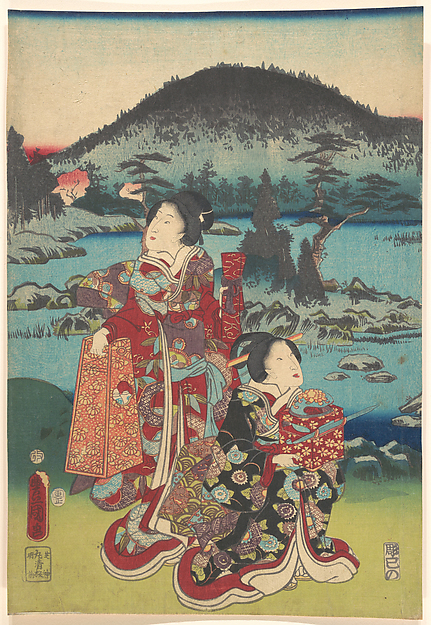 Utagawa Kunisada
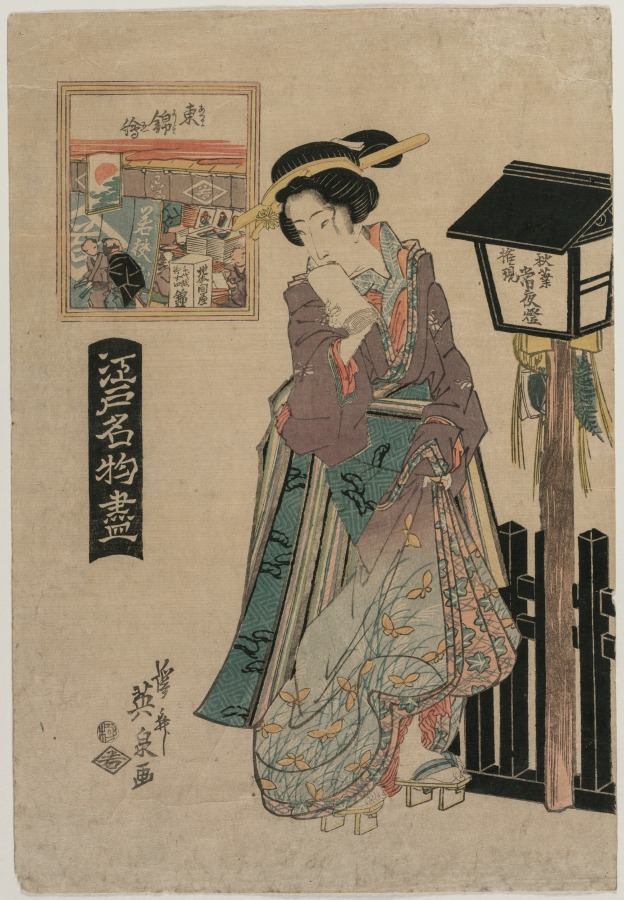 Keisai Eisen (Japanese, 1790–1848) — Pictures of Eastern Bro
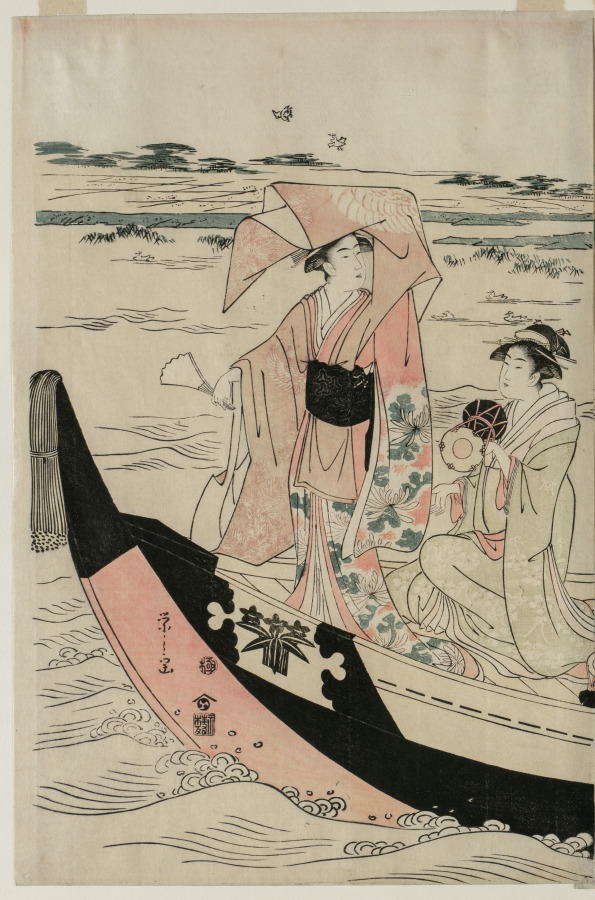 Chōbunsai Eishi (Japanese, 1756–1829) — Women in a Pleasure
 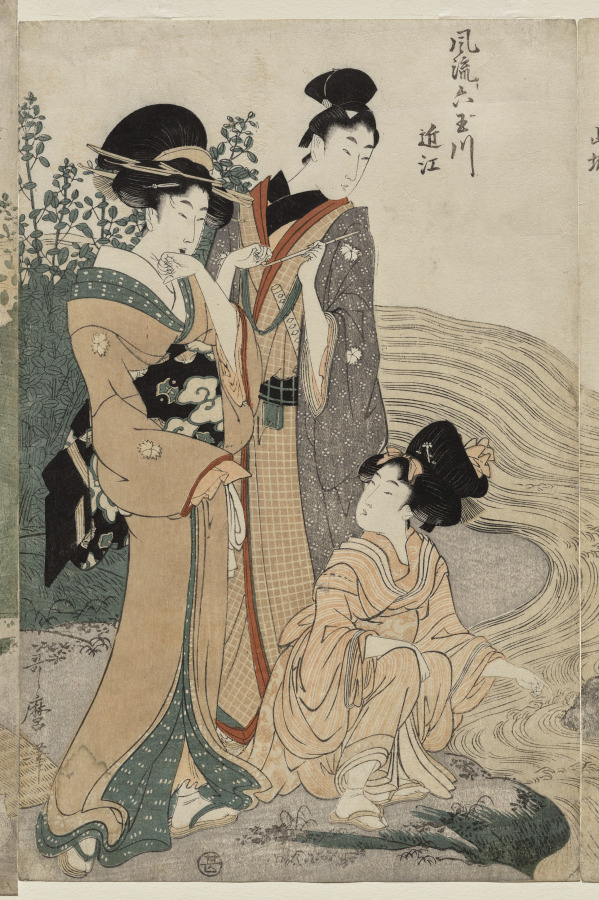 Kitagawa Utamaro (Japanese, c. 1754–1806) — Omi Province fro
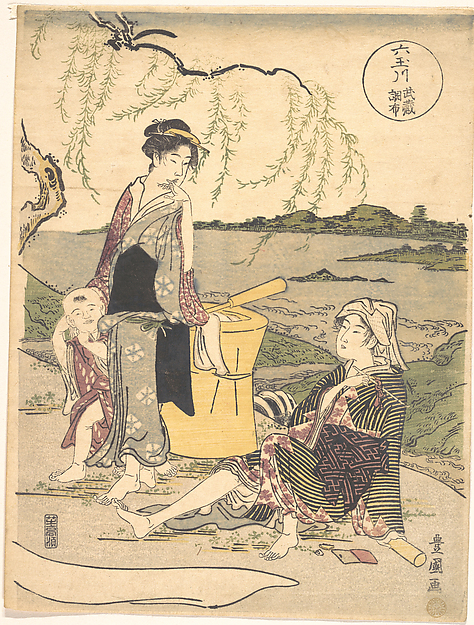 Utagawa Toyokuni I