FROM THE CLEVELAND MUSEUM OF ART’S CATALOG
Hand-spun and woven cotton cloth was probably the most important commodity exported from India during the 1700s and 1800s. The British East India Company expanded to manage the business of textile production and international sale. The humble conditions under which Indian weavers and spinners worked are depicted here, where simple looms are made from crude branches, and the craftsmen work on the ground. The inscriptions at the top of the page indicate the artist’s name and the workers’ occupations.
Source ↗︎
Be the first to share your thoughts.
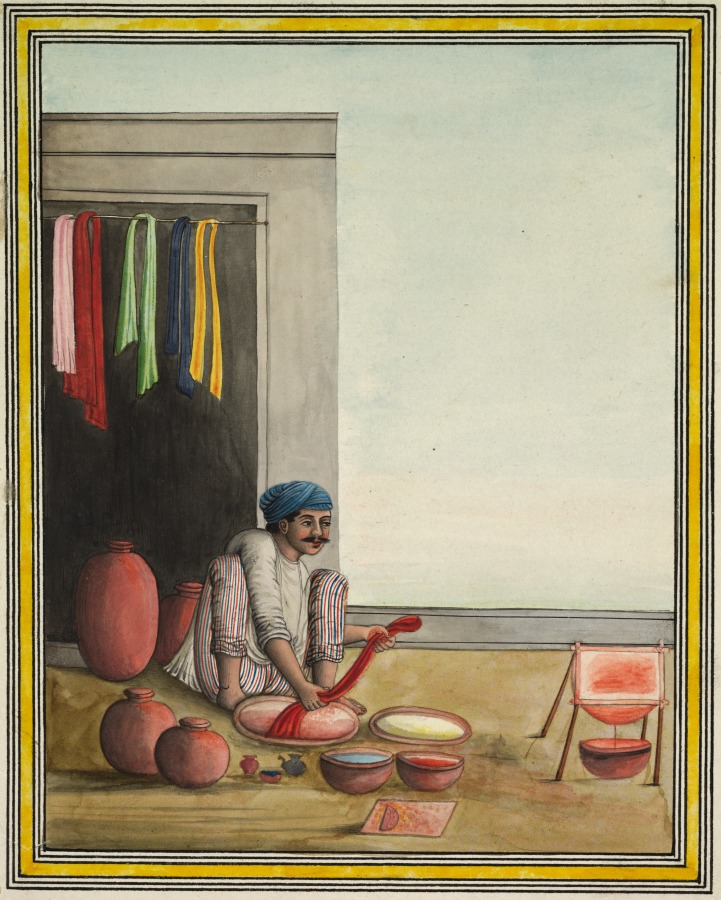 Man Dyeing Cloth
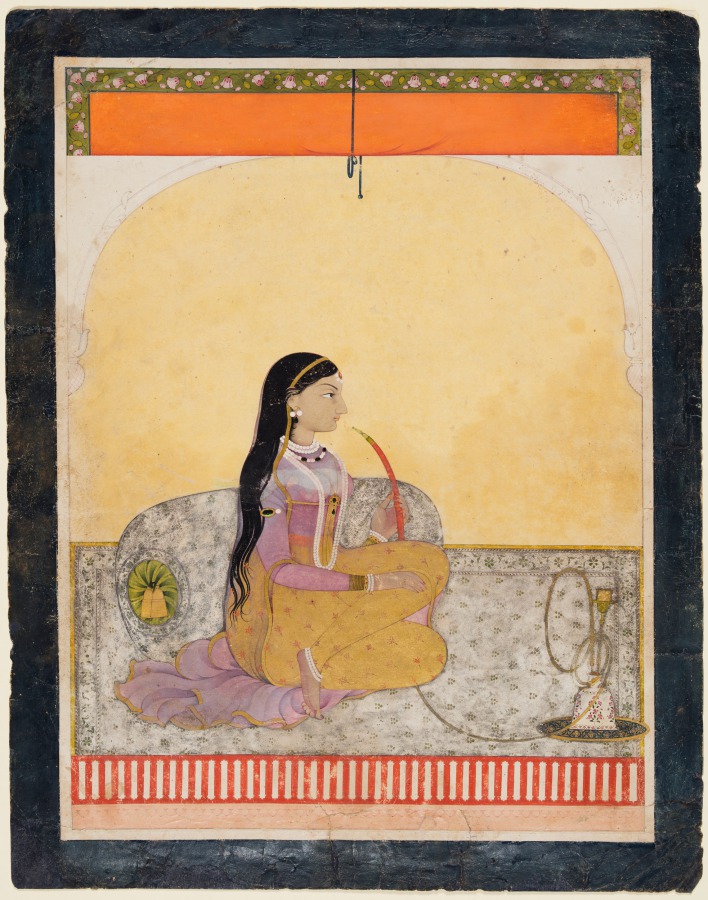 Princess smoking a hookah
![[Barber]](https://images.metmuseum.org/CRDImages/ph/web-large/DP147399.jpg) Unknown — [Barber]
Unknown — [Barber]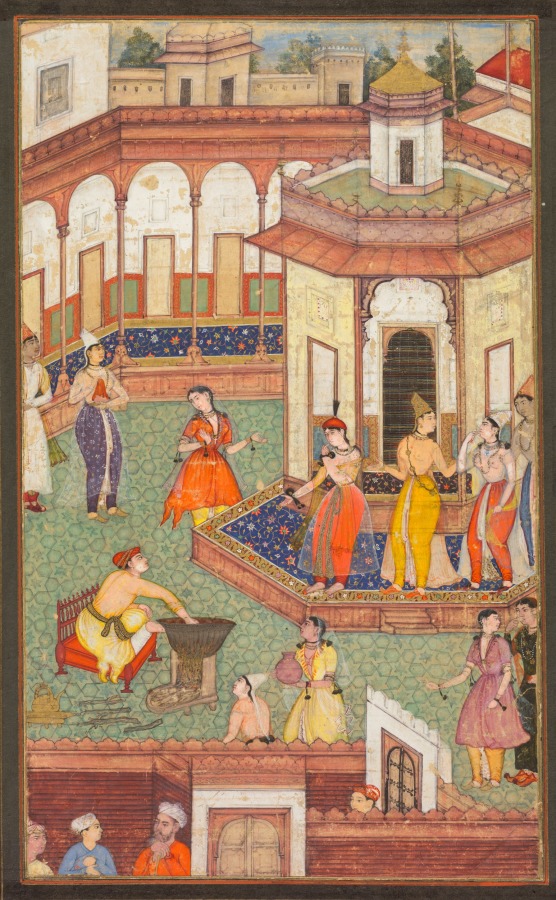 A Man Dips His Hand into a Cauldron as Ladies of the Harem S
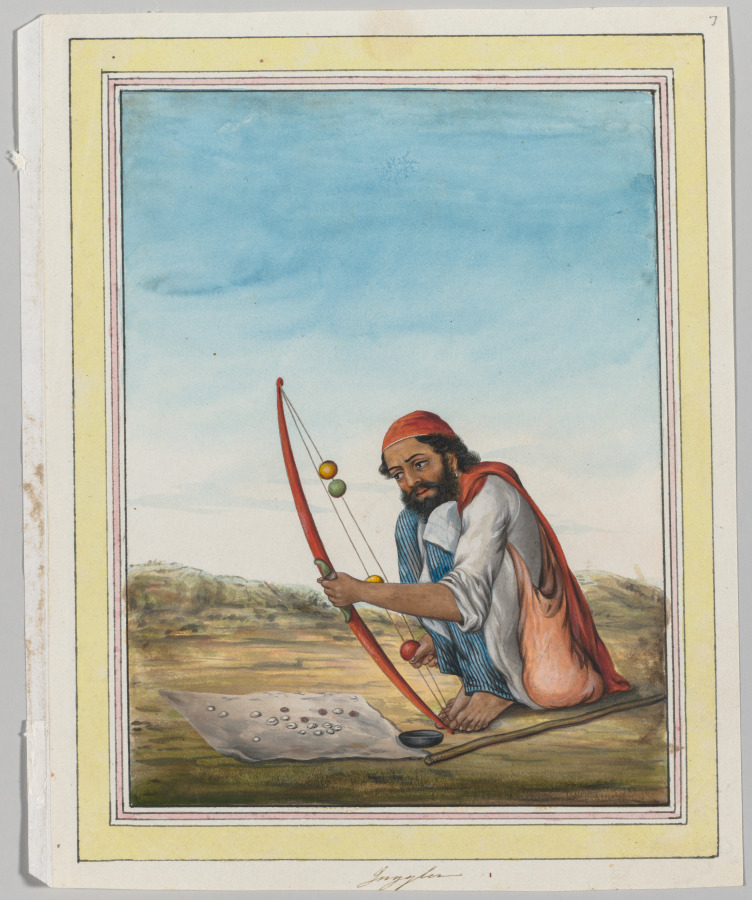 Juggler
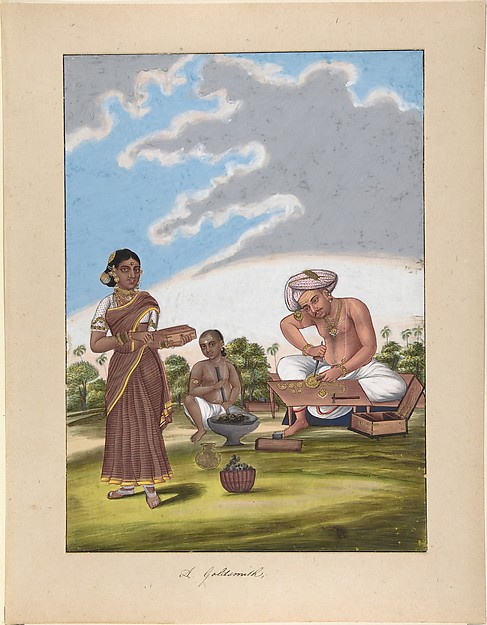 Anonymous, Indian, 19th century — A Goldsmith, from Indian T
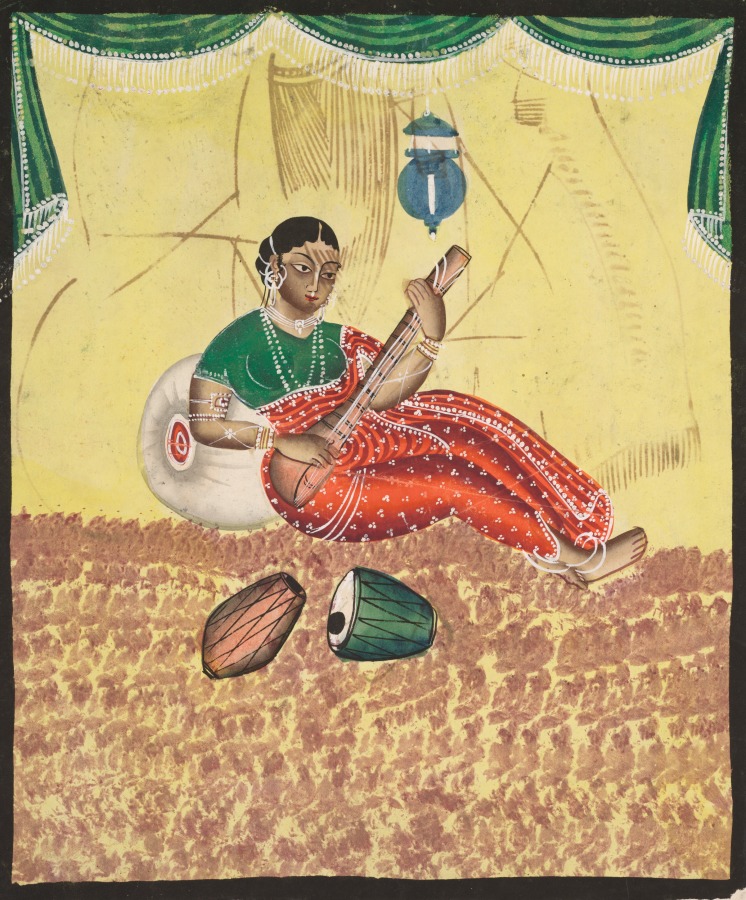 Woman Playing Music (recto), from a Kalighat album
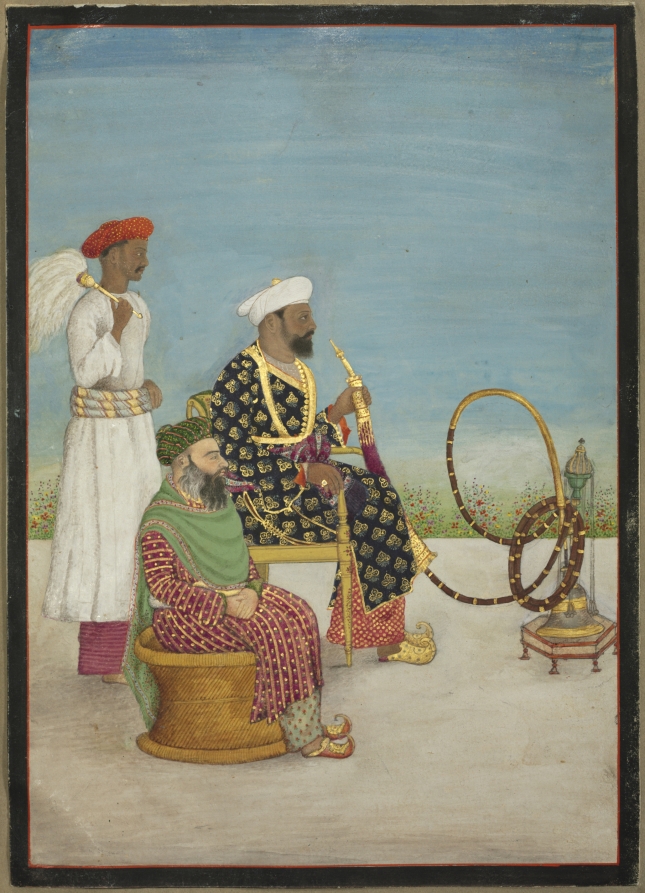 Portrait of Hafiz Abd al-Rahim Khan, from the Fraser Album
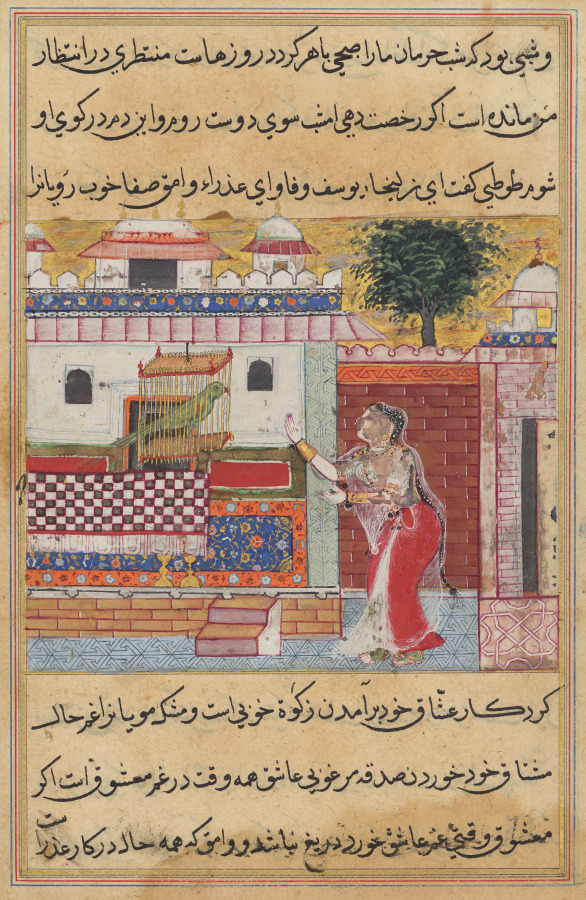 Tara 1 (Indian, active 1550s-1590s) — The Parrot Addresses K
 Ernest Benecke — Egyptian Musicians (Rawabí) and Almée
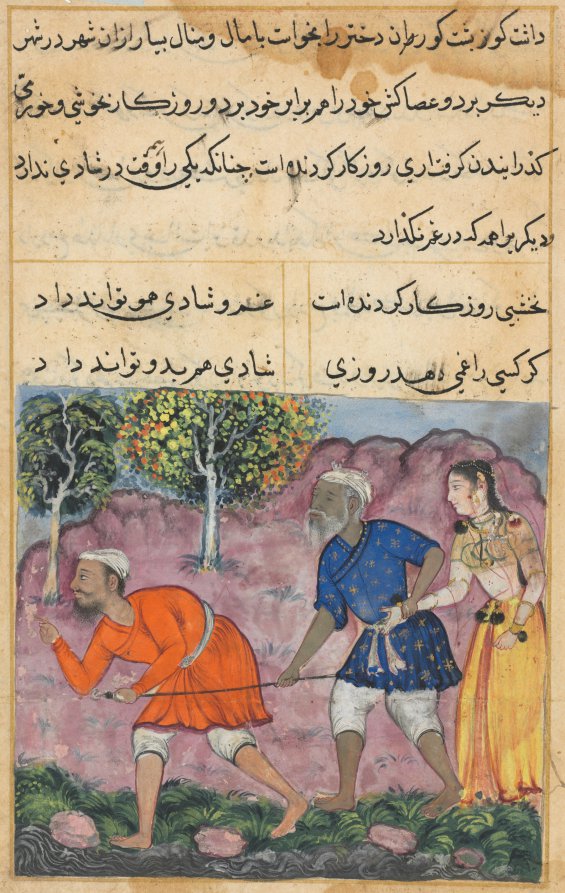 The Raja’s daughter, born with three breasts, accompanies he
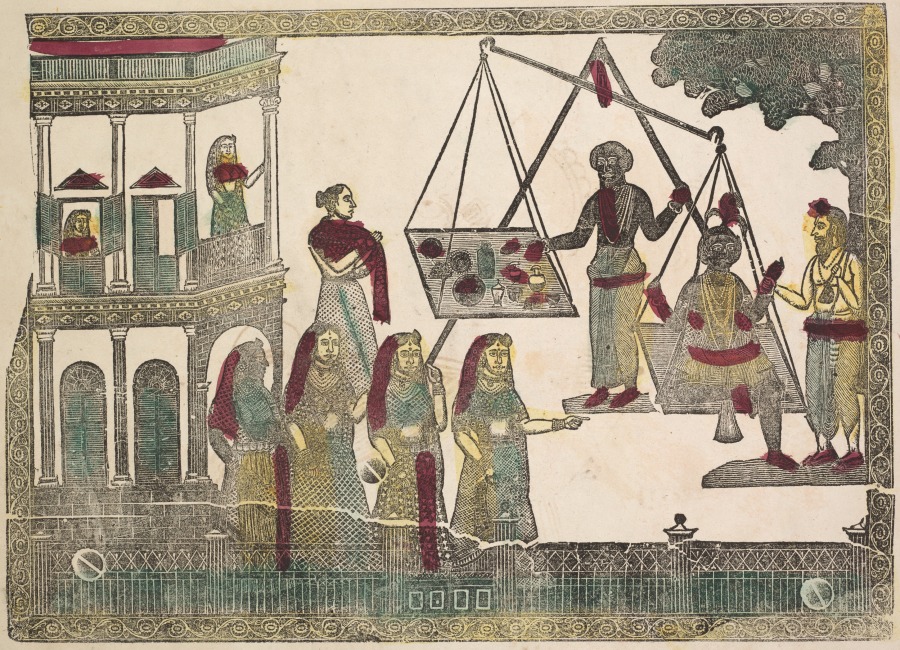 Shri Gobinda Chandra Roy (Indian, active late 1800s) — Krish