Chief Blanket (Third Phase)
SEE IT IN PERSON
Not currently on view
In the collection of Art Institute of Chicago, Chicago · as of July 2026
Discussion
FROM THE ART INSTITUTE OF CHICAGO’S CATALOG
Navajo (Diné) blankets made using fine churro wool and natural dyes are valued as works of special artistic and cultural significance. The design of this blanket, which features a steeped diamond in the center, quarter-diamonds ar each corner, and half-diamonds in the center of each side, was first introduced during the 1860s. The stripes of white, black-brown, and red reflect the continued use of pattern elements typical of earlier blankets. Although such textiles are known as "chiefs' blankets," prominent men from tribes as far away as the Northern Plains, Southwest, and Great Basin wore them draped over their shoulders as a sign of their wealth and status. The Navajo believe that the deity Spider woman taught women how to weave and continues to work through today's artists by directing the growth and beauty of each textile they make. Finished blankets are thought to have life forces of their own, radiating a sense of vitality and harmony—essential to the Navajo philosophy of hozho in which every individual strives to live in balance with the world.
Be the first to share your thoughts.
Sign in to join the discussion.
More by Navajo


More like this
 Toraja
Indonesia, Sulawesi, Kalumpang — Ceremonial Hanging/S
Toraja
Indonesia, Sulawesi, Kalumpang — Ceremonial Hanging/S Pueblo — Blanket
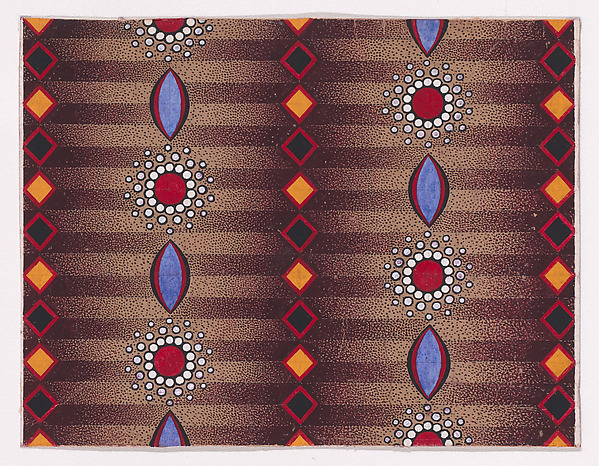 Anonymous, Alsatian, 19th century — Textile Design with Vert
 Iban — Ikat-dyed Blanket
 United States, Probably Pennsylvania — Coverlet
 Komering — Shoulder Cloth (?)
 Turkey, central Anatolia — Kilim with Bands of "Star" Motifs
 Nasca — Fragment
 Turkey, Central Anatolia — Kilim with Six Double-Niches
 Mexico, possibly Saltillo — Sarape
 United States, Ohio, Chesterville — Coverlet
 Iban
Indonesia, Borneo, Sarawak? — Ceremonial Cloth (Pua kom
Iban
Indonesia, Borneo, Sarawak? — Ceremonial Cloth (Pua kom