The Courtesan Hanaogi of the Ogiya and her attendant, from the series "Fans of the East (Azuma ogi)"
c. 1777/78
Color woodblock print; aibaiban
45.5 × 32.8 cm (17.9 × 12.9 in)
SEE IT IN PERSON
Not currently on view
In the collection of Art Institute of Chicago, Chicago · as of July 2026
Discussion
FROM THE ART INSTITUTE OF CHICAGO’S CATALOG
Hanaōgi was a famous courtesan of the Ōgiya brothel. She is depicted often in Japanese prints, but her appearance here is especially apt, since “Hanaōgi” translates to “floral fan” and “Ōgiya” to “house of fans.” Fans of the East was a popular series, and 23 designs by three different artists are known to have survived, all dating from the late 1770s and early 1780s.
Be the first to share your thoughts.
Sign in to join the discussion.
More by Isoda Koryusai
 Takigawa and Katarai of the Ogiya, from the series "Models f
 Shioginu of the Tsutaya, from the series "Models for Fashion
 Oshu of the Yamaguchiya, from the series "Models for Fashion
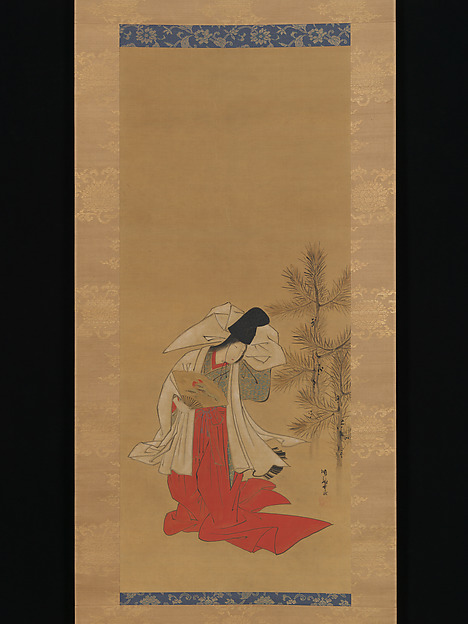 Untitled
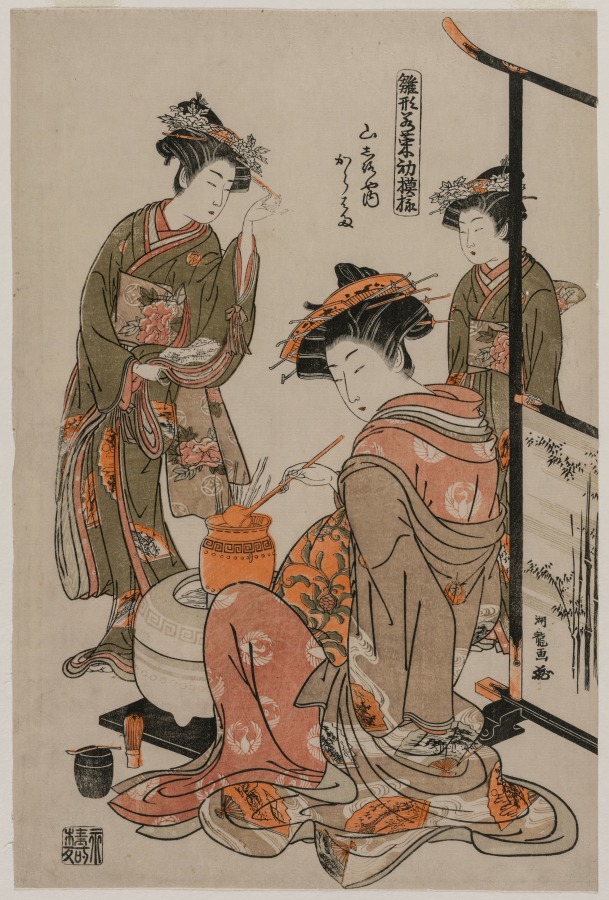 The Courtesan Karahama of Yamashiroya Performing the Tea Cer
 Untitled
 View of Mount Fuji at sunrise on New Year's Day
 Sayoginu of the Yotsumeya, from the series "Models for Fashi
More like this
 Katsukawa Shunsho — The Actors Nakamura Nakazo I as Onmaya K
 Ippitsusai Buncho — The Courtesan Somenosuke of the Matsubay
 Okumura Toshinobu — The Actor Sanjo Kantaro as a courtesan
 Ishikawa Toyonobu — Sanogawa Ichimatsu I as a puppeteer
 Katsukawa Shunsho — The Actors Matsumoto Koshiro IV and Sega
 Torii Kiyomitsu I — The Actors Anegawa Daikichi as Sankatsu
  Kitagawa Utamaro — Hinazuru of the Keizetsuro
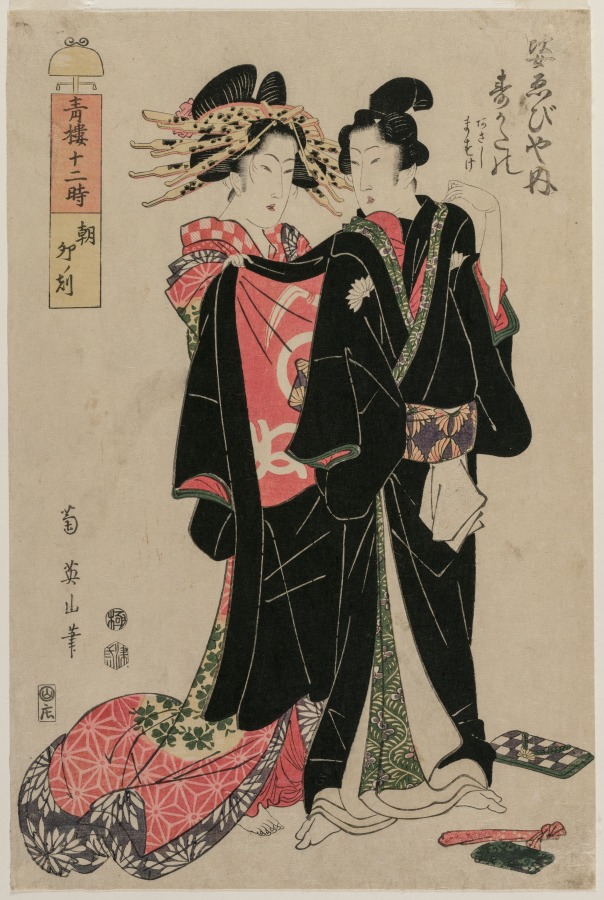 Kikukawa Eizan (Japanese, 1787–1867) — Sugatano of Sugata Eb
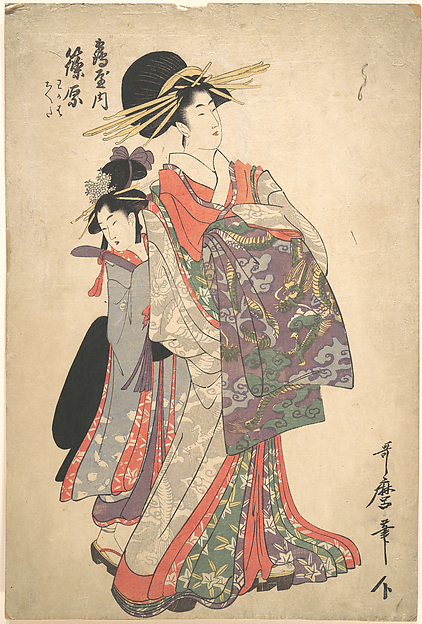 Kitagawa Utamaro
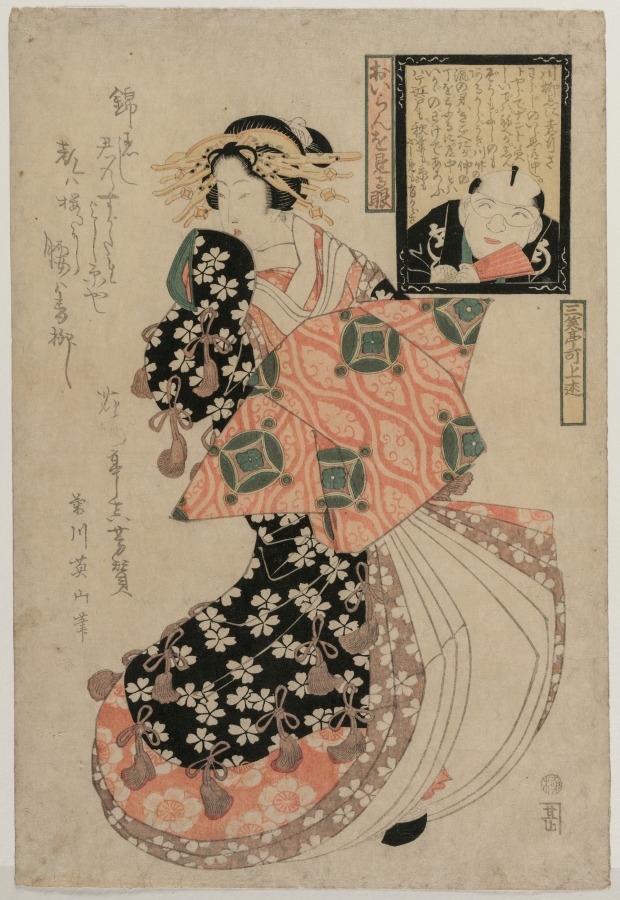 Kikukawa Eizan (Japanese, 1787–1867) — Eyes for Looking at a
 Ishikawa Toyonobu — Young Couple in Front of a Screen
 Kikugawa Eishin (Hideyoshi) — Kiyokawa and Bunshichi, from t