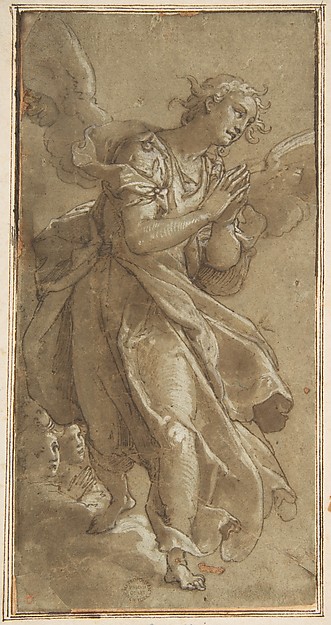
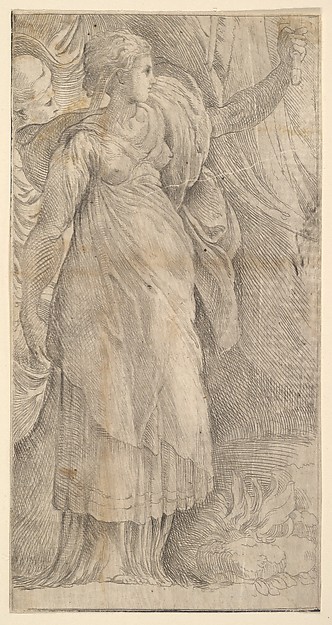
Andrea Schiavone

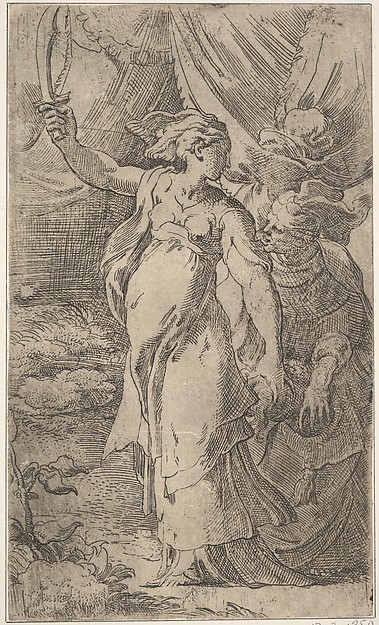
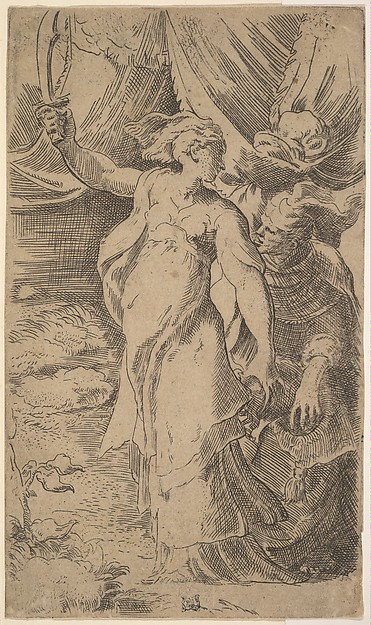
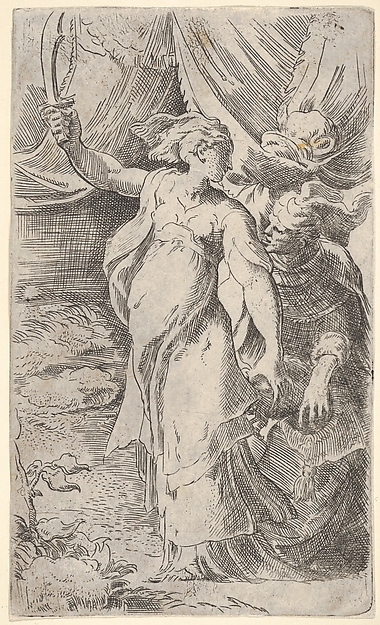
Judith her sword raised in her right hand, placing the head of Holofernes in the sack with her left

ca. 1542–45
Etching
16 × 8.5 cm (6.3 × 3.3 in)

SEE IT IN PERSON

Not currently on view

In the collection of The Metropolitan Museum of Art, New York · as of July 2026

View at metmuseum.orgPlan a visit ↗

Discussion

Be the first to share your thoughts.

Sign in to join the discussion.

Community guidelines

More by Andrea Schiavone

The Marriage of Cupid and PsycheThe Marriage of Cupid and PsycheThe Mystic Marriage of St. Catherine, with St. Joseph, an Angel, and a Cross-bearing SaintThe Mystic Marriage of St. Catherine, with St. Joseph, an AnThe Christ Child in the Cradle surrounded by adoring figuresThe Christ Child in the Cradle surrounded by adoring figuresHoly Family with SaintsHoly Family with SaintsThe Virgin and Child accompanied by saintsThe Virgin and Child accompanied by saintsHoly Family with SaintsHoly Family with SaintsHoly Family with SaintsHoly Family with SaintsThe Virgin and Child accompanied by saintsThe Virgin and Child accompanied by saints
More like this

JudithParmigianino (Girolamo Francesco Maria Mazzola) — JudithJudithAnonymous, Italian, 16th century|Parmigianino (Girolamo FranJudith with the head of Holofernes, which she places into a sack held by the figure behind her, she bears a sword in her outstretched right armParmigianino (Girolamo Francesco Maria Mazzola) — Judith witVenus and CupidJacob Binck — Venus and CupidFemale Winged Allegorical Figure Holding a SphereGiorgio Ghisi|Giulio Romano — Female Winged Allegorical FiguDiana and OrionJacques Bellange — Diana and OrionVenus with Two PuttiAlbrecht Altdorfer|Peregrino da Cesena — Venus with Two PuttThe Holy Family (?)Baccio Bandinelli — The Holy Family (?)Thetis Seated with a TritonGiorgio Ghisi|Perino del Vaga (Pietro Buonaccorsi)|AnonymousDido Killing HerselfStefano della Bella|Parmigianino (Girolamo Francesco Maria MA Standing Angel and two CherubsFederico Zuccaro (Zuccari) — A Standing Angel and two CherubJudithAnonymous, Italian, 16th century|Parmigianino (Girolamo Fran