Saint George in Armor
SEE IT IN PERSON
Not currently on view
In the collection of Art Institute of Chicago, Chicago · as of July 2026
Discussion
FROM THE ART INSTITUTE OF CHICAGO’S CATALOG
The German Romantic artist Ferdinand Piloty looked to Lucas Cranach’s 16th-century woodcut of the full-length Saint George as inspiration for this lithograph. He did not copy the saint directly, showing him reversed, at three-quarter length, and in a shallower space. Yet the halo effect of the lighting, George’s glorious hair, and the implied glint of the intricate armor leave little doubt as to the holy nature of the knight’s errand. Piloty and his colleagues Johann Strixner and Alois Senefelder dramatically fueled the German Romantic enthusiasm for the artistic past, through the creation both of exacting reproductions and nostalgic new works.
Be the first to share your thoughts.
Sign in to join the discussion.
More by Ferdinand Piloty


More like this
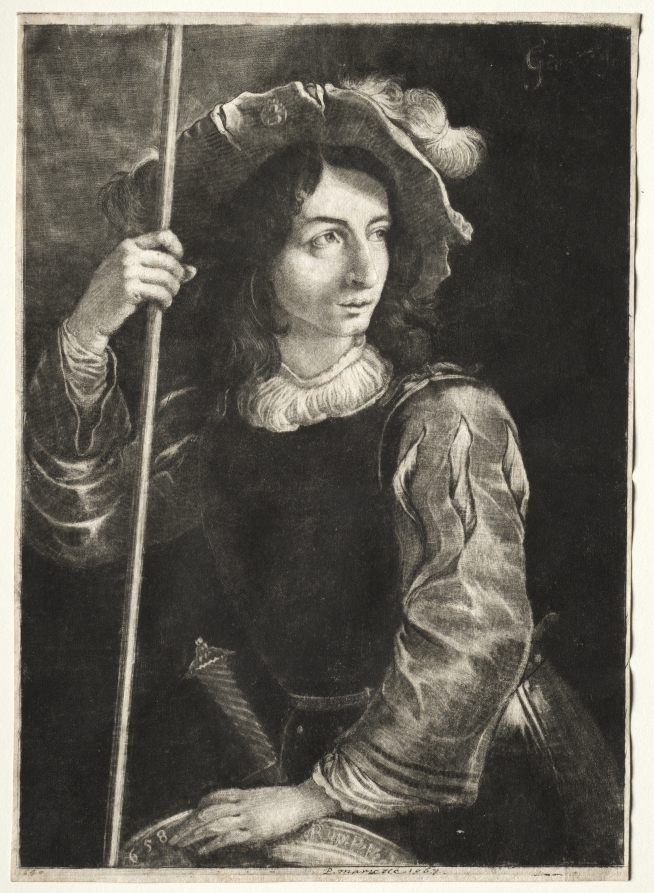 Prince Ruprecht (German, 1619–1682) — The Standard Bearer
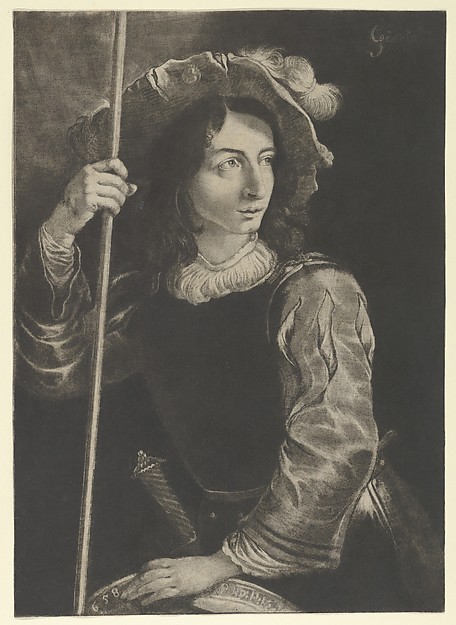 Prince Rupert of the Rhine|Pietro Muttoni, called della Vecc
 Christoffel van Sichem, I — Bust of a Young Man with Feather
 Unknown artist — Standing Page with Shield and Sword
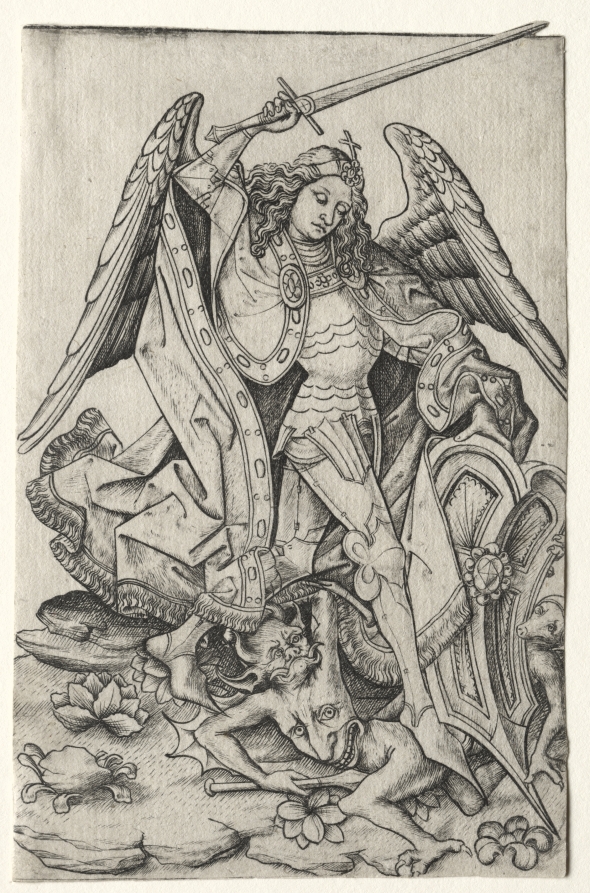 Master ES (German, active 1450–67) — Saint Michael
 Prince Rupert of the Rhine — Standard Bearer
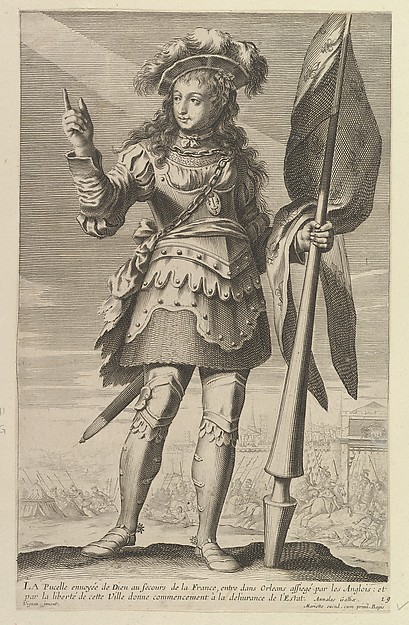 Abraham Bosse|Gilles Rousselet|Claude Vignon — La Pucelle d'
 Teodoro Viero|Giovanni Battista Piazzetta — Head of a young
  Johann Lorenz Haid|Giovanni Battista Piazzetta|Johann Christ
 C. Visscher — St. Gangulphus
 Hendrick Goltzius — Apollo
 Anonymous, French, 19th century — recto: Drawing after Antiq