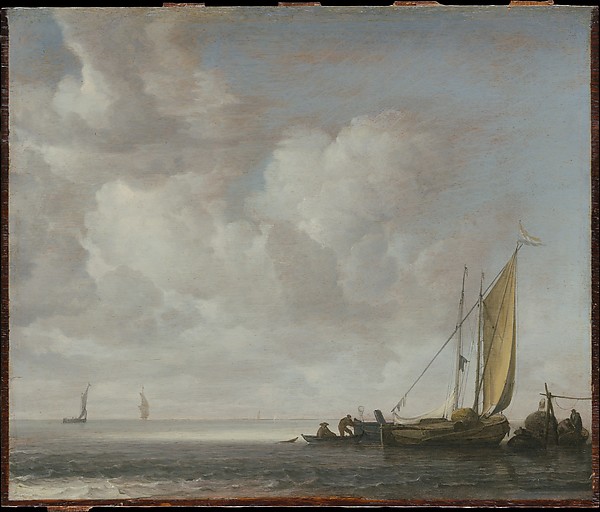
In the collection of Cleveland Museum of Art, Cleveland — check current display status with the museum.
FROM THE CLEVELAND MUSEUM OF ART’S CATALOG
During the 1600s Protestant leaders denounced visual representations, in a belief that a strict understanding of the scriptures was the only way to achieve salvation. As a result, Protestants did not generally commission religious images. However, where religious painting did appear, they often depicted verses from the Bible with strict didactic values, such as Sleeping Peasants near Fields (Parable of the Weeds). The subject of this painting is the Parable of the Weeds from Matthew 13:24-30. Simon de Vlieger has illustrated the point in the story where the peasants sleep after sowing good seeds, and the enemy, depicted here as a satyr, mixes in bad seeds in the fields as well. When the weeds begin to grow, confused, the peasants ask the farmer if they should remove the seeds. The farmer replies that they should let the weeds and wheat grow together, and he will destroy the weeds after the harvest. The lesson of the story is that good and evil people often mix together; but in the end the pious will prevail and the wicked will be destroyed.
Be the first to share your thoughts.
Sign in to join the discussion.
 Salomon van Ruysdael — Landscape with Deer Hunters
 Jacob Salomonsz. van Ruysdael — Landscape with herdsmen and
  Jacob Isaacksz van Ruisdael — Sandy Track in the Dunes
 Meindert Hobbema — A Wooded Landscape
 Meindert Hobbema — Landscape with Anglers and a Distant Town
 Johannes Schoeff — River View
 Roelant Roghman — Waldiges Flusstal
 Jacob van Ruisdael — Dünen mit Eichen und Gewässer
 Roelant Roghman — Forest landscape with lean-to
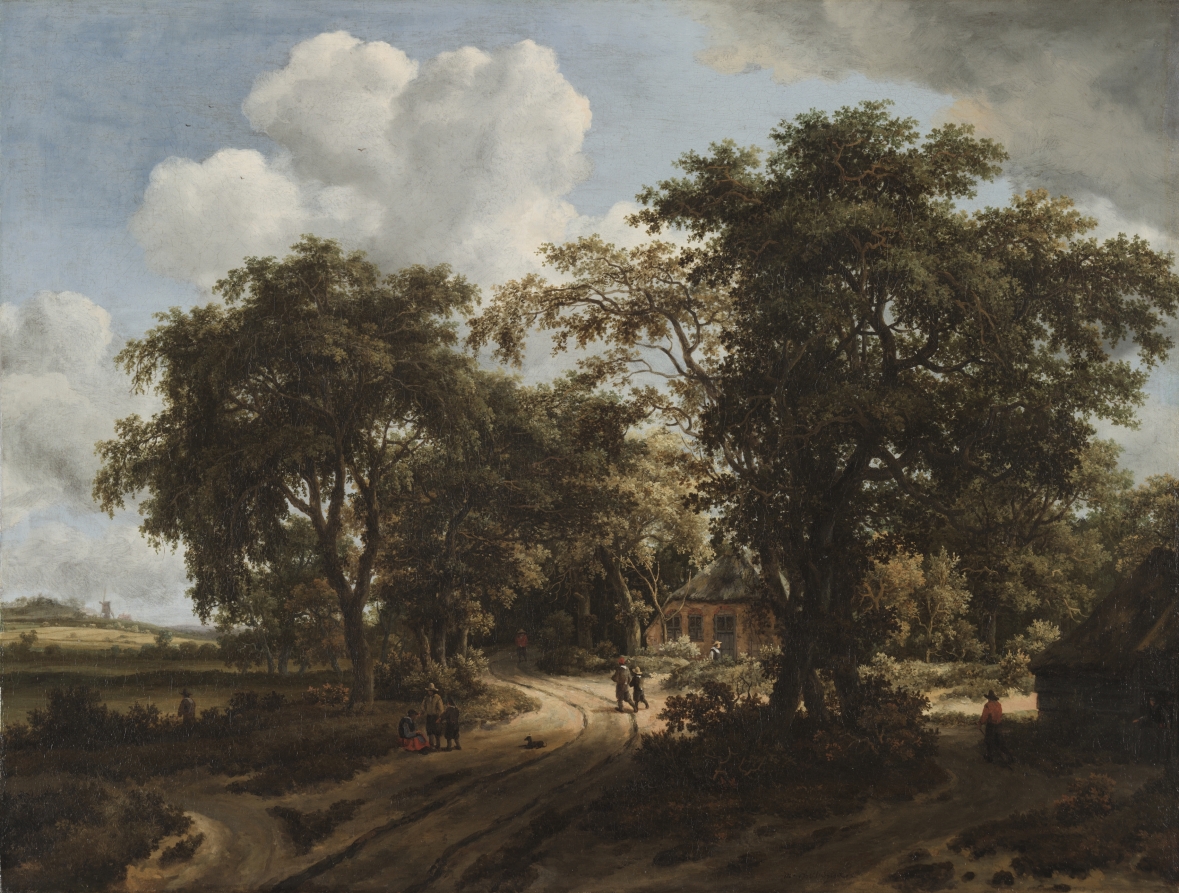 Meindert Hobbema (Dutch, 1638–1709) — A Cottage in the Woods
 Roelant Roghman — Forest landscape with a woodsman's shed
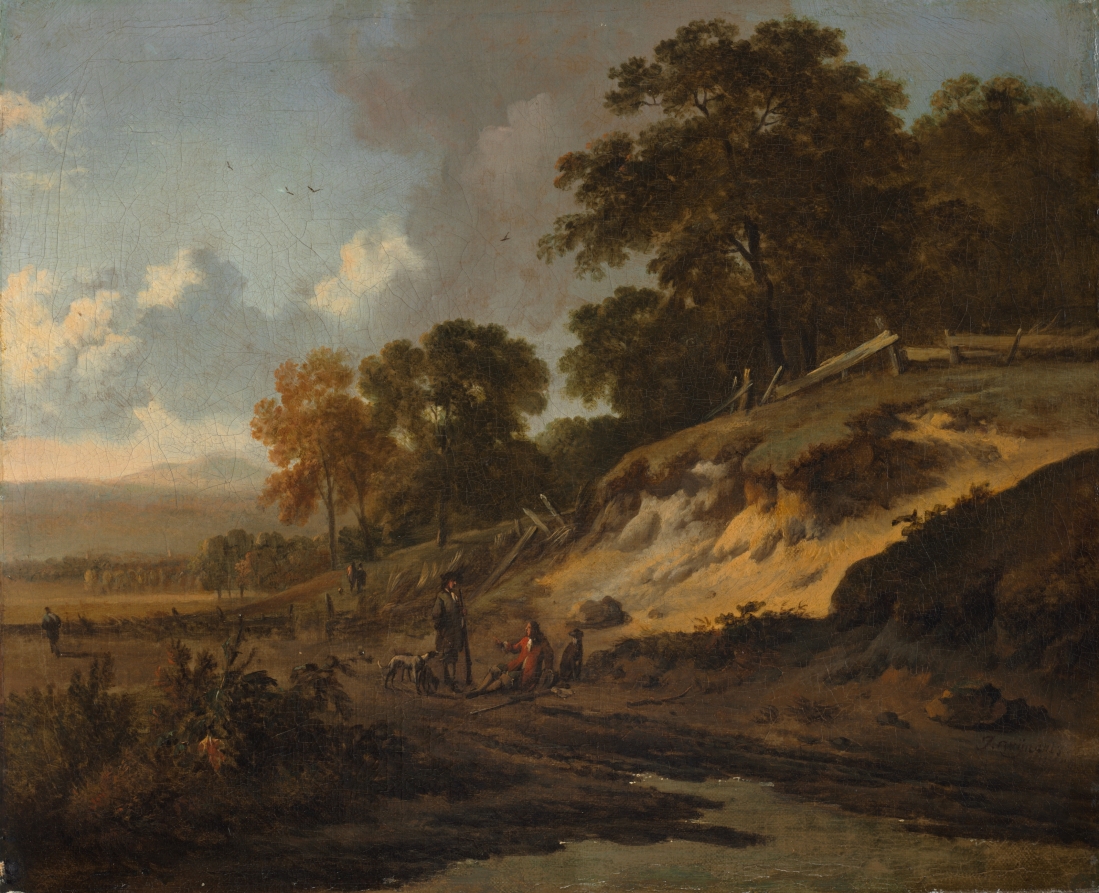 Jan Wijnants (Dutch, 1635–1684) — Landscape with Hunters