Hikers climbing up to a Mountain Chalet
c. 1888
Black crayon, with graphite, heightened with white chalk and white pencil, on tan wove paper
38.9 × 31.8 cm (15.3 × 12.5 in)
SEE IT IN PERSON
Not currently on view
In the collection of Art Institute of Chicago, Chicago · as of July 2026
Discussion
FROM THE ART INSTITUTE OF CHICAGO’S CATALOG
When Rousseau was a toll operator for one of Paris’s city gates, he made the decision to become an artist. With no academic training, he started copying works at the Musée du Louvre in 1884 and two years later exhibited his works with the Neo-Impressionists at the Salon des Indépendants. In this drawing Rousseau’s lack of formal training is evident in the flattened forms and odd spatial relations of the landscape. These idiosyncrasies would inspire artists such as Vasily Kandinsky and Pablo Picasso.
Be the first to share your thoughts.
Sign in to join the discussion.
More by Henri Rousseau
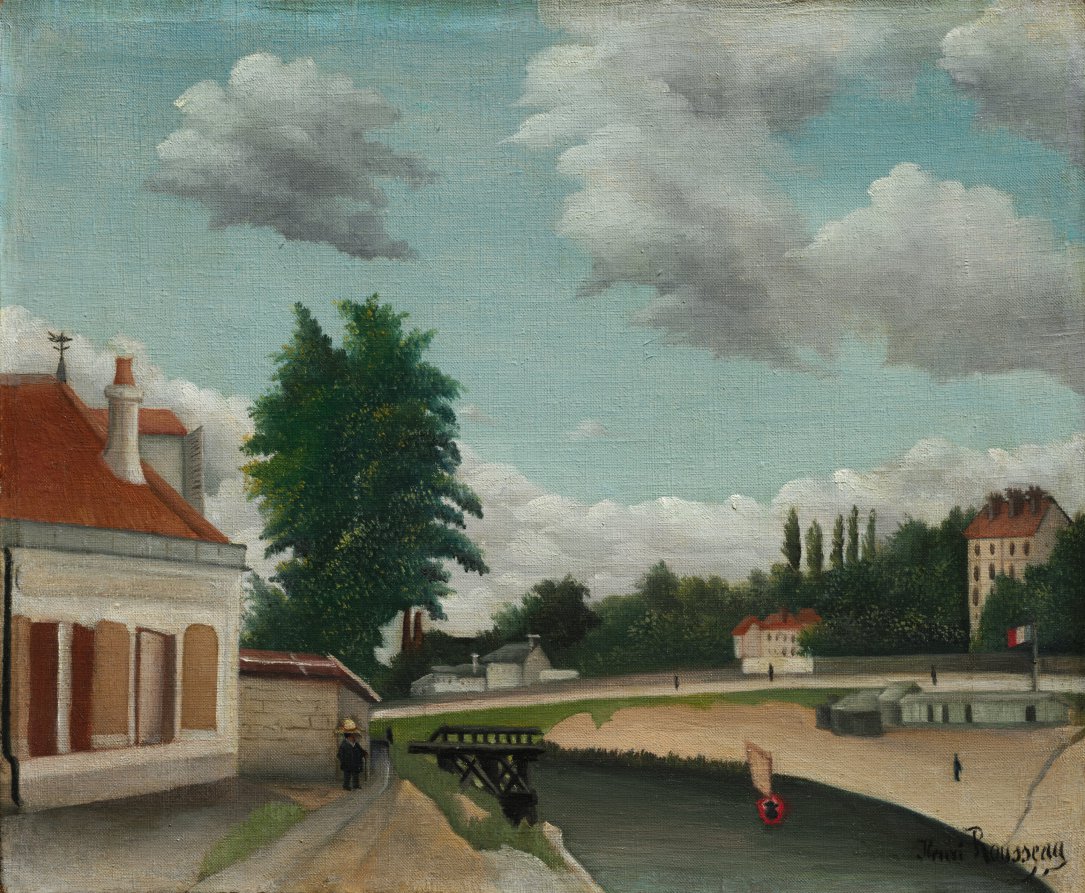 Outskirts of Paris
 View of the Quai d'Asnières (Vue du quai d'Asnières)
 View of Montsouris Park, the Kiosk (Vue du parc Montsouris,
  The Great Laundry Boat at Charenton Bridge (Le Grand Bateau-
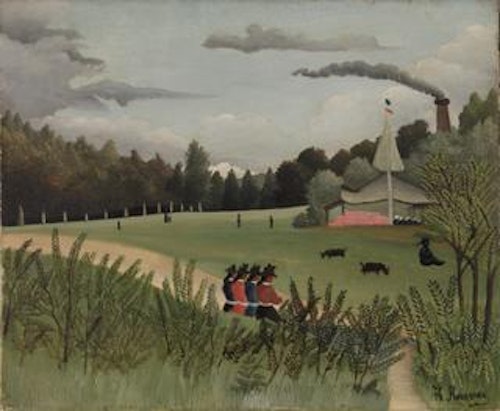 Landscape and Four Young Girls (Paysage et quatre jeunes fil
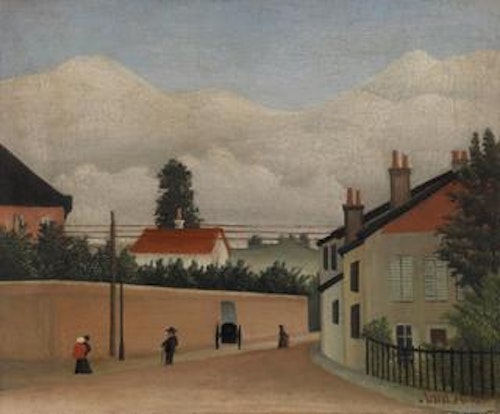 Outskirts of Paris (Environs de Paris)
 Sawmill, Outskirts of Paris
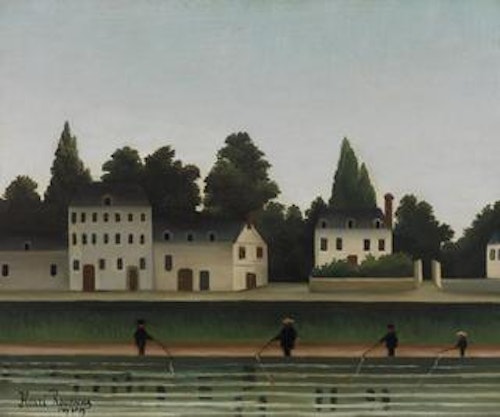 Landscape and Four Fisherman (Paysage et quatre pêcheurs à l
More like this
 Pieter Bruegel the Elder|Johannes van Doetecum I|Lucas van D
 Donald Shaw MacLaughlan — The Two Pines, Switzerland
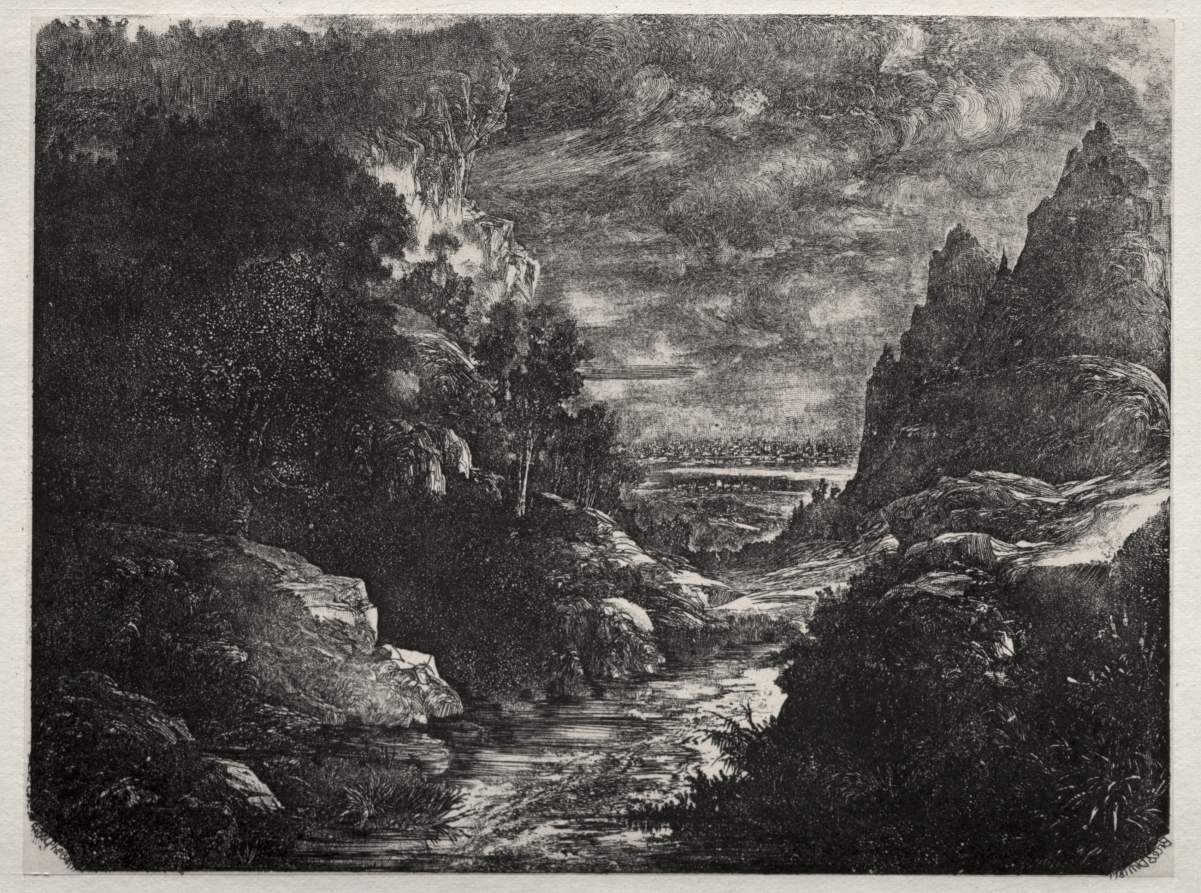 Rodolphe Bresdin (French, 1822–1885) — The Mountain Stream
 Jacob Matham — Bohemian Landscape with Couples and Hunters (
 Francis Seymour Haden (British, 1818–1910) — A Moorland Stre
 Rodolphe Bresdin (French, 1822–1885) — The Comedy of Death
 Ernest Haskell (American, 1876–1925) — Autumnal Point
 Ernst Fries (German, 1801–1833) — Six Views of Heidelberg Ca
 Paul Gauguin (French, 1848–1903) — Maruru (Offerings of Grat
 Rodolphe Bresdin (French, 1822–1885) — First frontispiece fo
 Ernst Fries (German, 1801–1833) — Six Views of Heidelberg Ca
 Paul Gauguin — Maruru (Offerings of Gratitude), from the Noa