FROM THE CLEVELAND MUSEUM OF ART’S CATALOG
The painting parodies the traditional representation of this subject. The death of Buddha is actually the moment he achieves nirvana and escapes the endless cycle of death and rebirth. Hakuen transformed this serious moment (see The Death of the Buddha , CMA 1916.1141 ) into a lively parody with otsu-e subjects. Mourners surround the Buddha. An oni , who pretends to be a priest, holds his gong in the air as he beats his drums and chants prayers. The wisteria maiden appears at the left, bringing water to the mourners. Behind her is an oni in the guise of a thunder god beating his drums. The animals along the foreground represent other otsu-e characters and models. The painting would have amused 19th-century viewers familiar with the usual Buddhist imagery.
Source ↗︎
Be the first to share your thoughts.
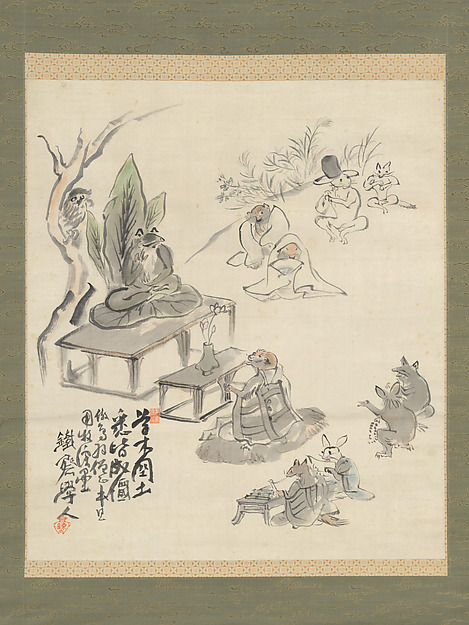 Tomioka Tessai 富岡鉄斎 — 鳥獣戯画の場面|Scene Inspired by the Scrolls
 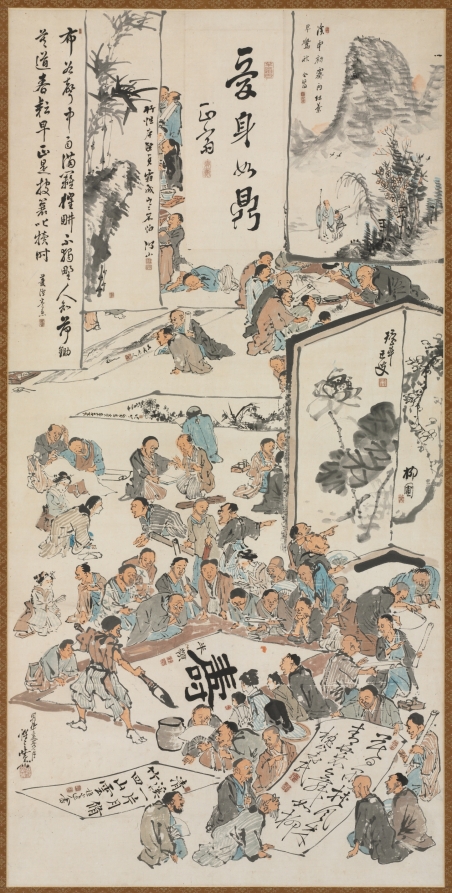 Kawanabe Kyōsai (Japanese, 1831–1889) — Calligraphy and Pain
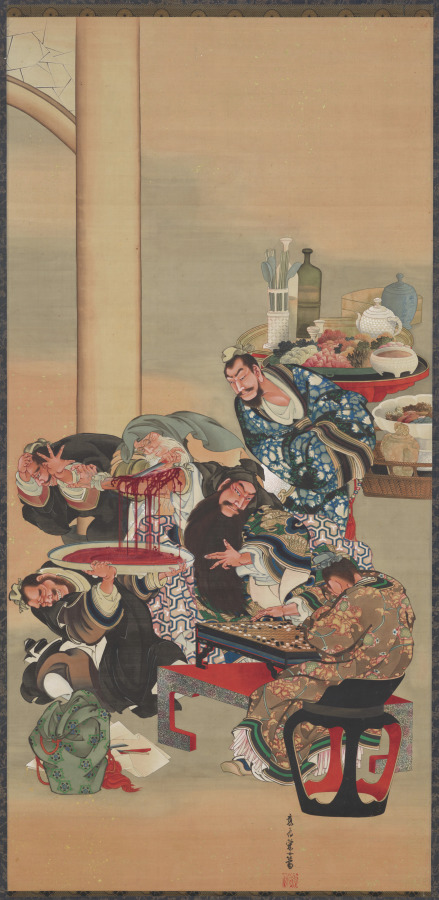 Katsushika Ōi (Japanese, c. 1800-after 1857) — Operating on
 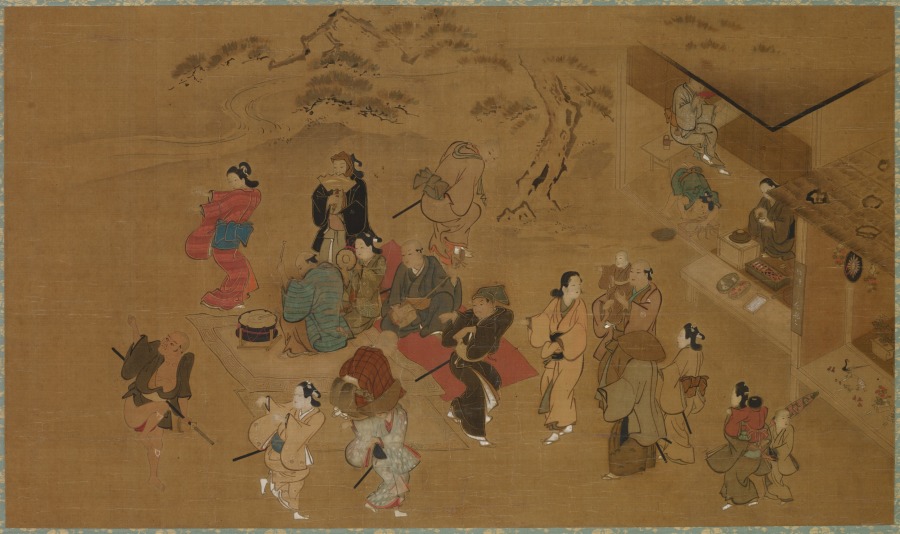 Hishikawa Moronobu (Japanese, c. 1618–1694) — Spring Dance S
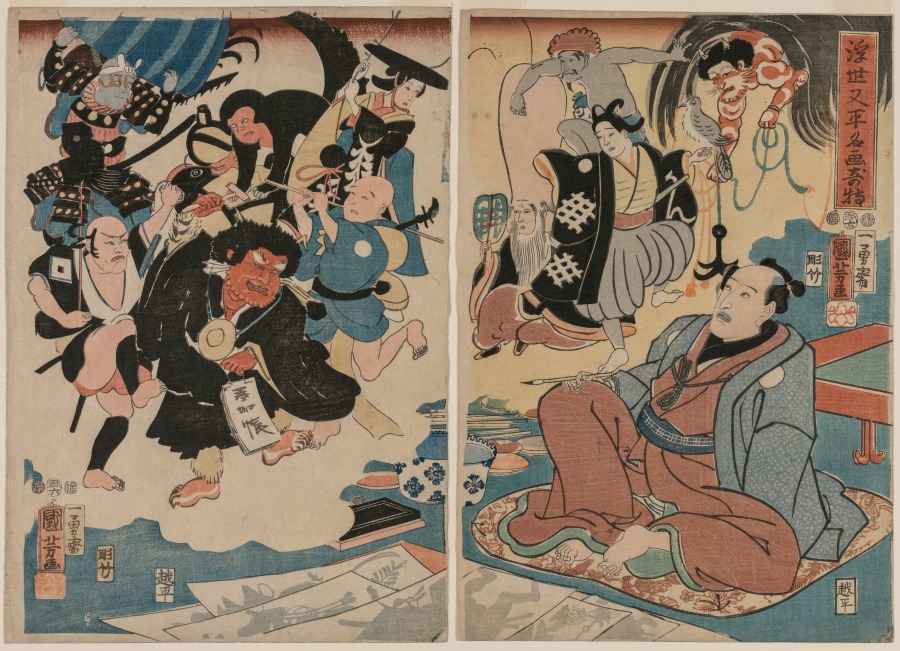 Utagawa Kuniyoshi (Japanese, 1797–1861) — The Strange Occure
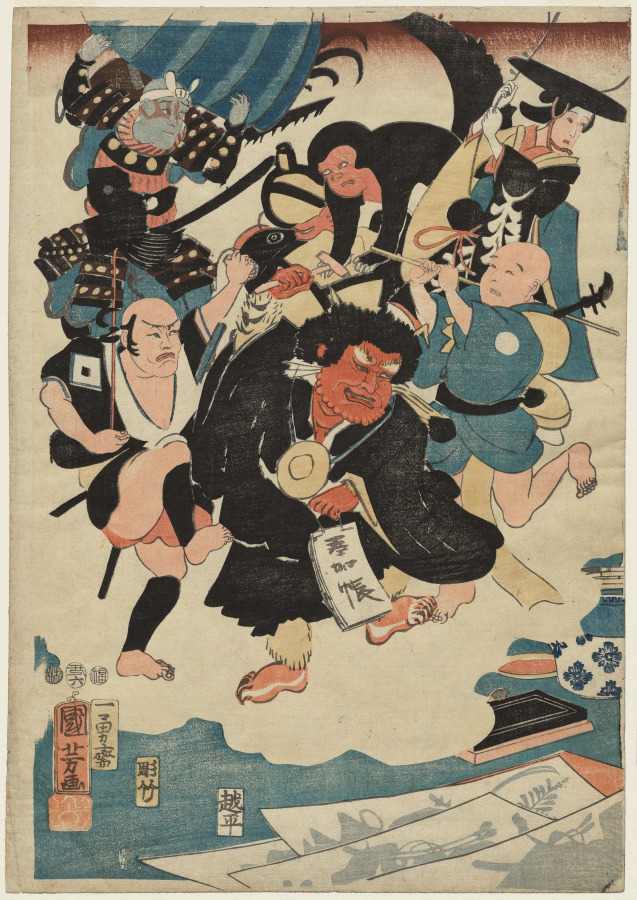 Utagawa Kuniyoshi (Japanese, 1797–1861) — The Strange Occurr
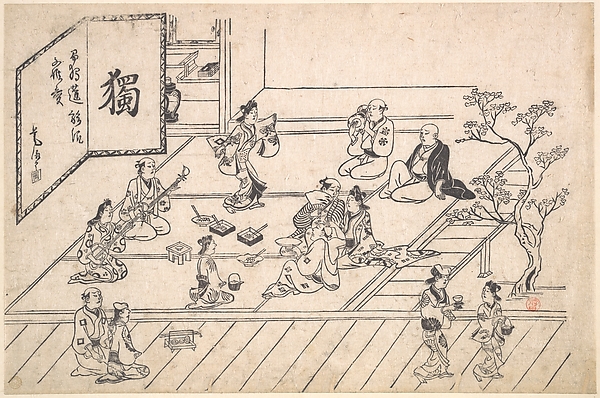 Hishikawa Moronobu 菱川師宣
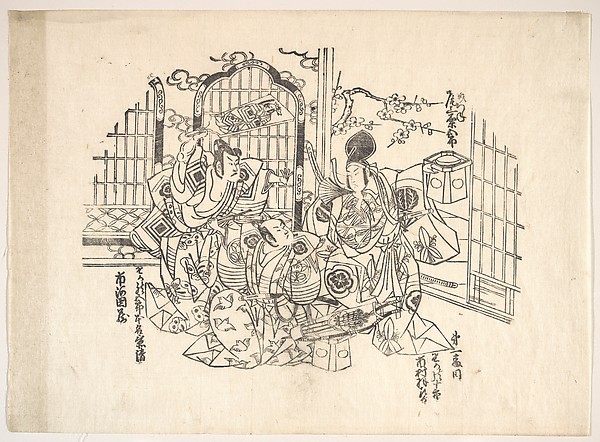 Unidentified artist
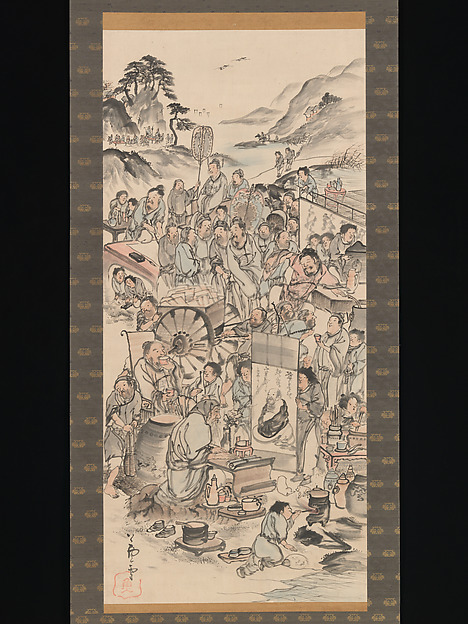 Nagasawa Rosetsu 長澤蘆雪 — 飲中八仙図|Drinking Festival of the Eight
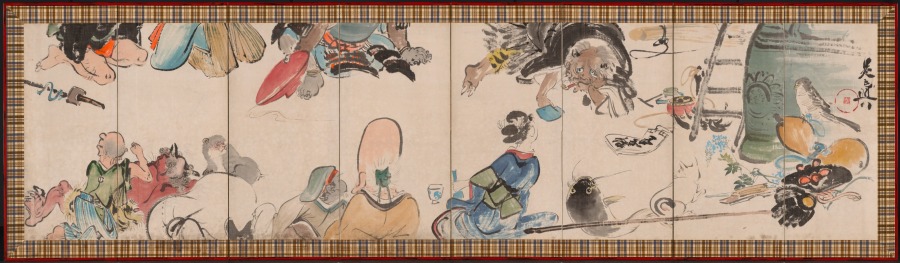 Shibata Zeshin (Japanese, 1807–1891) — Gathering of Otsu-e S
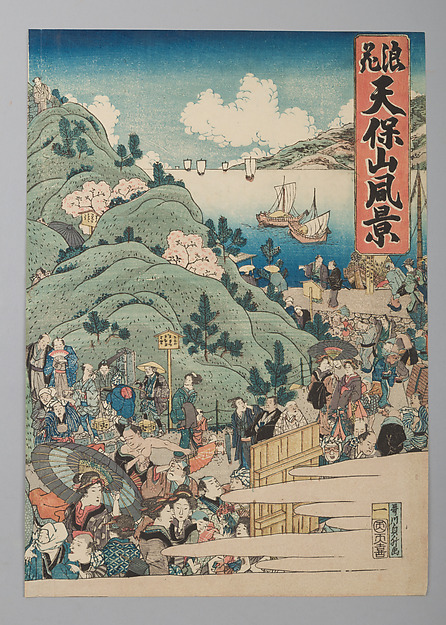 Hasegawa Sadamasu 長谷川貞升 — 「浪花天保山風景」|“View of Mount Tenpō in
 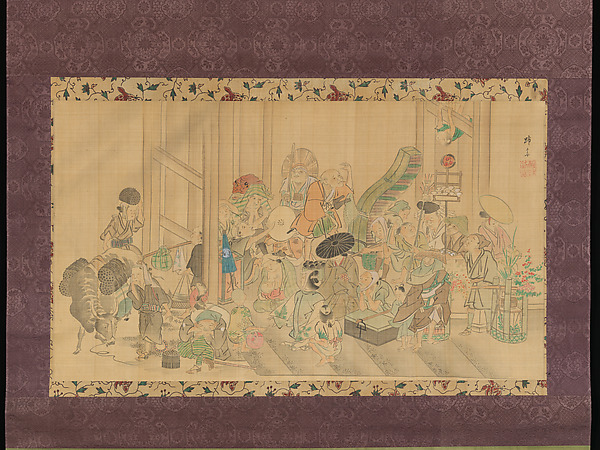 Teisai Hokuba — 蹄斎北馬筆 雨宿り図|Taking Shelter from the Rain