In the collection of Cleveland Museum of Art, Cleveland — check current display status with the museum.
FROM THE CLEVELAND MUSEUM OF ART’S CATALOG
Roger Fenton was a versatile and prolific artist who abruptly ended his brief, 12-year career as a professional photographer to return to the practice of law. Nevertheless, his architectural and landscape photographs have brought him recognition as the greatest British photographer of the 1850s. In this picturesque scene, Fenton focused on a single figure ascending a precarious wooden bridge that hangs suspended between two craggy surfaces. He often included people in his photographs to indicate scale and to enliven the composition. Fenton's wet collodion negative rendered the texture of the riverbed in minute detail, transforming the dark tones of the rocks and the random pattern of the light-colored lichens into a lively, abstract design. The slow speed of the negative, relative to the swift movement of the stream, turned the rushing water into a dense, white cloud.
Be the first to share your thoughts.
Sign in to join the discussion.
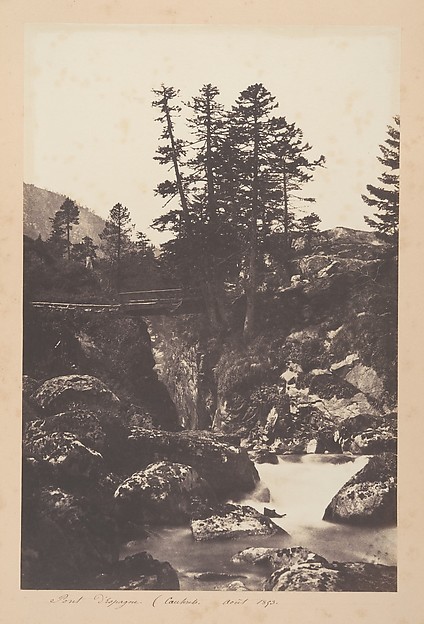 Joseph Vigier — Cauterets, Pont d'Espagne
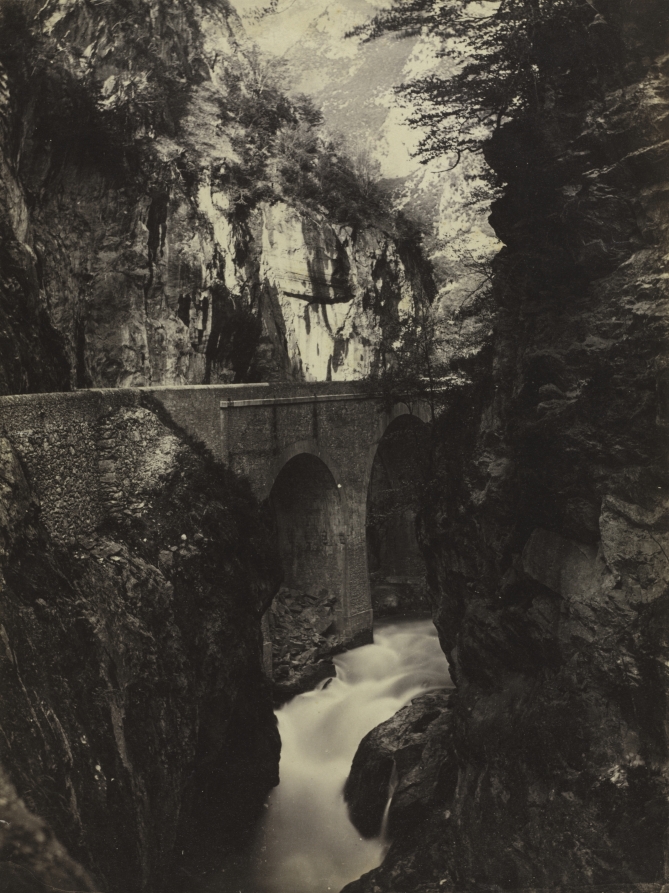 Farnham Maxwell Lyte (British, 1828–1906) — Road to Eaux-Cha
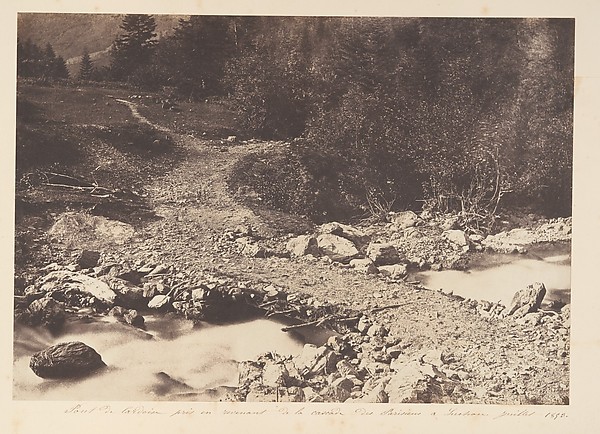 Joseph Vigier — Pont de l'ardoise pris en revenant de la cas
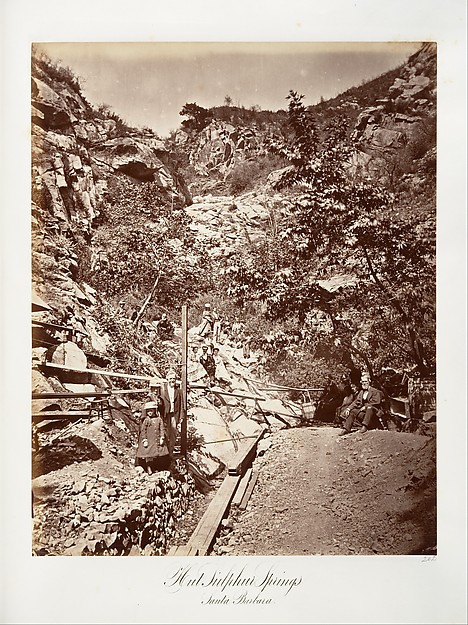 Carleton E. Watkins — Hot Sulphur Springs, Santa Barbara
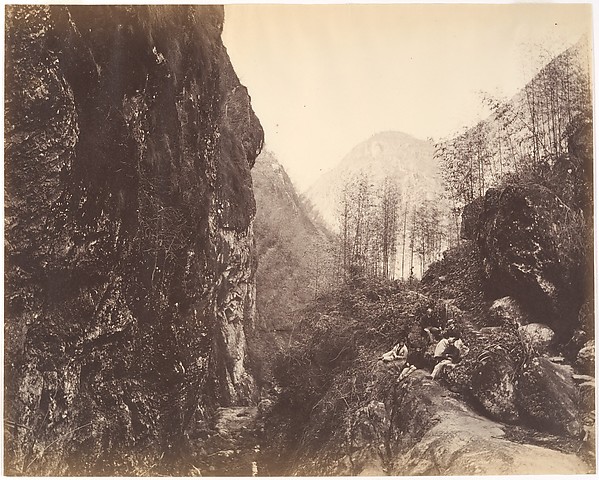 Lai Fong — Bankers Glen Yuen Foo Monastery
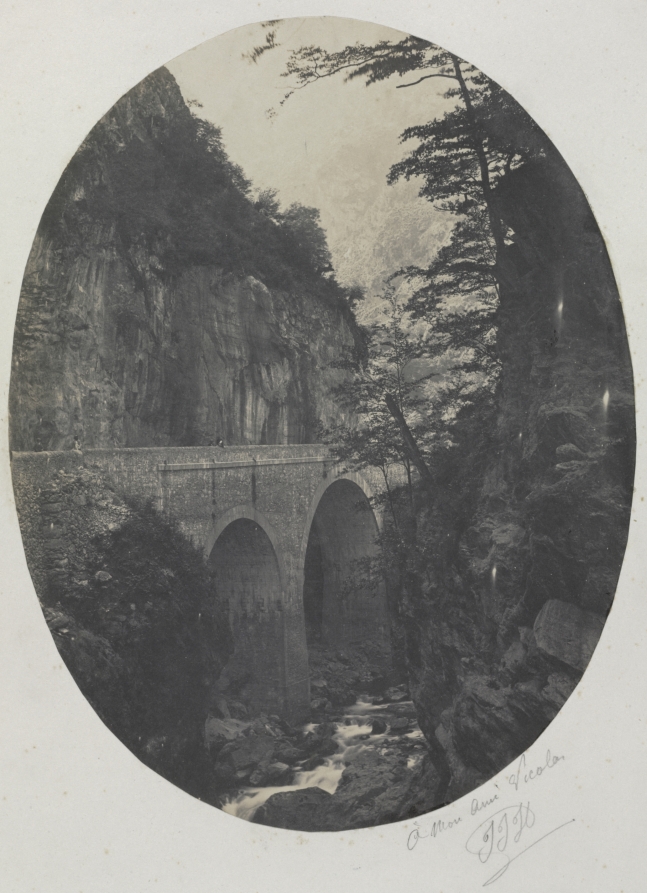 Jean-Jacques Heilmann (French, 1822–1859) — Gorge at Eaux Ch
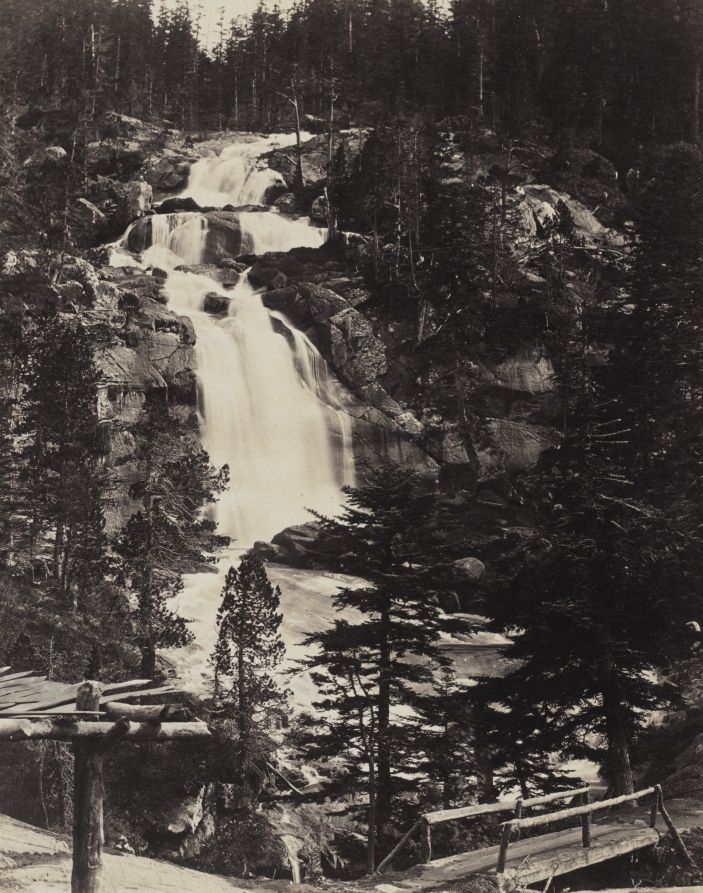 Louis-Alphonse Davanne (French, 1824–1912) — Great Upper Wat
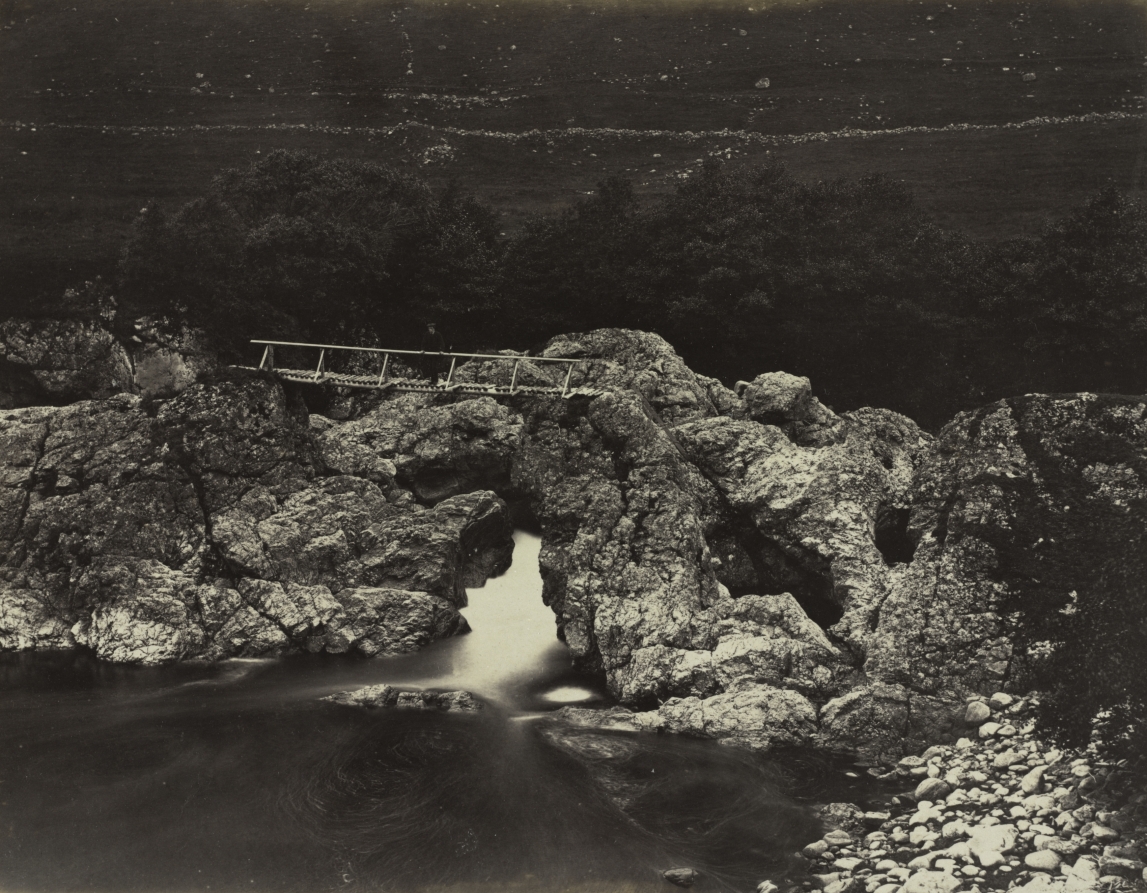 James Valentine (British, 1815–1880) — Shepherd's Bridge nea
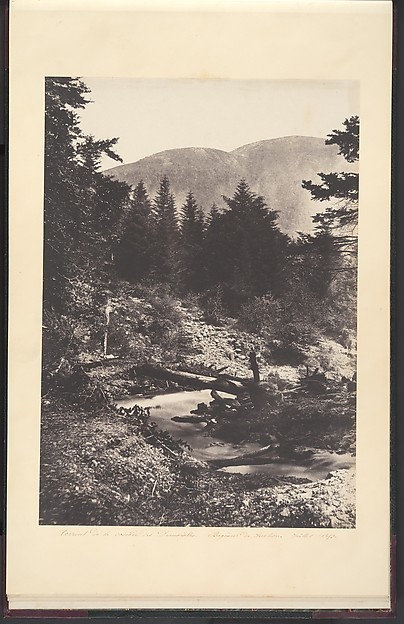 Joseph Vigier — Torrent de la cascade des Demoiselles, Bagnè
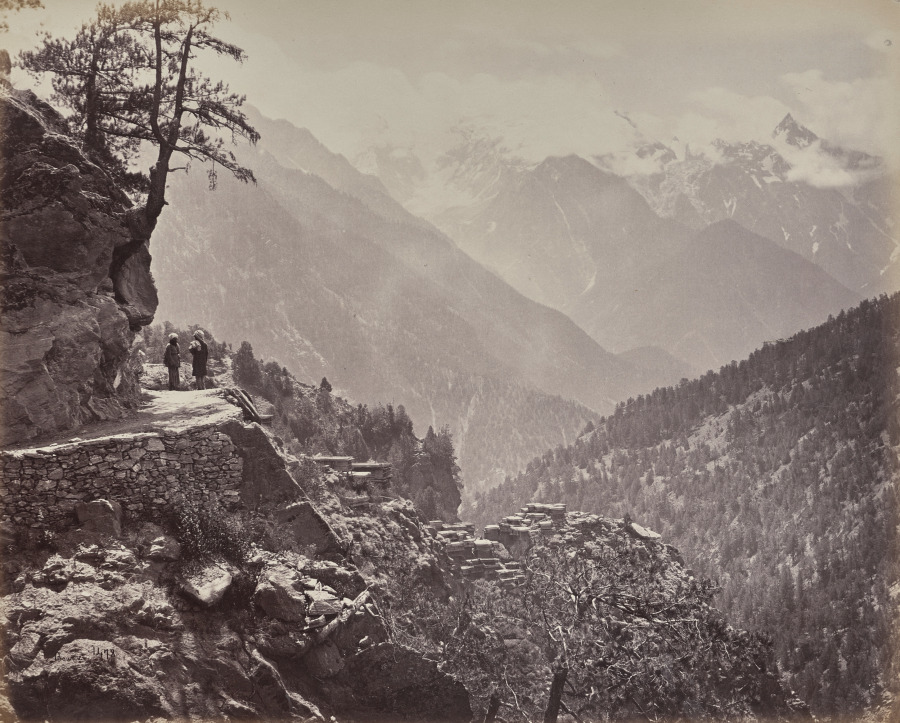 Samuel Bourne (British, 1834–1912) — The Upper Himmalayahs.
 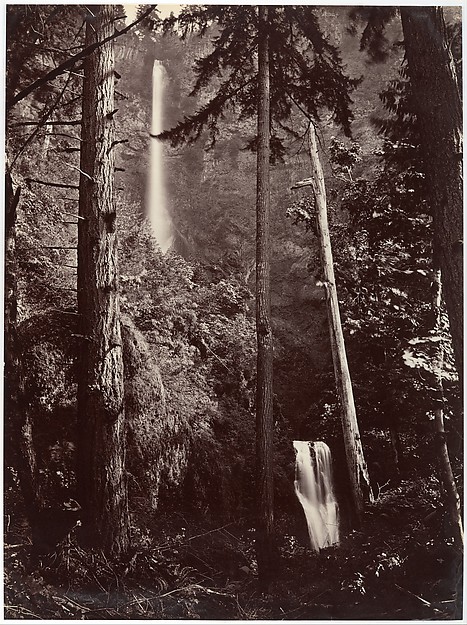 Carleton E. Watkins — Multnomah Falls, Oregon
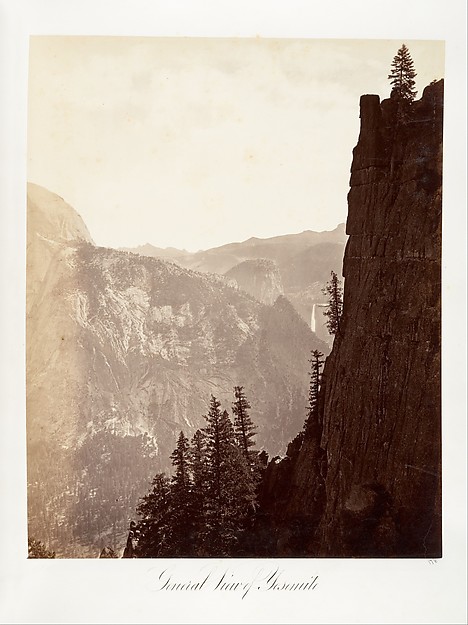 Carleton E. Watkins — General View of Yosemite
![[Still Life with Fruit]](https://images.metmuseum.org/CRDImages/ph/web-large/DP209008.jpg)
![[Royal Children in Tableau of the Seasons]](https://images.metmuseum.org/CRDImages/ph/web-large/DP229955.jpg)
![[Reclining Odalisque]](https://images.metmuseum.org/CRDImages/ph/web-large/DP107952.jpg)
![[Orientalist Study of a Woman]](https://images.metmuseum.org/CRDImages/ph/web-large/DP206649.jpg)

![[Lady on Horseback]](https://images.metmuseum.org/CRDImages/ph/web-large/DP206643.jpg)