Pan and Syrinx
SEE IT IN PERSON
Not currently on view
In the collection of Art Institute of Chicago, Chicago · as of July 2026
Discussion
FROM THE ART INSTITUTE OF CHICAGO’S CATALOG
Known for his lustful appetite, Pan preyed upon hapless nymphs. When Pan pursued her to a river’s edge, the skilled huntress Syrinx appealed to Artemis, goddess of chastity, who transformed her into the surrounding river reeds to save her. Pan’s frustrated sigh sounded across the hollow reeds, which he then fashioned into the set of pipes that became his attribute. This 16th-century German drawing references details from book one of Ovid’s Metamorphoses such as the quiver Syrinx grasps as she escapes: “When [Pan] thought he now had Syrinx, found that instead of the nymph’s body he only held reeds from the marsh; and, while he sighed there, the wind in the reeds, moving, gave out a clear, plaintive sound. Charmed by this new art and its sweet tones the god said ‘This way of communing with you is still left to me.’”
Be the first to share your thoughts.
Sign in to join the discussion.
More like this
 Giovanni Domenico Tiepolo — Satyr Surprising a Satyress
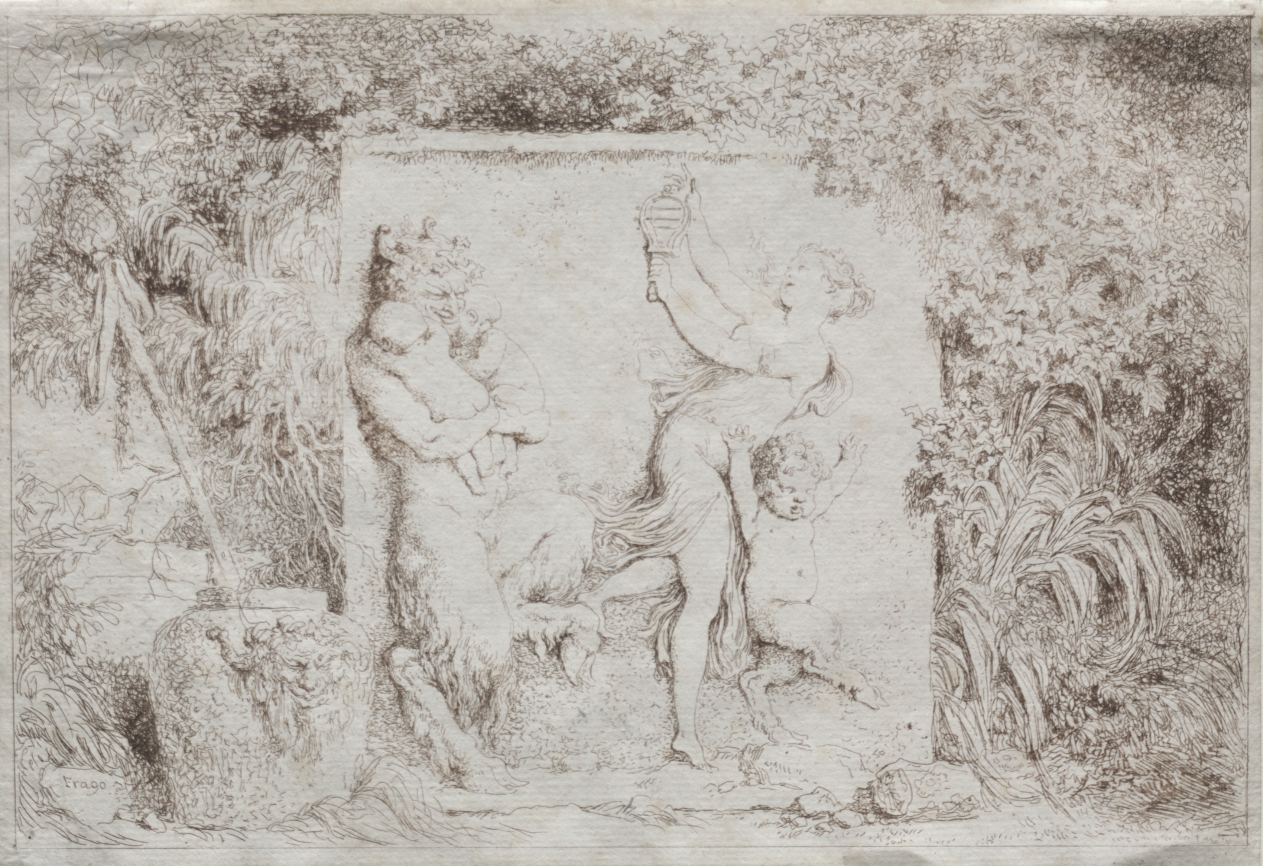 Jean-Honoré Fragonard (French, 1732–1806) — Bacchanal
 Giacinto Gimignani — Jupiter and Mercury in the Clouds
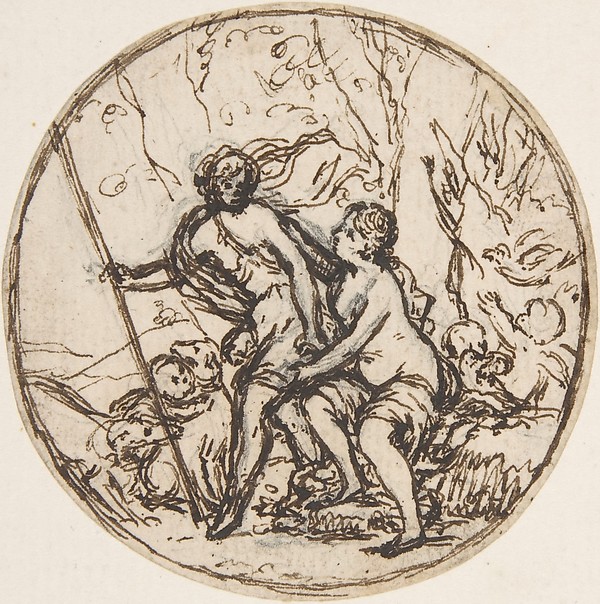 Hubert François Gravelot — Design for a Box-lid
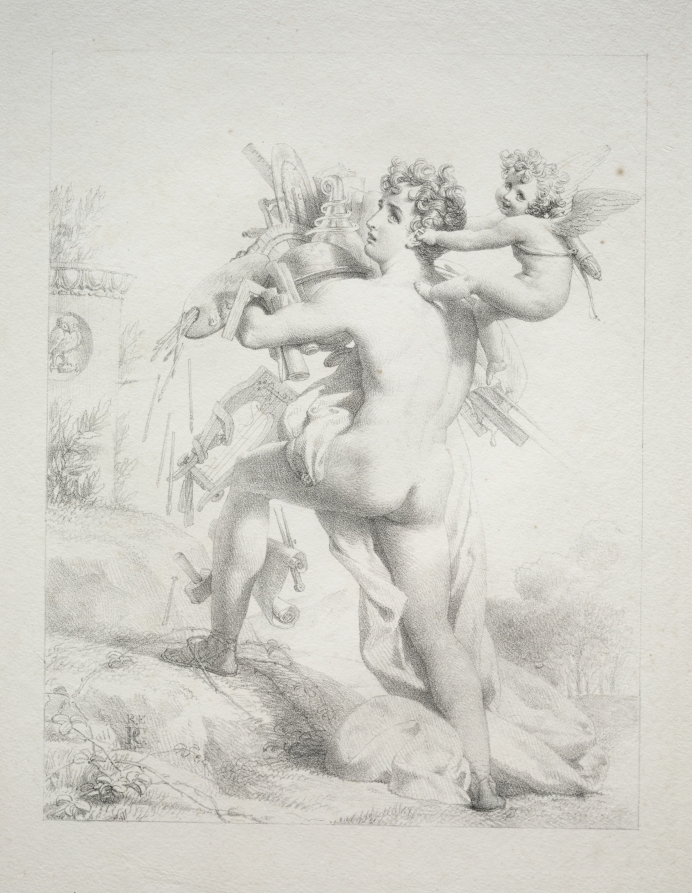 Pierre Guérin (French, 1774–1833) — Grasp All, Lose All
 Style of Frans Floris, I — Venus, Mars, and Cupid
 Carlo Cignani — Woman in Flight
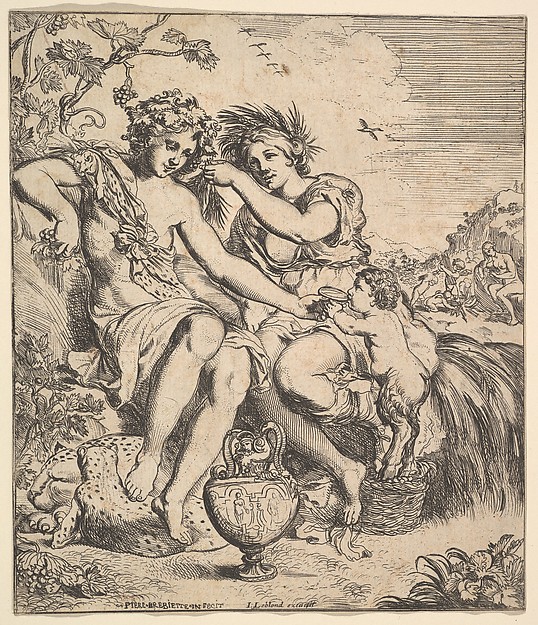 Pierre Brebiette — The Alliance of Bacchus and Ceres
 Stefano della Bella|Jean Desmarets de Saint-Sorlin|Henri Le
  Agostino Veneziano (Agostino dei Musi)|Baccio Bandinelli — A
 Giulio Carpioni — Water, represented by a naiad seated at th
 Anonymous, Italian, Roman-Bolognese, 17th century — Tobias a