In the collection of Cleveland Museum of Art, Cleveland — check current display status with the museum.
FROM THE CLEVELAND MUSEUM OF ART’S CATALOG
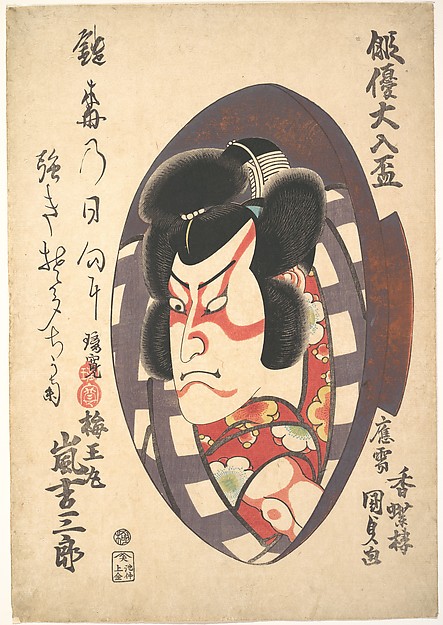
Here, the actor plays the role of an exiled statesman, transforming himself into a vengeful thunder god. The red-and-white make-up style— kumadori , or "shadow painting"—is characteristic of the aragoto manner of portraying heroic roles. The crossed eyes and clenched mouth—in this role a plum blossom branch is added—demonstrates the conventional mie pose used by Kabuki actors to express intense emotion at the most dramatic moment in the play. The audience applauds the actor’s ability to hold this pose, influenced by the stylized movements of the puppets in the famous Bunraku theater. This sensational transformation of the hero is the high point of the scene.
Be the first to share your thoughts.
Sign in to join the discussion.
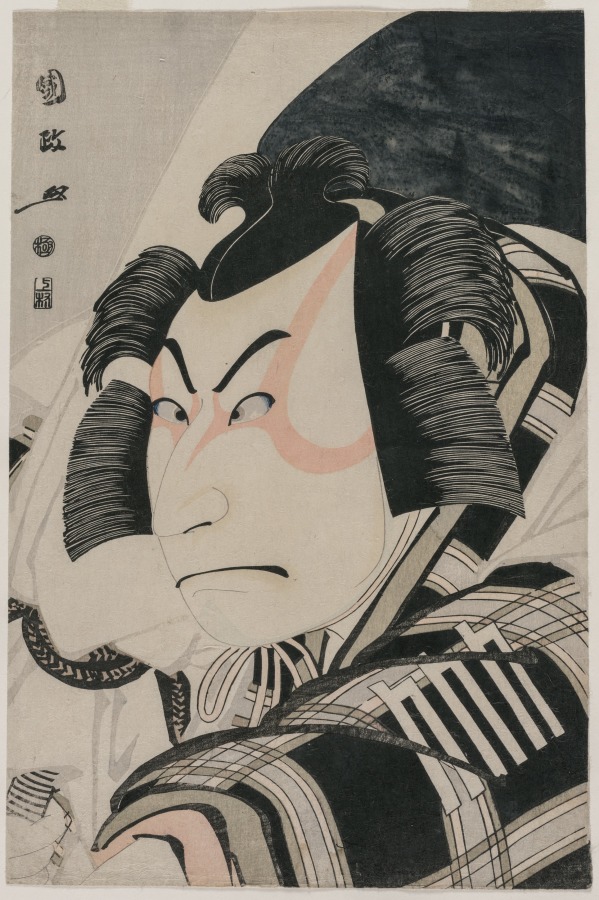 Utagawa Kunimasa (Japanese, 1773–1810) — Nakamura Nakazo II
 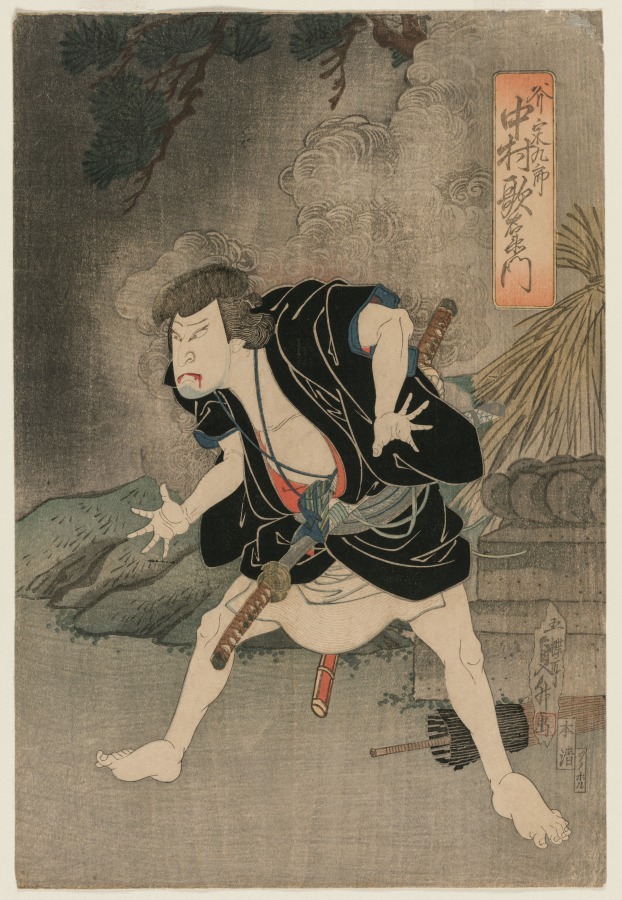 Utagawa Sadamasu (Japanese) — Nakamura Utaemon IV as Ono Sad
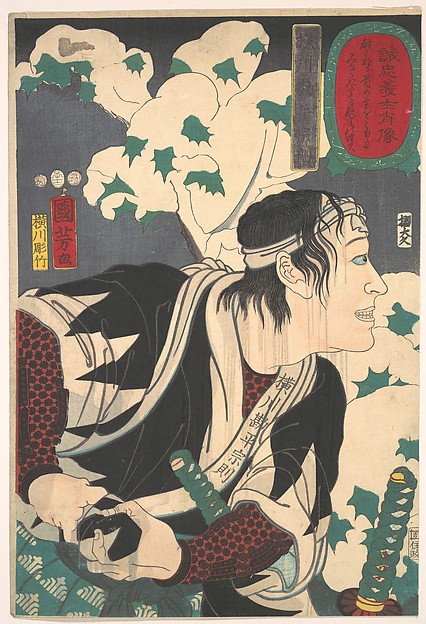 Yokogawa Horitake|Utagawa Kuniyoshi
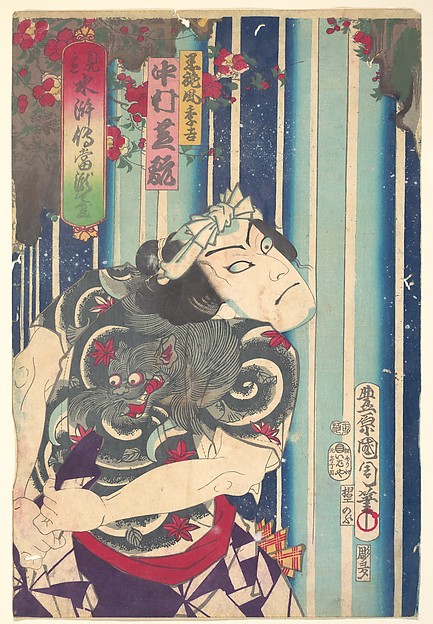 Toyohara Kunichika
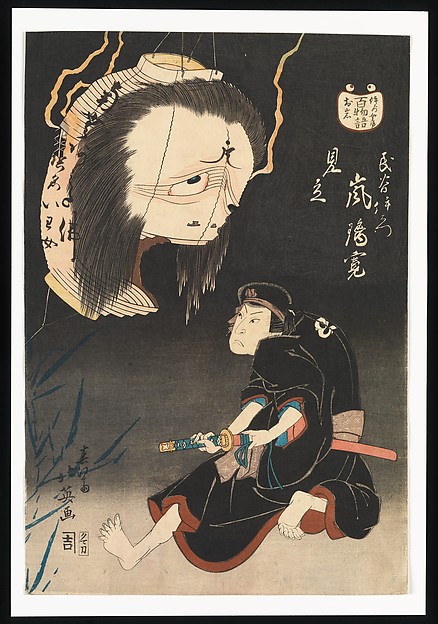 Shunbaisai Hokuei 春梅斎北英 — 春江斎北英画 二代目嵐璃寛 見立 「百物語」|Kabuki
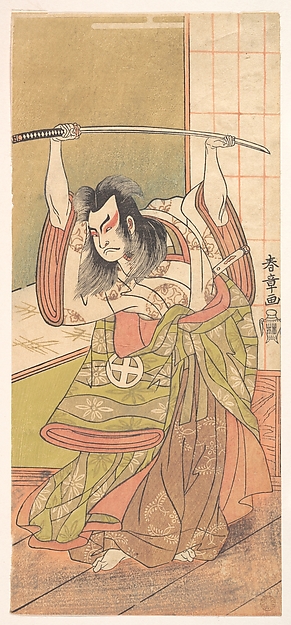 Katsukawa Shunshō 勝川春章
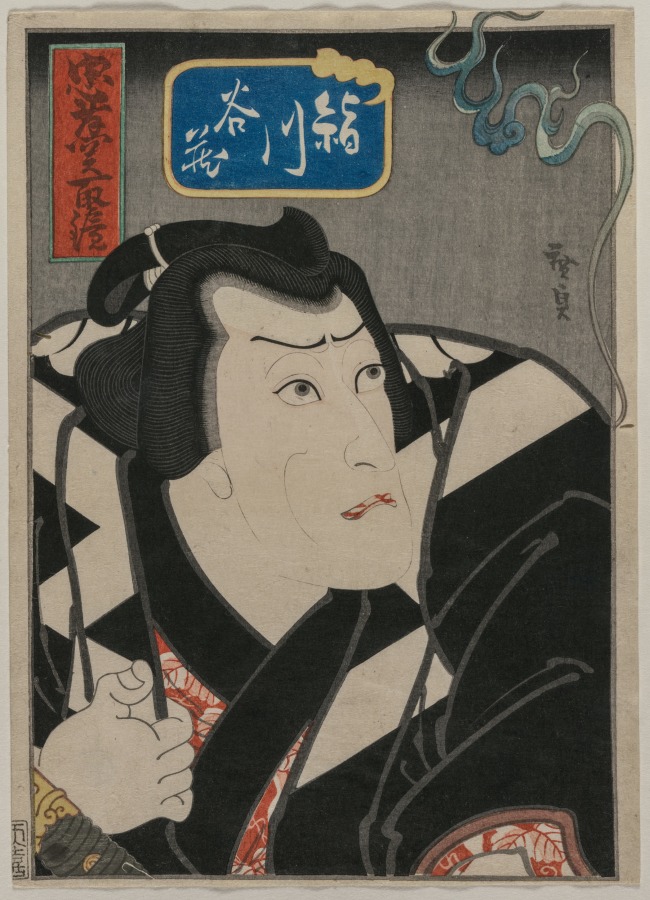 Gosōtei Hirosada (Japanese) — Kinugawa Tanizō in A Mirror of
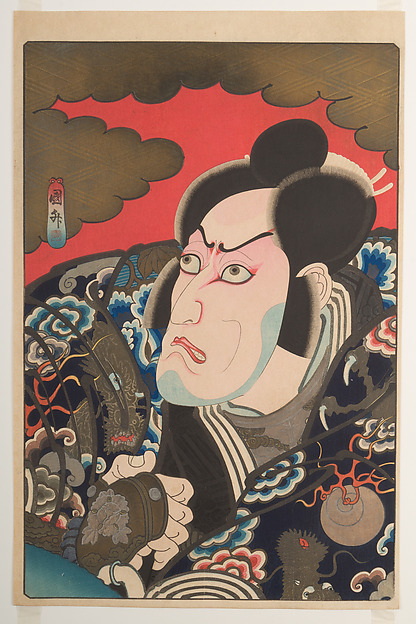 Utagawa Kunimasu — 歌川国升画 五代目市川海老蔵 「熊谷次郎直実」|Kabuki Actor
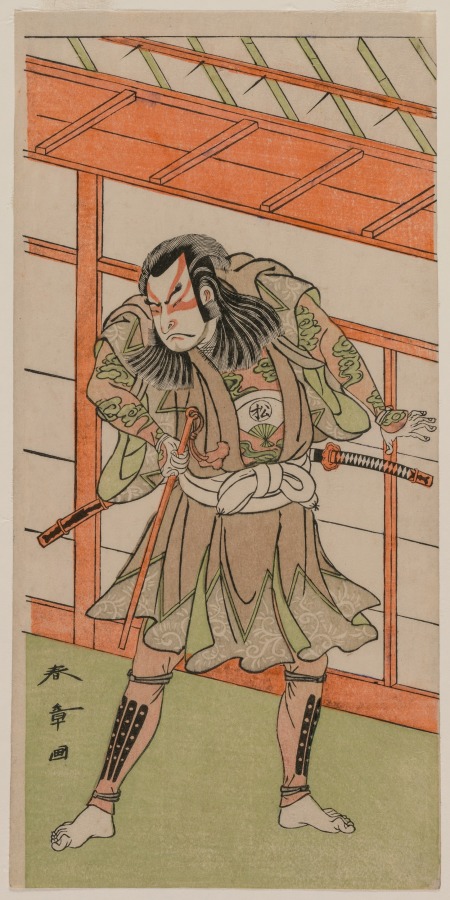 Katsukawa Shunshō (Japanese, 1726–1792) — The Actor Onoe Mat
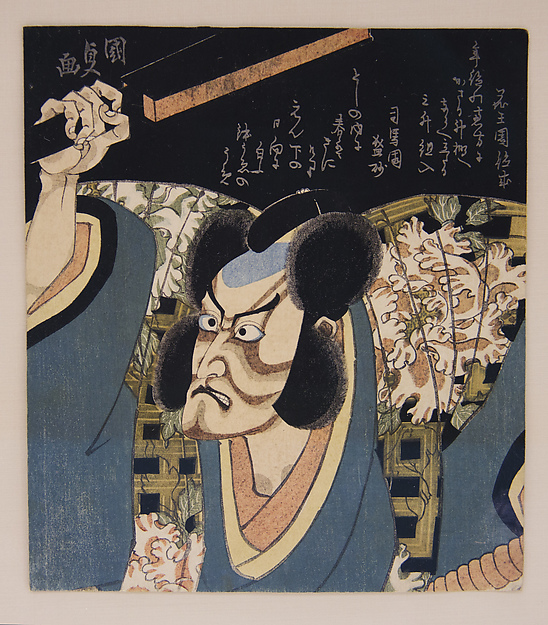 Utagawa Kunisada — 歌川国貞画 七代目市川団十郎の荒獅子男之助|Ichikawa Danjūrō VI
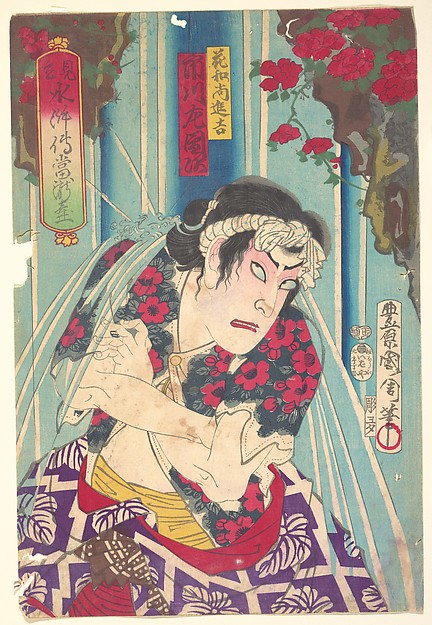 Toyohara Kunichika
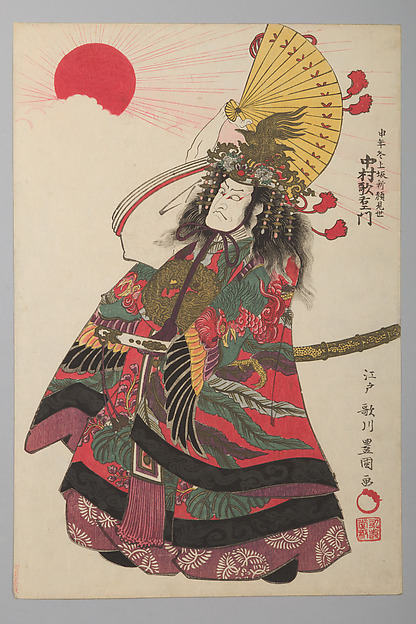 Utagawa Toyokuni I