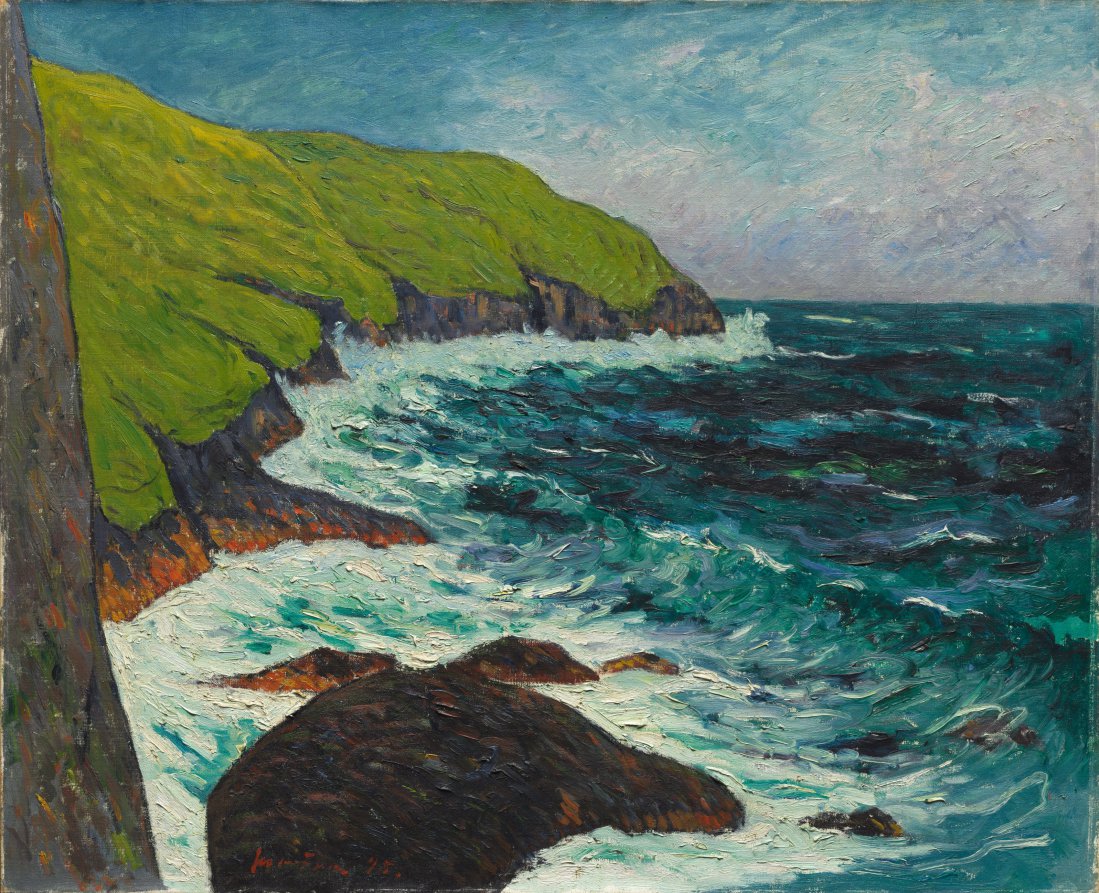
Rocks at Port-Goulphar, Belle-Île
1886
Oil on canvas
66 × 81.8 cm (26 × 32.2 in)
SEE IT IN PERSON
● On view now — Gallery 240
Art Institute of Chicago, Chicago · verified July 2026
Discussion
FROM THE ART INSTITUTE OF CHICAGO’S CATALOG
Belle-Île, a small island off the southern shore of Brittany, was known for its dramatic cliffs, rock formations, and grottoes. As he often did, Claude Monet misjudged the time he would need to explore and capture the beauty of the place, which he variously called “lugubrious,” “terrifying,” and “very beautiful.” He came for two weeks and stayed for more than two months. This canvas is one of a group depicting the frieze of rock formations known as Port-Goulphar.
Be the first to share your thoughts.
Sign in to join the discussion.