In the collection of Cleveland Museum of Art, Cleveland — check current display status with the museum.
FROM THE CLEVELAND MUSEUM OF ART’S CATALOG
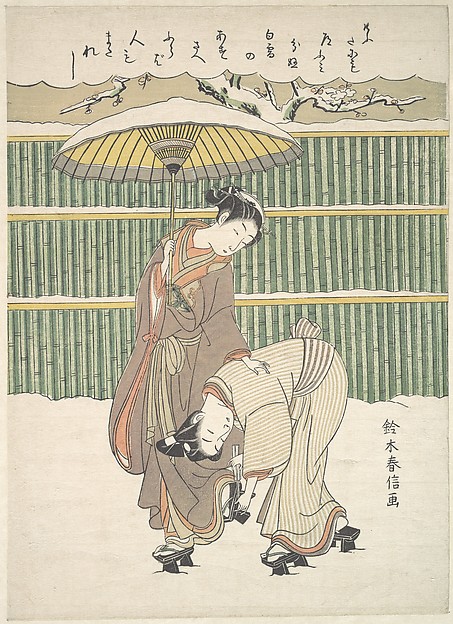
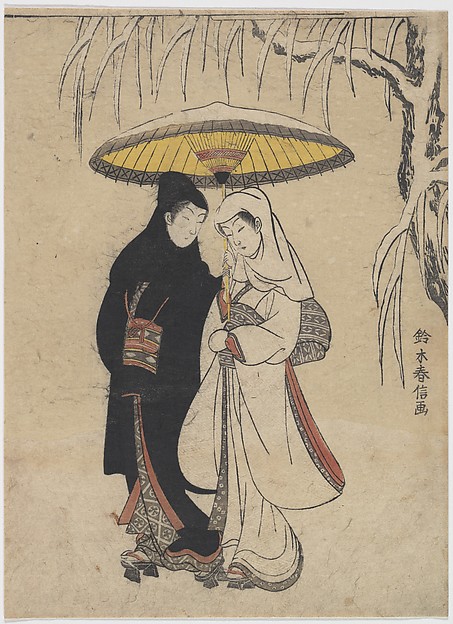
The young woman in this print likely stands in for Meng Zong, one of the Chinese Twenty Four Paragons of Filial Piety. Legend has it he went out in the dead of winter to dig bamboo shoots for his aged parents. Harunobu designed a calendar print for the year 1765 with a more explicit allusion to the theme. It shows a young woman actively digging for bamboo shoots. The first state of this print was privately issued as a calendar print for 1766, with the months of the year depicted in the woman's sash. It was illegal to sell any type of calendar without a government license, and a second state with the calendar replaced with a checked pattern was produced so that the print could be sold commercially. This print is several centimeters taller than the original, which together with its bright colors, indicates that it is a later reproduction.
Be the first to share your thoughts.
Sign in to join the discussion.
 Ohara Shoson (Japanese, 1877–1945) — Umbrellas in Snow
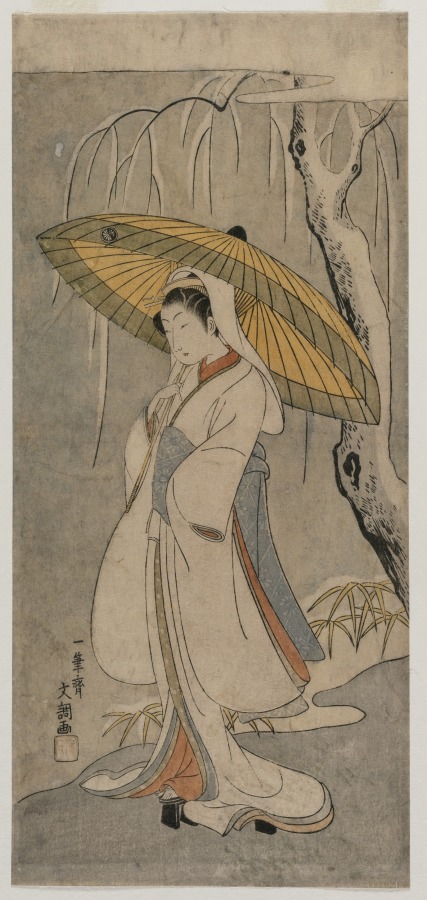 Ippitsusai Bunchō (Japanese, active c. 1765–92) — Segawa Kik
 Utagawa Kunisada
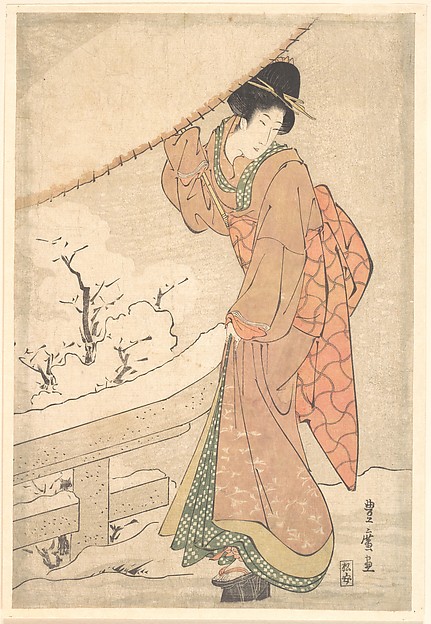 Utagawa Toyohiro
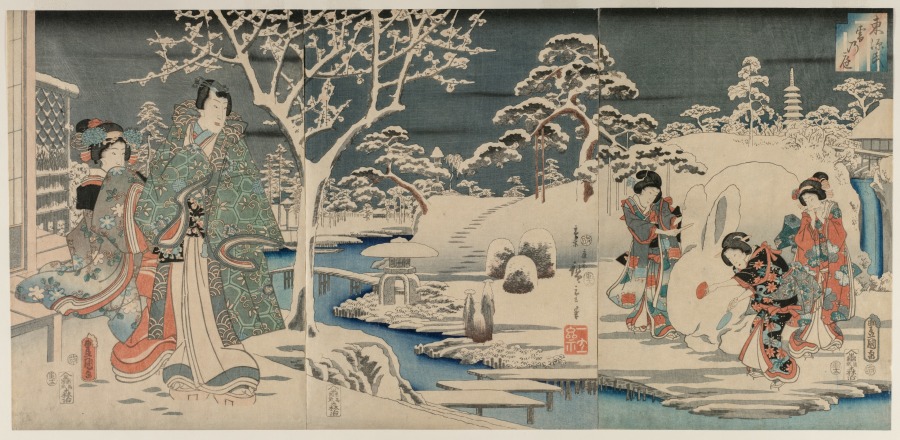 Utagawa Hiroshige (Japanese, 1797–1858) — The Snowy Garden
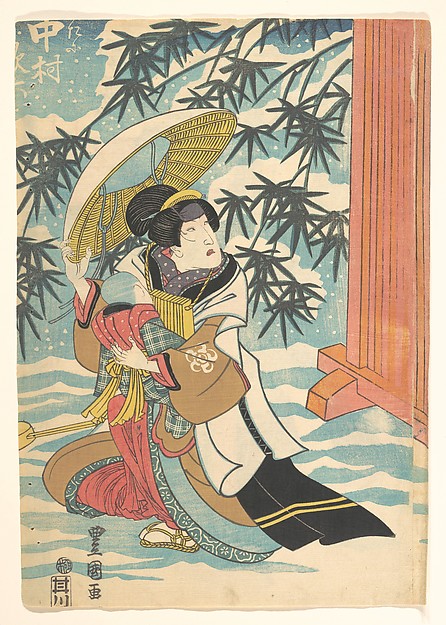 Utagawa Kunisada
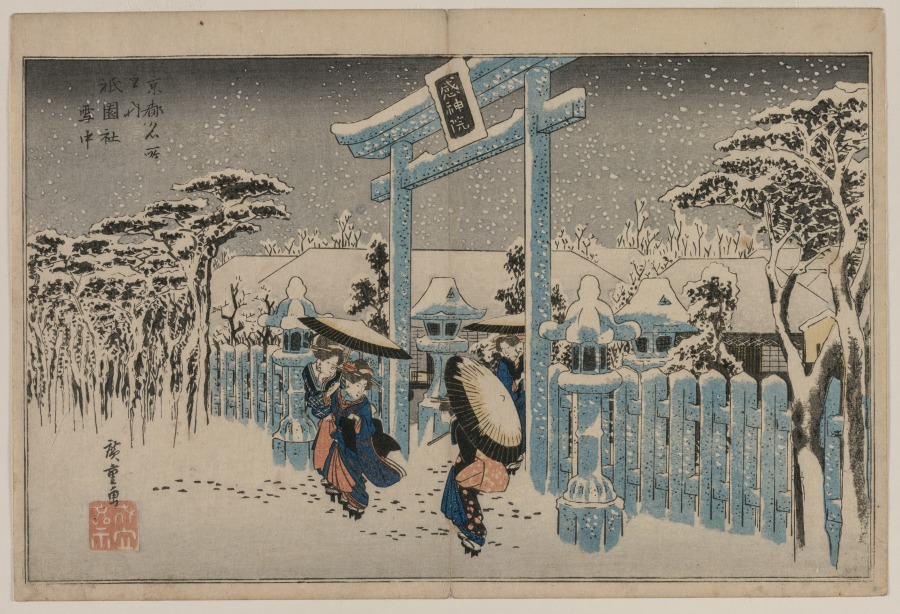 Utagawa Hiroshige (Japanese, 1797–1858) — Snow at the Gion S
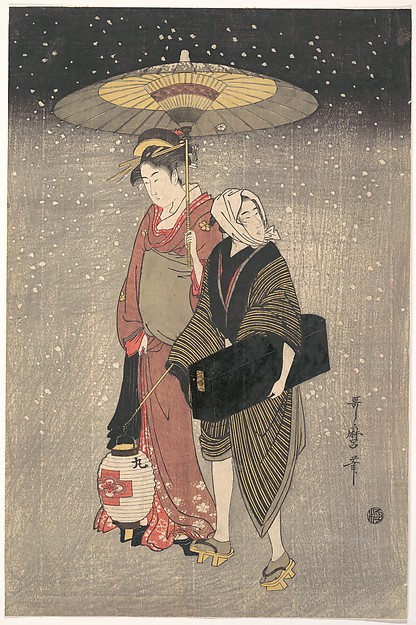 Kitagawa Utamaro
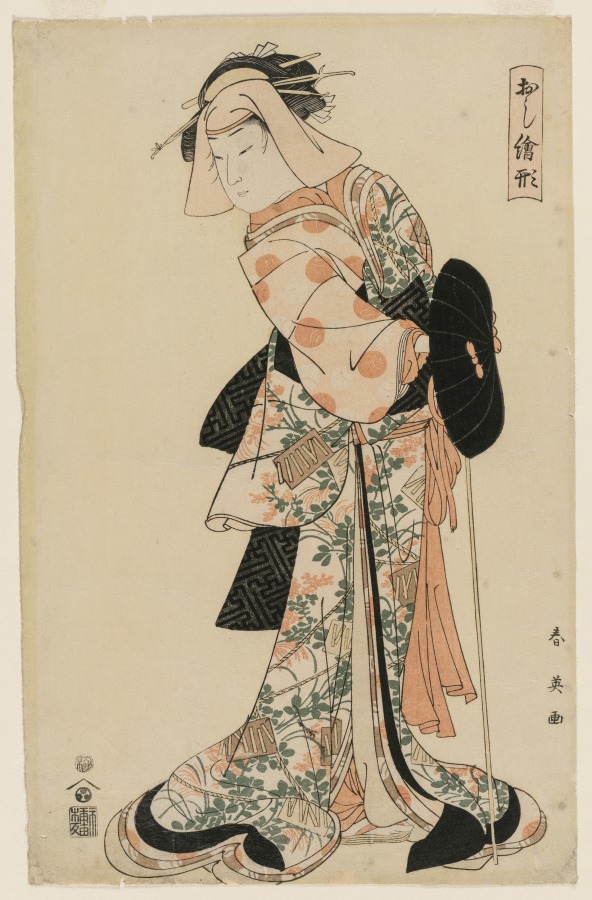 Katsukawa Shunei (Japanese, 1762–1819) — Dancer as Kuzunoha,
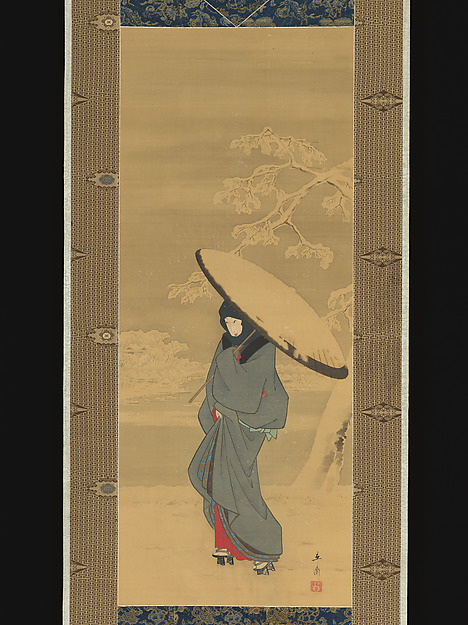 Utagawa Hiroshige
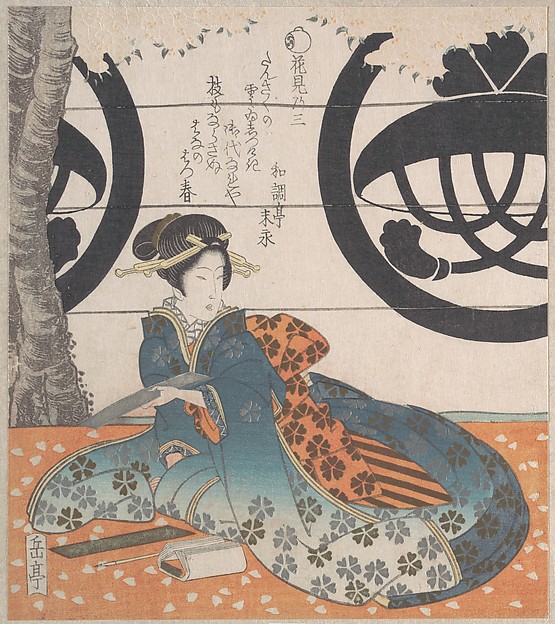 Yashima Gakutei
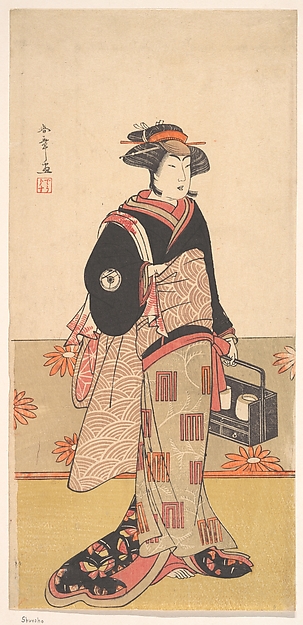 Katsukawa Shunshō 勝川春章