In the collection of Cleveland Museum of Art, Cleveland — check current display status with the museum.
FROM THE CLEVELAND MUSEUM OF ART’S CATALOG
Maillol executed Hero and Leander just as he was becoming acquainted with Paul Gauguin, whose contemporaneous woodcuts must have influenced this work. However, unlike Gauguin, Maillol filled the entire surface with intricate detail and pattern. Leander lived on the Asian side of the Hellespont, the strait which separates Asia and Europe. His lover, Hero, lived on the opposite shore. Each night Leander swam across the strait to visit Hero, but one evening during a storm he drowned, the waves bearing his body to the European shore. When Hero learned of his death, she cast herself into the sea and perished.
Be the first to share your thoughts.
Sign in to join the discussion.
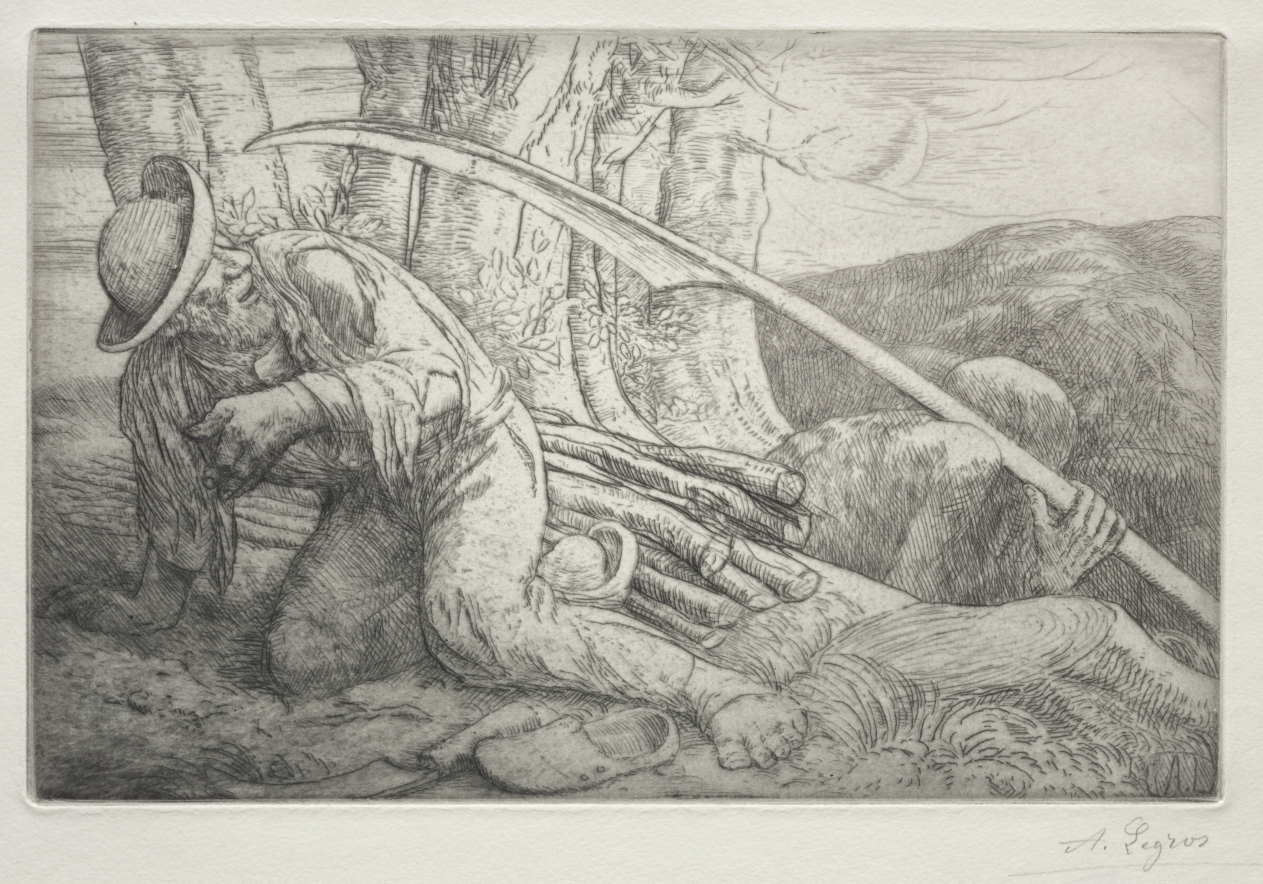 Alphonse Legros (French, 1837–1911) — La Mort et le Bûcheron
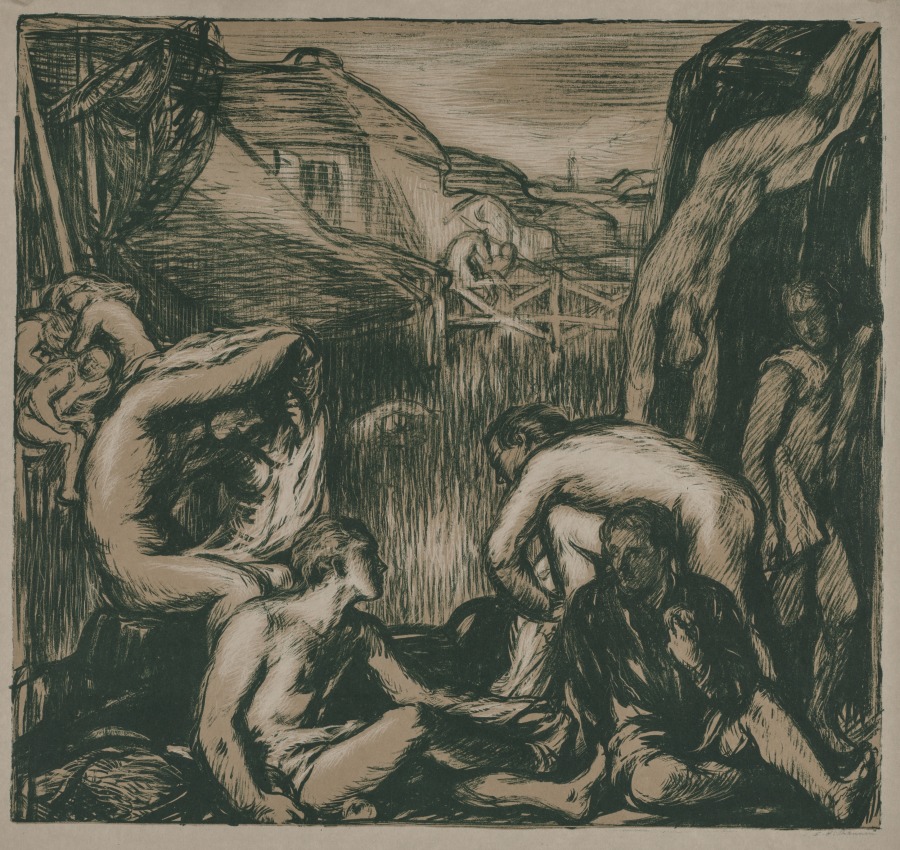 Charles Hasslewood Shannon (British, 1863–1937) — The Mill-P
 Paul Gauguin — Spirit of the Dead Watching (Manao Tupapau),
 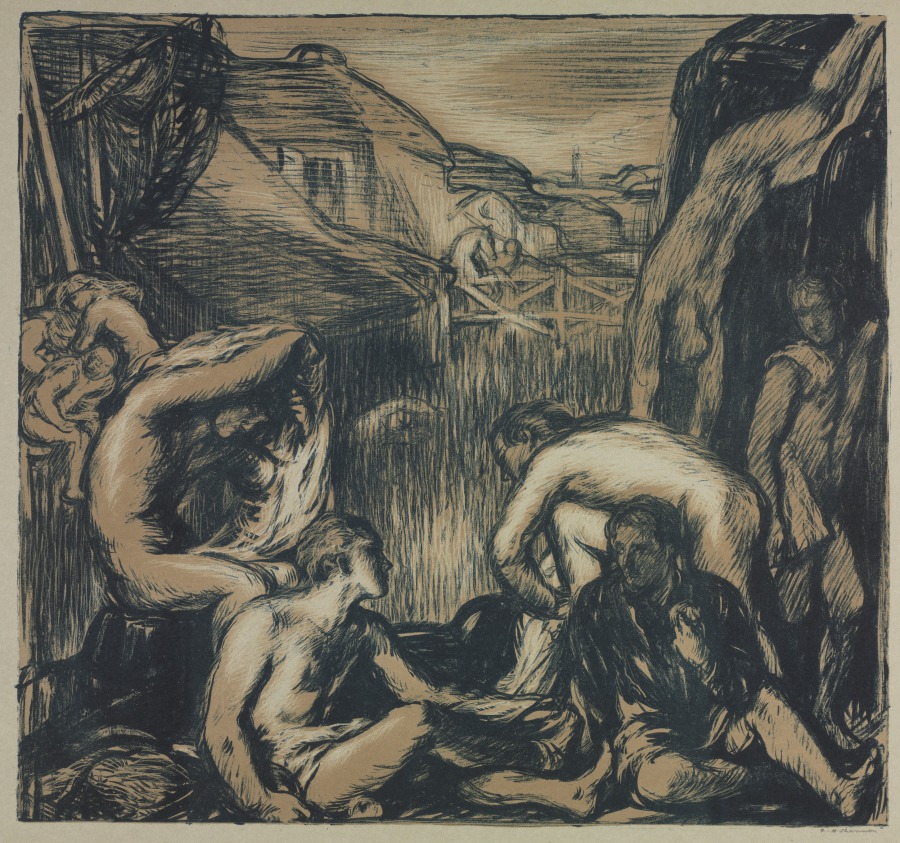 Charles Hasslewood Shannon (British, 1863–1937) — Bathers
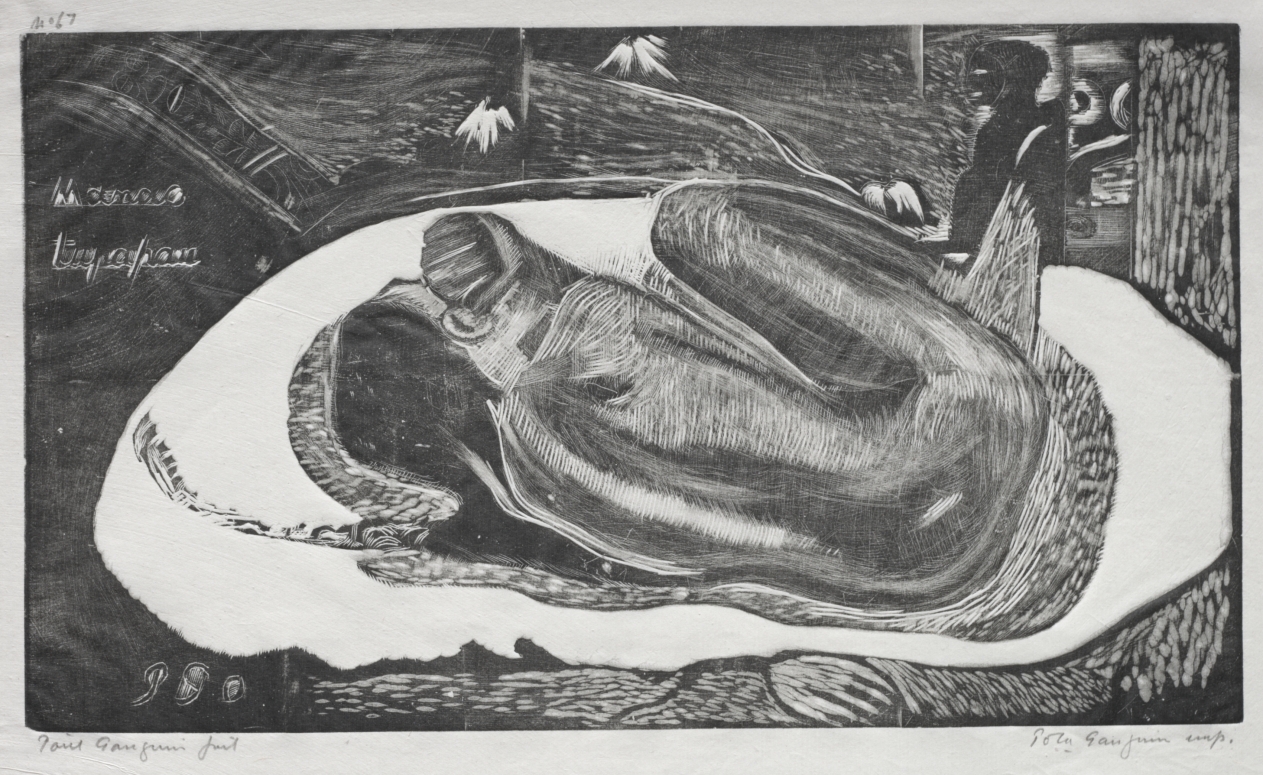 Paul Gauguin (French, 1848–1903) — Noa Noa: Manao Yupapau (
 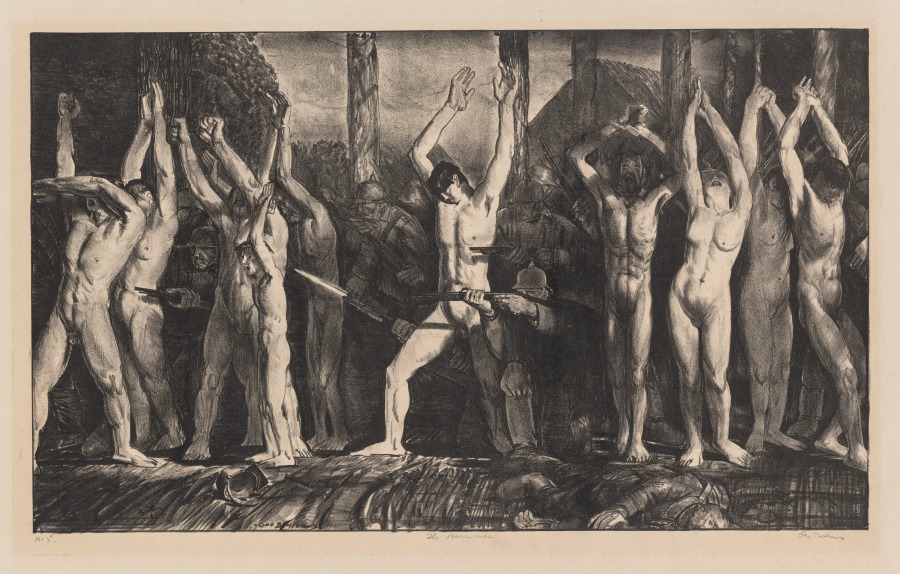 George Bellows (American, 1882–1925) — The Barricade, First
  Paul Gauguin — Spirit of the Dead Watching
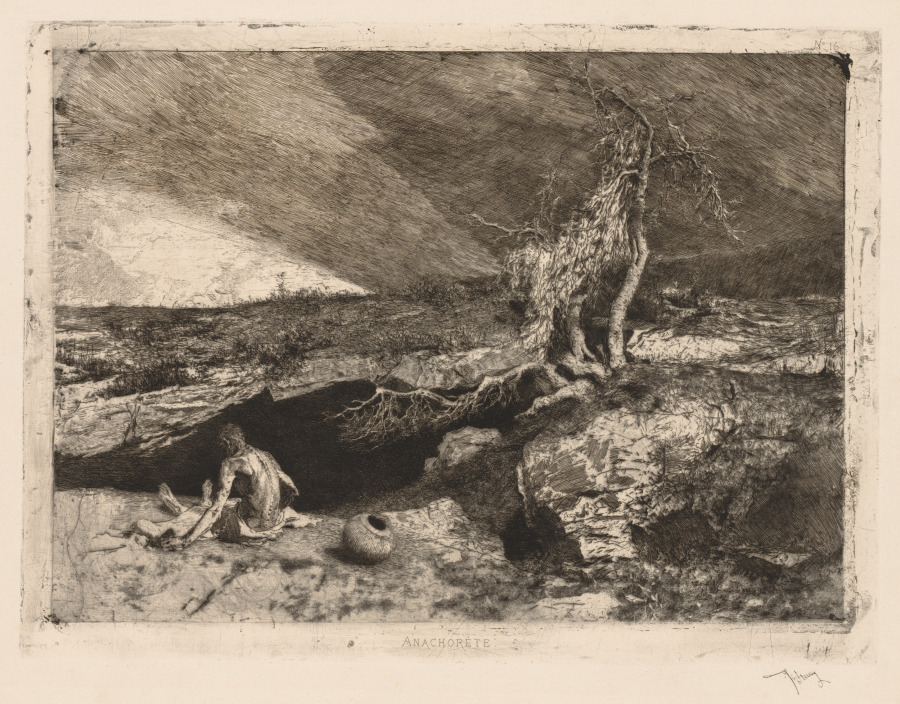 Mariano Fortuny (Spanish, 1838–1874) — The Anchorite
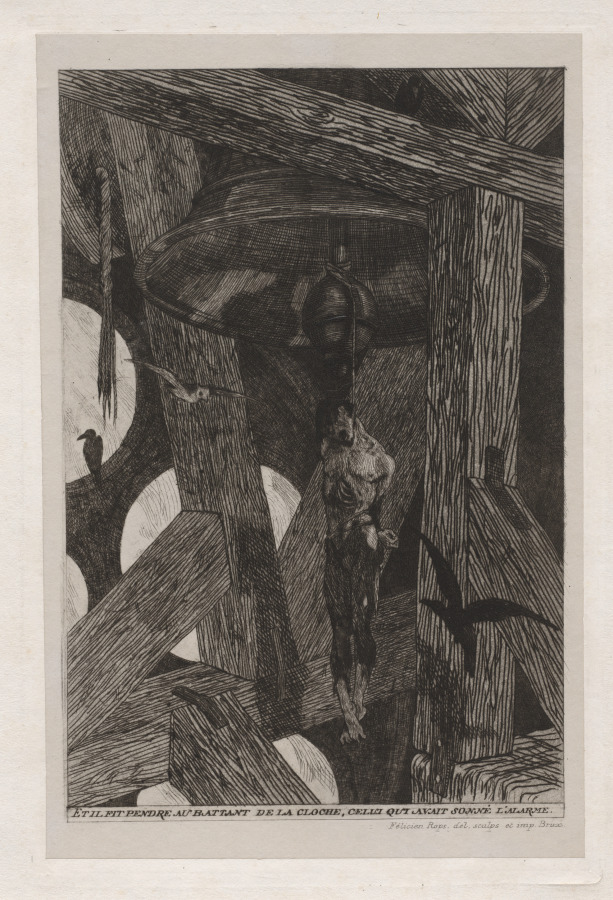 Félicien Rops (Belgian, 1833–1898) — The Legend and Adventur
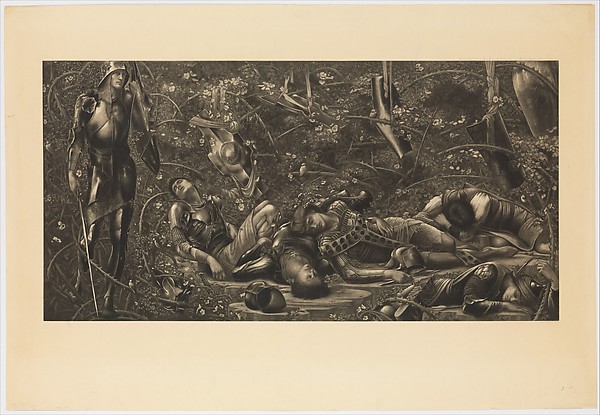 Sir Edward Burne-Jones|Thomas Agnew & Sons, Ltd. — The Legen
 Paul Gauguin — The Universe Is Created
 Paul Gauguin — Te Po