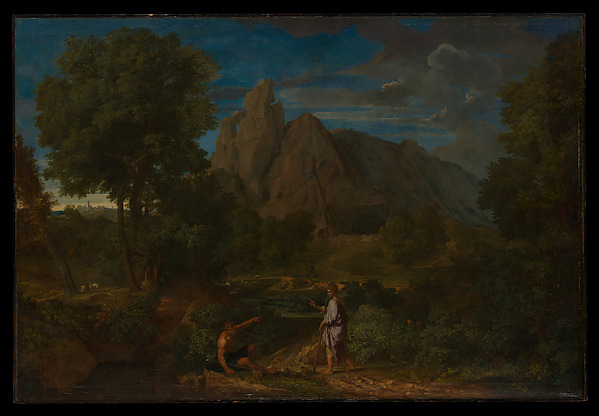
Landscape with Saint John on Patmos
SEE IT IN PERSON
● On view now — Gallery 209
Art Institute of Chicago, Chicago · verified July 2026
Discussion
FROM THE ART INSTITUTE OF CHICAGO’S CATALOG
In Christian tradition, Saint John the Evangelist is thought to be the youngest of Christ’s twelve disciples—but Nicolas Poussin depicted him here as an elderly man. The disciple has retired to the Greek island of Patmos to write the Gospel of John and the Book of Revelation; he is shown at work with his attribute, an eagle, just behind him. Poussin constructed an idealized landscape, shaping natural forms according to geometric principles and reinforcing the measured order of the composition by arranging them parallel to the picture plane. The resulting serene setting is replete with references to Greco-Roman civilization, including column fragments, an obelisk, and a temple. For Poussin and his friends and patrons, Christianity was closely linked to Stoic philosophy, which emphasized reason, unity, and serenity. Scholars now regard Poussin’s art, more than that of any other seventeenth-century European artist, as synonymous with classicism, the philosophy that prized the model of ancient Greek and Roman art and architecture. Born in France, Poussin spent most of his career in Rome, painting for an educated elite. Along with Landscape with Saint Matthew (Gemäldegalerie, Berlin), p
Be the first to share your thoughts.
Sign in to join the discussion.
More by Nicolas Poussin

More like this
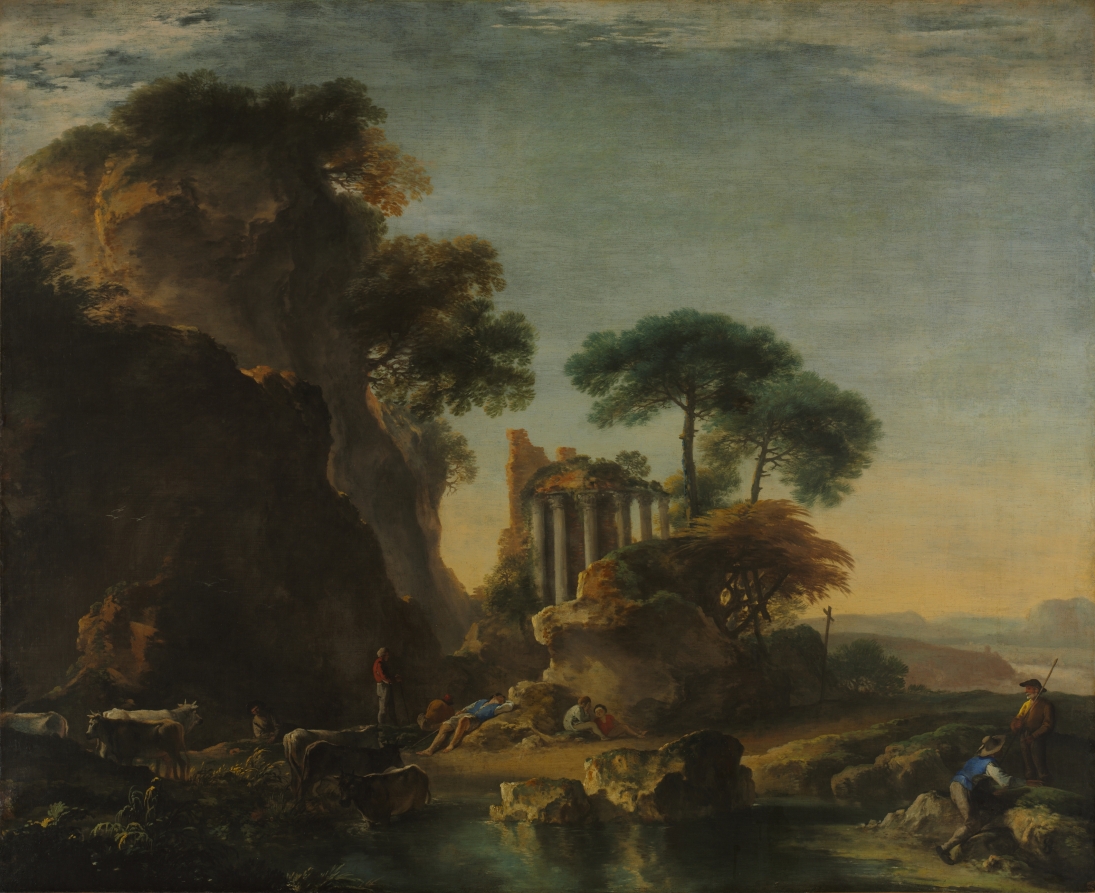 Salvator Rosa (Italian, 1615–1673) — Ruins in a Rocky Landsc
 Jan van Huysum — Arcadian Landscape with Fishermen
 Jan Asselijn — Ezeldrijvers bij een Italiaanse ruïne
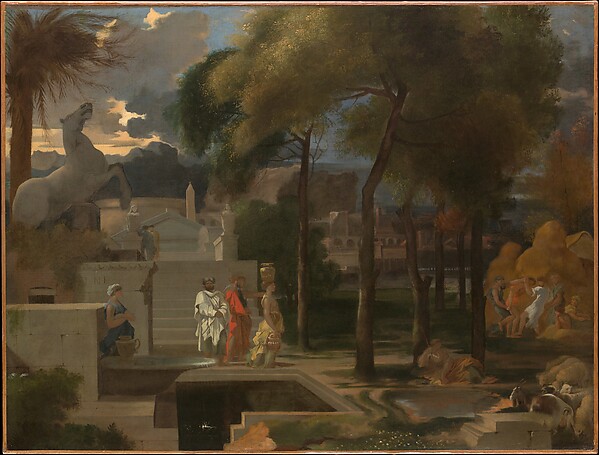 Sébastien Bourdon — A Classical Landscape
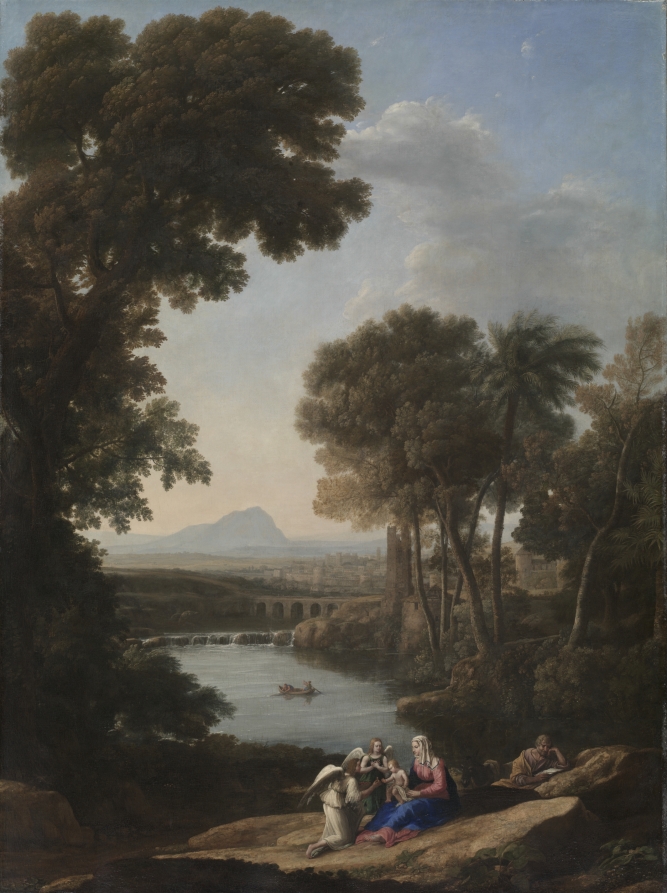 Claude Lorrain (French, 1604–1682) — Rest on the Flight into
 Jurriaan Andriessen — Arcadisch landschap met links een temp
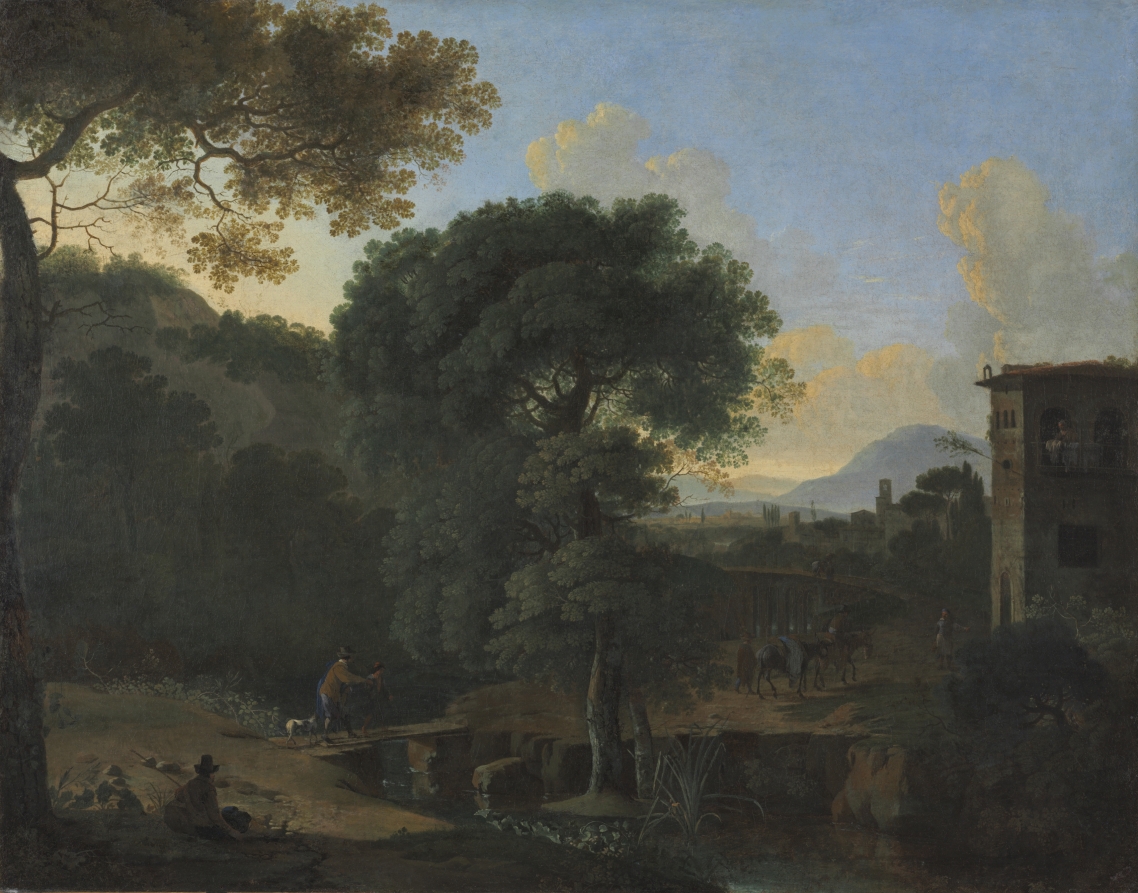 Herman van Swanevelt (Dutch, c. 1600–1655) — Landscape with
 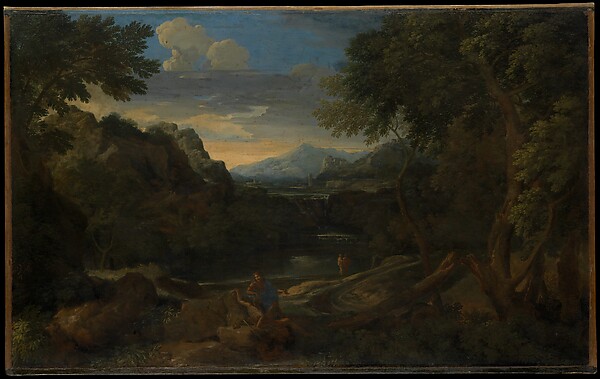 Gaspard Dughet — Imaginary Landscape
 Isaac de Moucheron — View of Tivoli
 Francisque Millet — Mercury and Battus
 Herman van Swanevelt — Italian landscape
 Josephus Augustus Knip — De golf van Napels met op de achter