In the collection of Cleveland Museum of Art, Cleveland — check current display status with the museum.
FROM THE CLEVELAND MUSEUM OF ART’S CATALOG
Created at the end of the 1500s, this print stylistically marks the end of Renaissance art. Barocci’s swirling, emotional composition and the intensity of Agostino’s engraved network of lines prefigure the rise of Baroque art in the 1600s. However, ancient legends such as the Trojan War, revived and popularized during the Renaissance, continued to inspire artists for centuries to come. Here, Aeneas carries his elderly father Anchises, who in turn rescues small statues of their household gods while the city of Troy burns. Both acts stress the men’s virtuous dedication to home and family. Aeneas’s young son Ascanius and his wife Creusa flee with them, but Creusa’s separation from the group alludes to her fate: she falls behind and is lost as the Greeks invade the city.
Be the first to share your thoughts.
Sign in to join the discussion.
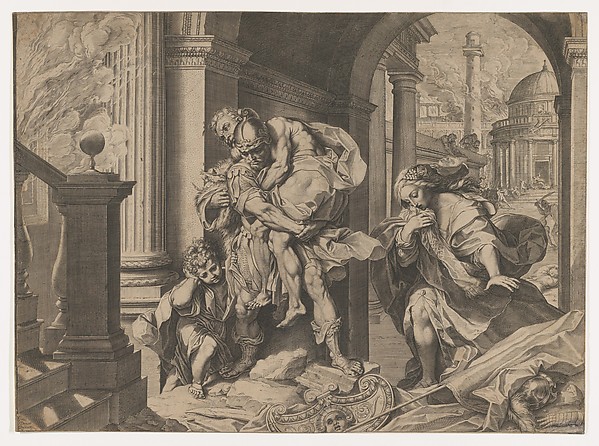 Agostino Carracci|Federico Barocci|Donato Rasicotti — Aeneas
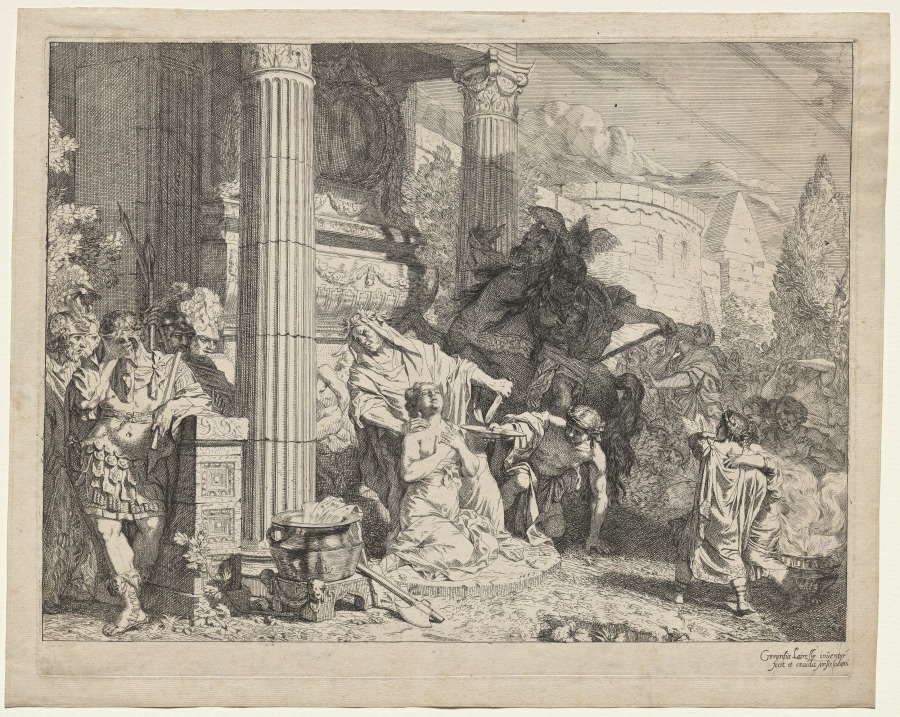 Gerard de Lairesse (Flemish, 1641–1711) — The Sacrifice of P
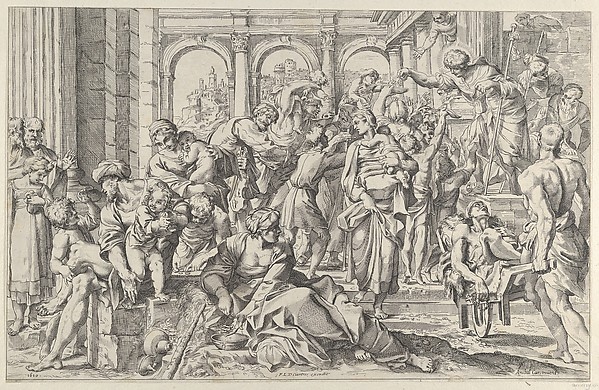 Annibale Carracci|François Langlois|Anonymous|Francesco Briz
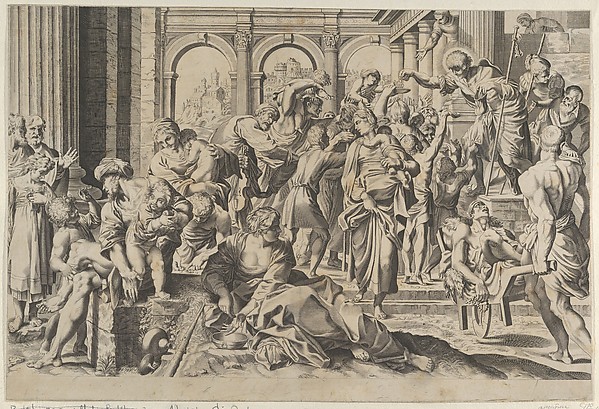 Annibale Carracci|Anonymous — Saint Roch at right distributi
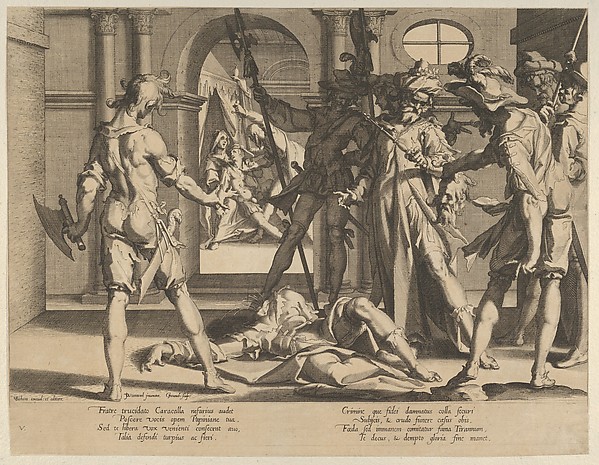 Joachim Wtewael|Willem van Swanenburg|Christoffel van Sichem
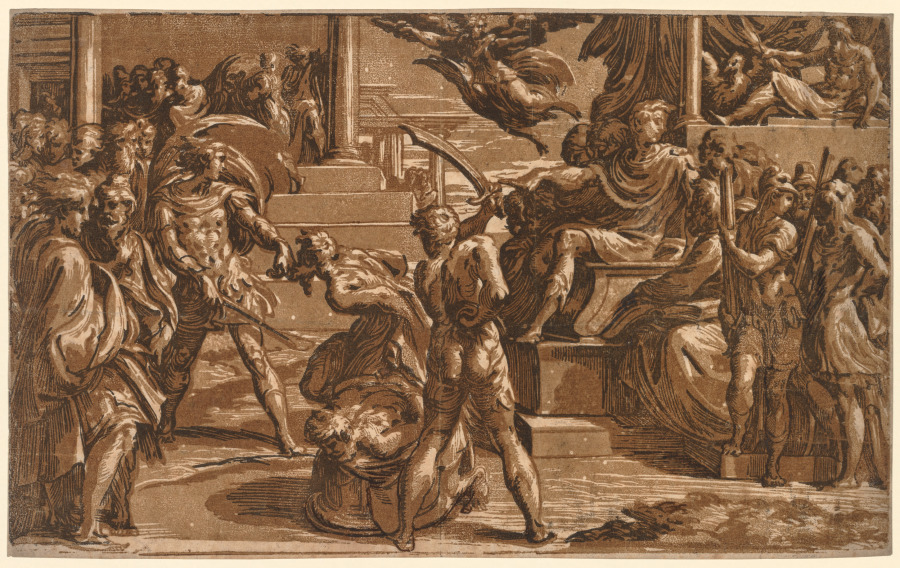 Antonio da Trento (Italian, c. 1508–c. 1550) — The Martyrdom
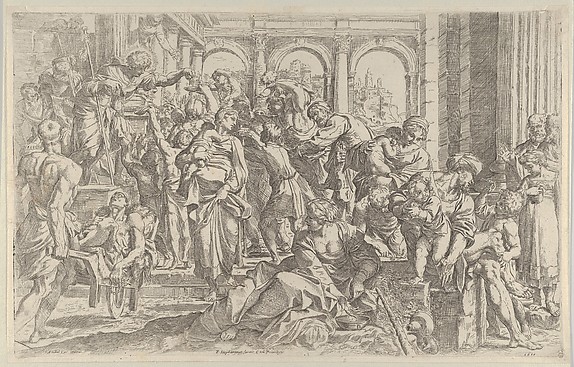 Francesco Brizio|Guido Reni|Pietro Stefanoni|Annibale Carrac
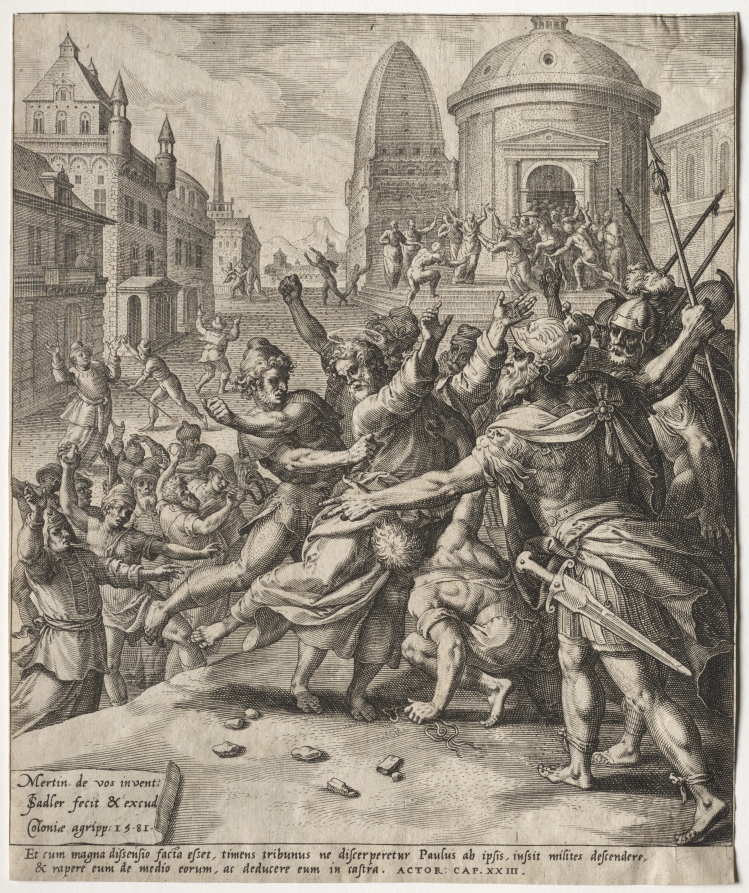 Jan I Sadeler (Flemish, 1550–1600) — The Arrest of St. Paul
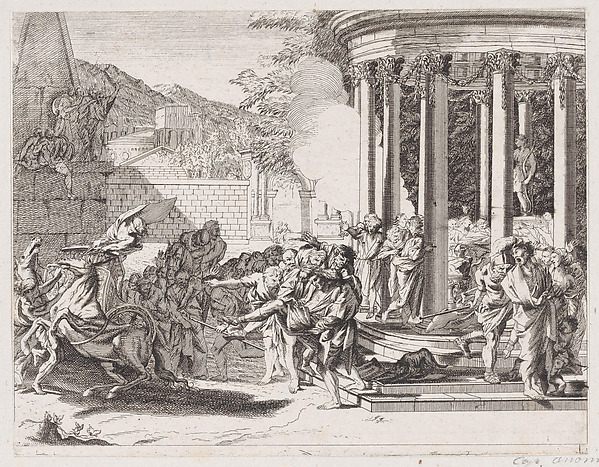 Pietro Testa|Arnold van Westerhout — Sinorix being carried f
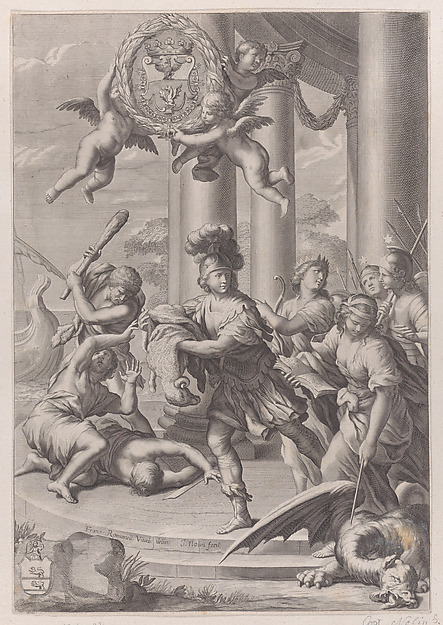 Giovanni Francesco Romanelli|Jean-Baptiste Nolin — Jason car
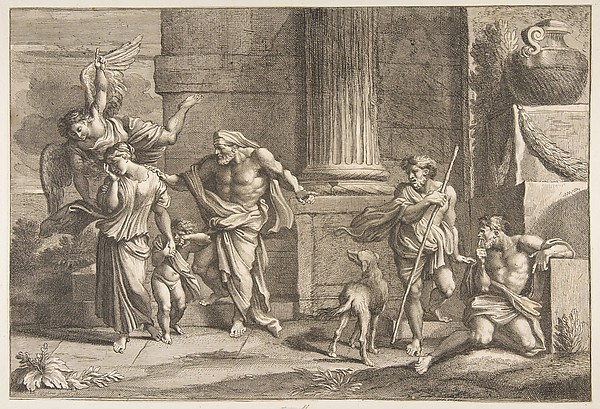 Charles Massé|Giovanni Benedetto Castiglione (Il Grechetto)
 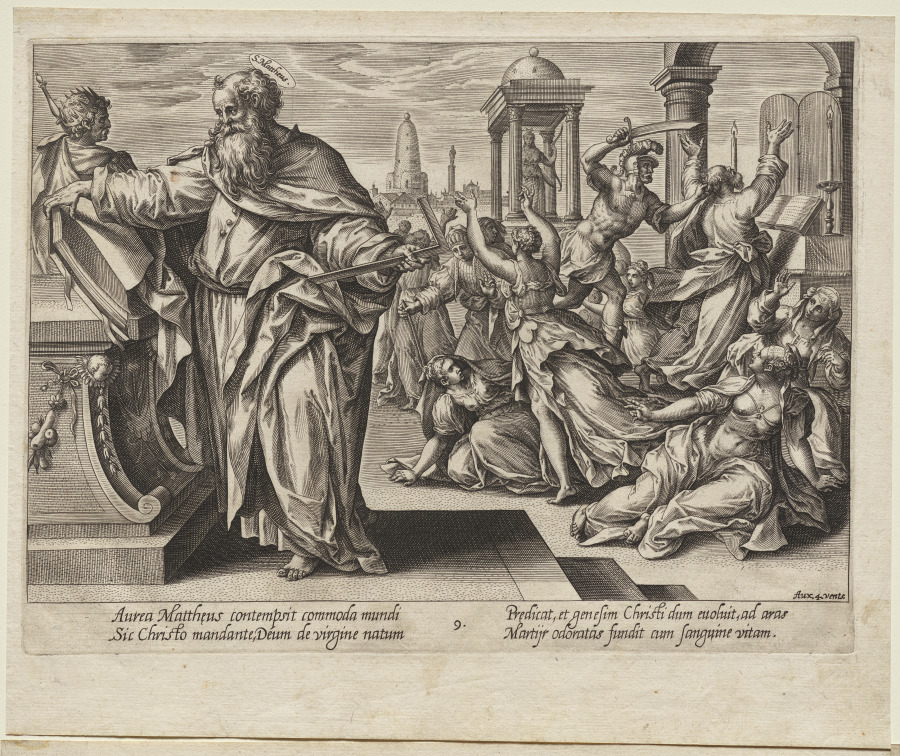 Hendrick Goltzius (Dutch, 1558–1617) — St. Matthew