In the collection of Cleveland Museum of Art, Cleveland — check current display status with the museum.
FROM THE CLEVELAND MUSEUM OF ART’S CATALOG
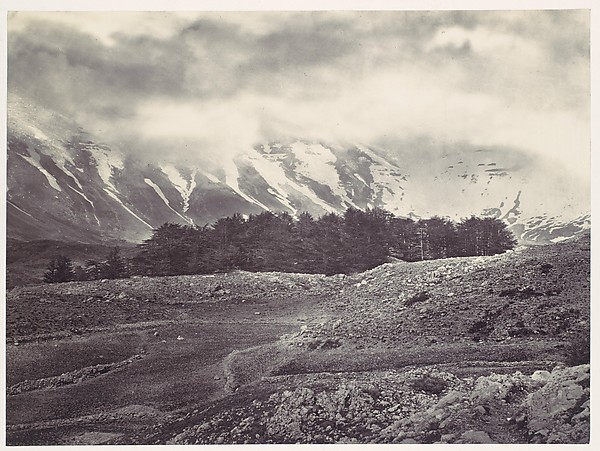
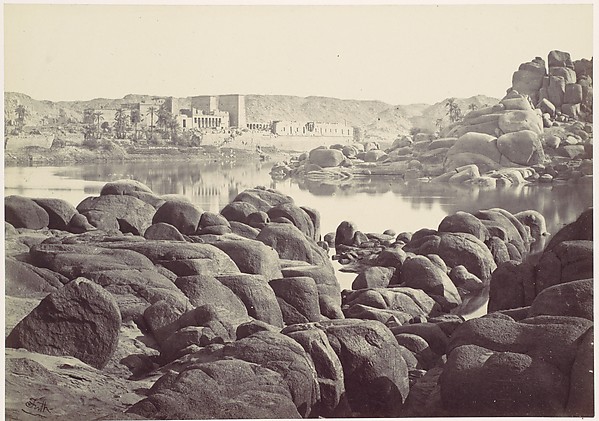
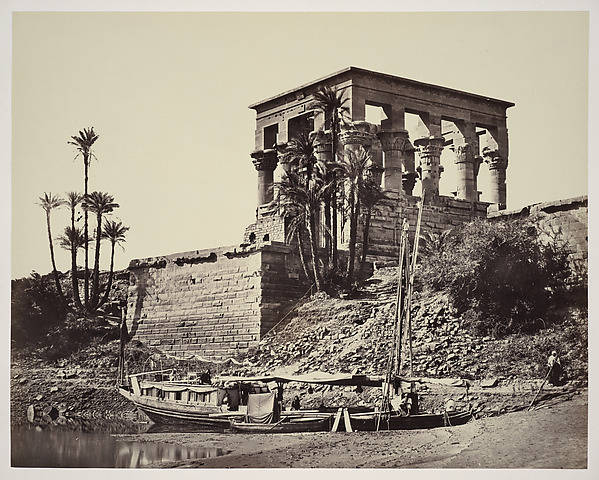
Frith was the first photographer in Egypt to successfully use the wet collodion process, introduced in 1851. Its glass plate negatives yielded sharper, more detailed images than paper ones. He even created mammoth plate prints, as this size is called, which required equally large glass plate negatives. Pursuing the process’s exacting chemistry in Egypt’s scorching sunlight was trying. Frith sometimes sought refuge in tombs for the cool air and darkness to process his plates. “Pushing myself backwards upon my hands and knees, into a damp slimy rock-tomb . . . I prepared my pictures by candlelight in one of the interior chambers. . . . The floor was covered . . . with an impalpable ill flavored dust, which rose in clouds as we moved; from the roof were suspended groups of fetid bats.”
Be the first to share your thoughts.
Sign in to join the discussion.
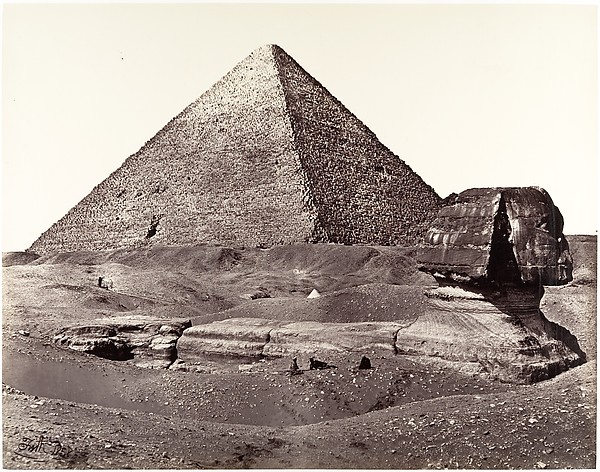 Francis Frith — The Great Pyramid and The Great Sphinx
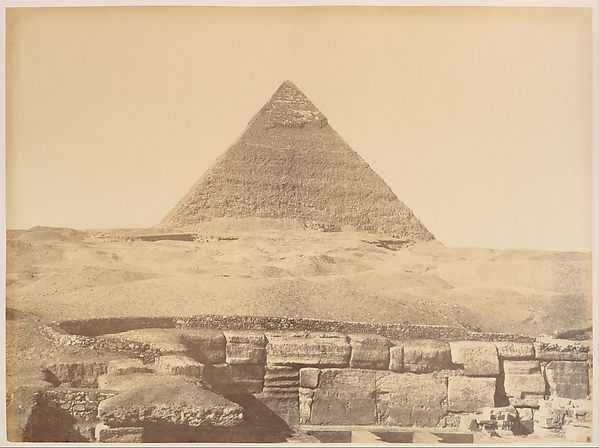 Gustave Le Gray — Pyramides de Gizèh
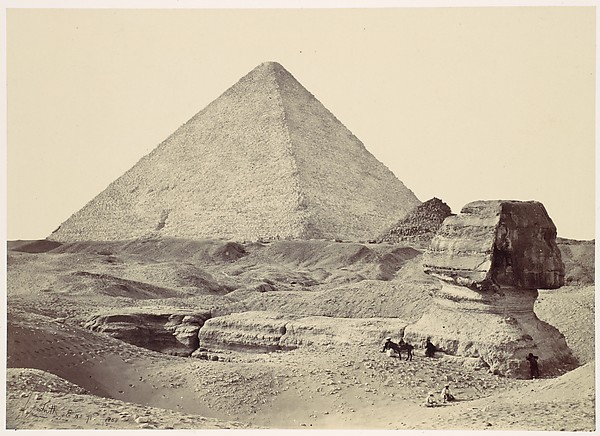 Francis Frith — The Sphynx and Great Pyramid, Geezeh
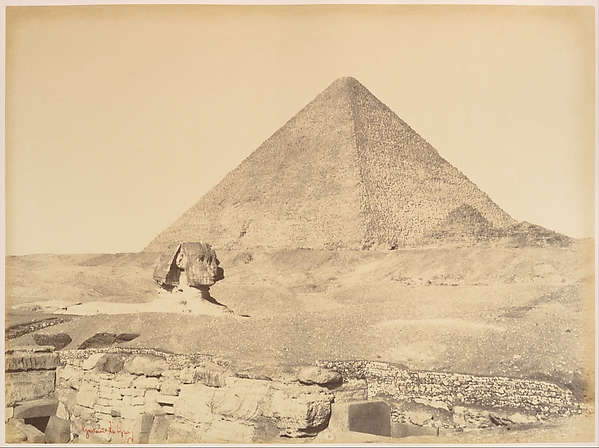 Gustave Le Gray — Pyramides de Gizèh
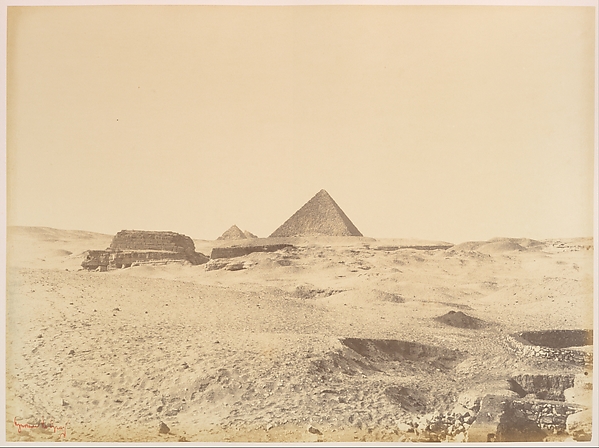 Gustave Le Gray — Pyramides de Gizèh
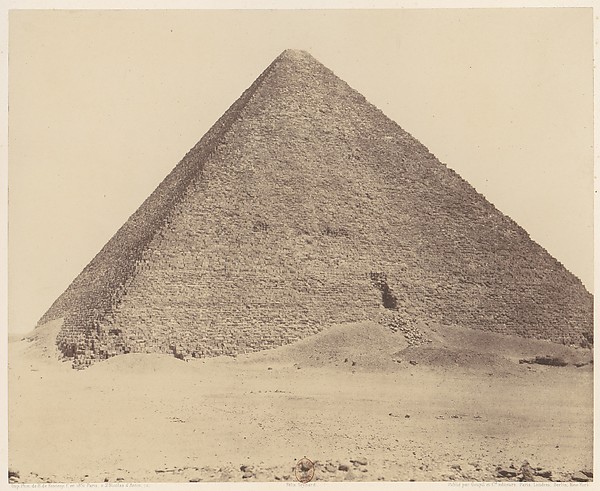 Félix Teynard|Imprimerie Photographique de H. de Fonteny et
 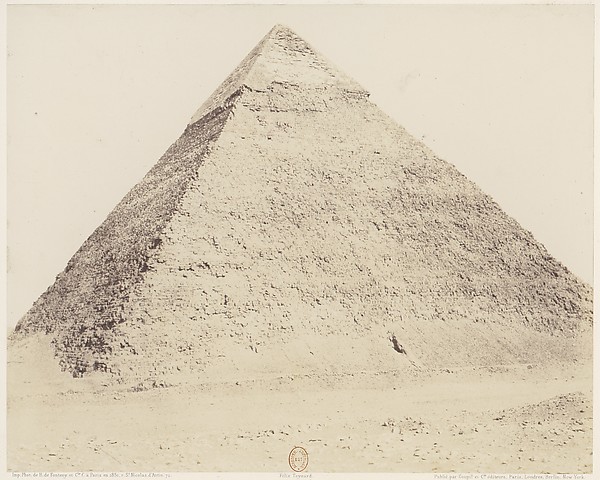 Félix Teynard|Imprimerie Photographique de H. de Fonteny et
 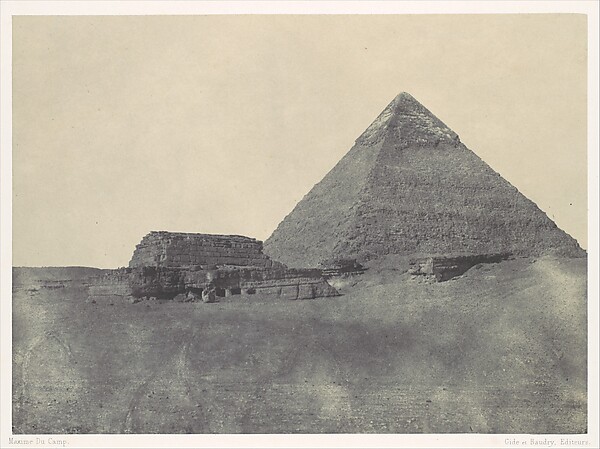 Maxime Du Camp|Imprimerie photographique de Blanquart-Évrard
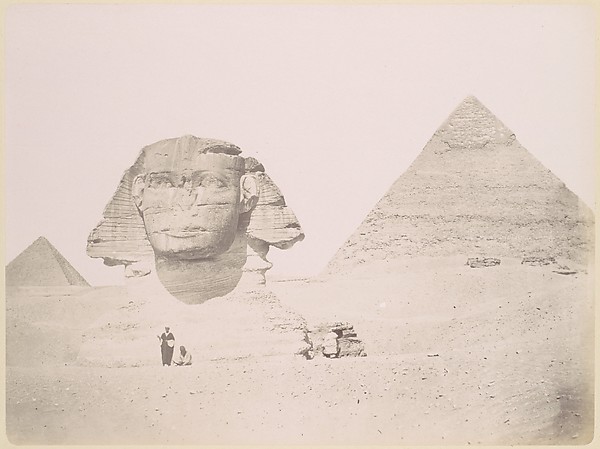 Félix Bonfils — Pyramides et le Sphinx
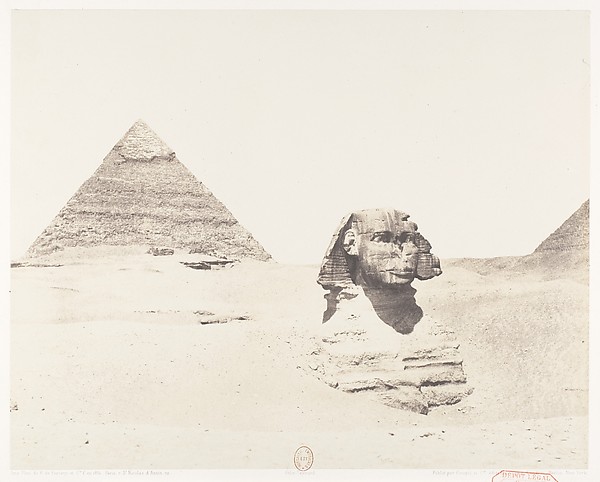 Félix Teynard|Imprimerie Photographique de H. de Fonteny et
 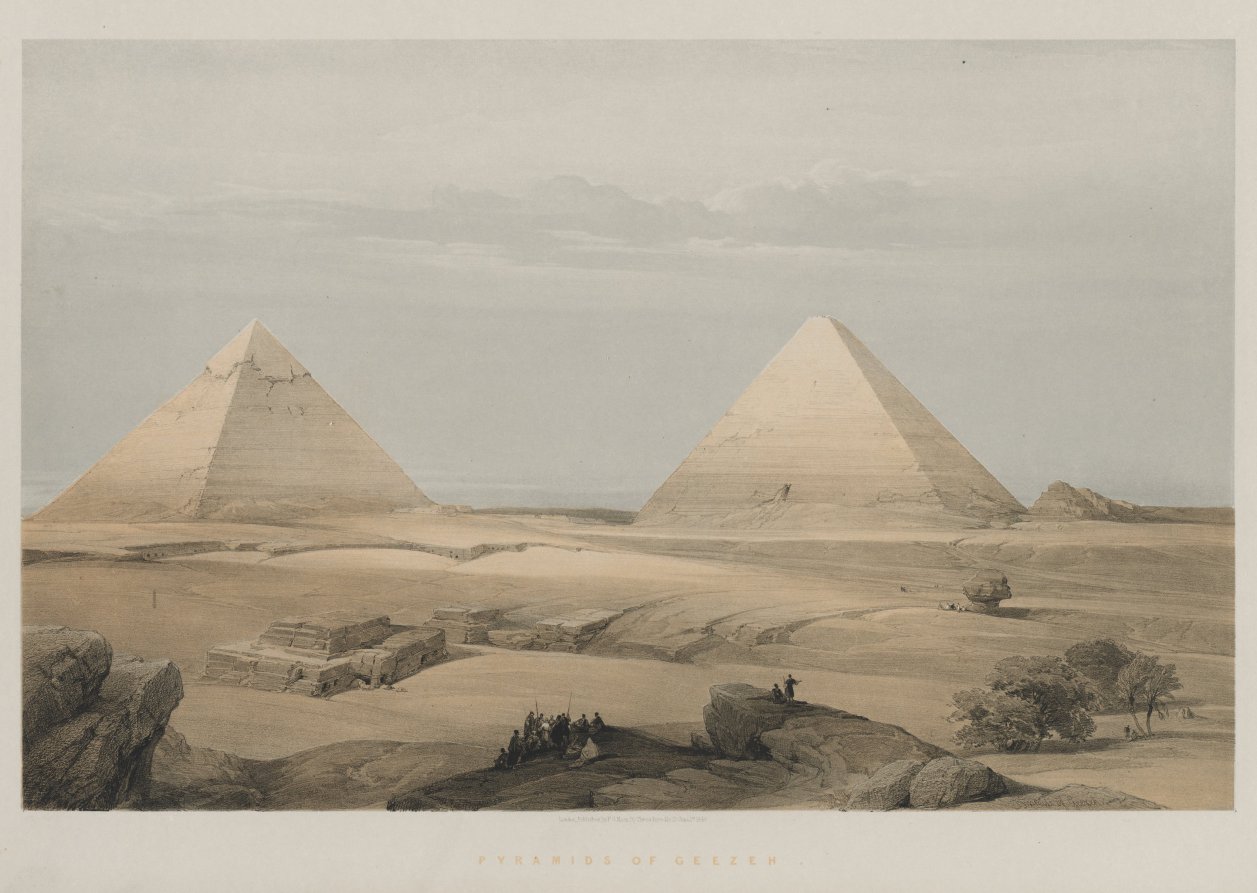 Louis Haghe (British, 1806–1885) — Egypt and Nubia, Volume I
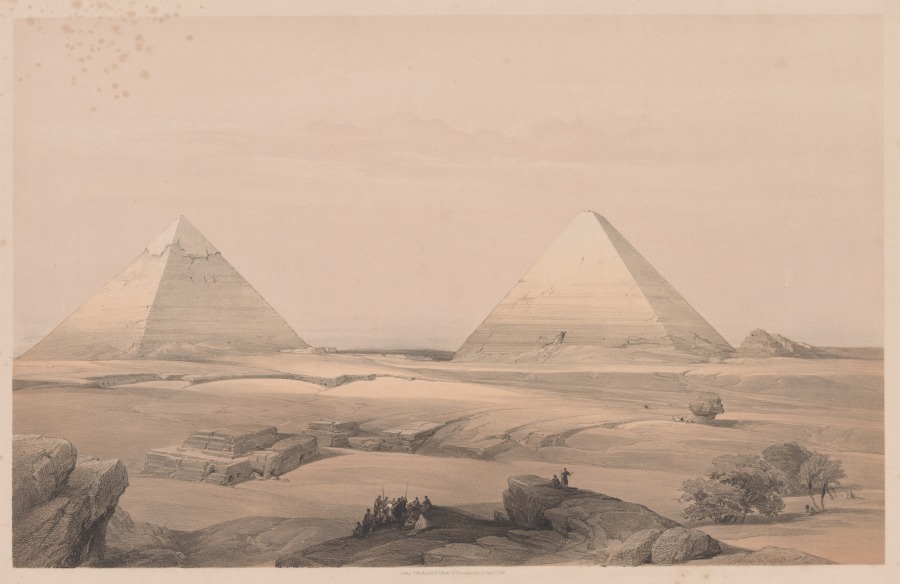 Louis Haghe (British, 1806–1885) — Egypt and Nubia: Volume
 ![[Three East Indian Women]](https://images.metmuseum.org/CRDImages/ph/web-large/DP116352.jpg)
![[Egyptian Obelisk, "Cleopatra's Needle," in Alexandria, Egypt]](https://images.metmuseum.org/CRDImages/ph/web-large/DP147834.jpg)

![[Six East Indian Men]](https://images.metmuseum.org/CRDImages/ph/web-large/DP116350.jpg)