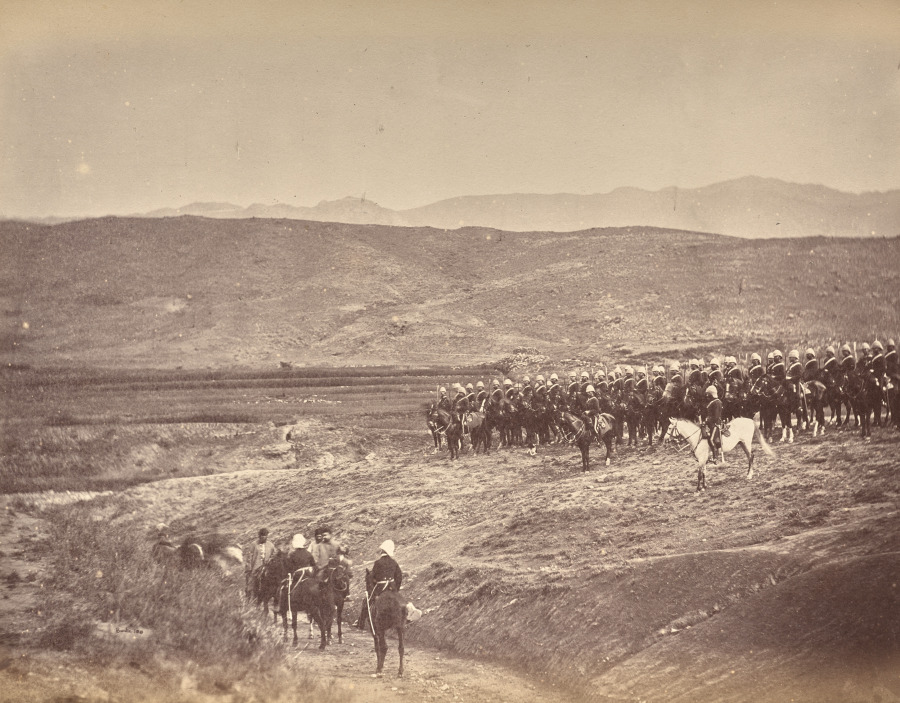
FROM THE CLEVELAND MUSEUM OF ART’S CATALOG
Exercises involving elephant batteries, which were exotic to European eyes, attracted spectators; photographs of them were excellent souvenirs of these military forces employed by the British Indian Army. Elephants had been employed in warfare in India since at least the 500s BC, but with the advent of heavy artillery, their function switched from attack to support. They transported big guns and supplies and worked in logging and construction. It took many cattle to pull a load that could be handled by two elephants.
Source ↗︎
Be the first to share your thoughts.
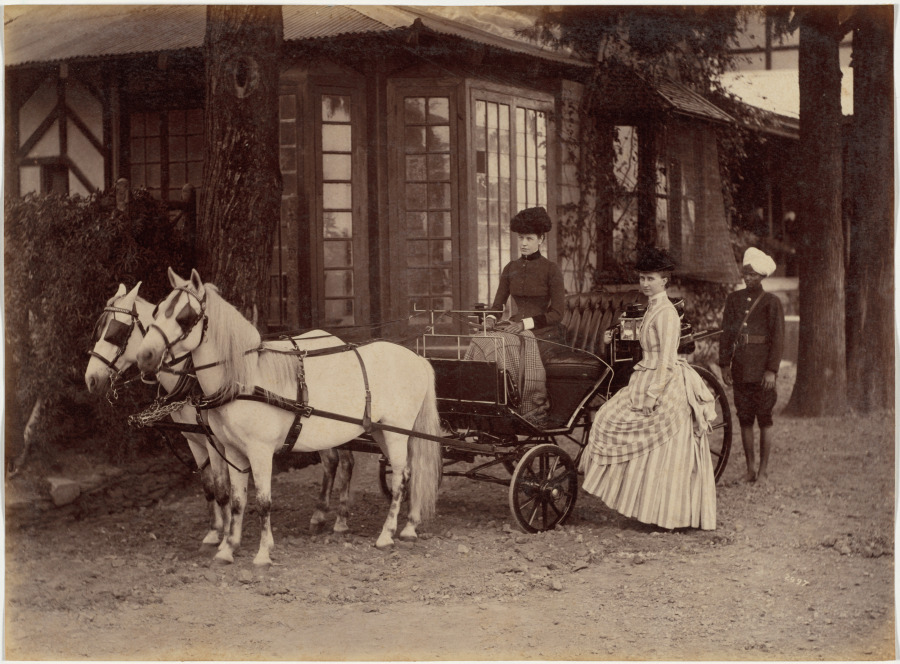 Mrs. and Miss Lyall, Shimla
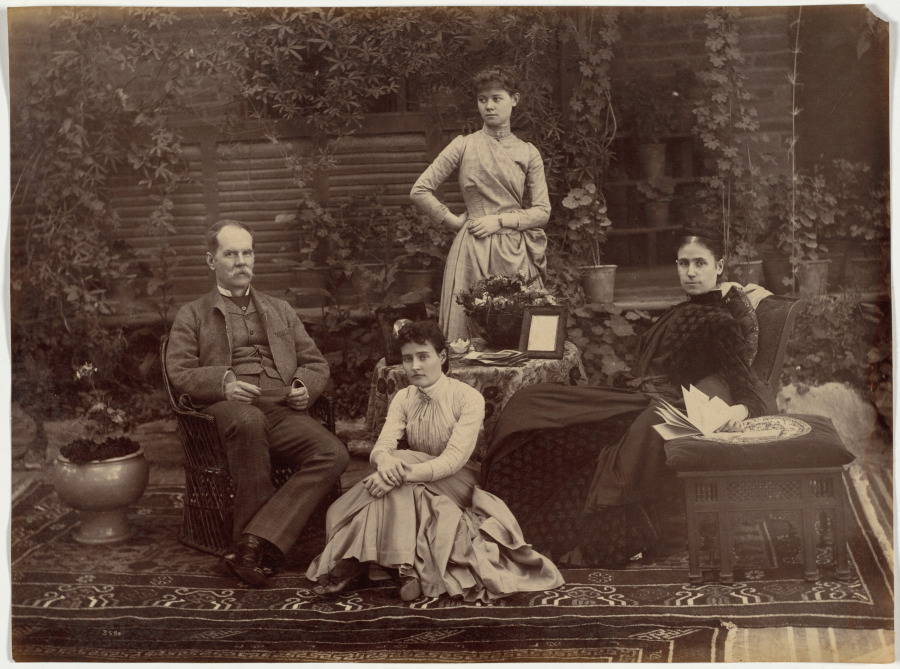 Sir Auckland Colvin and Family, Shimla
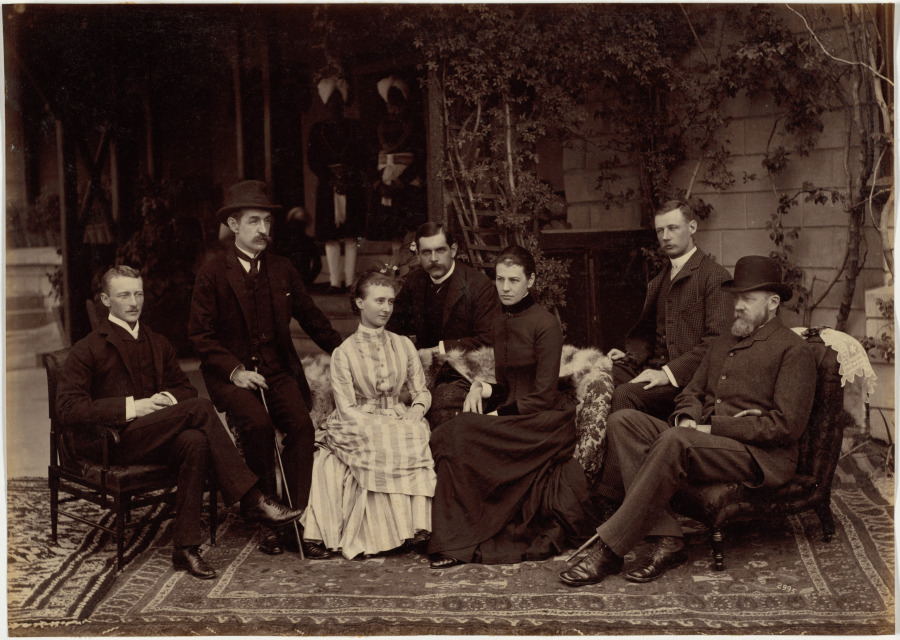 His Honor The Lieutenant Governor of the Punjab and Party, S
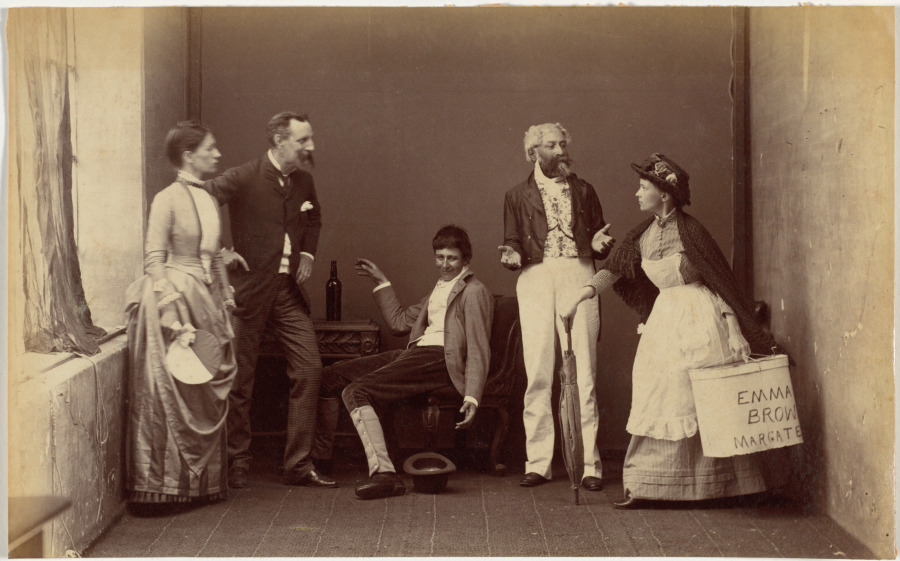 Fancy Group, Indore I
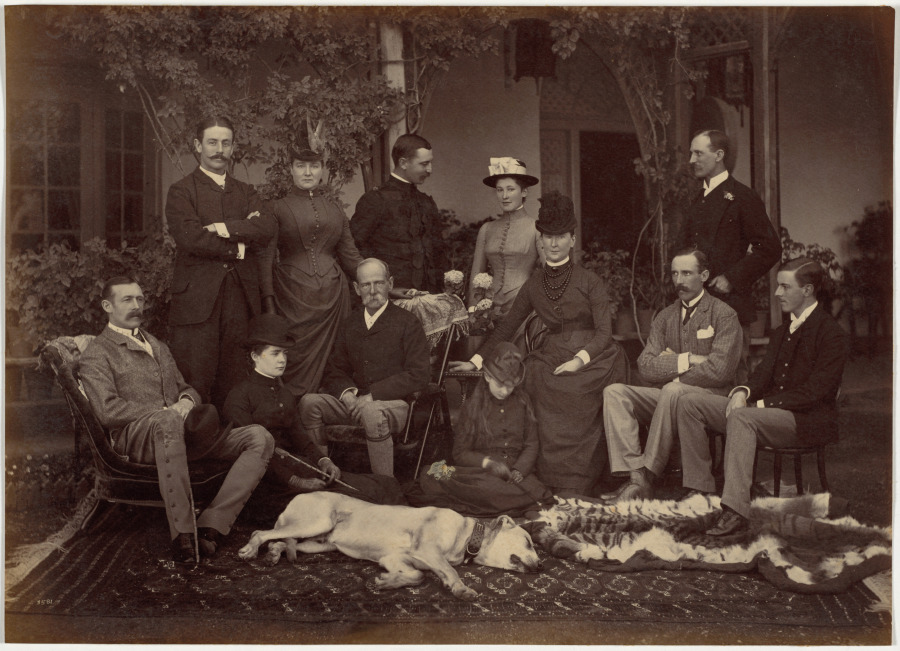 His Eminence Commander in Chief and Party, Shimla
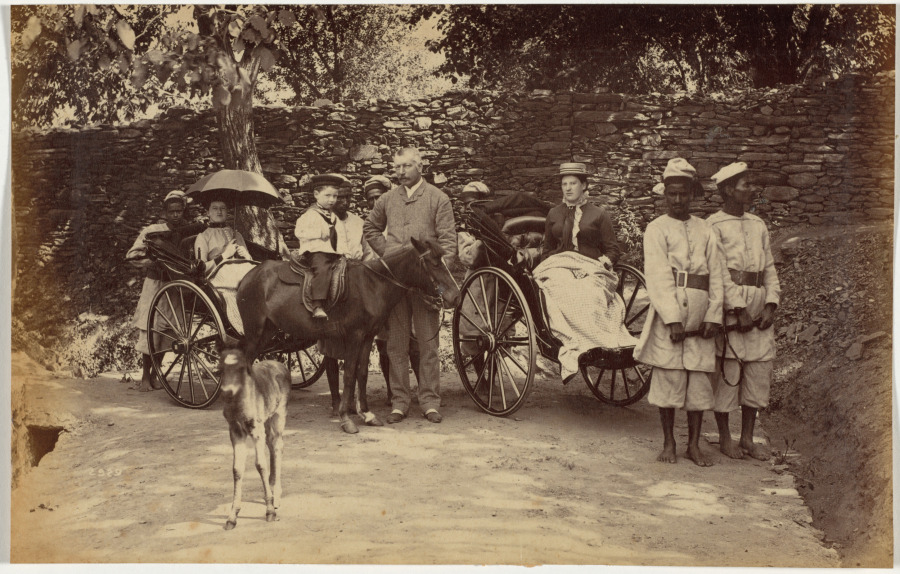 Colonel F. G. Oldham, Shimla
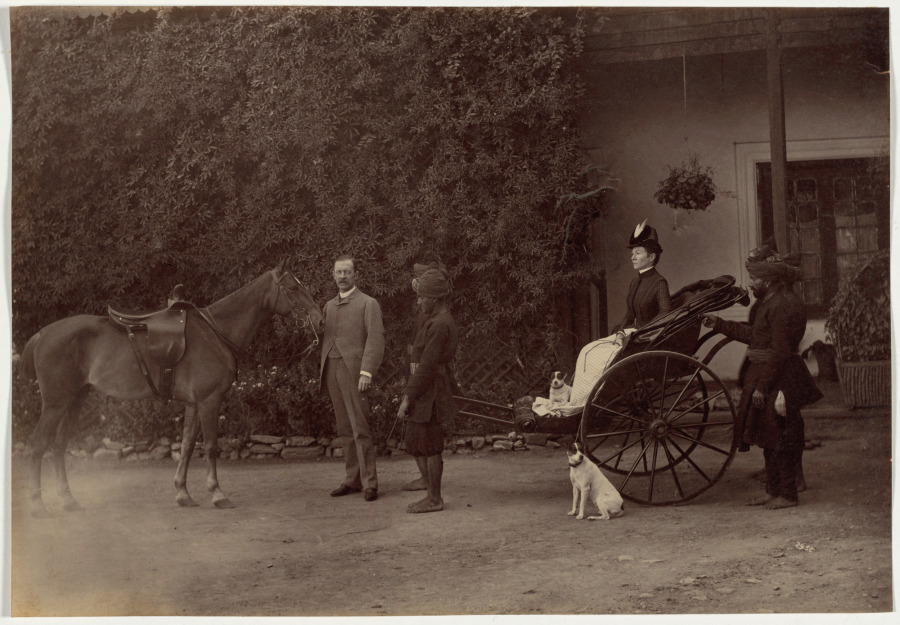 Colonel H.R. Thuillier and His Wife Emmeline Williams Thuill
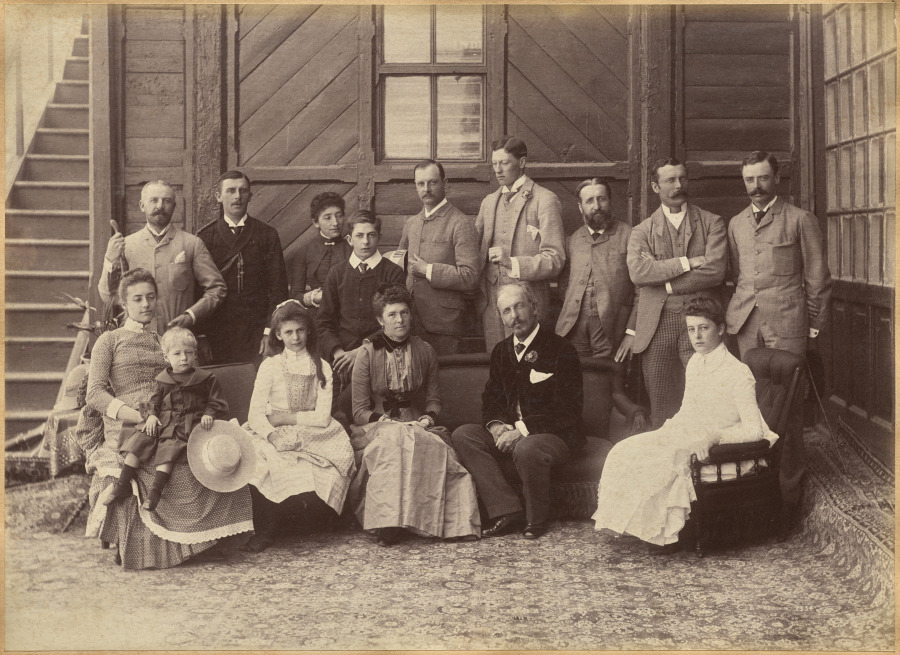 Viceregal Party Shimla (verso)
![[Hatti Kana-The Elephant Camp]](https://images.metmuseum.org/CRDImages/ph/web-large/DP146166.jpg)
![[ A Travelling Camel Carriage from Lahore to Peshawar, Governor General's Camp]](https://images.metmuseum.org/CRDImages/ph/web-large/DP146176.jpg)
![[Herd of Horses]. Brady album, p. 123](https://images.metmuseum.org/CRDImages/ph/web-large/DP70811.jpg)
![[Governor General's and Commander in Chief's Camp, Jullundur]](https://images.metmuseum.org/CRDImages/ph/web-large/DP146155.jpg)
![[Outskirts of Governor Generals Camp]](https://images.metmuseum.org/CRDImages/ph/web-large/DP146135.jpg)
![[Scene in Camp]](https://images.metmuseum.org/CRDImages/ph/web-large/DP146148.jpg)
![[Right Flank of Governor Generals Camp]](https://images.metmuseum.org/CRDImages/ph/web-large/DP146134.jpg)
![[Governor General's State Elephant and Silver Howdah]](https://images.metmuseum.org/CRDImages/ph/web-large/DP146147.jpg)
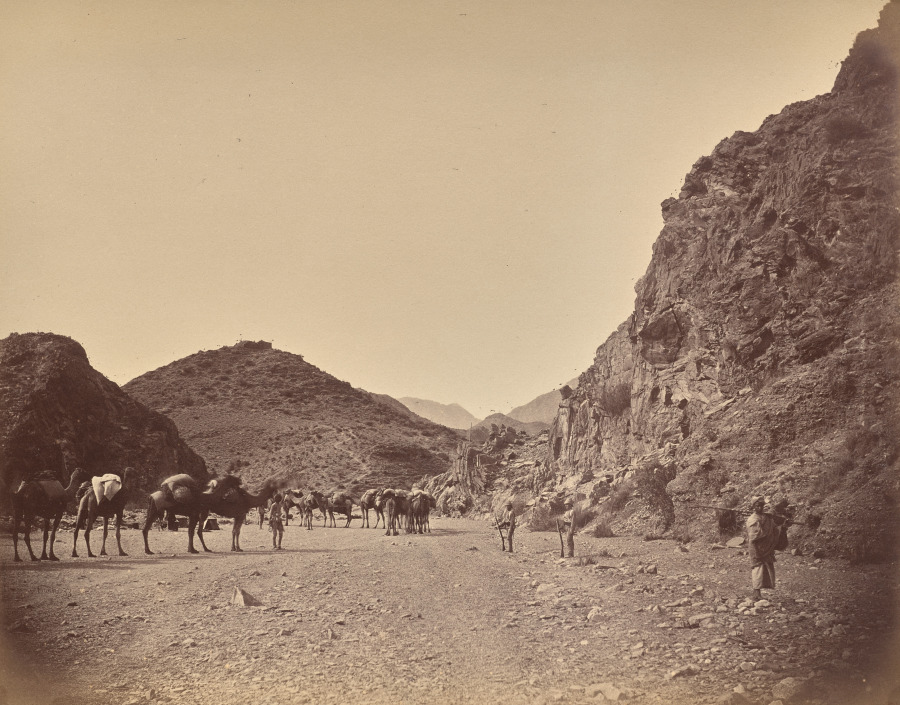
![[J.C.S. on a Riding Camel]](https://images.metmuseum.org/CRDImages/ph/web-large/DP146165.jpg)
![[Campbell Twins in a Shigram, Governor General's Camp]](https://images.metmuseum.org/CRDImages/ph/web-large/DP146150.jpg)