FROM THE CLEVELAND MUSEUM OF ART’S CATALOG
This work was made by Indian artists for a member of the British East India Company. It was painted in the southern style of Company school painting, which is distinguished by its bold outlines, saturated color, and heavy application of gold. The priest on the right bears the sectarian markings of a follower of the Hindu god Vishnu on his forehead, chest, arms, and flag. A 19th-century British inscription on its surviving fly sheet, a protective cover of tissue paper, states that this priest made his living by praying to the “native doorway” early every morning. The survival of this commentary reveals how British collectors used these apparently objective depictions of costumes and professions to implicate Indian holy men in strange or even charlatan behavior.
Source ↗︎
Be the first to share your thoughts.
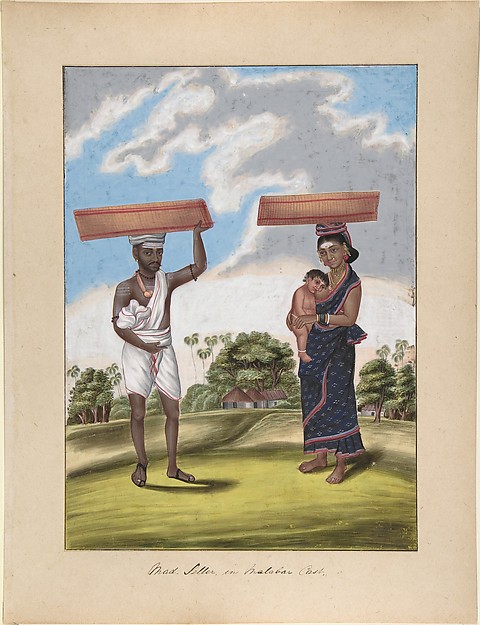 Anonymous, Indian, 19th century — Mad-seller, in Malabar Cas
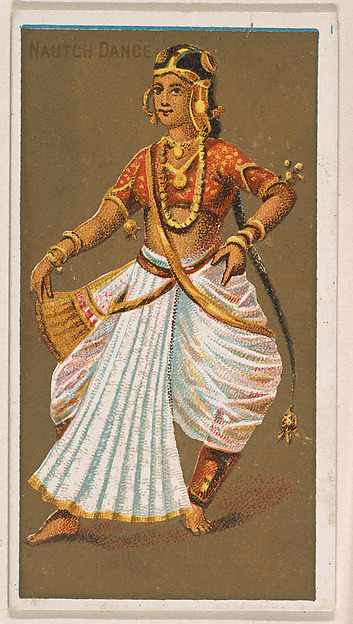 Kinney Brothers Tobacco Company — Nautch-Dance, from Nationa
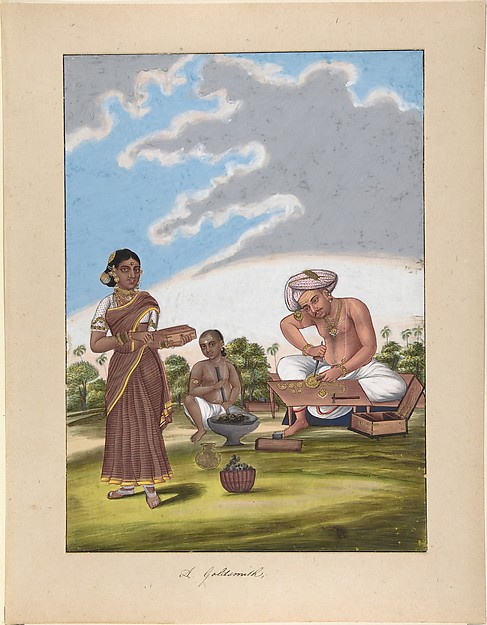 Anonymous, Indian, 19th century — A Goldsmith, from Indian T
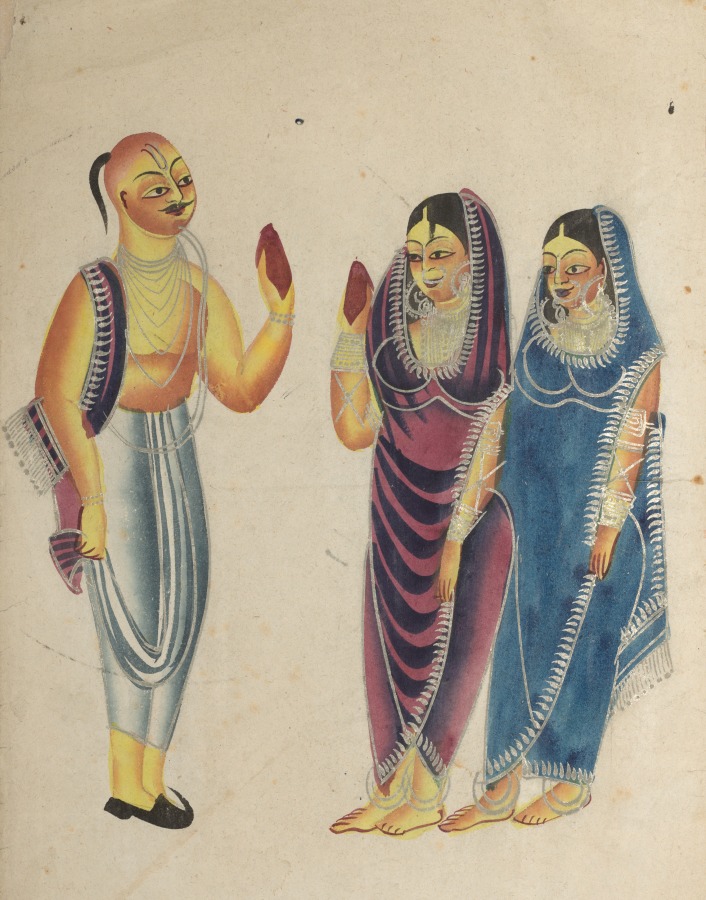 Vaishnava Devotee with Two Women
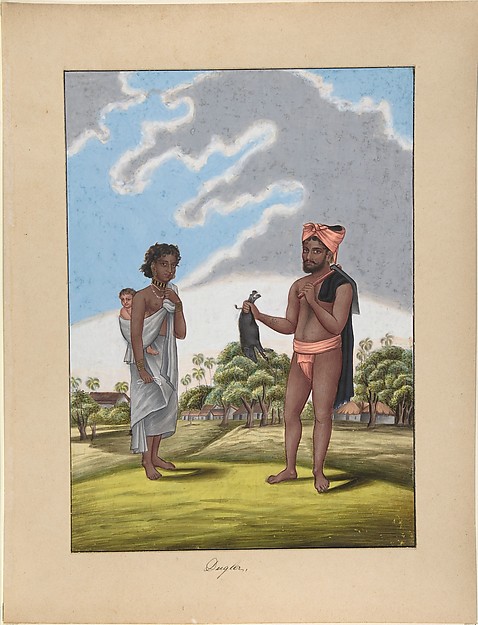 Anonymous, Indian, 19th century — Dugler, from Indian Trades
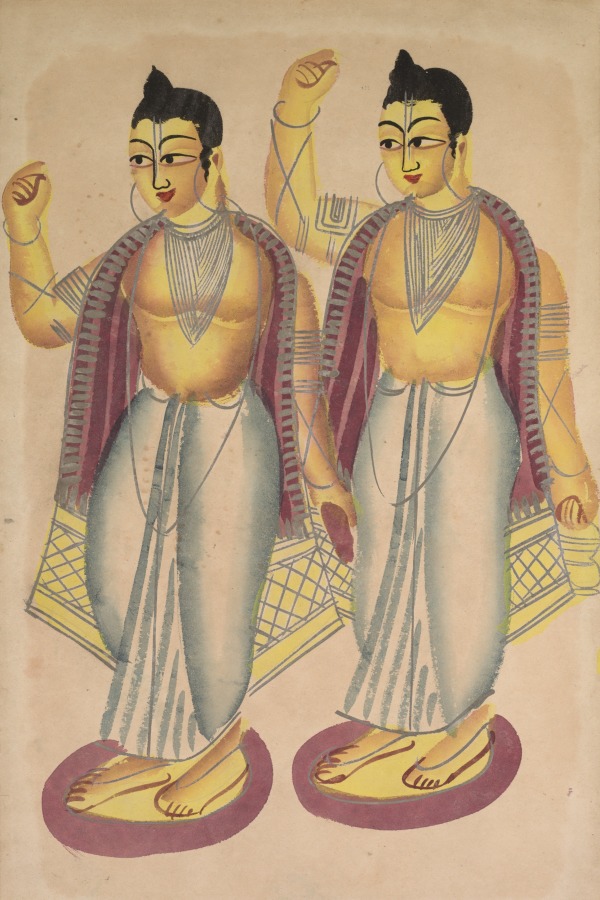 Nitai and Gaur
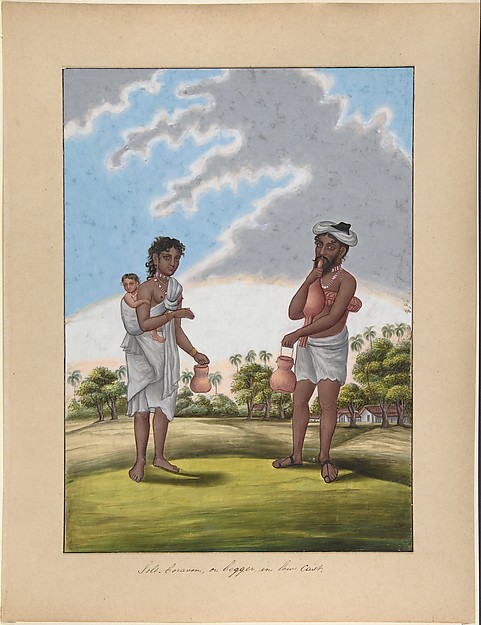 Anonymous, Indian, 19th century — Solf-Coraven, or Beggar, f
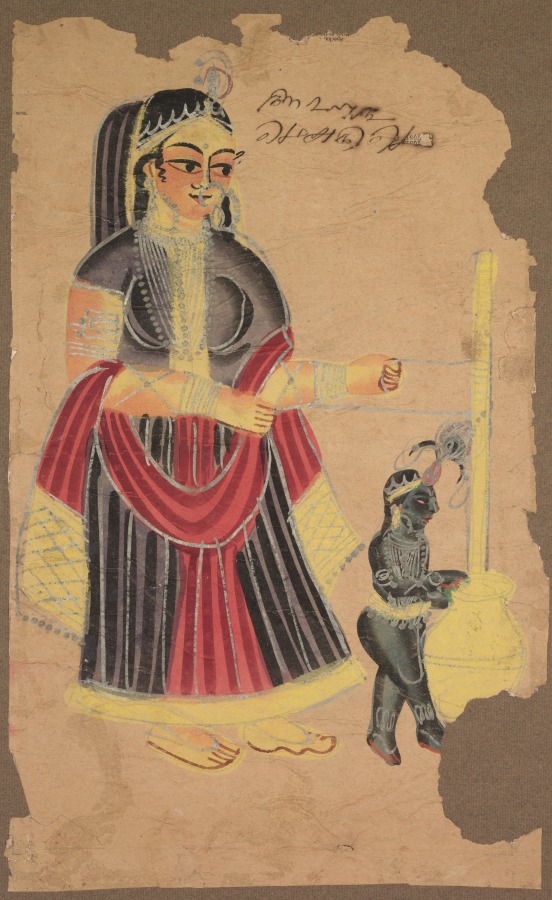 Yasoda and Krishna
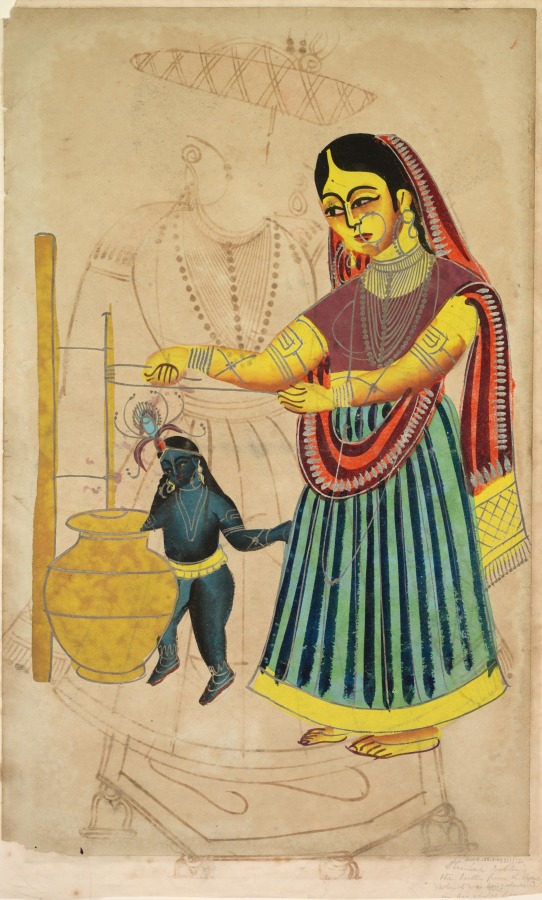 Yasoda Churning Butter (verso), from a Kalighat album
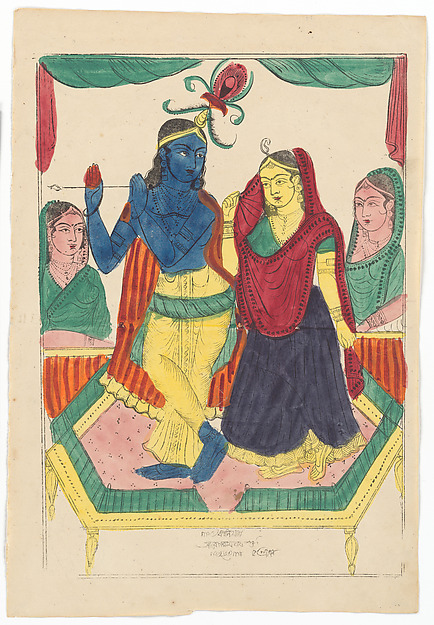 Becharam Das Dutta
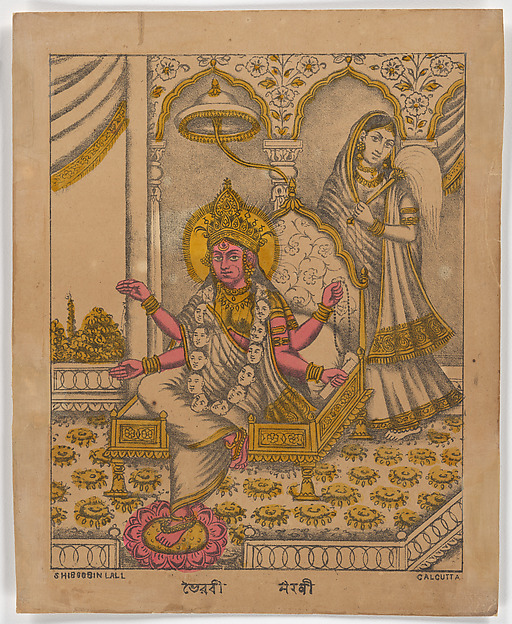 Shib Gobin Lal
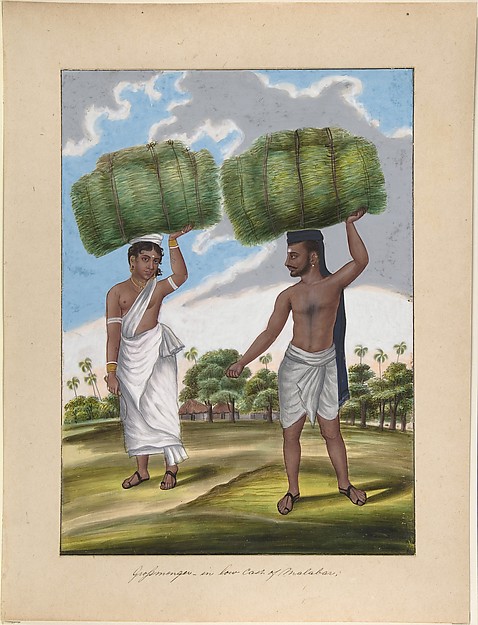 Anonymous, Indian, 19th century — Grossmonger, in Low Cast o