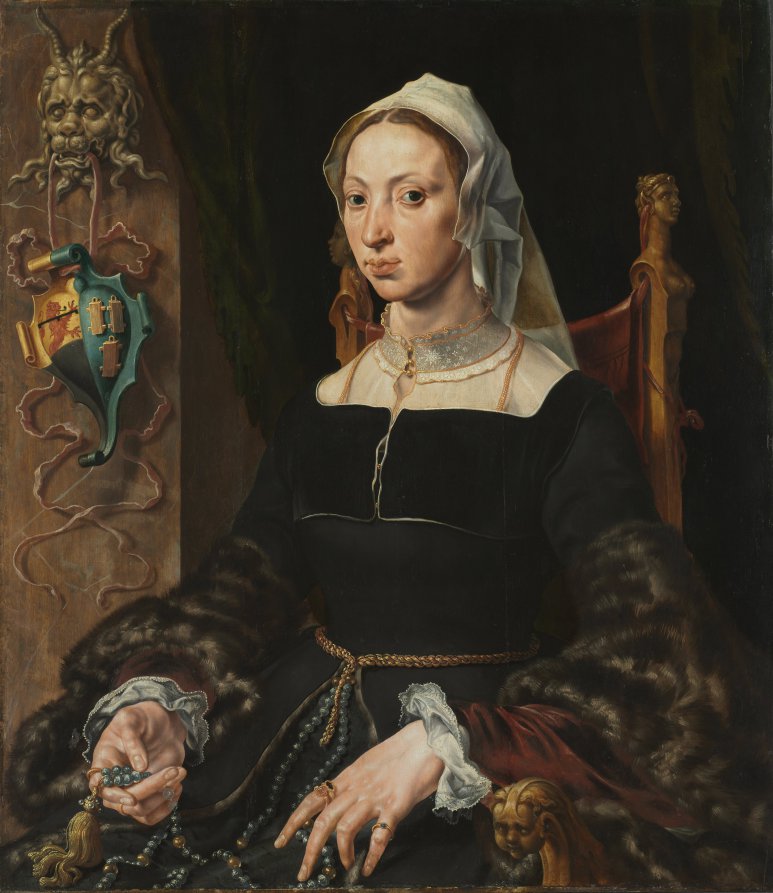
Portrait of a Noblewoman Dressed in Mourning
SEE IT IN PERSON
● On view now — Gallery 205
Art Institute of Chicago, Chicago · verified July 2026
Discussion
FROM THE ART INSTITUTE OF CHICAGO’S CATALOG
The subject of this imposing portrait is unknown today. Her black costume and traditional mourning veil indicate her status as an aristocratic widow, while the prominent crucifix refers to her piety, as does the small prayer book in her hand. The woman is nearly life-size and framed by a dramatic black curtain, conventions in portraiture of the nobility across Europe at the time. In the decades around 1600, the Medici dukes of Florence intermarried with the ruling houses of Europe, and their court artists and work-shops helped establish an international style that appealed to princely and aristocratic collectors.
Be the first to share your thoughts.
Sign in to join the discussion.
More by Jacopo da Empoli

More like this
 Mattheus Verheyden — Maria Hartmansdr de Custer(e). Echtgeno
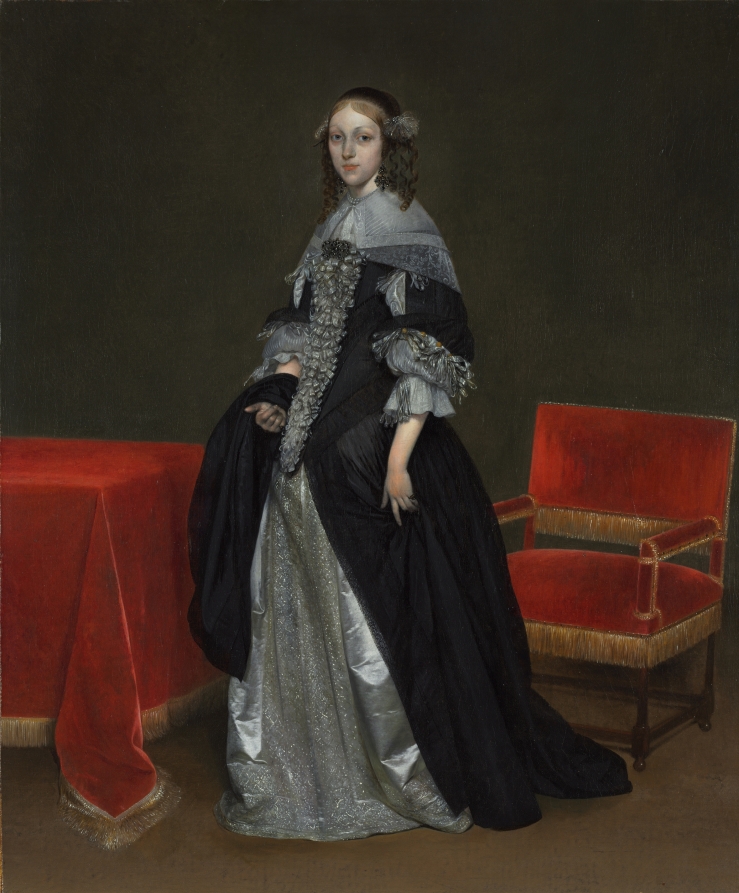 Gerard ter Borch (Dutch, 1617–1681) — Portrait of a Woman
 Bartholomaeus Bruyn, the younger — Portrait of a Woman with
  Rembrandt van Rijn — Portrait of Oopjen Coppit
 anonymous — Portrait of Doedt van Holdinga (1570-1646)
 Gerard ter Borch (II) — Portret van Aletta Pancras (1649-170
 Anthonis Mor — Portrait of a Seated Woman
 anonymous — Portrait of Suzanna Moor (1608-57)
 Maerten van Heemskerck (Dutch, 1498–1574) — Portrait of Mach
 Follower of Antonis Mor — Portrait of a Court Lady
 Andrés López Polanco — Queen Margaret of Spain
 North Netherlandish — Saint Gertrude of Nivelles and an Augu