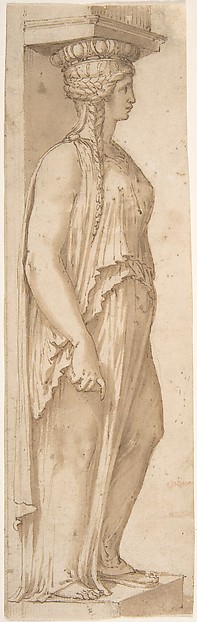
In the collection of The Metropolitan Museum of Art, New York — check current display status with the museum.
Be the first to share your thoughts.
Sign in to join the discussion.
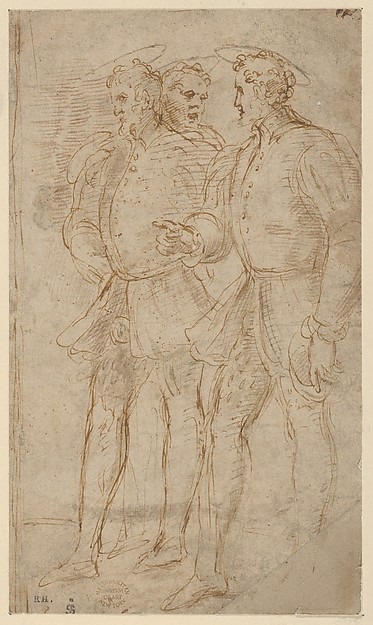 Anonymous, Italian, Florentine, 16th century — Three Men
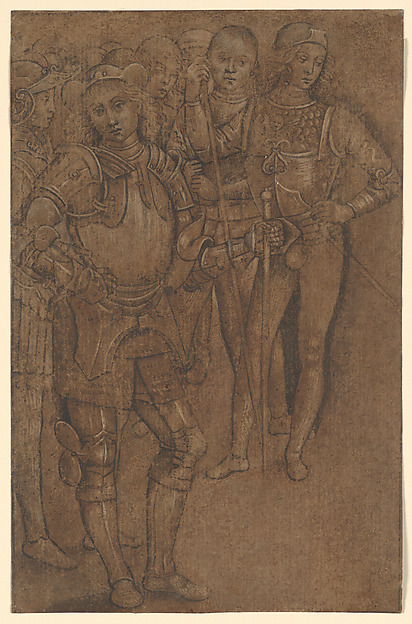 Perugino (Pietro di Cristoforo Vannucci) — Group of Warriors
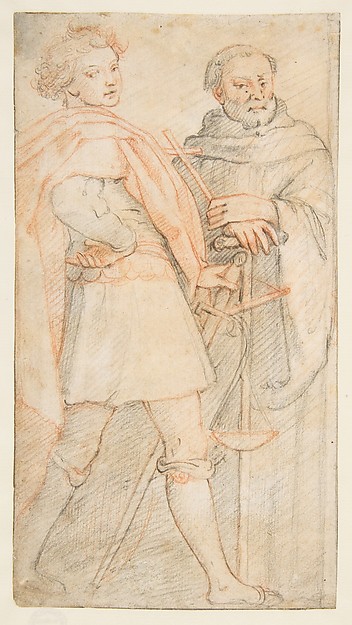 Federico Zuccaro (Zuccari) — Saint Michael and Saint Giovann
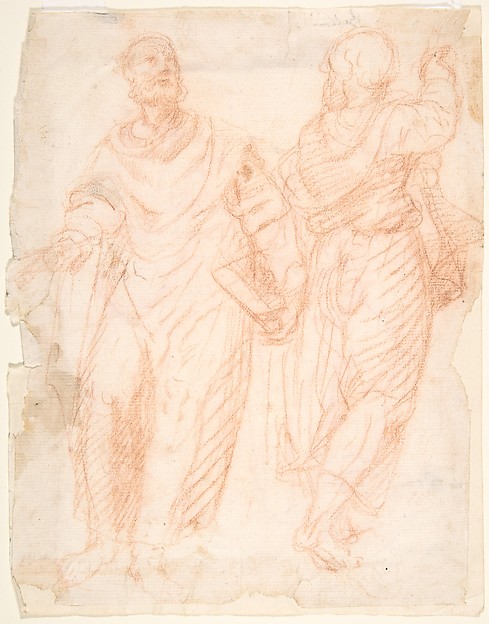 Anonymous, Italian, 17th century — Two standing male figures
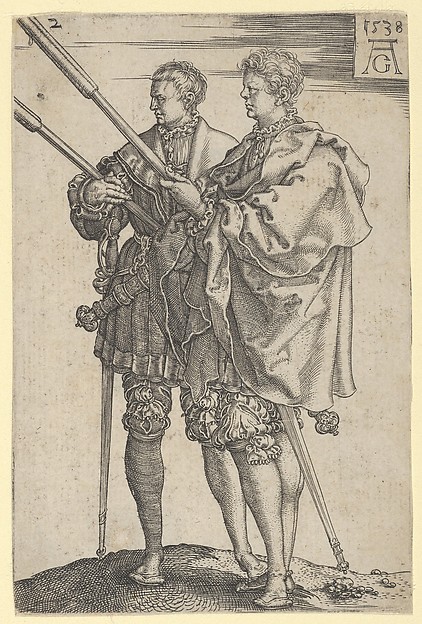 Heinrich Aldegrever — Two Torch-Bearers, from "The Large Wed
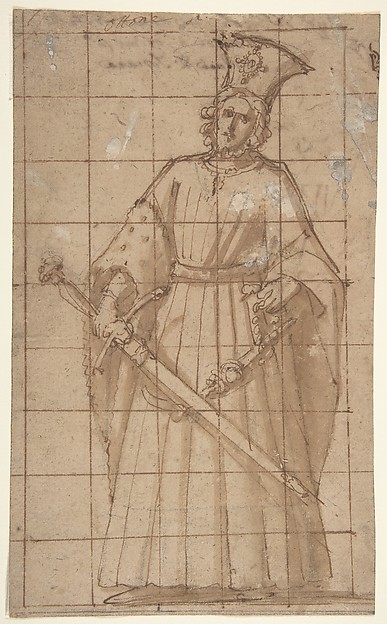 Cigoli (Ludovico Cardi) — Standing Male Figure Holding a Swo
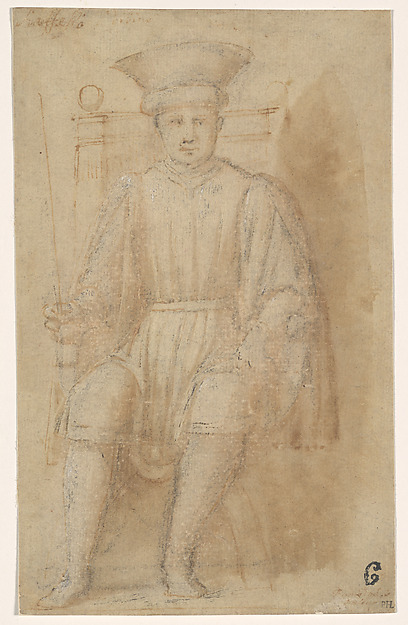 Follower of Piero della Francesca — A Man Seated on a Throne
 Bartholomeus Spranger|Jan Muller|Anonymous, Dutch, 17th cent
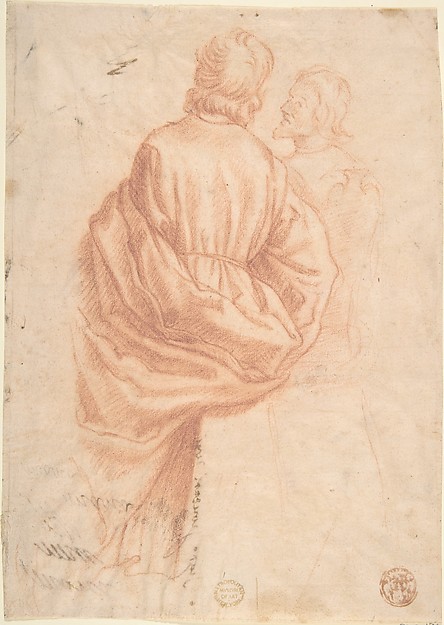 Anonymous, Italian, Florentine, second half of the 16th cent
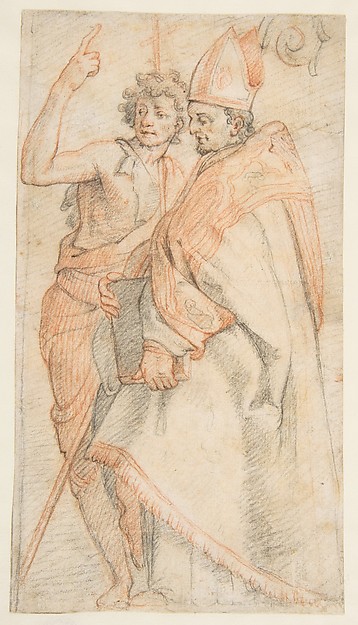 Federico Zuccaro (Zuccari) — Saint John the Baptist and Sain
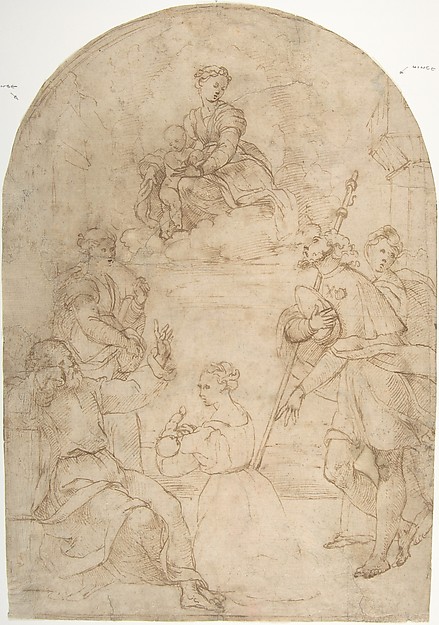 Anonymous, Italian, 16th century — Saint Roch Recommending a
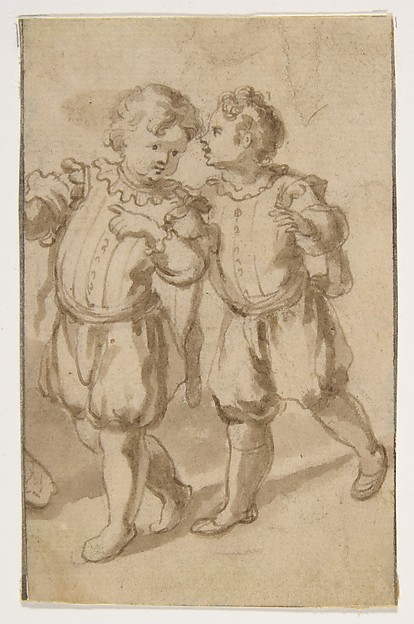 Bernardino Rodriguez ("Bernardino Siciliano") — Two Young Pa