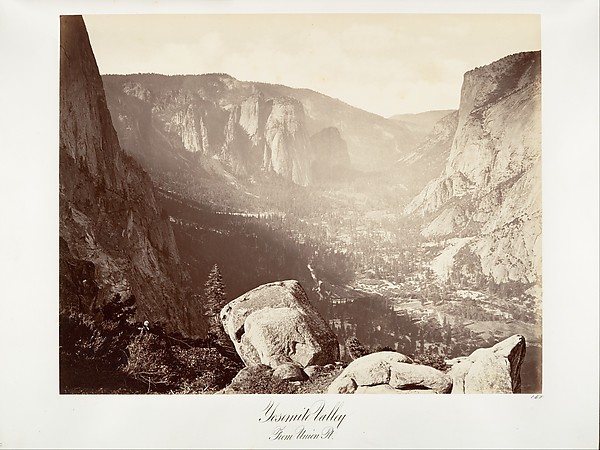
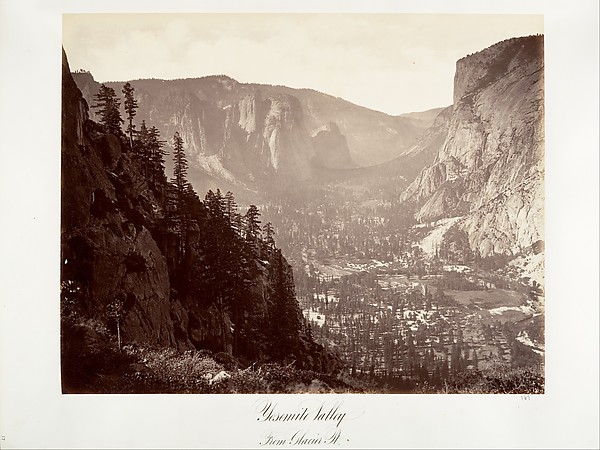
In the collection of Cleveland Museum of Art, Cleveland — check current display status with the museum.
FROM THE CLEVELAND MUSEUM OF ART’S CATALOG
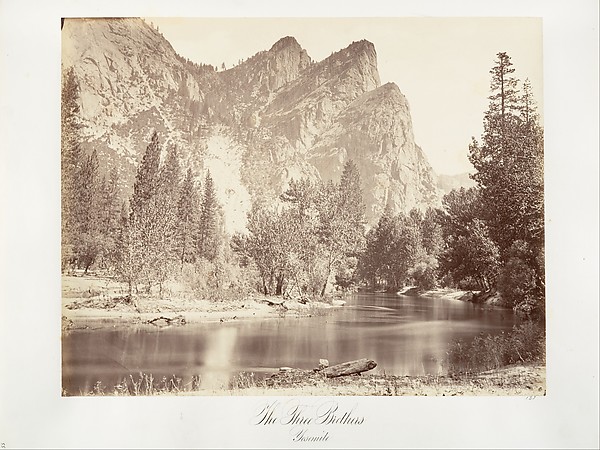
From the medium’s beginnings in the 1830s through the 1880s, most photographs were intimately scaled objects meant for the hand, the album, and the home. As the medium began being used to document landscapes and monuments in the 1850s, larger scale processes arose such as the glass-plate negative. The mammoth print truly seemed gargantuan in the 1860s. For much of the 20th century, the 8-x-10-inch gelatin silver print was the norm for photojournalism; these prints were destined for reproduction in books and magazines around the same scale.
Be the first to share your thoughts.
Sign in to join the discussion.
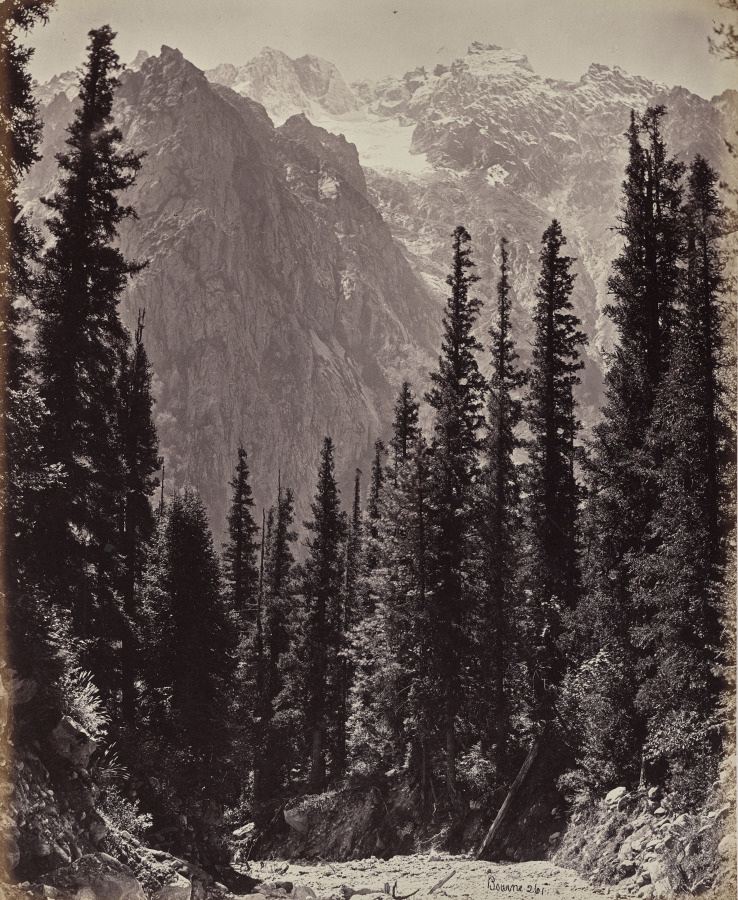 Samuel Bourne (British, 1834–1912) — The Upper Himmalayahs.
 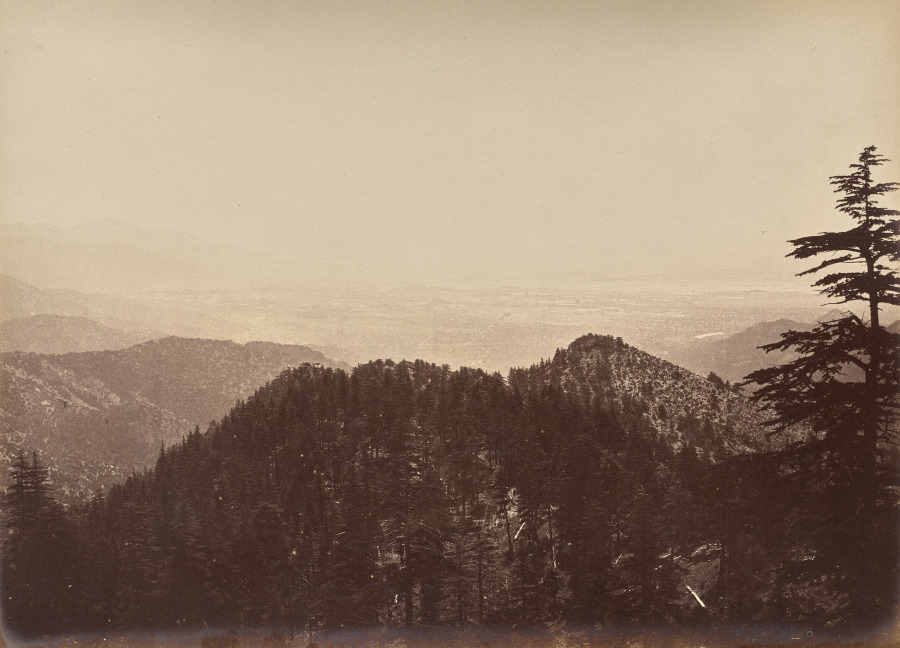 John Burke (Irish, 1845–1915) — Untitled (Landscape Scene)
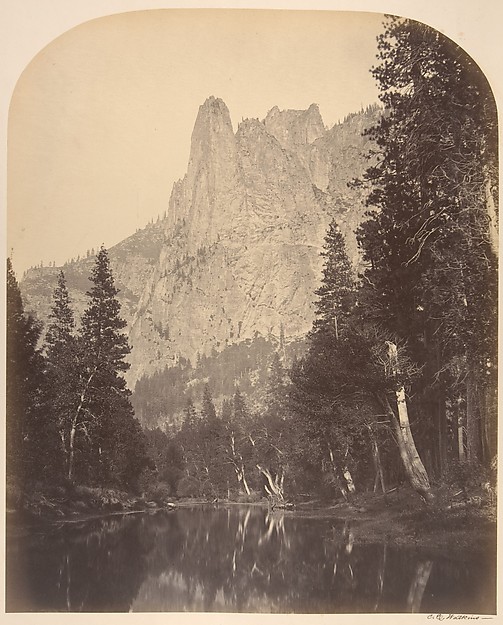 Carleton E. Watkins — River View, Sentinel, 3270 Feet
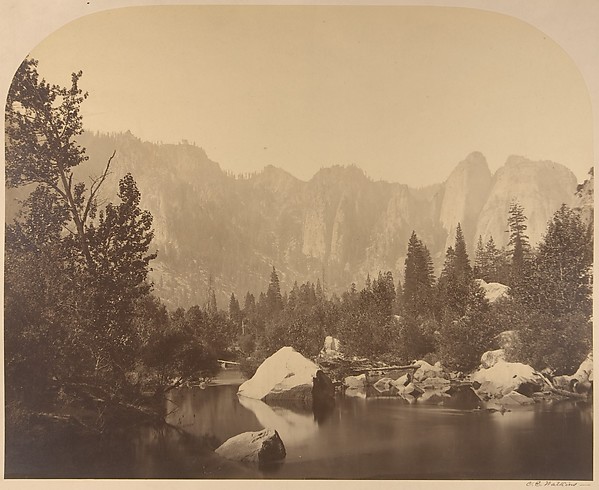 Carleton E. Watkins — Cathedral Rock, Down the Valley
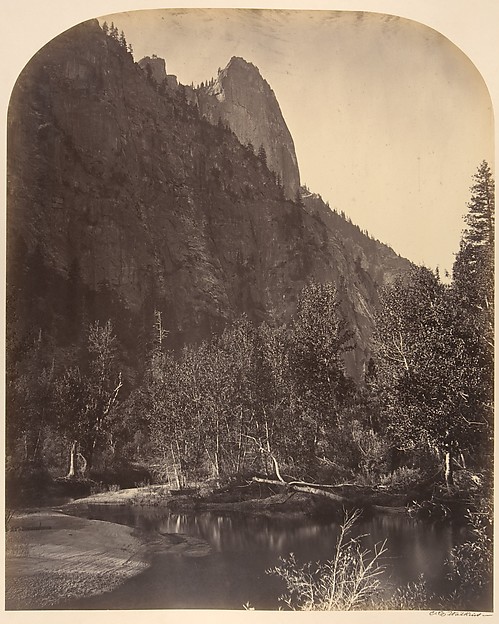 Carleton E. Watkins — River View, Sentinel, 3270 Feet
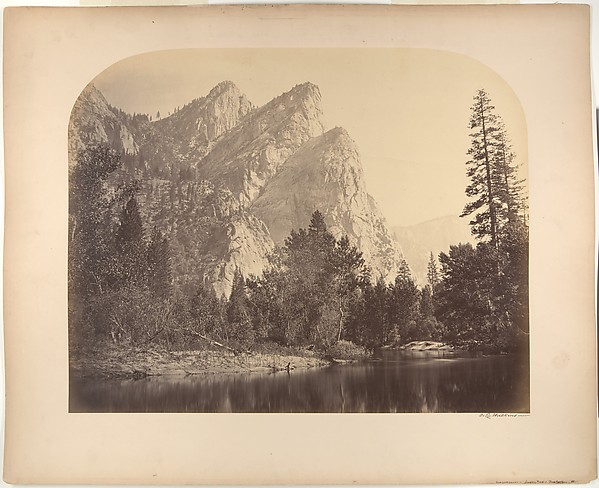 Carleton E. Watkins — Pompomasos (Leaping Frogs), Three Brot
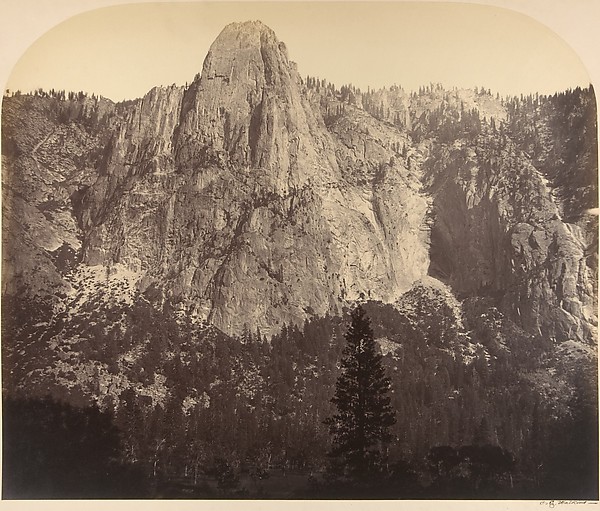 Carleton E. Watkins — Sentinel. Front View: 3270 Feet.
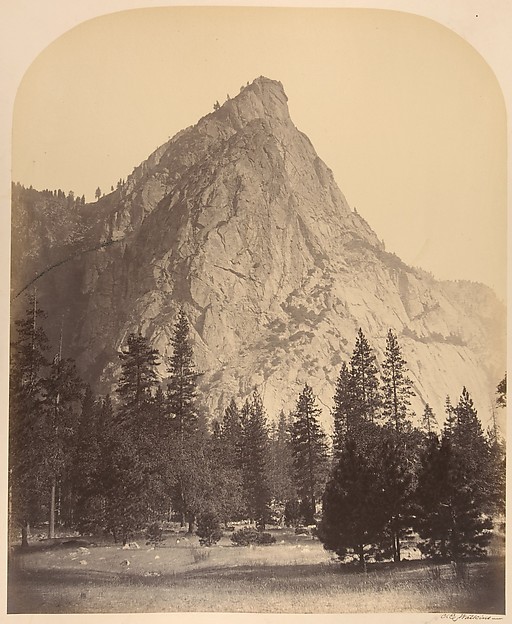 Carleton E. Watkins — Three Brothers, Front View, 4480 Feet
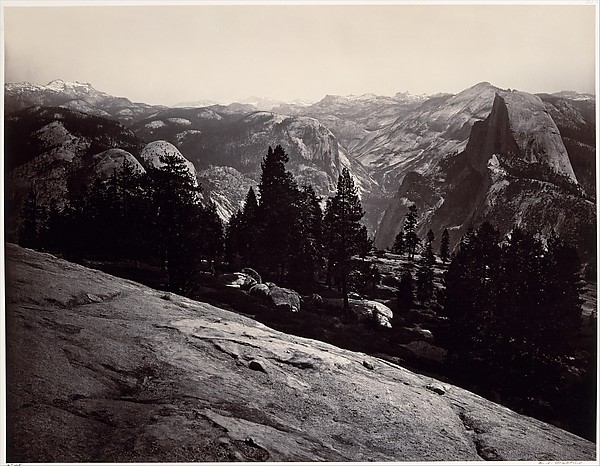 Carleton E. Watkins — View from the Sentinel Dome, Yosemite
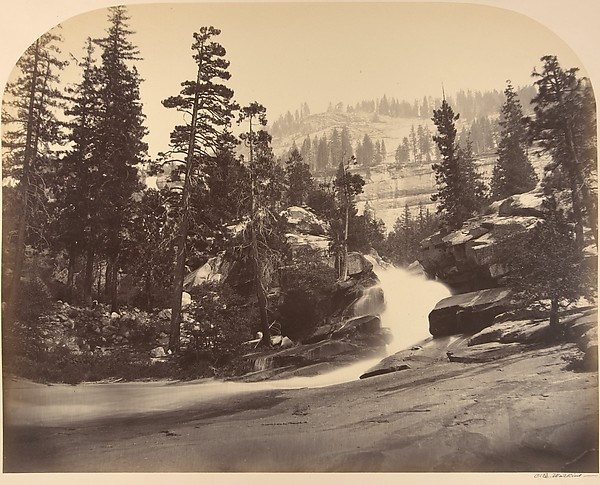 Carleton E. Watkins — Cascade, Nevada Fall on Left, View ab
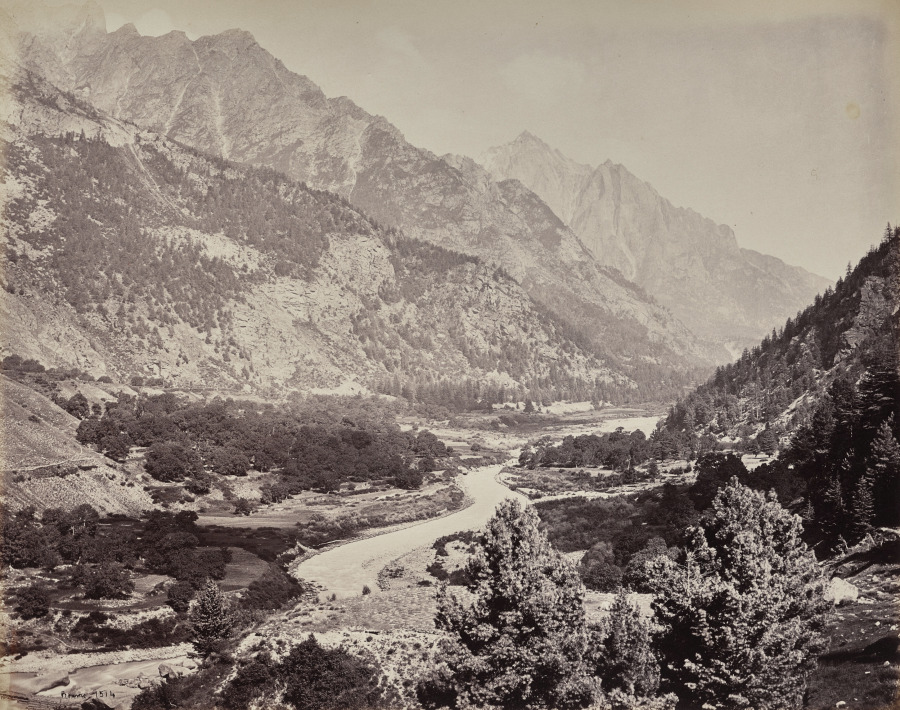 Samuel Bourne (British, 1834–1912) — The Upper Himmalayahs.
 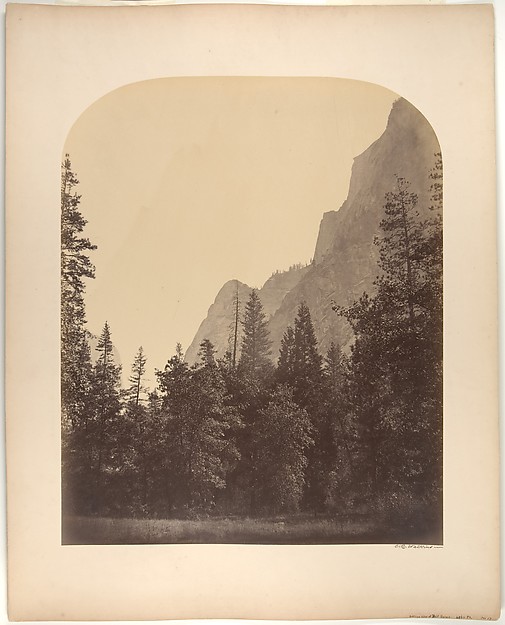 Carleton E. Watkins — Outline View of the Half Dome, 4967 Fe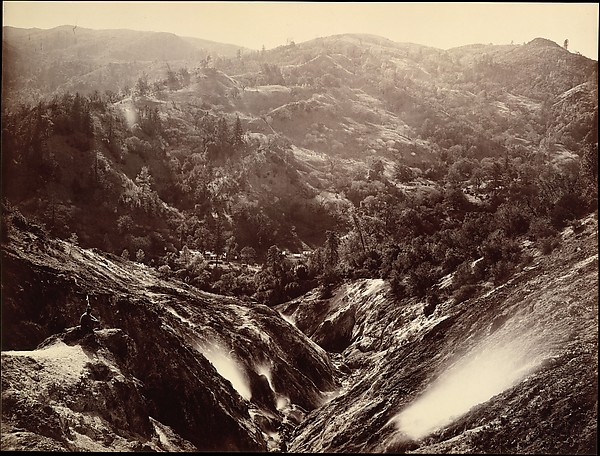
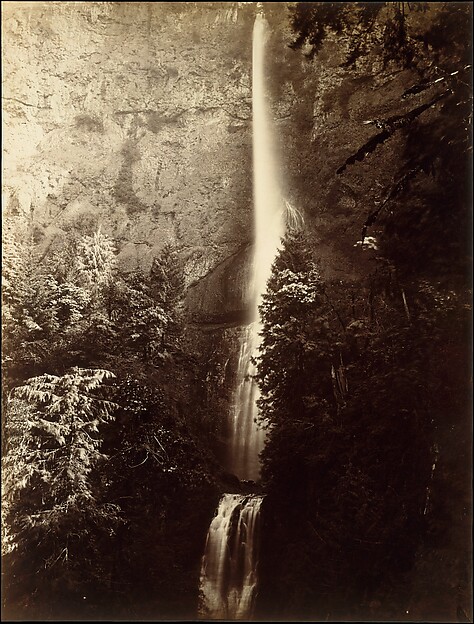
![[Yosemite National Park, California]](https://images.metmuseum.org/CRDImages/ph/web-large/DP136839.jpg)
![[Yosemite National Park, California]](https://images.metmuseum.org/CRDImages/ph/web-large/DP136829.jpg)
![[Yosemite National Park, California]](https://images.metmuseum.org/CRDImages/ph/web-large/DP136825.jpg)