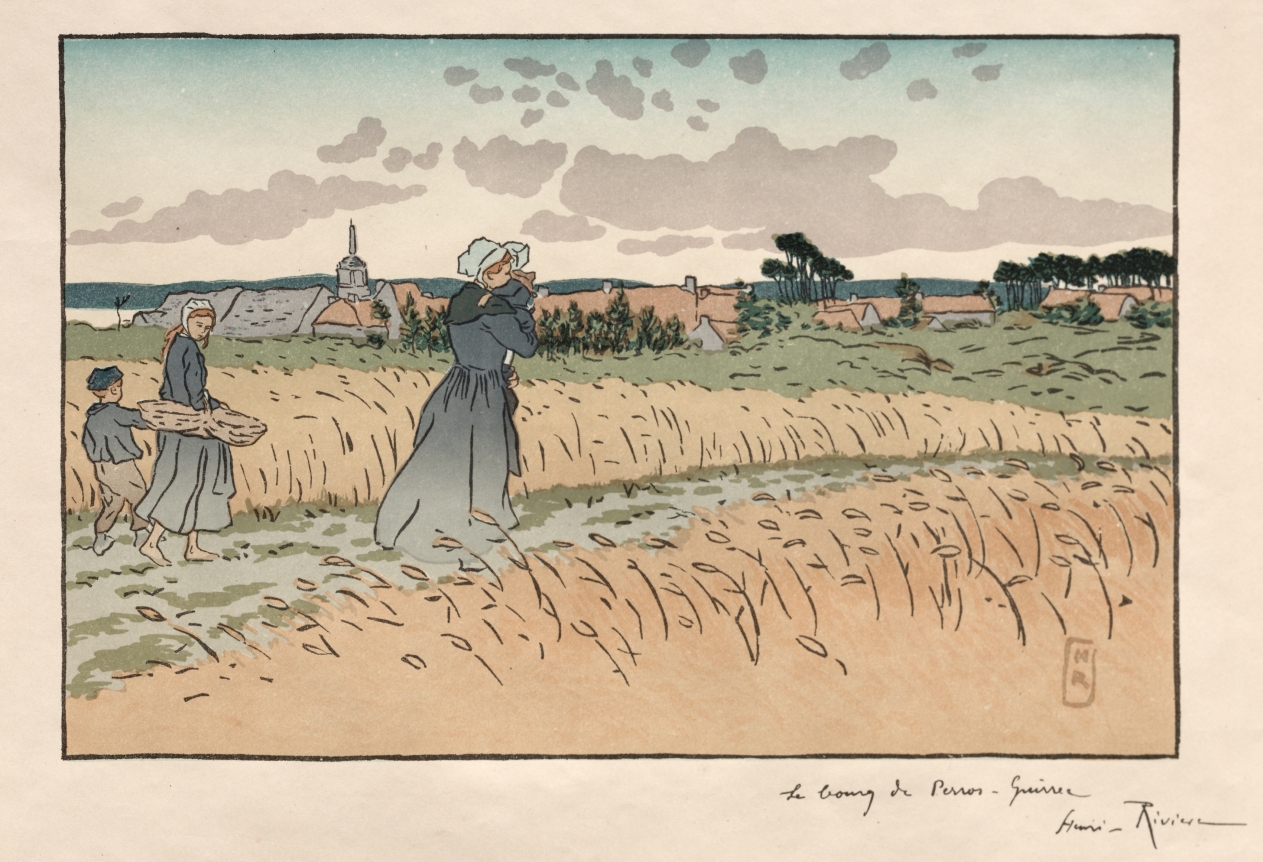
In the collection of Cleveland Museum of Art, Cleveland — check current display status with the museum.
FROM THE CLEVELAND MUSEUM OF ART’S CATALOG
The switchman’s principal duty was to switch tracks to direct an oncoming train to its destination, regulate a train’s speed, and signal the open track to the train conductor. The red and white checkered flag was used for the latter purpose and was placed on the side of the open tracks. The switchman was also responsible for manning the telegraph, whose white poles line the opposite side of the tracks. When he was off duty, the switchman grew vegetables on the bank bordering the railway, as was the custom with railway workers.
Be the first to share your thoughts.
Sign in to join the discussion.
 Henri Rivière — From Quai de Javel (Signaller Shack)
 Henri Rivière — Plumber Worker in the Tower
 Henri Rivière — From Bas-Meudon Station
 Henri Rivière — From Quai de Passy
 Henri Rivière — Rue Beethoven
 Henri Rivière — In the Tower
 Henri Rivière — From Pont de Grenelle
 Henri Rivière — From Rue Rochechouart
 Henri Rivière — From Quai de Passy-Charbonniers
 Henri Rivière — From Rue Lamarck
 Henri Rivière — In Bateau-mouche
 Henri Rivière — From Pont des Saints-Pères