FROM THE CLEVELAND MUSEUM OF ART’S CATALOG
This episode stems from the life of the historical Buddha, who, after his enlightenment, was initially hesitant about preaching his own doctrine. After much personal deliberation and prodding by deities, he finally relented. The first converts were the five guards who served him when he was still a prince. For Li Sheng, this is the pretext of the painting, which moves from the interaction of the bhiksu with the Buddha to a broader awareness of the vast surroundings of the scene.
Source ↗︎
Be the first to share your thoughts.
 Gu Tianzhi (Chinese, active mid-1600s) — Landscape in the St
 Zou Zhe (Chinese, c. 1610-before 1688) — Autumn Mist in the
  Wang Hui (Chinese, 1632–1717) — Hall of Lofty Pines
 Xiang Shengmo (Chinese, 1597–1658) — Meditative Visit to a M
 Landscape, The Palace of the Clouds
 Tang Yin (Chinese, 1470–1523) — Scholar-Hermits in the Autum
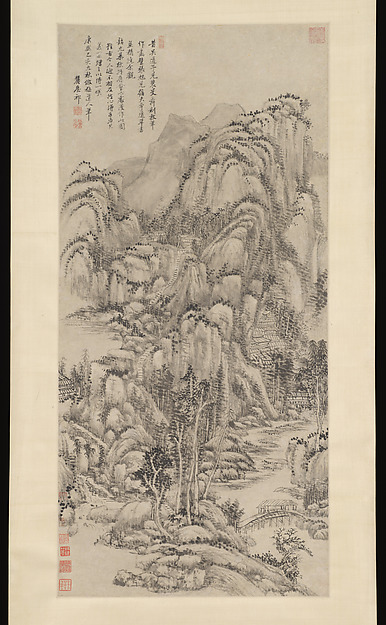 Wang Yuanqi — 清 王原祁 倣吳鎮山水圖 軸|Landscape after Wu Zhen
 Lin Liang (Chinese, 1416–1480) — A Hundred Sparrows in a Lof
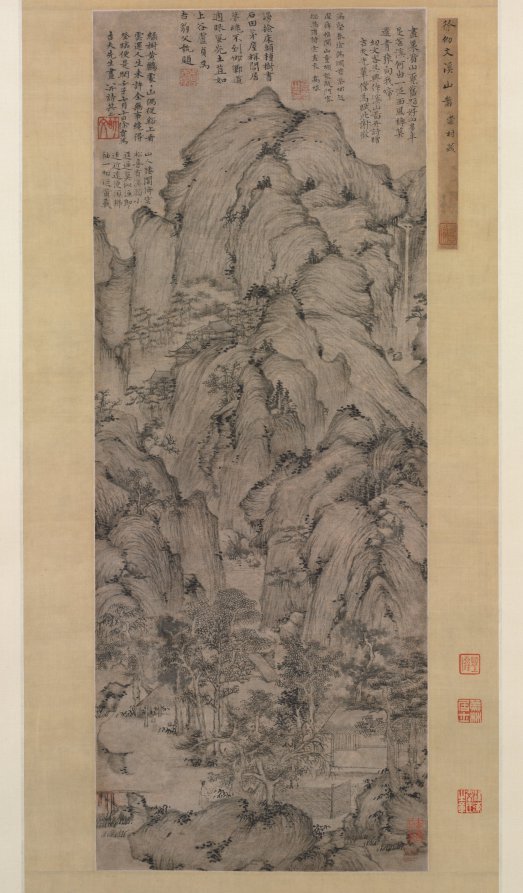 Xu Ben (Chinese, 1335–1380) — Streams and Mountains
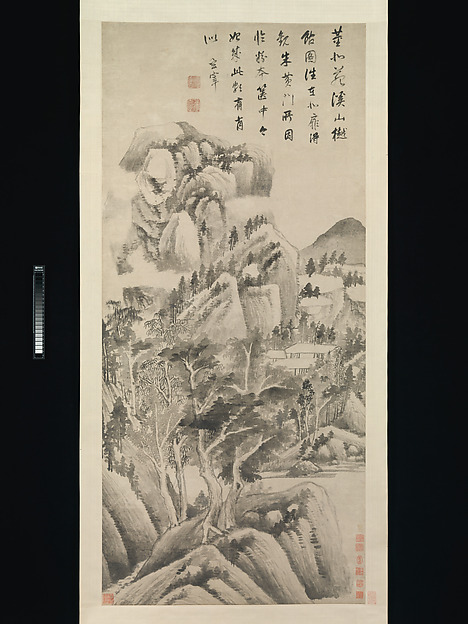 Dong Qichang — 明 董其昌 溪山樾館圖 軸|Shaded Dwellings among Strea
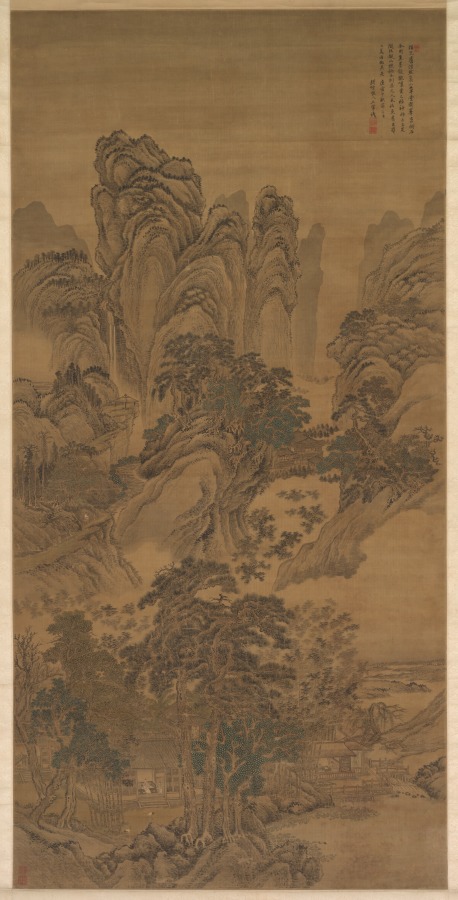 Wang Hui (Chinese, 1632–1717) — Landscape
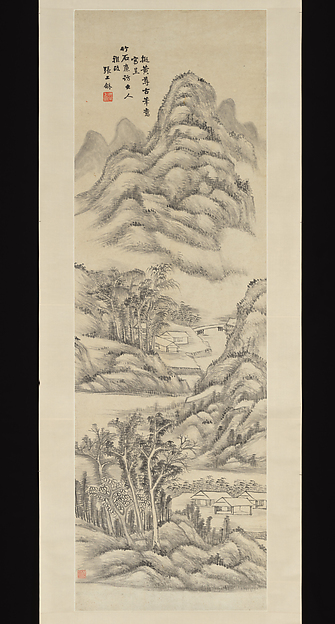 Zhang Shanghe — 清 張上龢 山水 軸|Landscape